South Korea to Double Spending on AI and Chips in 2027

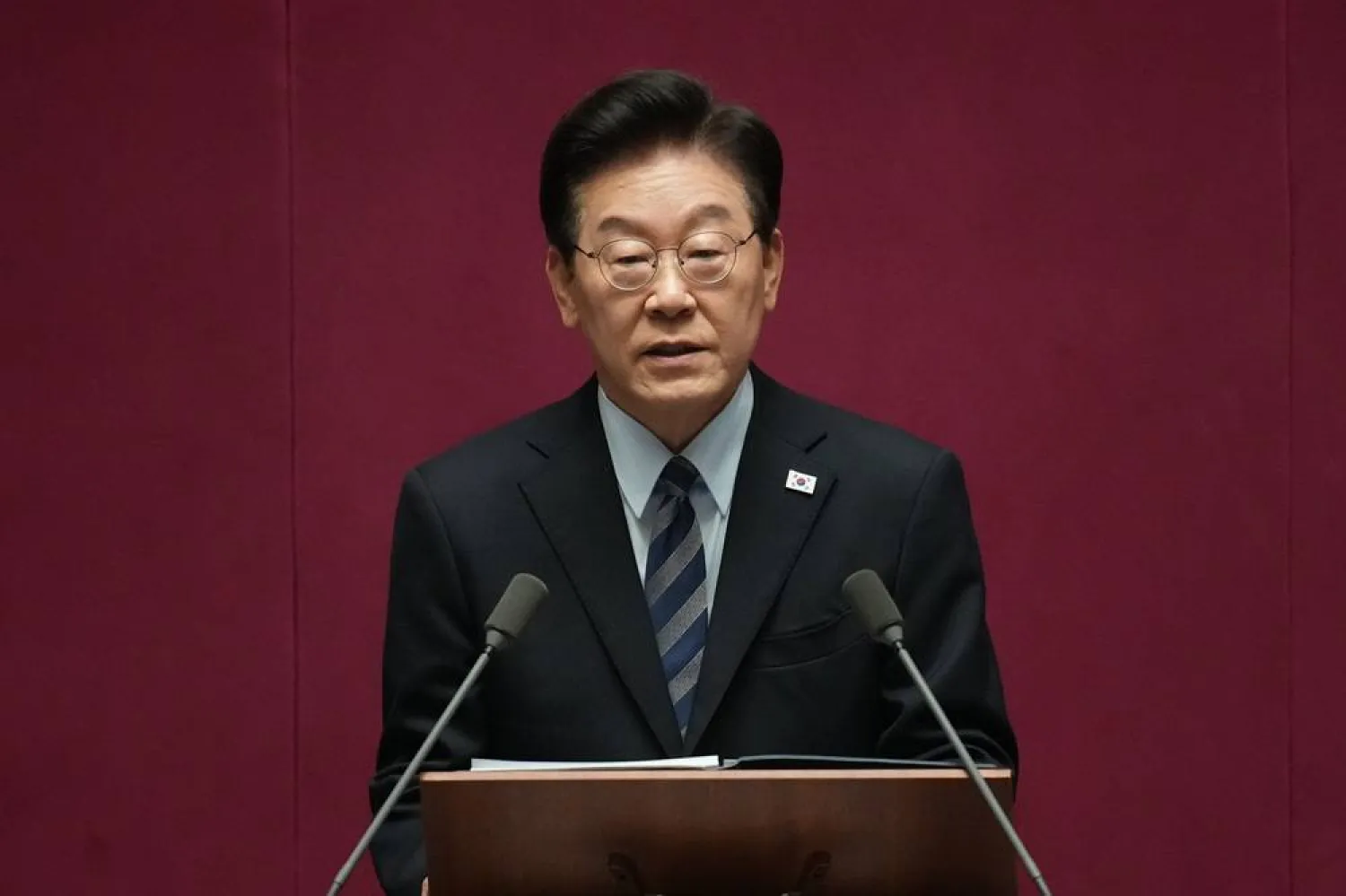
South Korean President Lee Jae Myung delivers a budget speech for 2027 at the National Assembly in Seoul, South Korea, 02 November 2026. (EPA)
TT

South Korea to Double Spending on AI and Chips in 2027

South Korean President Lee Jae Myung delivers a budget speech for 2027 at the National Assembly in Seoul, South Korea, 02 November 2026. (EPA)

South Korea will double spending on AI and semiconductors in 2027 to a record high, the president said Monday, pledging to use the technology to turn the military into a "smart, elite force".

President Lee Jae Myung in his annual budget speech to parliament said 21.3 trillion won ($16 billion) would be allocated to chipmaking and artificial intelligence, spanning data centers to robotics.

"We will make bold investments in AI and future growth engines to boost our economy's growth potential," he said, adding that the figure was "nearly double this year's amount".

On the defense budget, the government wants to see an increase of around eight percent from this year to 73.3 trillion won, aiming to secure nuclear-powered submarines and KF-21 fighter jets.

Lee said Seoul aims to "rapidly transform our military into a smart, elite force by establishing integrated manned and unmanned systems based on AI, robots and drones".

North Korea has recently tested a slew of weapons, including a new precision-guided torpedo system and an intermediate-range hypersonic missile, both of which it said used AI technology.

And last year, Seoul announced an agreement with Washington to build nuclear-powered submarines, with Pyongyang slamming the submarine program as a "dangerous attempt at confrontation".

Overall, the 2027 budget plan totals 821 trillion won, a 12.8 percent increase on-year, making it the largest budget proposal on record.

Lee now needs parliament to pass the budget proposal, which is likely given his party's majority.

-'Mega projects'-

The country is a tech powerhouse, home to Samsung Electronics and SK hynix, two of the world's three biggest makers of memory chips -- components in huge demand thanks to the AI boom.

Lee said the government will invest 4.7 trillion won to support "frontier AI development projects, with the aim of achieving world-leading performance for our own AI model, a national strategic asset".

In June, Lee announced a public-private partnership centered on "three mega-projects" -- aiming to expand chip production hubs nationwide, establish robotics research and development centers, and build gigawatt-scale AI data centers.

The government at the time unveiled plans for nearly $1.2 trillion in investment, equivalent to more than two-thirds of South Korea's GDP.

Samsung and SK hynix also in June announced plans to invest more than 4,755 trillion won ($3.5 trillion) in South Korea, marking a record level of corporate investment in the country.

South Korean chipmakers have seen profits and share prices skyrocket as frenzied demand for AI infrastructure squeezes the global supply of memory chips.

The boom has also spurred chip engineers and other workers to seek higher payouts in tense negotiations at companies including Samsung and SK hynix.

In September, Seoul announced plans for a 162.3 trillion won "Future Fund" next year, aimed at channeling record tax revenues from the country's chip boom into long-term growth.

Lee said Monday the government would also invest 2.1 trillion won in electricity, water supply and industrial complex infrastructure, as semiconductor plants require a stable power supply around the clock, 365 days a year.


South Korea to Double Spending on AI and Chips in 2027

South Korean President Lee Jae Myung delivers a budget speech for 2027 at the National Assembly in Seoul, South Korea, 02 November 2026. (EPA)
TT

South Korea to Double Spending on AI and Chips in 2027

South Korean President Lee Jae Myung delivers a budget speech for 2027 at the National Assembly in Seoul, South Korea, 02 November 2026. (EPA)

South Korea will double spending on AI and semiconductors in 2027 to a record high, the president said Monday, pledging to use the technology to turn the military into a "smart, elite force".

President Lee Jae Myung in his annual budget speech to parliament said 21.3 trillion won ($16 billion) would be allocated to chipmaking and artificial intelligence, spanning data centers to robotics.

"We will make bold investments in AI and future growth engines to boost our economy's growth potential," he said, adding that the figure was "nearly double this year's amount".

On the defense budget, the government wants to see an increase of around eight percent from this year to 73.3 trillion won, aiming to secure nuclear-powered submarines and KF-21 fighter jets.

Lee said Seoul aims to "rapidly transform our military into a smart, elite force by establishing integrated manned and unmanned systems based on AI, robots and drones".

North Korea has recently tested a slew of weapons, including a new precision-guided torpedo system and an intermediate-range hypersonic missile, both of which it said used AI technology.

And last year, Seoul announced an agreement with Washington to build nuclear-powered submarines, with Pyongyang slamming the submarine program as a "dangerous attempt at confrontation".

Overall, the 2027 budget plan totals 821 trillion won, a 12.8 percent increase on-year, making it the largest budget proposal on record.

Lee now needs parliament to pass the budget proposal, which is likely given his party's majority.

-'Mega projects'-

The country is a tech powerhouse, home to Samsung Electronics and SK hynix, two of the world's three biggest makers of memory chips -- components in huge demand thanks to the AI boom.

Lee said the government will invest 4.7 trillion won to support "frontier AI development projects, with the aim of achieving world-leading performance for our own AI model, a national strategic asset".

In June, Lee announced a public-private partnership centered on "three mega-projects" -- aiming to expand chip production hubs nationwide, establish robotics research and development centers, and build gigawatt-scale AI data centers.

The government at the time unveiled plans for nearly $1.2 trillion in investment, equivalent to more than two-thirds of South Korea's GDP.

Samsung and SK hynix also in June announced plans to invest more than 4,755 trillion won ($3.5 trillion) in South Korea, marking a record level of corporate investment in the country.

South Korean chipmakers have seen profits and share prices skyrocket as frenzied demand for AI infrastructure squeezes the global supply of memory chips.

The boom has also spurred chip engineers and other workers to seek higher payouts in tense negotiations at companies including Samsung and SK hynix.

In September, Seoul announced plans for a 162.3 trillion won "Future Fund" next year, aimed at channeling record tax revenues from the country's chip boom into long-term growth.

Lee said Monday the government would also invest 2.1 trillion won in electricity, water supply and industrial complex infrastructure, as semiconductor plants require a stable power supply around the clock, 365 days a year.


AI Giants Promise Publishers New Way to Block Some Scraping

An OpenAI logo is displayed at Moscone Center during the Dreamforce 2026 technology summit in San Francisco, California, US, September 17, 2026. (Reuters)
TT

AI Giants Promise Publishers New Way to Block Some Scraping

An OpenAI logo is displayed at Moscone Center during the Dreamforce 2026 technology summit in San Francisco, California, US, September 17, 2026. (Reuters)

OpenAI, Google, Microsoft and Anthropic pledged on Friday to give media outlets and other websites a single way to prevent their content from being scraped to train artificial intelligence (AI) models, amid growing criticisms and legal battles from news publishers.

Publishers currently have to implement multiple blocking commands for every bot that crawls the web to collect data, but the new proposed solution will allow them to enter a single, standardized instruction that's recognized and honored by any AI company that adopts the protocol.

The solution will not fully take effect for months, though.

Microsoft will implement it beginning February 1, 2027, and Google sometime in 2027. ChatGPT-maker OpenAI said it will roll it out "in the coming months," while Claude-maker Anthropic said it has "already started" rolling it out.

The announcement comes as publishers are facing a surge in bots that scrape their articles to feed AI models. Some, like the New York Times, have taken the matter to court.

In December 2023, the Times sued OpenAI and Microsoft for allegedly using millions of its articles without authorization or payment to train ChatGPT. The two tech companies are invoking an exception to copyright law known as fair use.

Meanwhile, internet infrastructure provider Cloudflare has blocked AI bots by default on new customer sites since July 2025, and a standard called Really Simple Licensing already allows publishers to charge bots that visit their pages.

The new setting will apply only to future training of models but does not prevent bots from crawling otherwise, and content scraping will be allowed by default until the setting is changed by a publisher, Microsoft said in a blog post.

Opting out of AI training could reduce the chances that a publisher's content will surface in AI apps and experiences, Microsoft and Google said in separate blog posts.

"We believe creating a common signal that conveys such preferences to multiple providers at once is an important step. And we look forward to working with other AI companies on the standards and their implementation across the industry," Meta spokesperson Andy Stone wrote on X, conveying his support for the effort.


Meta, TikTok, X Lose Legal Challenge against UK Watchdog over Online Safety Data Demands

Meta logo (Reuters)
Meta logo (Reuters)
TT

Meta, TikTok, X Lose Legal Challenge against UK Watchdog over Online Safety Data Demands

Meta logo (Reuters)
Meta logo (Reuters)

Meta, TikTok and X on Friday lost a legal challenge against British regulator Ofcom over the amount of information it is demanding they provide under Britain's nascent online safety regime.

The challenge is one of the first in relation ‌to the ‌2023 Online Safety Act, ‌which ⁠sets tougher standards ⁠for platforms such as TikTok, X and Meta's Facebook and Instagram with the aim to protect children from harmful and illegal content, reported Reuters.

Ofcom has been gradually ⁠implementing the regime, with ‌its requirements backed ‌up by the threat of fines ‌of up to 10% of ‌a company's global turnover for the most serious breaches.

In February, it issued information notices requesting detailed content moderation ‌metrics from the tech companies, including data on how ⁠many ⁠posts were removed or had visibility restricted, and how many users were exposed to harmful content.

Meta, TikTok and X argued the notices create unprecedented regulatory burdens, but their case was rejected by London's High Court.

None of the companies, nor Ofcom, immediately responded to requests for comment.