
UK Anti-monarchists Released from Custody after King Charles’ Coronation

A coach carrying Britain's Prince William, Catherine, Princess of Wales, and their children Prince George, Princess Charlotte, and Prince Louis, rides past protesters following Britain's King Charles and Queen Camilla's coronation in London, Britain, May 6, 2023. (Reuters)
TT

UK Anti-monarchists Released from Custody after King Charles’ Coronation

A coach carrying Britain's Prince William, Catherine, Princess of Wales, and their children Prince George, Princess Charlotte, and Prince Louis, rides past protesters following Britain's King Charles and Queen Camilla's coronation in London, Britain, May 6, 2023. (Reuters)

The leader of anti-monarchy group Republic and other members were released from custody after hours of detention during Saturday's coronation of King Charles that raised questions over whether the police response had been proportionate.

Police arrested the leader of Republic, Graham Smith, and 51 others in central London while thousands of royal fans were gathering in the streets for King Charles's coronation on Saturday, saying their duty to prevent disruption outweighed the right to protest.

Republic said that detained members began to be released late on Saturday evening, after nearly 16 hours in custody.

"I'm now out of the police station... Make no mistake. There is no longer a right to peaceful protest in the UK," Smith said on Twitter.

"I have been told many times the monarch is there to defend our freedoms. Now our freedoms are under attack in his name."

The police said on Saturday that they understood public concern following the arrests, but said they acted after receiving information that protesters were determined to disrupt the coronation procession.

London police chief Mark Rowley warned on Friday that police would take action if protesters tried to "obstruct the enjoyment and celebration" of people, saying there would be a "very low tolerance" for disruption.

In a separate incident, there was a dispute after police arrested three people early on Saturday morning and seized a number of rape alarms.

The police cited intelligence that there were plans to disrupt the procession with the alarms, but the local Westminster Council expressed concern that trained volunteers for a night safety scheme had been detained.

"We are deeply concerned by reports of our Night Stars volunteers being arrested overnight," local councilor Aicha Less said, adding the volunteers were being offered support.

"We are working with the Metropolitan Police to establish exactly what happened."

Wes Streeting, a senior lawmaker from the opposition Labour Party, declined to comment on specific arrests while investigations were ongoing but said London's police would have to be accountable as to whether their overall approach to the coronation was proportionate.

Tens of thousands of people turned out to catch a glimpse of the newly crowned King Charles and Queen Camilla, who rode in a state coach back to Buckingham Palace after Saturday's service at Westminster Abbey.

Not everyone who came to watch was there to cheer Charles, with hundreds of republicans booing and waving banners reading "Not My King".

Culture Minister Lucy Frazer said she had huge confidence in the police and added that they were right to take a tougher line on an event that could have raised questions about national security.

"I think overall (the police) managed to get that balance right," Frazer told Sky News.



Dozens of Orangutans Saved from Indonesia Blazes

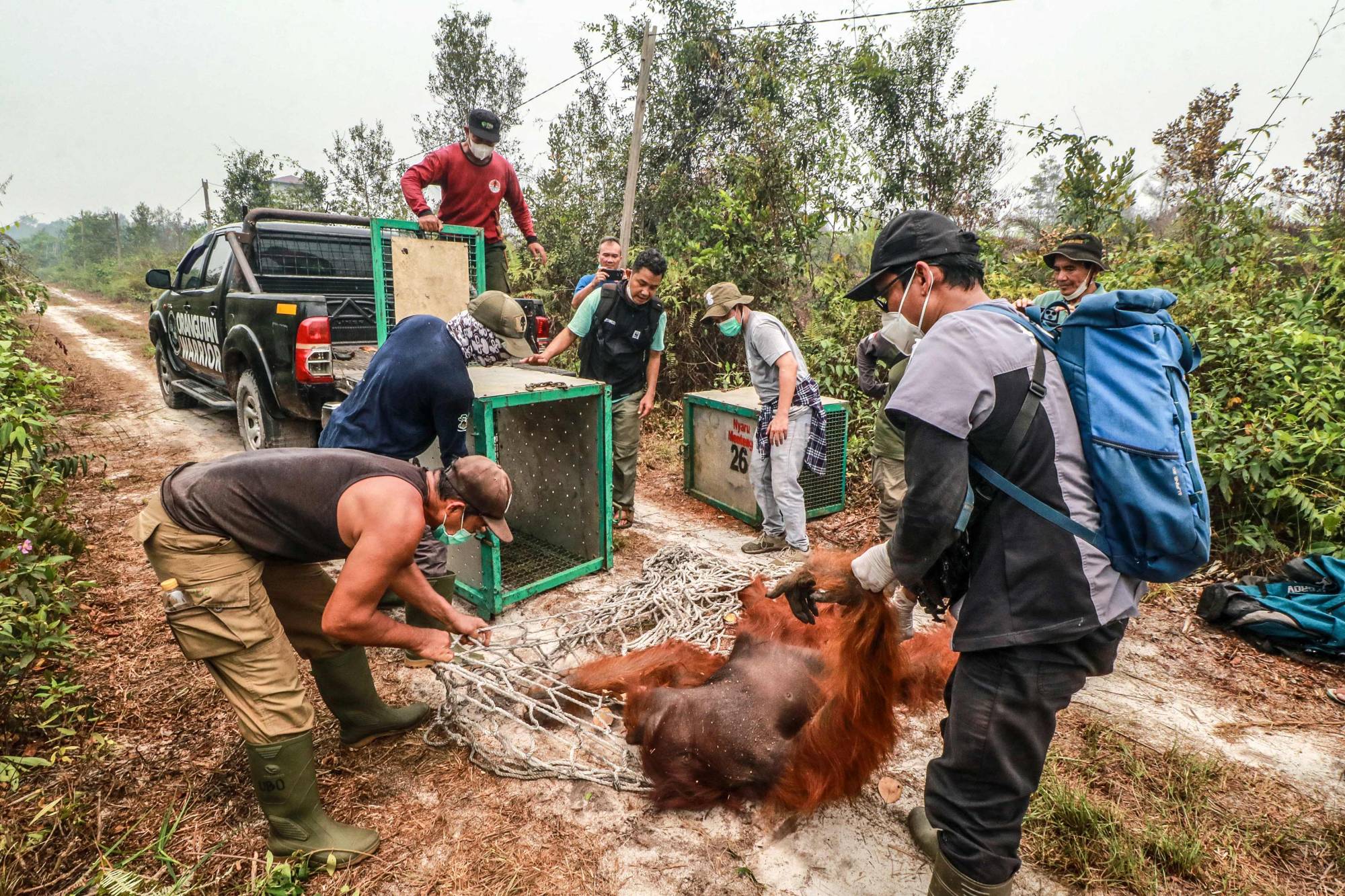
A 20-year-old orangutan tries to escape as members of the BKSDA (Natural Resources Conservation Agency), the Borneo Orangutan Survival Foundation (BOSF) and the World Wide Fund for Nature (WWF) Indonesia evacuate it due to forest and land fire, in Hampangen Village, Katingan Regency, Central Kalimantan, on October 17, 2026. (Photo by REINA / AFP)
TT

Dozens of Orangutans Saved from Indonesia Blazes

A 20-year-old orangutan tries to escape as members of the BKSDA (Natural Resources Conservation Agency), the Borneo Orangutan Survival Foundation (BOSF) and the World Wide Fund for Nature (WWF) Indonesia evacuate it due to forest and land fire, in Hampangen Village, Katingan Regency, Central Kalimantan, on October 17, 2026. (Photo by REINA / AFP)

Dozens of critically endangered orangutans have been rescued in recent weeks from rampant wildfires burning across Indonesia, conservation groups said.

The fires have triggered a months-long pollution spell that has closed schools, fueled a surge in respiratory conditions both among humans and animals, and restricted outdoor activities in Indonesia, Malaysia, Singapore and East Timor.

Pollution levels again ranged from unhealthy to very unhealthy across the region on Sunday, cloaking many areas across southern Southeast Asia in toxic haze.

Swiss-based air quality monitor IQAir again ranked Singapore and Kuala Lumpur among the world's top five most polluted major cities as fires on Borneo and Sumatra islands, intensified by a turbo-charged El Nino weather phenomenon, keep emitting smoke.

In Indonesia, groups are working to save wildlife from the fires, including orangutans.

On Saturday, the West Kalimantan conservation agency and Indonesian non-profit YIARI said a team evacuated 51 orangutans from locations in the province from August 6 to October 19.

And figures from Indonesia's forestry ministry suggested this week that the number rescued over recent months in Kalimantan could be as high as 96.

Officials could not be immediately reached to clarify the number, according to AFP.

Members of the BKSDA (Natural Resources Conservation Agency), the Borneo Orangutan Survival Foundation (BOSF) and the World Wide Fund for Nature (WWF) Indonesia evacuate a 20-year-old orangutan due to forest and land fire, in Hampangen Village, Katingan Regency, Central Kalimantan, on October 17, 2026. (Photo by REINA / AFP)

The latest rescue came on Saturday, when three conservation agencies rescued a 20-year-old male orangutan in Hampangen village in Central Kalimantan, on Borneo island.

"The evacuation process was carried out with great caution," the agencies said.

"After the orangutan was sedated, the medical team immediately conducted a health examination before taking the animal to the... rehabilitation center," it said.

Indonesia's transport ministry also said around 2,400 flights across the country have been affected by the haze since mid-August.

"Haze reduces visibility around airports, which can lead to delays, disruptions, and even flight cancellations. Every operational decision is made with safety as the top priority," the ministry said.


China’s Tourists Flock to Experience Pretend Typhoon as ‘Dark Tourism’ Flourishes

Participants brace for surging water in a flash flood simulator at the Lvxing center in Hangzhou (Reuters)
TT

China’s Tourists Flock to Experience Pretend Typhoon as ‘Dark Tourism’ Flourishes

Participants brace for surging water in a flash flood simulator at the Lvxing center in Hangzhou (Reuters)

When Leon Lv was looking for somewhere to travel last year, she turned to the Chinese social media app RedNote for ideas. The algorithm took her to videos of people struggling to survive typhoon-strength winds and flash floods.

“I never experienced a typhoon. I don’t know how it will feel and what will happen. I just have seen it on the news,” said the 28-year-old from Chongqing in southwest China. “So that’s why I want to go there to have a safe place to experience it and learn something.”

She travelled more than 1,300 kilometers to Hangzhou in the east, and joined a group of 20 to take part in a disaster simulation that featured a typhoon-fueled flooding scenario, according to The Guardian.

Standing in a simulated flood, her mind momentarily went blank as hundreds of tons of water swept people off their feet, and carried them towards a safety barrier.

As the surge hit, she forgot she was in a simulation. “One thing I learned is how to stay calm and protect myself during a flood. I learned how to use the right body position to stay safe,” she said. “No book and no school [can] teach me like that.”

Across Chinese social platforms phrases like “paying to suffer”, or “paying to buy fear” are trending online as part of a wave of interest in experiences known as “dark tourism.”

Lvxing Base, a company in Hangzhou offering simulated disaster experiences has gone viral. The founders spent 10 years making documentaries in some of the world’s most extreme environments.

At a 200,000 square meter facility, which opened in 2024, they simulate extreme weather conditions like typhoons and mudslides, giving participants the experience of what it would be like in a disaster.

“I don’t deny that many people come because they want excitement,” said general manager Wang Kuanghan. "They want to see what this place is like, what a real typhoon and torrential rain feel like, and whether they themselves can withstand it. Most of our individual customers are between 20 and 30 years old.”

It plans to open five more centers across China within the next three years. It also plans to create earthquake and fire simulations.

Extreme weather has become increasingly common in China. In 2025, China recorded its highest number of hot days since records began, and was hit by 10 typhoons, well above the long-term annual average.

China’s ministry of emergencies reported that 67 million people were affected by such disasters across the country.

The new generation of Chinese travelers want to experience a place rather than simply see famous attractions,” said Robert Li, director of the School of Hotel and Tourism Management at the Chinese University of Hong Kong.

But some travelers have found a way to blend the two approaches; rather than indulging in the white-knuckle ride of a simulated typhoon, they are travelling to real sites of death and destruction.

In May 2008 a magnitude 8.0 earthquake devastated towns in China’s Sichuan province, killing more than 70,000 people.

Alice, a 30-year-old writer from Sichuan walked around Beichuan, one of the affected towns, the ruins of which the government had preserved. Metal beams hold collapsed buildings in place for the public to visit. She saw the site where schools collapsed, crushing students inside.

“I felt scared because of the power of nature and how many children and students could not escape from it,” said Alice, who plans to start a Chinese language Substack account detailing her journeys into tragedy. “Everything was so broken. It became like a ghost town, because nobody lives in the old town anymore.”

Alice believes dark tourism helps a country reconcile with its past, even if the government decides what can be remembered.


Japan to Launch Historic Round-trip Mission to Mars Moon

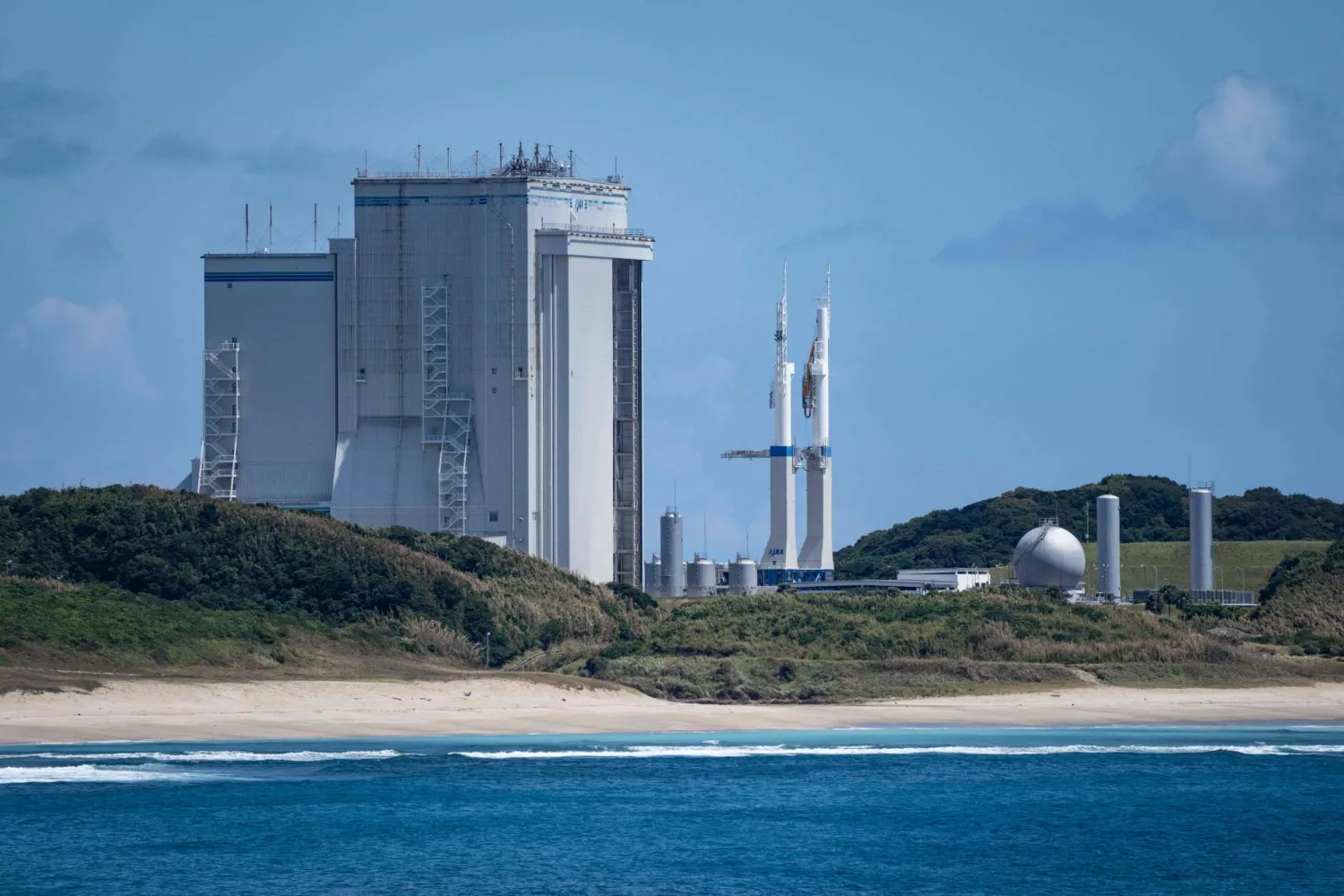
(FILES) A vehicle assembly building is seen at the Tanegashima Space Center in Minamitane, Kagoshima prefecture on August 13, 2026. (Photo by Yuichi YAMAZAKI / AFP)
TT

Japan to Launch Historic Round-trip Mission to Mars Moon

(FILES) A vehicle assembly building is seen at the Tanegashima Space Center in Minamitane, Kagoshima prefecture on August 13, 2026. (Photo by Yuichi YAMAZAKI / AFP)

Japanese scientists are readying a mission to Mars's moons to retrieve samples that could help unlock the origins of the Solar System and life on Earth, in what aims to be the first round trip to the Martian region.

The unmanned Martian Moons eXploration (MMX) probe, a collaboration with US and European space agencies as well as numerous universities and tech companies, could also help lay the groundwork for eventual human exploration.

The flagship H3 rocket carrying the MMX is set to blast off from the Tanegashima Space Center Tuesday at 4:41 am (1941 GMT Monday), according to the Japan Aerospace Exploration Agency (JAXA).

The spacecraft will arrive near Mars one year later, where it will orbit its moon Phobos for up to three years before landing and collecting at least 10 grams (0.35 ounces) of material from the surface.

A rover dubbed IDEFIX -- the French name for the comic hero Asterix's dog -- will first conduct surface observations aimed at ensuring a safe landing.

"The sampling (from) Phobos is of course the world's first, but it means... this is the first round trip to the Martian system," MMX's project manager Yasuhiro Kawakatsu told AFP.

JAXA said the mission will also explore the possibility of using Phobos as a "natural space station" by establishing the requirements for a round trip to Mars -- something "essential for crewed Mars exploration".

It will also observe the Red Planet's moon Deimos, although it will not land on it, before returning to Earth.

JAXA hopes the mission will reveal how Mars and its two moons formed, a key piece of knowledge in working out how the Solar System was born.

One theory for the origin of the Martian moons -- the "giant impact" hypothesis -- is that they formed after a celestial body collided with Mars.

The "capture" hypothesis, meanwhile, postulates that the moons are asteroids captured by Mars's gravity.

Determining which is right will help reveal "how a habitable environment for life might have arisen on the terrestrial planets", JAXA said, referring to the four rocky worlds closest to the Sun -- Mercury, Venus, Earth and Mars.

"MMX will shed light on the transport mechanisms that delivered water, volatiles, and organic compounds from the outer Solar System to the inner rocky planet region -- processes that may have played a key role in making these worlds habitable," said Patrick Michel, a French astrophysicist working on IDEFIX.

"If Phobos and Deimos are indeed remnants of these early delivery systems, they may hold clues to the origins of life itself, or, to be more correct, to the transport of the materials that were key to the emergence of life on rocky planets," he told AFP.

MMX is a collaboration with France's National Centre for Space Studies (CNES), the German Aerospace Center (DLR), NASA, the European Space Agency (ESA), and about 20 universities and tech companies.

The development of the spacecraft's landing legs was particularly difficult, as gravity on Phobos is extremely weak, JAXA scientists say.

Japan's unmanned Smart Lander for Investigating Moon (SLIM) -- the "Moon Sniper" -- tipped over after touching down on Earth's Moon in 2024, but still transmitted data and survived several two-week lunar nights.

Japan also has experience in bringing back samples from space, including JAXA's unmanned Hayabusa-2, which returned 5.4 grams of rock and dust collected from an asteroid several hundred million kilometers from Earth in 2020.

One of the differences between JAXA's past asteroid probes and the MMX mission is that this time "we have to travel very close to Mars and return", which means escaping the planet's heavy gravity, Kawakatsu told reporters.

Phobos orbits about 6,000 kilometers above the Martian surface.

"Going deep into what we call the 'gravity well' is difficult," Kawakatsu said.

US and Chinese space agencies have been racing to be the first to return rock samples from Mars's surface back to Earth.

NASA's Perseverance rover, which has been roaming the Red Planet since 2021, has already collected samples.

The mission, however, was effectively cancelled by the administration of President Donald Trump following a vote by the US Congress in January.

China, meanwhile, has announced its Tianwen-3 spacecraft is scheduled for launch around 2028 and hopes to return Mars samples to Earth as early as 2031 -- potentially before the MMX's return.

JAXA scientists say sand and rocks from Phobos may offer a wider variety of samples than those on the planet itself, especially if it was formed by a collision between a celestial body and Mars.