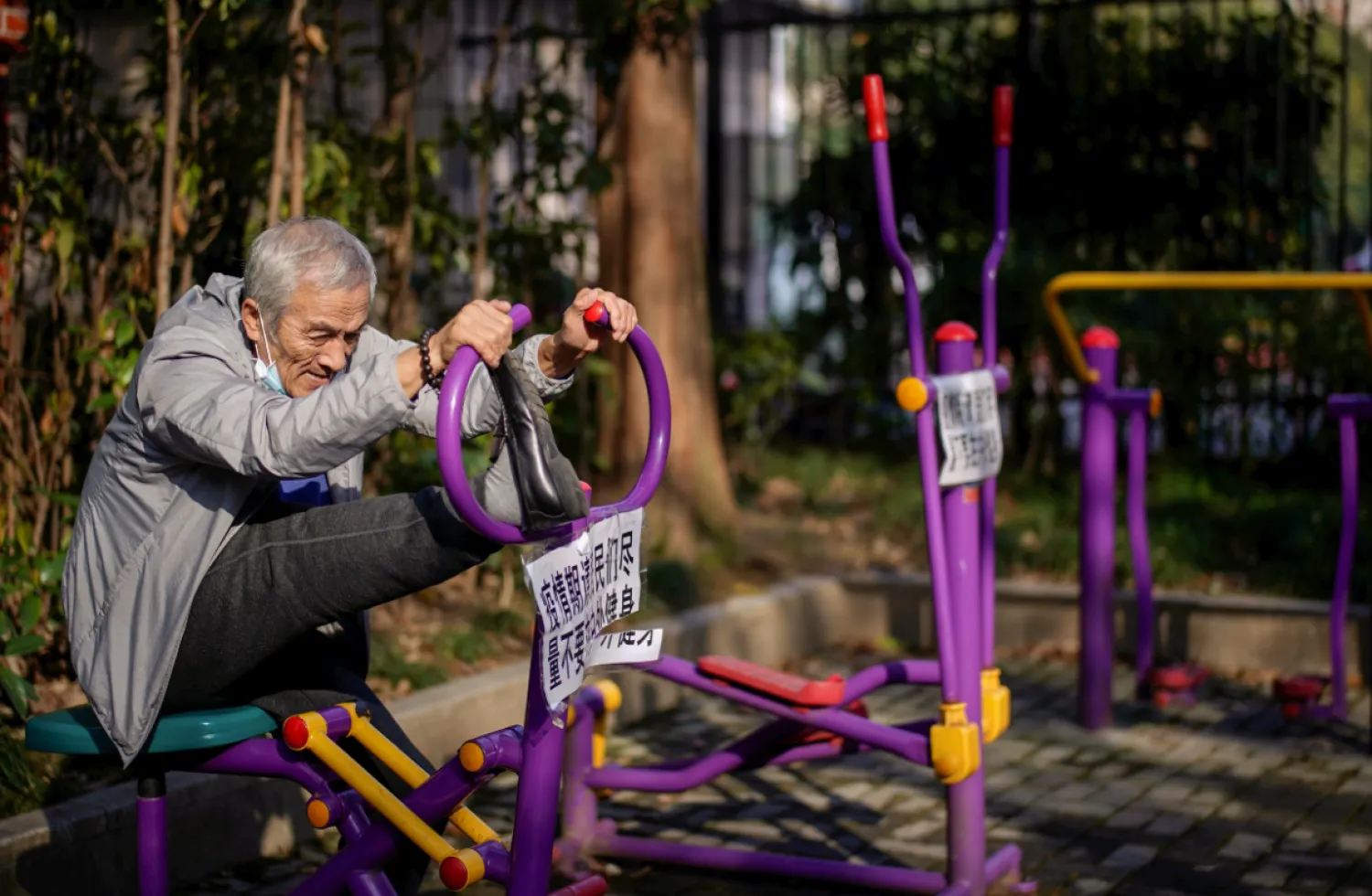

A new study has found that “intensive exercise ameliorates motor and cognitive symptoms in Parkinson’s disease by restoring striatal synaptic plasticity,” which could pave the way for new non-drug approaches.
The study, which was published in the journal Science Advances, was conducted by a team of neuroscientists from the Faculty of Medicine of the Catholic University, Rome, in collaboration with other research organizations.
“We have discovered a never observed mechanism, through which exercise performed in the early stages of the disease induces beneficial effects on movement control that may last over time even after training is suspended,” Professor of Neurology at the Catholic University, Paolo Calabresi told the Medical Xpress website.
“In the future, it would be possible to identify new therapeutic targets and functional markers to be considered for developing non-drug treatments to be adopted in combination with current drug therapies,” he added.
Previous work has shown that intensive physical activity is associated with increased production of a critical growth factor, the brain-derived neurotrophic factor (BDNF), which supports neurons’ functioning, promotes the growth and differentiation of new synapses, and is often active in the brain in areas vital to learning, memory and thinking.
The researchers carried out experimental support to the neuroprotective effect of exercise “by using a multidisciplinary approach employing different techniques to measure the improvements in neuronal survival, brain plasticity, motor control and visuospatial cognition.”
The main effect observed in response to daily sessions of treadmill training is a reduction in the spread of pathological alpha-synuclein aggregates, which in Parkinson's disease leads to the gradual and progressive dysfunction of neurons in specific brain areas essential to motor control.
The neuroprotective effect of physical activity is associated with the survival of neurons releasing the neurotransmitter dopamine, and with the consequent striatal neurons’ ability to express a form of dopamine-dependent plasticity, aspects otherwise impaired by the disease. As a result, motor control and visuospatial learning are conserved.
Professor Paolo Calabresi said “our research team is involved in a clinical trial to test whether intensive exercise can identify new markers to monitor the disease progression slowing in early-stage patients and the profile of the progression of the disease.”