Why Telling Time on the Moon is a Conundrum for NASA?

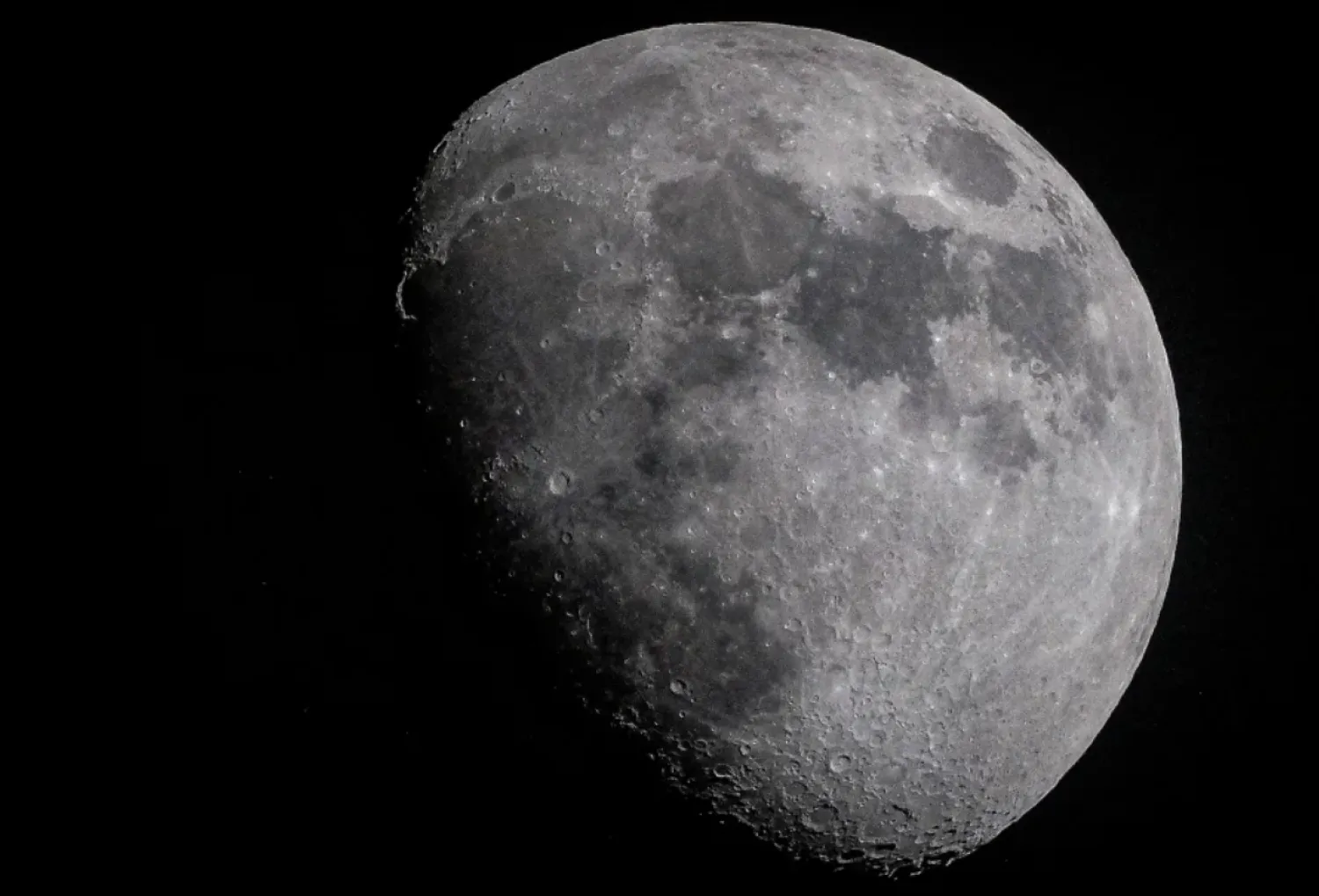
Scientists say a lunar time scale is needed before astronauts return to the moon, seen in the sky in the evening hours in Kars, Turkey, on May 18. Omer Tarsuslu/Anadolu/Getty Images
TT

Why Telling Time on the Moon is a Conundrum for NASA?

Scientists say a lunar time scale is needed before astronauts return to the moon, seen in the sky in the evening hours in Kars, Turkey, on May 18. Omer Tarsuslu/Anadolu/Getty Images

It’s easy to take the moon for granted as a silvery orb in the night sky, providing a soft light on most evenings. But have you ever pondered what time it is on the moon?

As multiple countries race to establish a human presence on the lunar surface, experts say it’s time to establish a time scale for Earth’s natural satellite. Otherwise, things could get confusing, CNN reported.

Albert Einstein’s theory of relativity decades ago changed the way we understand time, and time even passes differently depending on where a clock is sitting on Earth. Determining a lunar time scale will be even more challenging.

The new system of measurement that NASA and its international partners need to agree on will have to account for the fact that seconds tick by faster on the moon. Over time, those seconds add up.

But it will be crucial for astronauts living in lunar habitats and scooting around in moon buggies who need to know exactly what time it is.


Spain Records More Than 1,000 Heat-Related June Deaths

A person drinks from a fountain rest during a spring heatwave in Madrid, Spain, May 27, 2026. (Reuters)
TT

Spain Records More Than 1,000 Heat-Related June Deaths

A person drinks from a fountain rest during a spring heatwave in Madrid, Spain, May 27, 2026. (Reuters)

More than 1,000 deaths in Spain were attributed to the recent heatwave that roasted Europe, as the country posted the hottest first six months ever recorded, officials said on Wednesday.

At least 1,028 people died of heat-related issues during the heatwave, the public Carlos III Health Institute said.

The figure was more than double the 407 deaths that were attributed to heat in June 2025, Spain's hottest June since records started being kept, according to the national weather agency Aemet.

The first six months of 2026 were the hottest in Spain since the start of records, with temperatures 1.6C above normal levels on average, Aemet said in a post on X on Wednesday.

"The seven warmest first semesters... have occurred over the past 10 years", the Aemet agency said in a post on X.

June 2026 came in as the second-hottest June, "with temperatures on average 3.2C above the norm," Aemet said.

The heatwave that scorched Europe from late June was the most severe ever recorded in Europe, and would have been "virtually impossible" in June without climate change, the World Weather Attribution group of scientists said.

All-time temperature records have been broken in Germany, Poland, the Czech Republic, Slovakia and Hungary, as well as for the month of June in the UK and in Switzerland.

France faced record breaking average temperatures, with the country experiencing its highest-ever nighttime temperatures.


A Rare Dinosaur Fossil from Antarctica Is Found Tucked Away in a Drawer

This image provided by the Natural History Museum shows a fossil found in Antarctica that belongs to a group of dinosaurs called titanosaurs. (Natural History Museum via AP)
TT

A Rare Dinosaur Fossil from Antarctica Is Found Tucked Away in a Drawer

This image provided by the Natural History Museum shows a fossil found in Antarctica that belongs to a group of dinosaurs called titanosaurs. (Natural History Museum via AP)

Scientists have stumbled on a rare dinosaur fossil from Antarctica, tucked away for decades in a drawer.

The bone comes from the tail of a long-necked, plant-eating dinosaur called a titanosaur. Scientists haven't yet identified the species it belongs to.

It was discovered in 1985 during an expedition to Antarctica's James Ross Island and collected by geologist Mike Thomson. Working with the British Antarctic Survey, Thomson was mapping the area's rock layers and collected marine reptile fossils to help with future dating efforts. He recorded the find as a large reptile.

Decades later, paleontologist Mark Evans spotted the bone in the British Antarctic Survey's collections and wondered whether it might be a dinosaur. He and other researchers analyzed the shape of the bone and compared it to other more complete dinosaur remains, confirming their discovery. The findings were published on Monday in the journal Acta Palaeontologica Polonica.

Dinosaur fossils are rare to find in Antarctica because of the unforgiving ice caps. But millions of years ago, when this dinosaur lived, the region was populated by lush forests — a “rather different and much more hospitable place than we think of today,” said study co-author Paul Barrett with the Natural History Museum in London.

At about 23 feet (7 meters) long, the dinosaur was small for its group and may have been young when it died. Scientists don't know how the creature met its end, but they think its body floated away from the coast and sank to the sea floor, becoming fossilized in marine rock.

Technology has come a long way since the dinosaur tail bone was first found, allowing researchers to peer inside bones and gain even more detailed information about ancient creatures. Thomson died in 2020 before the fossil was identified as belonging to a dinosaur.

“If he were still with us, he would be delighted to know what this was,” Evans, a study co-author, said.


World’s Oceans Break June Heat Record, Says EU Monitor

The sun sets over the Pacific Ocean, as seen from Huntington Beach, California, US, June 29, 2026. (Reuters)
TT

World’s Oceans Break June Heat Record, Says EU Monitor

The sun sets over the Pacific Ocean, as seen from Huntington Beach, California, US, June 29, 2026. (Reuters)

The world's oceans just experienced their hottest June on record and could set fresh highs in the months ahead as El Nino and climate change drive temperatures even higher, scientists said Wednesday.

Global average sea surface temperatures in June were 20.98C, beating the previous records of 2023 and 2024, according to the European Union's Copernicus Marine Service.

The record capped six months of near unprecedented ocean warmth in 2026, with prolonged marine heatwaves, the service said. Average sea temperatures in the first half of the year were 20.04C, slightly below the high set in the same period in 2024.

And scientists said the onset of a potentially powerful El Nino weather pattern could boost global heat in the oceans and atmosphere even further in 2026 and into next year.

"Current conditions could indicate the beginning of a new phase, leading, once more, to uncharted territory," said Carlo Buontempo, director of Copernicus Climate Change Service, the EU's climate monitor.

"With ocean temperatures at these levels and El Nino on the horizon, we are likely to see more temperature records fall in the coming months," Buontempo said in a statement.

El Nino is marked by unusually warm waters in parts of the Pacific Ocean, releasing more heat into the atmosphere and influencing wind, cloud and weather patterns around the globe.

This can raise the risk of weather extremes ranging from floods in Peru to droughts in parts of Africa and wildfires in Australia.

But it can also cause a temporary spike in global temperatures, compounding the long-term warming caused by humanity's burning of fossil fuels.

Land and sea temperatures reached an all-time high in 2024 at the tail end of the last El Nino.

"With the arrival and the onset of an El Nino year ... we can expect that 2026 will be amongst the warmest (ever) recorded," Simon Van Gennip, lead Oceanographer for the Copernicus Marine Service, said in a news briefing.

"This is due to El Nino ... but also from the warming due to the greenhouse gas emissions we continue to provide for the atmosphere," Van Gennip said.

- 'Deepening crisis' -

The report follows a warning issued in a major UN scientific assessment last month which declared that the world's oceans were in a "deepening crisis" as seas were warming and rising faster.

Oceans are a key regulator of Earth's climate because they absorb some 90 percent of the excess heat caused by humanity's release of greenhouse gases such as carbon dioxide.

Warmer oceans increase moisture in the atmosphere, providing fuel for tropical cyclones and destructive rainfall.

Hotter seas also directly contribute to sea level rise -- water expands when it warms up -- and create unbearable conditions for tropical reefs, whose corals can bleach and die during prolonged marine heatwaves.

The first six months of the year were marked by widespread marine heatwaves that affected around 82 percent of the world's oceans, the second-largest extent after 2024, according to Copernicus Marine Service.

Marine heatwaves -- prolonged periods of unusually high sea temperatures -- can affect weather, trigger coral bleaching and prove fatal for marine wildlife.

- Global heat -

Global sea surface temperatures varied in the first half of the year, according to the service, which is run by Mercator Ocean International, an EU-backed non-profit organization.

The Mediterranean broke its June record at 24.3C, surpassing the previous highs set in 2023 and 2025. Marine heatwaves hit 98 percent of the basin during the first six months of the year.

A marine heatwave affecting the northwestern Mediterranean broke a record intensity measurement on Monday after a week that saw temperature records tumble in Europe, a Spanish climate institute said.

The tropical Pacific also had its hottest June ever at 27.26C.

The region matched its 2016 record for the January-to-June period, with the strongest and most persistent warming in the western equatorial Pacific and off the coasts of Peru and California.