


The Most Iconic Venues of the Paris Olympics

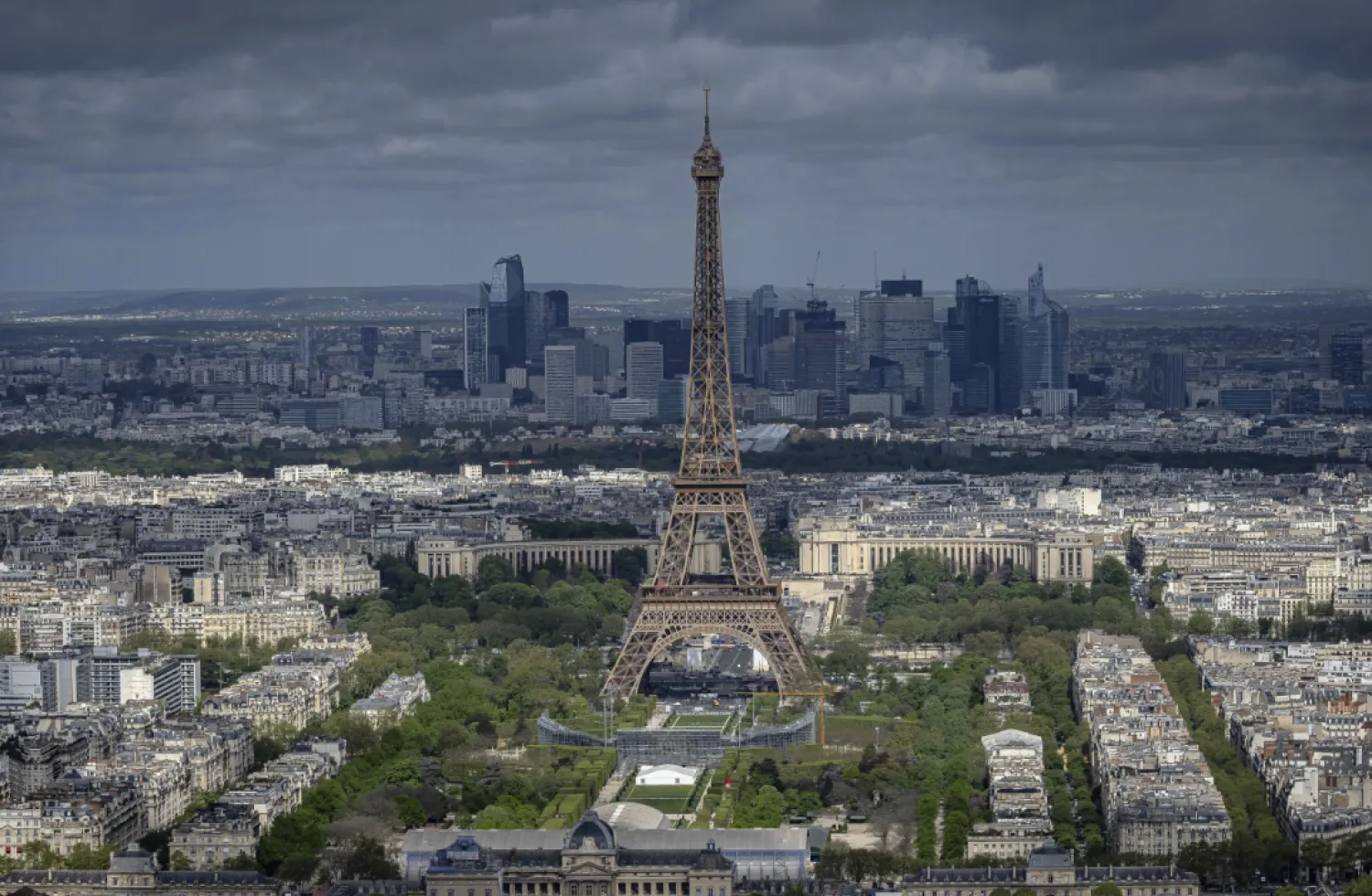
La Dame de Fer (The Iron Lady) needs no introduction and is still going strong at 135 years old.  (AP)
La Dame de Fer (The Iron Lady) needs no introduction and is still going strong at 135 years old. (AP)
TT

The Most Iconic Venues of the Paris Olympics

La Dame de Fer (The Iron Lady) needs no introduction and is still going strong at 135 years old.  (AP)
La Dame de Fer (The Iron Lady) needs no introduction and is still going strong at 135 years old. (AP)

There will be no shortage of iconic venues at the Paris Olympics.

From the Palace of Versailles to the Place de La Concorde and of course, the Eiffel Tower, organizers have made sure the City of Light’s most famous landmarks will take center stage during the Olympics.

Competitions will be held right in the heart of the city, in the Seine River and inside historic buildings such as the Grand Palais.

Paris is also making use of its existing sports infrastructure, including the Roland Garros tennis stadium and Stade de France, the national soccer stadium.

Here’s a look at the most iconic spots that will host competitions during the July 26-Aug. 11 games in the French capital, according to The AP.

- EIFFEL TOWER

La Dame de Fer (The Iron Lady) needs no introduction and is still going strong at 135 years old. Men's and women's volleyball players get to compete at the feet of the 330-meter (1,083-foot) behemoth. They will be watched by nearly 13,000 fans at the temporary Eiffel Tower Stadium on the nearby Champ de Mars, where Parisians and tourists like to have picnics on the grass or watch July 14 firework displays.

-PALACE OF VERSAILLES

Once the residence of French royalty, the chateau is one of the most popular tourist spots in Paris. Louis XVI — the Sun King — and Queen Marie Antoinette held lavish banquets at Versailles before they were beheaded during the French revolution. During the Paris Games, equestrian riders will gallop at the heart of the palace’s gardens. Modern pentathlon events will also take place there.

-GRAND PALAIS

The palace with its green-tinged glass roof was built for the Paris Universal Exhibition in 1900. More than 6,000 tonnes of steel were used to build the nave. Fencing and Taekwondo fans will get to watch events here.

-HOTEL DE VILLE

The imposing-looking City Hall has a massive façade stretching high and wide, and gives off a golden hue when lights are switched on at night. It's been around since 1357. Having stood the test of time, it seems rather fitting to start the marathon from its paved forecourt.

-LA CONCORDE

Place de la Concorde will always have its place in France’s gory past. It is where France’s banquet-loving king and queen were guillotined in 1793. Prominent French revolutionary Maximilien Robespierre met the same fate a year later. It’s also been home to the Luxor Obelisk for nearly 200 years. The idea to transport imposing obelisks to Paris came about at the turn of the 19th century, during Napoleon Bonaparte’s military campaign in Egypt. This summer breakdancers as well BMX freestylers, 3-on-3 basketballers and skateboarders will share the attention at La Concorde.

-LES INVALIDES

The gloriously decorated Pont Alexandre III bridge connects the right and left banks of the Seine River. People crossing the bridge can catch cycling and triathlon events, or look down to watch swimming events in the Seine River, before walking over toward a grassy esplanade which leads to Les Invalides. It's the more common name for Hôtel des Invalides, which houses Napoleon's tomb. A haven for military enthusiasts, the much-admired Paris landmark has a giant golden dome standing at 107 meters (351 feet) and is covered with nearly 13 kilograms (29 pounds) of gold leaf. Perhaps fittingly, giving its military feel, Olympic archers will set their sights here.

-TROCADERO

From its elevated position, the Trocadéro faces the Eiffel Tower in a stare-down contest between famed landmarks. It's where hordes of kilt-wearing Scottish soccer fans congregated at the 1998 World Cup, singing “We're the famous Tartan Army" as they danced and drank heartily. It should offer a great vantage point for watching triathlon, road cycling, marathon and race walking events.

-BERCY ARENA

The 20,000-seat indoor arena has witnessed much sporting drama over the years. Frenchman Paul-Henri Mathieu lost in the fifth set of the deciding rubber against Russian Mikhail Youzhny in the 2002 Davis Cup final. Tennis great Novak Djokovic has won the Paris Masters a record seven times at the arena, which has also hosted regular-season NBA games and international handball matches. Oh, and Madonna and French rocker Johnny Hallyday held concerts inside the the pyramid-shaped building. Located a stone’s throw from the Finance Ministry, it will host artistic gymnastics, basketball and trampoline events.

-PARC DES PRINCES

The 48,000-seat stadium is home to soccer club Paris Saint-Germain and where France superstar Kylian Mbappé played for seven years before leaving the club this year. France used to regularly play rugby and soccer matches at “Le Parc." Fourty years ago soccer great Michel Platini led France to its first European Championship title at the stadium. Parc des Princes will host soccer matches during the Paris Games, including the men's and women's finals on Aug. 9 and Aug. 10, respectively.

-STADE DE FRANCE

Another French soccer great, Zinedine Zidane, will always have a special place in the history of the Stade de France. The attacking midfielder scored the first goal when France's national stadium was inaugurated in 1998. Later that year he celebrated France's first World Cup trophy there after scoring two goals in the 3-0 win over Brazil in the final. The 80,000-capacity stadium hosted the track and field world championships in 2003 as well as many international soccer and rugby games since. It will hold athletics competitions on a new-look purple track as well as rugby sevens matches.

-STADE VELODROME

“A jamais les premiers” (Forever the First). That's how passionate Marseille fans goad supporters from cash-rich arch rival Paris Saint-Germain, by reminding them that Marseille remains the first — and only — French side to win the Champions League, back in 1993. Marseille's 67,000-capacity Stade Velodrome boasts one of the most fervent atmospheres in European soccer and hosts a total of 10 Olympic soccer matches, including two semifinals. The US men's and women's teams each play a group-stage game there.

-LA DEFENSE ARENA

Situated near a vibrant business hub some around 11 kilometers (7 miles) northwest of central Paris, the boat-shaped arena has hosted seminars and club rugby matches of Racing 92 since 2017. Now it will host Olympic swimming thanks to its multipurpose structure. The Arena's façade is made up of aluminium and glass scales and looks impressive when lit at night.

-STADE YVES-DU-MANOIR

The stadium is located the northwest suburb of Colombes and links the city's Olympic past and its present. In 1924 it was the main venue for the Paris Games. It's more low-key this time around, hosting field hockey matches.


Times Square to Feature Patriotic Crystal Ball for New Year's Eve, Kicking Off US's 250th Birthday

FILE - The 7-foot tall "2026" numerals are displayed at an illumination ceremony in Times Square, Thursday, Dec. 18, 2025, in New York. (AP Photo/Adam Gray, File)
TT

Times Square to Feature Patriotic Crystal Ball for New Year's Eve, Kicking Off US's 250th Birthday

FILE - The 7-foot tall "2026" numerals are displayed at an illumination ceremony in Times Square, Thursday, Dec. 18, 2025, in New York. (AP Photo/Adam Gray, File)

After the crystal ball drops on New Year’s Eve in New York City, it will rise again, sparkling in red, white and blue to usher in 2026 and kick off months of celebrations for the nation’s upcoming 250th birthday.

The patriotic touches at this year's Times Square gathering, including a second confetti drop, will offer an early glimpse of what’s ahead: hundreds of events and programs, big and small, planned nationwide to mark the signing of the Declaration of Independence in 1776.

“I’m telling you right now, whatever you’re imagining, it’s going to be much more than that,” said America250 Chair Rosie Rios, who oversees the bipartisan commission created by Congress in 2016 to organize the semiquincentennial anniversary. “It’s going to be one for the ages, the most inspirational celebration this country and maybe the world has ever seen.”

According to The Associated Press, Rios and her group worked with the Times Square Alliance business district and One Times Square, the building from where the ball is dropped, to make the changes to this year's ceremonies.

They're also planning a second ball drop event on July 3, the eve of the nation's birthday, “in the same beautiful style that Times Square knows how to do it," Rios said.

It will mark the first time in 120 years there will be ball drop in Times Square that doesn't occur on New Year's Eve, she said.

A New Year’s Eve ball was first dropped in Times Square in 1907. Built by a young immigrant metalworker named Jacob Starr, the 700-pound (318-kilogram), 5-foot- (1.5-meter-) diameter ball was made of iron and wood and featured 100 25-watt light bulbs. Last year, the Constellation Ball, the ninth and largest version, was unveiled. It measured about 12 feet (3.7 meters) in diameter and weighs nearly 12,000 pounds (5,400 kilograms).

The only years when no ball drop occurred were 1942 and 1943, when the city instituted a nightly “dimout” during World War II to protect itself from attacks. Crowds instead celebrated the new year with a moment of silence followed by chimes rung from the base of One Times Square.

This year, the stroke of midnight will also mark the official launch of America Gives, a national service initiative created by America250. Organizers hope to make 2026 the largest year of volunteer hours ever aggregated in the country.

On the following day, America250 will participate in the New Years Day Rose Parade in Pasadena, California, with a float themed “Soaring Onward Together for 250 Years." It will feature three larger-than-life bald eagles representing the country’s past, present and future.

“We want to ring in this new year from sea to shining sea. What better way to think about it than going from New York to California,” Rios said. “This has to be community-driven, this has be grassroots. We’re going from Guam to Alaska, from Fairbanks to Philadelphia, and everything in between.”

President Donald Trump has also announced the “Freedom 250” initiative to coordinate additional events for the 250th anniversary.

Rios said she sees the wide range of celebrations and programs planned for the coming months, from large fireworks displays and statewide potluck suppers to student contests and citizen oral histories, as an opportunity to unite a politically divided nation.

“If we can find something for everyone ... having those menus of options that people can pick and choose how they want to participate," she said. “That’s how we’re going to get to engaging 350 million Americans.”


Elusive Wild Cat Feared Extinct Rediscovered in Thailand

This handout picture taken with a camera trap and released on December 26, 2025, by Thailand's Department of National Parks, Wildlife and Plant Conservation (DNP) and Panthera Thailand shows a recently rediscovered flat-headed cat in southern Thailand's Princess Sirindhorn Wildlife Sanctuary. (AFP / Thailand's Department of National Parks, Wildlife and Plant Conservation (DNP) / Panthera Thailand)
TT

Elusive Wild Cat Feared Extinct Rediscovered in Thailand

This handout picture taken with a camera trap and released on December 26, 2025, by Thailand's Department of National Parks, Wildlife and Plant Conservation (DNP) and Panthera Thailand shows a recently rediscovered flat-headed cat in southern Thailand's Princess Sirindhorn Wildlife Sanctuary. (AFP / Thailand's Department of National Parks, Wildlife and Plant Conservation (DNP) / Panthera Thailand)

An elusive wild cat long feared extinct in Thailand has been rediscovered three decades after the last recorded sighting, conservation authorities and an NGO said Friday.

Flat-headed cats are among the world's rarest and most threatened wild felines. Their range is limited to Southeast Asia and they are endangered because of dwindling habitat.

The domestic cat-sized feline with its distinctive round and close-set eyes was last spotted in a documented sighting in Thailand in 1995.

But an ecological survey that began last year, using camera traps in southern Thailand's Princess Sirindhorn Wildlife Sanctuary, recorded 29 detections, according to the country's Department of National Parks, Wildlife and Plant Conservation and wild cat conservation organization Panthera.

"The rediscovery is exciting, yet concerning at the same time," veterinarian and researcher Kaset Sutasha of Kasetsart University told AFP, noting that habitat fragmentation has left the species increasingly "isolated".

It was not immediately clear how many individuals the detections represent, as the species lacks distinctive markings so counting is tricky.

But the findings suggest a relatively high concentration of the species, Panthera conservation program manager Rattapan Pattanarangsan told AFP.

The footage included a female flat-headed cat with her cub -- a rare and encouraging sign for a species that typically produces only one offspring at a time.

Nocturnal and elusive, the flat-headed cat typically lives in dense wetland ecosystems such as peat swamps and freshwater mangroves, environments that are extremely difficult for researchers to access, Rattapan said.

Globally, the International Union for Conservation of Nature estimates that around 2,500 adult flat-headed cats remain in the wild, classifying the species as endangered.

In Thailand, it has long been listed as "possibly extinct".

Thailand's peat swamp forests have been heavily fragmented, largely due to land conversion and agricultural expansion, said Kaset, who was not involved in the ecological survey but has researched wild cats for years.

The animals also face mounting threats from disease spread by domestic animals, and they struggle to reproduce across isolated areas.

While the rediscovery offers hope, it is only a "starting point" for future conservation efforts, he said.

"What comes after this is more important -- how to enable them to live alongside us sustainably, without being threatened."


Hooked on the Claw: How Crane Games Conquered Japan’s Arcades

This picture taken on June 6, 2024 shows a claw crane game shop in Akihabara district of Tokyo. (AFP)
TT

Hooked on the Claw: How Crane Games Conquered Japan’s Arcades

This picture taken on June 6, 2024 shows a claw crane game shop in Akihabara district of Tokyo. (AFP)

As school and work wrap up, crowds fill Tokyo's many bustling arcade halls -- not to battle it out in fighting games, but to snag plush toys from claw machines.

In one of these gaming hubs in the Japanese capital's Ikebukuro district, aisles of crane games stretch as far as the eye can see.

The crown jewels of the arcade industry, they occupy the building's first two floors, relegating video games to the basement and upper levels.

"Crane games are keeping the sector afloat," said Morihiro Shigihara, an industry expert and former arcade manager.

"Arcade operators, machine manufacturers, and even prize suppliers depend on this business," he told AFP.

Some 80 percent of the 22,000 arcades Japan had in 1989 have shut down, but revenues have held up thanks to claw machines, according to the Japan Amusement Industry Association.

Their share of revenue has climbed since 1993 from 20 percent to more than 60 percent, the association said.

Suzuna Nogi, a 20-year-old student, visits these arcades at least twice a week in search of "big plushies" on which she can spend up to 3,000 yen ($19) at 100 yen per try.

"What I like best is the sense of accomplishment," she said, even though there is no guarantee of success.

Nogi added that she enjoys "the thrill of not knowing whether you'll manage to grab something or not".

The sensitivity of the claw arms is adjusted by operators "based on the cost of the prizes and revenue targets", Shigihara said.

"You can also make the game easier to compete with a nearby arcade."

- From cigarettes to candy -

This year, the industry is officially celebrating the 60th anniversary of these construction crane-inspired machines in Japan.

But they have actually been around since before World War II, said Benoit Bottos, who wrote his doctoral dissertation on the subject at Japan's Chuo University.

Older models, installed in cafes or bowling alleys, sometimes offered lighters and cigarettes, but those prizes quickly gave way to children's candy.

In the late 1980s, the machines began to gain traction, notably with game company Sega's 1985 invention of the "UFO Catcher", which switched up the older version that forced players to lean in and look down.

"The old ones were a bit dark. So we opted for a brighter, showcase-like style where you can see the prizes right in front of you," said Takashi Sasaya, a Sega executive.

But the real stroke of genius "was putting plush toys in the claw games", said Bottos.

Manufacturing giants like Sega or Bandai, involved in both video games and toys, then began negotiating licenses for anime and manga characters, with Sega notably securing Disney rights.

"That largely explains the success of these machines," said Bottos, who describes them as "somewhere between a vending machine, a game of chance and a game of skill".

- 'Transformation' -

The success of claw games also feeds on Japan's booming fan culture of "oshikatsu", with many people devoting more and more time and money to supporting their favorite idol.

Part of asserting their fan identity involves collecting character merchandise.

"I love Pokemon, so I often come looking for plush toys and merch from the franchise," said professional Pokemon card player Akira Kurasaki, showing off nails decorated with his most beloved characters.

Arcade operators have taken this enthusiasm to heart, tailoring their prize selections to the demographics of their neighborhood and organizing events around certain characters.

"New prizes are introduced almost every day," said Sasaya, the Sega executive.

The hegemony of claw machines has also gone hand in hand with a gradual transformation of urban hangouts.

Arcades -- seen in the 1970s and 1980s as dark, male-dominated places linked to crime -- "tried to attract a new audience" of women and families, Bottos said.

"The crane game is emblematic of that transformation."