


Tiger Poachers Use Fishing Boats to Smuggle Body Parts Out of Malaysia, Study Shows 

A Malayan tiger walks in its enclosure at the Cincinnati Zoo and Botanical Garden in Cincinnati, July 7, 2023. (AP)
TT

Tiger Poachers Use Fishing Boats to Smuggle Body Parts Out of Malaysia, Study Shows 

A Malayan tiger walks in its enclosure at the Cincinnati Zoo and Botanical Garden in Cincinnati, July 7, 2023. (AP)

Commercial fishing fleets have been playing a key role in trafficking parts of tigers poached in Malaysia, according to research released Wednesday that could help enforcement efforts to save the critically endangered cat.

The fishing boats are part of a network of routes used by sophisticated teams of poachers to move parts of illegally killed Malayan Tigers and other poached animals to Vietnam, according to the study by conservation organizations Panthera and ZSL in conjunction with Malaysia's Sunway University.

Through interviews with more than four dozen people involved in the operations, including poachers and those who brokered sales of the illicit goods, researchers found that fishing boats were able to carry larger consignments, cheaper, and less likely to be checked by customs than land or air routes.

“To really crack a problem and insert the right intervention that's going to have any impact you have to understand the thing inside out,” said Panthara's Rob Pickles, the lead author of the study, in a phone interview from Kuala Lumpur. “That's what we hope that this study does — contribute to that depth of understanding of the problem to allow us to tailor the interventions.”

From a population estimated at some 3,000 tigers in the middle of the 20th century, the latest estimates are that there are only about 150 of the cats left in Malaysia and they have already gone extinct in Cambodia, Laos and Vietnam over the last 25 years.

In addition to poaching, tigers have lost much of their habitat to deforestation, and they have been falling victim in recent years to the canine distemper virus while a major source of food, the wild boar, has been decimated by the African swine fever virus.

“It's their last gasp,” Pickles said. “This is the last chance to turn things around.”

The tigers live in the forests of peninsular Malaysia, which is connected by land to Thailand to the north. They have also been targeted by poachers from Malaysia, Cambodia and Thailand, but researchers said the Vietnamese teams operate on a “different order of magnitude.”

Almost all from the poor, rural and rugged province of Quang Binh, where many took to the jungles to escape relentless American bombing during the Vietnam War, the poachers use well-honed bushcraft skills to live as small teams in the forests for three to five months at a time on poaching excursions.

They capture wild tigers with heavy steel snares made of wires as thick as a person's index finger, as well as other animals.

Once caught, the tigers are killed and processed largely for their bones, which are boiled for days until they become a gelatinous glue-like substance that is pressed into small blocks and sold for perceived medicinal benefits. Claws and teeth are used to make amulets.

As Malaysia went on lockdown during the COVID pandemic, poaching operations came to a near standstill. The researchers were able to use the time to find and interview more than 50 individuals involved in the operations for the study, which was done in two phases concluding in 2024.

Researchers learned that fishing boats were also used to carry bear paws and bile, live civets, wild boar tusks and meat, pangolins, monitor lizards and turtles.

One person told researchers the fishing boats were ideal to send larger items like tiger skins.

“Nobody checks,” the interviewee was quoted as saying. “In addition, people can go back by boat so many things also can be brought back by this route.”

Malaysia and Vietnam have both been increasing maritime controls recently, making trafficking by fishing boats riskier.

Malaysian authorities have also had success in catching poachers and have substantially increased punishments for wildlife crime in recent years, though the study also found that the managers who send the teams into the forests are rarely caught and can easily recruit replacements.

Researchers also learned that many Vietnamese poachers take on significant debt to travel to Malaysia.

They recommend that in addition to focusing more on fishing boats, authorities should target potential poachers in their home villages in Quang Binh with information about the increasing risks and diminishing returns to try and dissuade them from coming to Malaysia in the first place.

Officials in Malaysia and Vietnam, both of which were celebrating public holidays this week, did not respond to requests for comment on the survey and its recommendations.

“We can’t arrest our way out of a problem or over-rely on the criminal justice system,” said ZSL's Gopalasamy Reuben Clements, a co-author of the report.

“We need to explore other approaches, such as highly targeted behavioral change interventions, that can run in parallel to arrests and prosecutions.”



British Royals Choose Historian to Write Queen Biography

Britain's Queen Elizabeth II arrives for a visit to the Royal Academy of Arts in Central London, Britain, 20 March 2018. (EPA)
TT

British Royals Choose Historian to Write Queen Biography

Britain's Queen Elizabeth II arrives for a visit to the Royal Academy of Arts in Central London, Britain, 20 March 2018. (EPA)

Britain's royal family said Sunday that historian Anna Keay would write an official biography of queen Elizabeth II, who died in September 2022 after over 70 years on the throne.

King Charles III had wanted a woman to write the definitive account of his mother's life, according to British media.

Keay, best known for her work chronicling Britain's Republican period between 1649 and 1660, said receiving the job was a "profound honor".

She will have access to Elizabeth's personal and official papers held in the Royal Archives, Buckingham Palace said in a statement.

She will also be able to talk to members of the royal family and the queen's friends and household staff, the palace added.

Keay described Elizabeth as "an extraordinary woman, whose life spanned a century of great change".

"I am deeply grateful to His Majesty The King for entrusting me with this responsibility and for granting me access to her papers, and will do all I can to do justice to her life and work," she said.

Official royal biographies can sometimes reveal unexpected details about the subject's life.

William Shawcross's official biography of Elizabeth's mother, the wife of George VI, revealed how she suffered from bowel cancer in her 60s but was successfully treated.


Mounted New York Police Officer and His Horse Corner Suspected Purse Snatcher in Manhattan

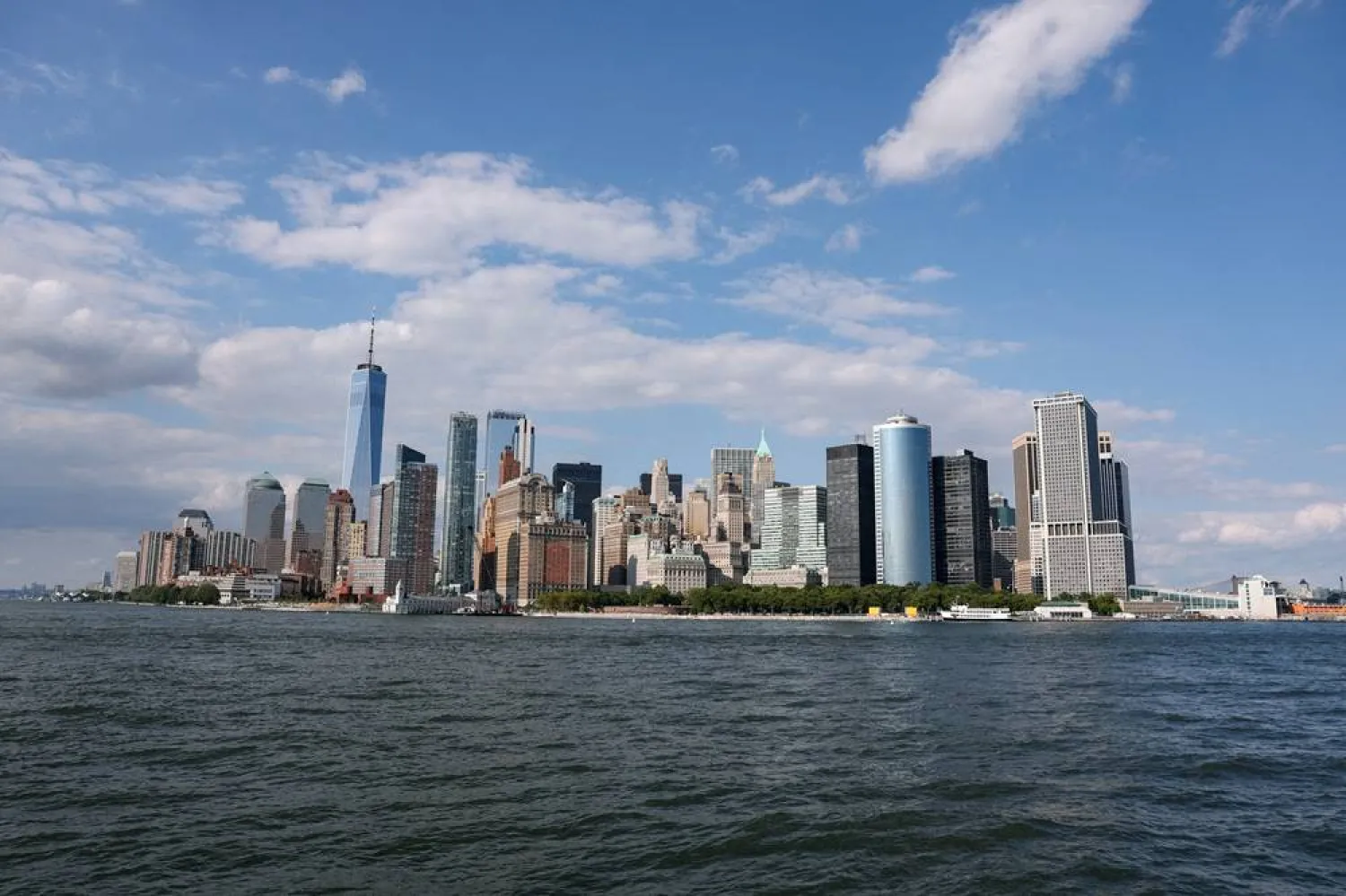
A view shows the downtown Manhattan skyline in New York City, US, July 22, 2025. (Reuters)
TT

Mounted New York Police Officer and His Horse Corner Suspected Purse Snatcher in Manhattan

A view shows the downtown Manhattan skyline in New York City, US, July 22, 2025. (Reuters)

A New York City police officer on horseback nabbed a suspected purse snatcher after chasing her through the streets of Manhattan at full gallop — a wild scene evoking the clip-clopping past of a city where lights, sirens and squad cars are the norm.

The late Wednesday morning pursuit began when the victim reported the theft. The officer — whose name has not been released — and his horse quickly took up the chase that was captured on his bodycam and also by a television news crew that happened to be in the area for an unrelated story.

The officer repeatedly screamed at the suspect to stop running, but she refused while denying she had taken the purse.

The brief hoof chase went along sidewalks, under scaffolding, between parked cars and across streets before the woman was stopped by a pedestrian and then detained by the officer.

The woman was charged with larceny and providing false information. Authorities said she had been convicted of murder in the April 2000 fatal shooting of a cab driver and had served time in prison before being released. She is currently on lifetime parole.

No injuries were reported in the chase.


Back on Earth, Artemis II Crew Still Finding their Footing

HOUSTON, TEXAS - APRIL 16: Artemis II Commander Reid Wiseman, Pilot Victor Glover, Mission Specialist Christina Koch, and Mission Specialist Jeremy Hansen speak during a press conference at the NASA Johnson Space Center on April 16, 2026 in Houston, Texas. Danielle Villasana/Getty Images/AFP
TT

Back on Earth, Artemis II Crew Still Finding their Footing

HOUSTON, TEXAS - APRIL 16: Artemis II Commander Reid Wiseman, Pilot Victor Glover, Mission Specialist Christina Koch, and Mission Specialist Jeremy Hansen speak during a press conference at the NASA Johnson Space Center on April 16, 2026 in Houston, Texas. Danielle Villasana/Getty Images/AFP

Nearly a week after their Pacific splashdown, the astronauts who crewed the Artemis II mission that flew around the Moon told reporters Thursday they have yet to fully grasp the magnitude of the moment.

"It's been a week of medical testing, physical testing, doctors, science objectives," mission commander Reid Wiseman said during a press conference at NASA's Johnson Space Center in Houston.

"We have not had that decompression," he added.

The 50-year-old led fellow Americans Victor Glover and Christina Koch, and Canadian crewmate Jeremy Hansen, on a mission that took them farther into space than anyone has ever gone before.

Adjusting to life on Earth is taking a beat, AFP reported.

"Tomorrow will be one week, and I just was trying to live in a little hole for one week, been off social media, not on the news. So, no, I don't know," Glover, who piloted the mission, told reporters.

Nonetheless, he said his children and neighbors have clued him in to the excitement.

Artemis II was the first crewed mission to venture to the Moon's orbit since 1972, and the only one in history to include a woman, or a Black astronaut, or a non-American. Their voyage was broadcast live by US space agency NASA, and the media coverage of the launch and return to Earth was watched by millions of people.

For Koch, waking up to the reality means remembering gravity has taken hold.

"In the first few days, I thought I was floating. I truly thought I was floating, and I had to convince myself I wasn't," Koch said.

Their mission lasted almost 10 days, but NASA has ambitions to return to the Moon for longer visits to establish a base in preparation for future missions to Mars.

The United States is targeting a lunar landing in 2028, before the end of President Donald Trump's term and a deadline set by rivals in China.