


Saudi Medical Team Separates Conjoined Twins in Groundbreaking 15-Hour Surgery

The procedure was carried out by a dedicated team of 36 consultants and specialists from multiple disciplines. SPA
TT

Saudi Medical Team Separates Conjoined Twins in Groundbreaking 15-Hour Surgery

The procedure was carried out by a dedicated team of 36 consultants and specialists from multiple disciplines. SPA

The medical and surgical team of the Saudi Conjoined Twins Program successfully separated on Wednesday Eritrean twins Asma and Someya, who were joined at the head, at King Abdullah Specialist Children’s Hospital in Riyadh.

King Salman Humanitarian Aid and Relief Centre (KSrelief) Supervisor General and head of the medical team Dr. Abdullah Al Rabeeah said the complex procedure, which lasted more than 15 hours, was carried out in adherence to Saudi leadership directives by a dedicated team of 36 consultants and specialists from multiple disciplines.

The team employed neuronavigational technology and surgical microscopy to ensure precise planning and uphold the highest safety standards.

He added that this operation marks the 64th separation performed under the Saudi Conjoined Twins Program, which has treated over 149 cases from 27 countries over the past 35 years.

The program continues to receive strong support from Custodian of the Two Holy Mosques King Salman bin Abdulaziz Al Saud and Prince Mohammed bin Salman bin Abdulaziz Al Saud, Saudi Crown Prince and Prime Minister.

Over the years, it has achieved outstanding medical successes, showcasing the advanced capabilities and professionalism of Saudi Arabia's healthcare sector and its medical teams.

Consultant pediatric neurosurgeon and head of the Pediatric Neurosurgery Dr. Moutasem Azzubi explained that the twins underwent a comprehensive evaluation, which revealed the fusion of skull bones, brain membranes, veins, and certain arteries.

The separation was conducted in stages, beginning with an initial surgical procedure followed by three interventional radiology procedures to block shared arteries and veins. The pediatric plastic surgery team inserted tissue expanders under the skin to stretch it over several months and allow sufficient skin coverage after the separation.

The twins' family expressed their sincere gratitude to the Saudi leadership for making this life-saving procedure possible and ensuring their children received the best medical care. They also commended the Kingdom’s humanitarian efforts and extended thanks for the generous hospitality they received during their stay in Saudi Arabia.



Asteroid Zooming Past Earth on Saturday Visible to Stargazers

FILE PHOTO: A nighttime view of Earth, derived from satellite images taken daily over the past decade, capturing human activity on the planet through the emissions of artificial light, is seen in this image released on April 8, 2026. Michala Garrison/NASA Earth Observatory/Handout via REUTERS
TT

Asteroid Zooming Past Earth on Saturday Visible to Stargazers

FILE PHOTO: A nighttime view of Earth, derived from satellite images taken daily over the past decade, capturing human activity on the planet through the emissions of artificial light, is seen in this image released on April 8, 2026. Michala Garrison/NASA Earth Observatory/Handout via REUTERS

A large asteroid that will zoom harmlessly past Earth on Saturday will be visible to stargazers using a small telescope or large binoculars, the European Space Agency announced Wednesday.

The asteroid will come within 2,560,000 kilometers of Earth at 1114 GMT on Saturday, which is more than six times the distance between the Earth and the Moon.

Called (152637) 1997 NC1, the asteroid will be speeding along at nearly nine kilometers a second, posing no threat to Earth as any chance of an impact has been ruled out.

Discovered in 1997, the asteroid is estimated to be between 750 and 1,650 meters wide, according to calculations based on how much sunlight it reflects.

However other estimates suggest it could be smaller, AFP quoted the ESA as saying in a statement.

"A close approach to Earth by an object this size only occurs every few years, although this time the bright nearby Moon might impede its observability at closest approach," Juan Luis Cano of the ESA's Planetary Defense Office said in a statement.

For stargazers with telescopes or binoculars, the asteroid will be visible in parts of the Northern Hemisphere as it approaches, almost everywhere as it speeds past Earth, and only from the Southern Hemisphere as it departs.

But this depends if people are in areas of the world where the sky is dark enough as it passes.


Think Tank: Singapore, Indonesia, Malaysia and Brunei Face High Risk of Severe Haze this Year

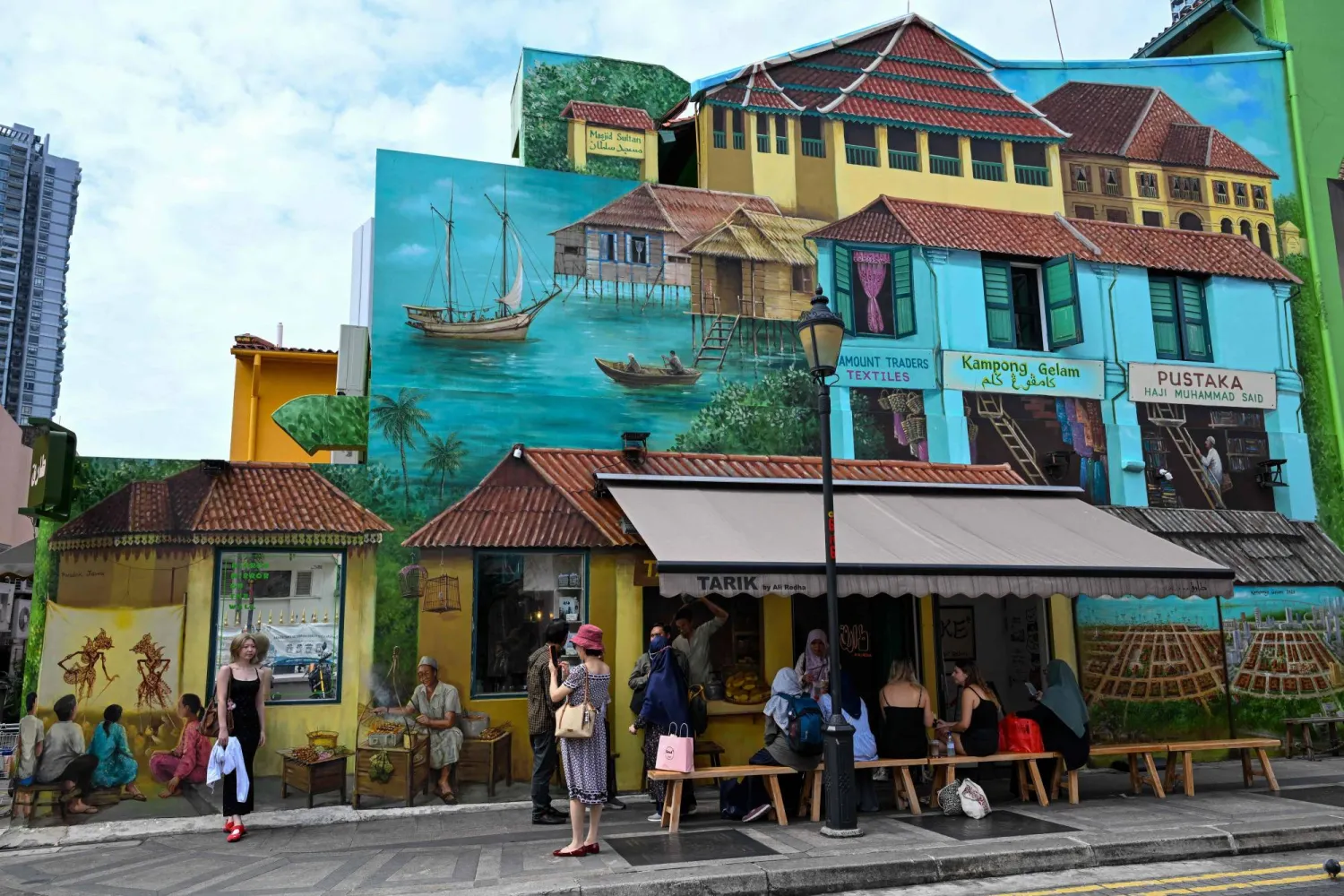
People stop by a cafe with murals painted on its facade in the Arab Street district of Singapore on June 16, 2026. (Photo by Roslan RAHMAN / AFP)
TT

Think Tank: Singapore, Indonesia, Malaysia and Brunei Face High Risk of Severe Haze this Year

People stop by a cafe with murals painted on its facade in the Arab Street district of Singapore on June 16, 2026. (Photo by Roslan RAHMAN / AFP)

Singapore, Indonesia, Malaysia and Brunei face a high risk of severe haze this year due to hot and dry weather conditions, biofuel demand and economic pressures, a research institute said Wednesday.

The Singapore Institute of International Affairs said it was the second time it had issued a red risk rating since launching its Haze Outlook report in 2019. The previous red risk rating was in ⁠2023, Reuters reported.

Here are some ⁠details:

August to September is the peak danger period for haze in the Southeast Asian region, driven by the El Niño and Indian Ocean Dipole weather phenomena, the report said.

The ⁠return of El Niño is expected to create a longer and stronger dry season at a time when fire preparedness could be adversely affected by economic uncertainty and cost pressures.

The SIIA said rising costs of fertilizer and fuel as a result of the Iran war could lead to unsustainable activity such as the use ⁠of ⁠fire rather than machinery to clear land and dispose of waste.

Land use could also intensify as demand for biofuels rises due to energy supply disruptions.

"This trend will continue even if the US-Iran agreement holds, as countries now want energy independence," said SIIA associate director Khor Yu-Leng.

ASEAN cooperation and sustainable land management will be critical to reducing risks, the report said.


Australian Shark Attack Survivor Briefly Emerges from Coma

A warning sign notifying the public that a shark-spotting drone is operating in the area is displayed at Coogee Beach following a shark attack on Saturday, in Sydney, Australia, June 16, 2026. (Reuters)
TT

Australian Shark Attack Survivor Briefly Emerges from Coma

A warning sign notifying the public that a shark-spotting drone is operating in the area is displayed at Coogee Beach following a shark attack on Saturday, in Sydney, Australia, June 16, 2026. (Reuters)

An Australian woman mauled by a shark at a popular Sydney beach briefly emerged from an induced coma and said "I love you" to family, according to an update from her brother.

Leah Stewart is in hospital on life support and has had multiple surgeries, including the amputation of her arm, since the June 13 attack at Sydney's Coogee Beach, according to a fundraising site set up to help her rehabilitation and care.

Doctors reduced her sedation to bring her out of the induced coma for a short time, her brother Joshua Stewart said in an update Tuesday to the GoFundMe page, which has raised Aus$492,000 ($340,000).

"This allowed Leah to share her first words 'I love you' with her Mum and partner Fernando who have been by her side in ICU since the incident. Her first thoughts were with her daughter August and wanted to check she was OK," he said.

"This is a lot faster than anyone expected, and for us this feels like a miracle and is everything so many of us have hoped and prayed for over the past week."

Leah Stewart, described by local media as a 34-year-old teacher from Coogee, had undergone five days of surgeries in the past week and was scheduled for more in the coming weeks, her brother said.

"Leah has a long road ahead and still remains in critical care, but this is such a positive first step and gives us hope for Leah's long term recovery."

Australian scientists believe rising ocean temperatures are shifting sharks' migratory patterns, which may be contributing to an uptick in attacks.

A 12-year-old boy died after he was bitten by a shark while swimming in Sydney Harbour in January.

Three divers were fatally mauled in separate incidents between May and June -- two in Western Australia and the third in Queensland.

There have been nearly 1,300 shark incidents around Australia since 1791, of which more than 260 resulted in death, according to a database of shark encounters with humans.