


Melania Trump Meets with Patients, Visits Garden at Washington Children’s Hospital

 US First Lady Melania Trump takes part in an activity with children during a visit at Children's National Hospital in Washington, DC on July 3, 2025. (AFP)
US First Lady Melania Trump takes part in an activity with children during a visit at Children's National Hospital in Washington, DC on July 3, 2025. (AFP)
TT

Melania Trump Meets with Patients, Visits Garden at Washington Children’s Hospital

 US First Lady Melania Trump takes part in an activity with children during a visit at Children's National Hospital in Washington, DC on July 3, 2025. (AFP)
US First Lady Melania Trump takes part in an activity with children during a visit at Children's National Hospital in Washington, DC on July 3, 2025. (AFP)

US First Lady Melania Trump visited with sick patients at Children’s National hospital in Washington on Thursday as the children made Fourth of July arts and crafts ahead of the holiday.

Trump, continuing a tradition of support by first ladies for the pediatric care center, also stopped by the hospital's rooftop “healing” garden she dedicated during the first Trump administration to first ladies of the United States.

The first lady decorated rocks for the garden with the children, drawing a red heart on one. A few kids played with stretchy slime while Trump engaged them in questions.

“Wow, that’s a big slime!” she told one child that was more focused on stretching the sticky goo.

Trump gave each of the children gift bags with blankets and teddy bears that had shirts reading, “Be Best,” her campaign focused on children’s well-being.

She quizzed the kids on their favorite sports, what music they like and how they’re feeling. Trump also took an informal poll, asking the kids whether they like chocolate and ice cream.

Most of the hands shot up, including the first lady’s.

“I like it too,” she said.

She then took the children out to the Bunny Mellon Healing Garden, where they placed small American flags and patriotically-colored pinwheels into the soil.

The garden, decked out in decorations for Independence Day on Friday, was named to honor Rachel “Bunny” Mellon, a friend of first lady Jacqueline Kennedy.

Mellon was a philanthropist and avid gardener who designed the Rose Garden and other White House gardens during the Kennedy administration.

The garden was dedicated to America’s first ladies because of their decades-long support for the hospital and its patients, including a traditional first lady visit at Christmastime that dates back to Bess Truman.

Trump, along with chief White House groundskeeper Dale Haney, inspected a new yellow rose bush donated by the White House and planted earlier in the week at the hospital garden.

After, the first lady visited the heart and kidney unit at the hospital and met privately with a 3-year-old patient.

Later Thursday, the first lady joined President Donald Trump in the Oval Office where they met with Edan Alexander, the last living American hostage in Gaza, who was released in May.


Two Holy Mosques Exhibition Welcomes Visitors for Founding Day Celebrations

The exhibition is open daily from 10:00 a.m. to 1:30 a.m - SPA
TT

Two Holy Mosques Exhibition Welcomes Visitors for Founding Day Celebrations

The exhibition is open daily from 10:00 a.m. to 1:30 a.m - SPA

In celebration of the Kingdom’s Founding Day, the Exhibition of the Two Holy Mosques Architecture in Makkah is welcoming visitors to explore a comprehensive historical journey.

The exhibition presents the evolution of the Two Holy Mosques through rare artifacts, historical photographs, and documentation of successive Saudi expansions, according to SPA.

The halls highlight the Kingdom’s long-standing dedication to serving the Two Holy Mosques. They combine heritage and modern technology to present the architectural development of Islam’s holiest sites.

The exhibition is open daily from 10:00 a.m. to 1:30 a.m.


Photos Show Filming of Ramadan TV Drama Series on the War-scarred Streets of Syria's Aleppo

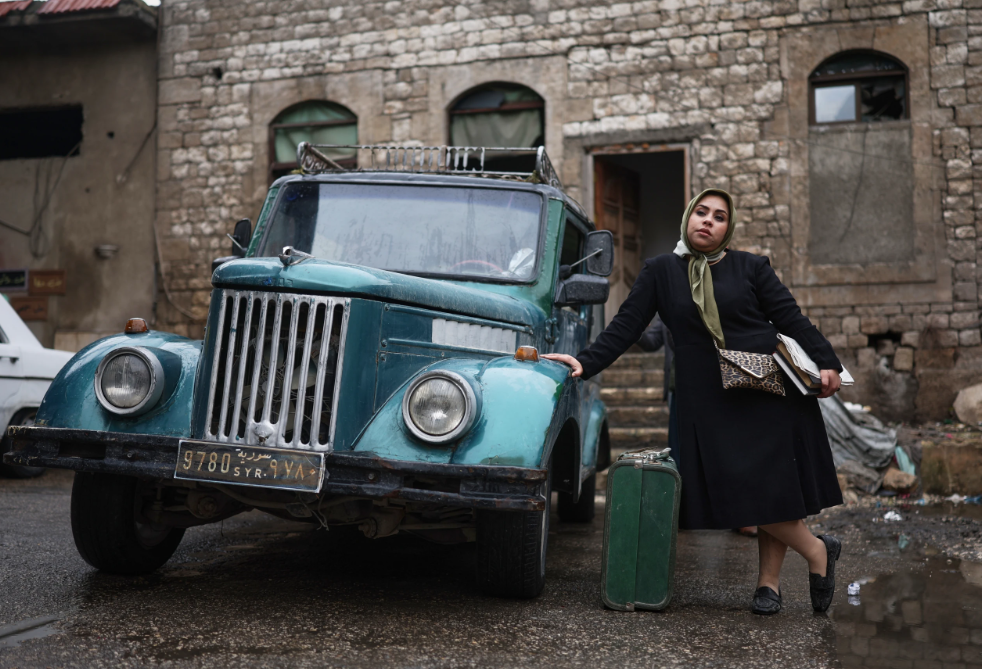
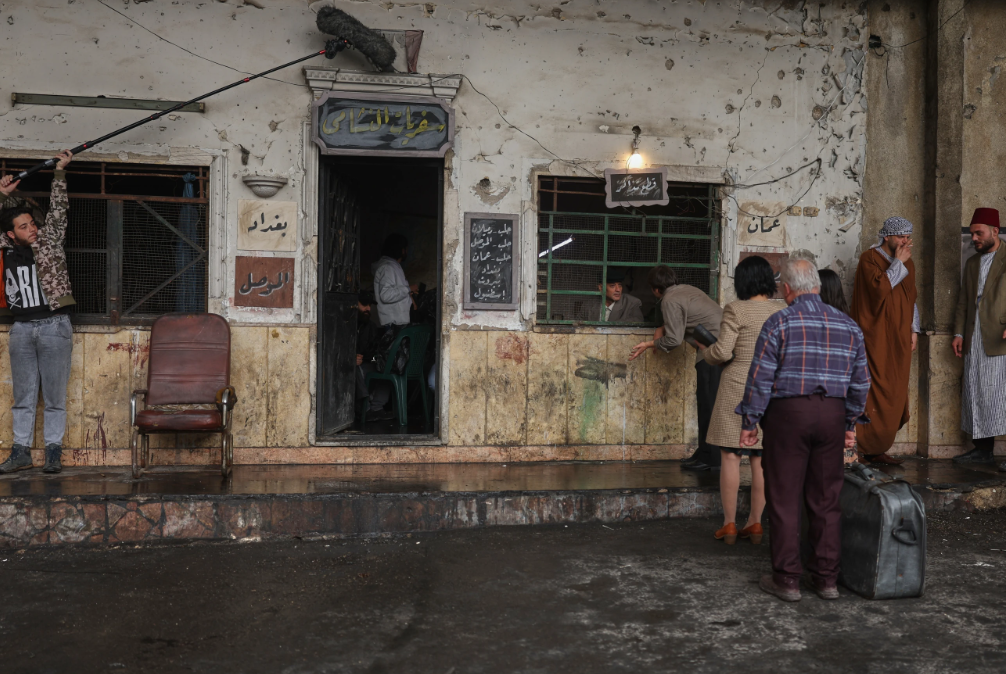
Extras stand by as a television crew films an episode of the TV series “Al-Souriyoun al-Aada” (“The Syrian Enemies”), based on a novel of the same name that was banned under Bashar Assad, along a transformed street in central Aleppo, Syria, Friday, Feb. 13, 2026. (AP Photo/Ghaith Alsayed)
TT

Photos Show Filming of Ramadan TV Drama Series on the War-scarred Streets of Syria's Aleppo

Extras stand by as a television crew films an episode of the TV series “Al-Souriyoun al-Aada” (“The Syrian Enemies”), based on a novel of the same name that was banned under Bashar Assad, along a transformed street in central Aleppo, Syria, Friday, Feb. 13, 2026. (AP Photo/Ghaith Alsayed)

Ramadan in the Arab world is a month of fasting and prayer by day — and television by night. For decades, families have gathered after the iftar, the evening meal that breaks the daytime fast, to follow the season’s highly anticipated drama series, produced specially to air during the Islamic holy month.

In the week before Ramadan, a television crew in central Aleppo was busy preparing one of those productions, with a battered street in the historic city transformed into a scene from decades past.

Lamees Al-Ali, an extra in the series, poses for a photograph during the filming of an episode of the TV series “Al-Souriyoun al-Aada” (“The Syrian Enemies”), based on a novel of the same name that was banned under Bashar Assad, along a transformed street in central Aleppo, Syria, Friday, Feb. 13, 2026. (AP Photo/Ghaith Alsayed)

Classic 1970s cars lined the curb. A horse-drawn cart rolled through the frame. A vendor in a red tarboush, a brimless cone-shaped hat, stood beside steaming pots of sahlep — a sweet, thickened milk drink flavored with spices and associated with winter evenings.

Just outside the camera’s view stood a stark reminder of Syria's more recent history. Collapsed buildings and damaged facades testified to Aleppo’s role as a major battleground during the country's civil war. However, with costumes, props and careful framing, the production temporarily carried the street back to what it portrays as a more innocent era, according to The AP news.

A television crew films an episode of the TV series “Al-Souriyoun al-Aada” (“The Syrian Enemies”), based on a novel of the same name that was banned under Bashar Assad, along a transformed street in central Aleppo, Syria, Friday, Feb. 13, 2026.(AP Photo/Ghaith Alsayed)

The series being filmed — “Al-Souriyoun al-Aada,” or “The Syrian Enemies” — is based on a novel that was banned during the rule of former President Bashar Assad. The story examines painful chapters of Syria’s past, including the 1982 events in Hama, when government forces crushed an uprising led by the Muslim Brotherhood, killing or disappearing an estimated 10,000 to 40,000 people and leaving the city in ruins.

As filming continues into Ramadan, the production reflects both a cherished seasonal tradition and Syria’s complex, layered history.


How Bomb Cyclones Form and Create Dangerous Conditions 

A man works in a snowstorm, Sunday, Feb. 22, 2026, in New York. (AP)
TT

How Bomb Cyclones Form and Create Dangerous Conditions 

A man works in a snowstorm, Sunday, Feb. 22, 2026, in New York. (AP)

When turbulent weather with whipping winds and heavy snow is in the forecast, meteorologists sometimes warn that a storm could “bomb out” or become a bomb cyclone. But what exactly does this mean?

According to the US National Oceanic and Atmospheric Administration, certain storms undergo bombogenesis, which happens when a storm’s central pressure drops at least 24 millibars in 24 hours. These storms are sometimes called bomb cyclones. Storm intensity is measured by central pressure, so the lower the pressure, the stronger the storm.

Such rapidly strengthening storms are capable of producing heavy rain, blizzard conditions and intense winds that can create dangerous conditions such as downed trees and power outages.

“If you’re watching TV at night and the weather report comes on and you’re hearing ‘bomb cyclone’ being used, that usually means there’s quite a bit of active weather going on,” said Andrew Orrison, a meteorologist with the National Weather Service in College Park, Maryland.

Bomb cyclones can happen in any season, but mainly occur during fall and winter when frigid air from the Arctic can creep south and clash with warmer air masses.

“It’s really the clash of those air masses that really kind of helps to generate the areas of low pressure in the first place,” said Orrison.

Regions in North America that are prone to seeing bomb cyclones include Alaska, the Pacific Northwest and the Great Lakes region.
