


What Are All These Microplastics Doing to Our Brains?

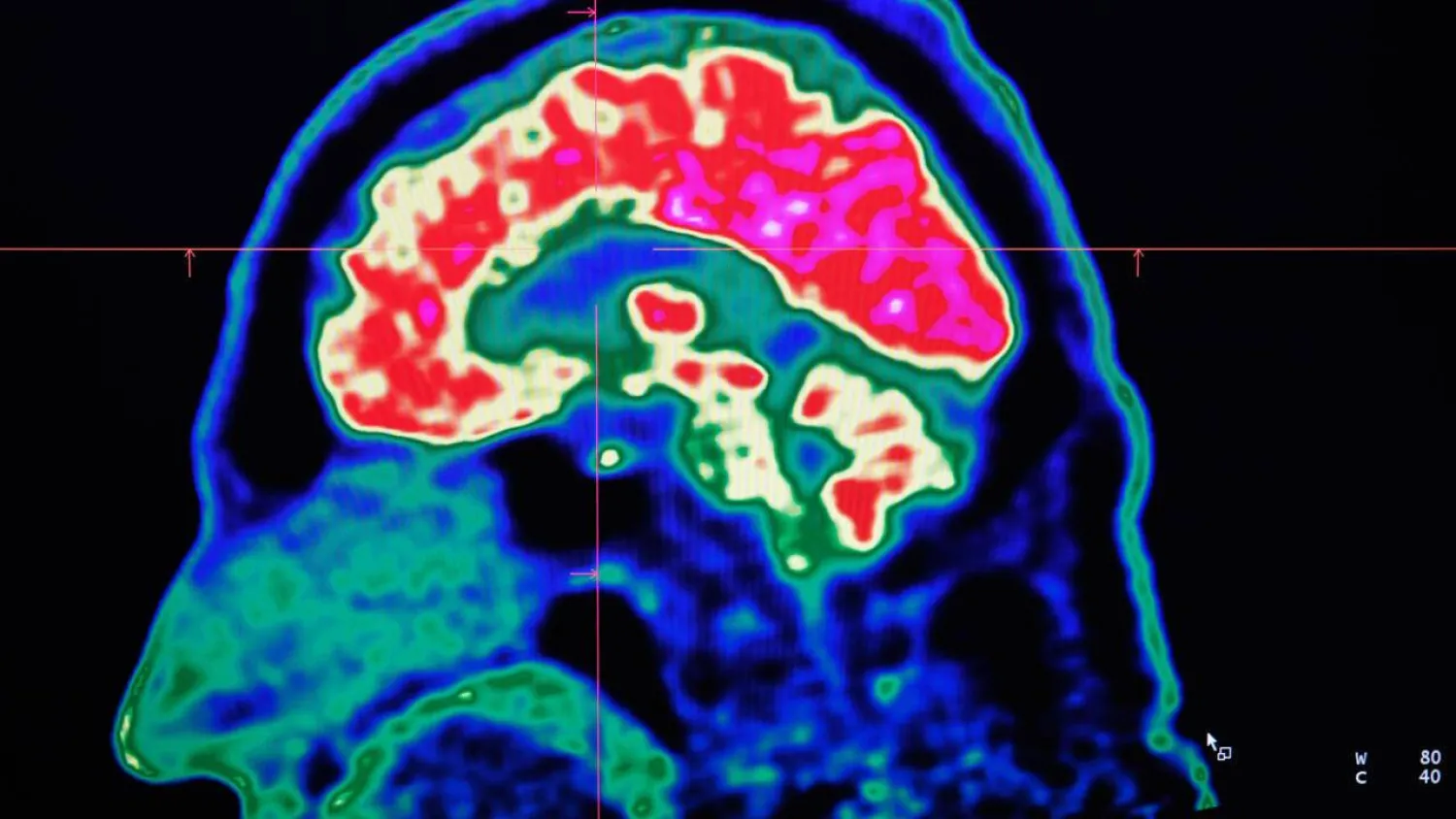
Microplastics are everywhere, but data is still lacking about how they could be affecting our brains. Fred TANNEAU / AFP/File
TT

What Are All These Microplastics Doing to Our Brains?

Microplastics are everywhere, but data is still lacking about how they could be affecting our brains. Fred TANNEAU / AFP/File

Tiny shards of plastic called microplastics have been detected accumulating in human brains, but there is not yet enough evidence to say whether this is doing us harm, experts have said.

These mostly invisible pieces of plastic have been found everywhere from the top of mountains to the bottom of oceans, in the air we breathe and the food we eat. They have also been discovered riddled throughout human bodies, inside lungs, hearts, placentas and even crossing the blood-brain barrier.

The increasing ubiquity of microplastics has become a key issue in efforts to hammer out the world's first plastic pollution treaty, with the latest round of UN talks being held in Geneva next week.

The effects that microplastics and even smaller nanoplastics have on human health is not yet fully understood, but researchers have been working to find out more in this relatively new field.

The most prominent study looking at microplastics in brains was published in the journal Nature Medicine in February.

The scientists tested brain tissue from 28 people who died in 2016 and 24 who died last year in the US state of New Mexico, finding that the amount of microplastics in the samples increased over time.

The study made headlines around the world when the lead researcher, US toxicologist Matthew Campen, told the media that they detected the equivalent of a plastic spoon's worth of microplastics in the brains.

Campen also told Nature that he estimated the researchers could isolate around 10 grams of plastic from a donated human brain -- comparing that amount to an unused crayon.

Speculation 'far beyond the evidence'

But other researchers have since urged caution about the small study.

"While this is an interesting finding, it should be interpreted cautiously pending independent verification," toxicologist Theodore Henry of Scotland's Heriot-Watt University told AFP.

"Currently, the speculation about the potential effects of plastic particles on health go far beyond the evidence," he added.

Oliver Jones, a chemistry professor at Australia's RMIT University, told AFP there was "not enough data to make firm conclusions on the occurrence of microplastics in New Mexico, let alone globally".

He also found it "rather unlikely" that brains could contain more microplastics than has been found in raw sewage -- as the researchers had estimated.

Jones pointed out the people in the study were perfectly healthy before they died, and that the researchers acknowledged there was not enough data to show that the microplastics caused harm.

"If (and it is a big if in my view) there are microplastics in our brains, there is as yet no evidence of harm," Jones added.

The study also contained duplicated images, the neuroscience news website The Transmitter has reported, though experts said this did not affect its main findings.

- 'Cannot wait for complete data' -

Most of the research into the effects microplastics have on health has been observational, which means it cannot establish cause and effect.

One such study, published in the New England Journal of Medicine last year, found that microplastics building up in blood vessels was linked to an increased risk of heart attack, stroke and death in patients with a disease that clogs arteries.

There have also been experiments carried out on mice, including a study in Science Advances in January which detected microplastics in their brains.

The Chinese researchers said that microplastics can cause rare blood clots in the brains of mice by obstructing cells -- while emphasizing that the small mammals are very different to humans.

A review by the World Health Organization in 2022 found that the "evidence is insufficient to determine risks to human health" from microplastics.

However many health experts have cited the precautionary principle, saying the potential threat microplastics could pose requires action.

A report on the health risks of microplastics by the Barcelona Institute for Global Health published this week ahead of the treaty talks said that "policy decisions cannot wait for complete data".

"By acting now to limit exposure, improve risk assessment methodologies, and prioritize vulnerable populations, we can address this pressing issue before it escalates into a broader public health crisis," it added.

The amount of plastic the world produces has doubled since 2000 -- and is expected to triple from current rates by 2060.



Move over Larry: Maximus the PM's Cat Grabs Belgium Spotlight

Larry the Downing Street cat is a global celebrity in his own right, with more than 900,000 followers on X. JUSTIN TALLIS / AFP/File
TT

Move over Larry: Maximus the PM's Cat Grabs Belgium Spotlight

Larry the Downing Street cat is a global celebrity in his own right, with more than 900,000 followers on X. JUSTIN TALLIS / AFP/File

It is no secret that a tabby named Larry wields considerable power in Downing Street. Now in Belgium, a rescue cat named Maximus has shot to social media stardom as bewhiskered sidekick and PR weapon of Prime Minister Bart De Wever.

Taken in from a shelter by the Flemish conservative leader over the summer, the grey fluffball has become a fixture on Instagram -- snapped batting at string or lolling around in the boss's office.

But while Larry has risen above politics as Chief Mouser to six British prime ministers, the adventures of De Wever's four-legged friend come with a dose of salty commentary on Belgium's turbulent public life, said AFP.

Cartoon bubbles have captured Maximus musing sardonically -- in Flemish -- on everything from the country's long-running budget showdown to strikes over his boss's austerity measures, or a new voluntary military service for young Belgians.

'Maximus, can you catch a drone?'

Less than six months after his account went live in July, Maximus has caught up with his master when it comes to Instagram followers.

The account name -- @maximustp16 -- stands for "Maximus Textoris Pulcher", a cryptic reference to that of his boss, which means "The Weaver" in Dutch.

Those in the know say the fel-influencer's posts are put up by the prime minister's personal assistant.

But the Belgian leader -- known for his deadpan sense of humor -- is also pretty prolific online, and regularly cross-posts with the cat's account when he wants to strike a lighter note.

Since taking office in February, De Wever has posted a whole series of vignettes of himself with Maximus, pushing him in a stroller or taking a nap by his side.

His first response in October to the news of a foiled plot to attack him using drone-mounted explosives?

A post showing the prime minister and reclining cat with the cartoon caption "Maximus, can you catch a drone?"

"No -- but I'm catching dreams like no one else!" the mog replies.

'Noise and hot air'

All good fun, but what is the strategy at work?

For political analyst Dave Sinardet the spoof account is chiefly a way for the 54-year-old De Wever to freshen up his public image -- and show he does not take himself too seriously.

"It's a smart way to do political PR," said Sinardet, a university professor in Brussels. "It makes politicians seem friendlier, gentler -- considering that most people see them as rational, even arrogant figures."

The Flemish nationalist faces an uphill challenge -- under fire from left-wing parties who accuse him of unpicking social protections with rolling strikes and protests targeting his government all year.

Deploying pets as political PR assets is nothing new: every US president in history, with the exception of Donald Trump, has posed with animals at the White House.

Larry the Downing Street cat is a global celebrity in his own right, with his @Number10cat account on X boasting almost 900,000 followers.

But De Wever's posts with Maximus are not to everyone's liking at home.

A video of the prime minister pretending to play "Amazing Grace" on the bagpipes -- the pipe being Maximus's tail -- during tense budget talks had the opposition hissing.

"Quite the summary of their politics: noise and hot air," snapped the socialist lawmaker Patrick Prevot.


Indonesia Floods Were 'Extinction Level' for Rare Orangutans

Residents rest as they search for the remains of their house, buried under piles of uprooted trees swept by the flash flood, in Lintang Baru village in Aceh Tamiang, northern Sumatra, on December 11, 2025. (Photo by Aditya Aji / AFP)
TT

Indonesia Floods Were 'Extinction Level' for Rare Orangutans

Residents rest as they search for the remains of their house, buried under piles of uprooted trees swept by the flash flood, in Lintang Baru village in Aceh Tamiang, northern Sumatra, on December 11, 2025. (Photo by Aditya Aji / AFP)

Indonesia's deadly flooding was an "extinction-level disturbance" for the world's rarest great ape, the tapanuli orangutan, causing catastrophic damage to its habitat and survival prospects, scientists warned on Friday.

Only scientifically classified as a species in 2017, tapanulis are incredibly rare, with fewer than 800 left in the wild, confined to a small range in part of Indonesia's Sumatra.

One dead suspected tapanuli orangutan has already been found in the region, conservationists told AFP.

"The loss of even a single orangutan is a devastating blow to the survival of the species," said Panut Hadisiswoyo, founder and chairman of the Orangutan Information Centre in Indonesia.

And analysis of satellite imagery combined with knowledge of the tapanuli's range suggests that the flooding which killed nearly 1,000 people last month may also have devastated wildlife in the Batang Toru region.

The scientists focused on the so-called West Block, the most densely populated of three known tapanuli habitats, and home to an estimated 581 tapanulis before the disaster.

There, "we think that between six and 11 percent of orangutans were likely killed," said Erik Meijaard, a longtime orangutan conservationist.

"Any kind of adult mortality that exceeds one percent, you're driving the species to extinction, irrespective of how big the population is at the start," he told AFP.

But tapanulis have such a small population and range to begin with that they are especially vulnerable, he added.

Satellite imagery shows massive gashes in the mountainous landscape, some of which extend for more than a kilometer and are nearly 100 meters wide, Meijaard said.

The tide of mud, trees and water toppling down hillsides would have carried away everything in its path, including other wildlife like elephants.

David Gaveau, a remote sensing expert and founder of conservation start-up The Tree Map, said he was flabbergasted by the before-and-after comparison of the region.

"I have never seen anything like this before during my 20 years of monitoring deforestation in Indonesia with satellites," he told AFP.

The devastation means remaining tapanulis will be even more vulnerable, with sources of food and shelter now washed away.

Over nine percent of the West Block habitat may have been destroyed, the group of scientists estimated.

In a draft paper shared with AFP and set to be published as a pre-print in coming days, they warned the flooding represents an "extinction-level disturbance" for tapanulis.

They are urging an immediate halt to development in the region that will damage remaining habitat, expanded protected areas, a detailed survey of the affected area and orangutan populations and work to restore lowland forests.

The highland homes currently inhabited by tapanulis are not their preferred habitat, but it is where remaining orangutans have been pushed by development elsewhere.

Panut said the region had become eerily quiet after the landslides.

"This fragile and sensitive habitat in West Block must be fully protected by halting all habitat-damaging development," he told AFP.


Study Finds Humans Were Making Fire 400,000 Years Ago, Far Earlier Than Once Thought

Discovery of the first fragment of iron pyrite in 2017, at Barnham, England. (Jordan Mansfield/Pathways to Ancient Britain Project via AP)
TT

Study Finds Humans Were Making Fire 400,000 Years Ago, Far Earlier Than Once Thought

Discovery of the first fragment of iron pyrite in 2017, at Barnham, England. (Jordan Mansfield/Pathways to Ancient Britain Project via AP)

Scientists in Britain say ancient humans may have learned to make fire far earlier than previously believed, after uncovering evidence that deliberate fire-setting took place in what is now eastern England around 400,000 years ago.

The findings, described in the journal Nature, push back the earliest known date for controlled fire-making by roughly 350,000 years. Until now, the oldest confirmed evidence had come from Neanderthal sites in what is now northern France dating to about 50,000 years ago.

The discovery was made at Barnham, a Paleolithic site in Suffolk that has been excavated for decades. A team led by the British Museum identified a patch of baked clay, flint hand axes fractured by intense heat and two fragments of iron pyrite, a mineral that produces sparks when struck against flint, The Associated Press reported.

Researchers spent four years analyzing to rule out natural wildfires. Geochemical tests showed temperatures had exceeded 700 degrees Celsius (1,292 Fahrenheit), with evidence of repeated burning in the same location.

That pattern, they say, is consistent with a constructed hearth rather than a lightning strike.

Rob Davis, a Paleolithic archaeologist at the British Museum, said the combination of high temperatures, controlled burning and pyrite fragments shows "how they were actually making the fire and the fact they were making it."

Iron pyrite does not occur naturally at Barnham. Its presence suggests the people who lived there deliberately collected it because they understood its properties and could use it to ignite tinder.

Deliberate fire-making is rarely preserved in the archaeological record. Ash is easily dispersed, charcoal decays and heat-altered sediments can be eroded.

At Barnham, however, the burned deposits were sealed within ancient pond sediments, allowing scientists to reconstruct how early people used the site.

Researchers say the implications for human evolution are substantial.

Fire allowed early populations to survive colder environments, deter predators and cook food. Cooking breaks down toxins in roots and tubers and kills pathogens in meat, improving digestion and releasing more energy to support larger brains.

Chris Stringer, a human evolution specialist at the Natural History Museum, said fossils from Britain and Spain suggest the inhabitants of Barnham were early Neanderthals whose cranial features and DNA point to growing cognitive and technological sophistication.

Fire also enabled new forms of social life. Evening gatherings around a hearth would have provided time for planning, storytelling and strengthening group relationships, which are behaviors often associated with the development of language and more organized societies.

Archaeologists say the Barnham site fits a wider pattern across Britain and continental Europe between 500,000 and 400,000 years ago, when brain size in early humans began to approach modern levels and when evidence for increasingly complex behavior becomes more visible.

Nick Ashton, curator of Paleolithic collections at the British Museum, described it as "the most exciting discovery of my long 40-year career."

For archaeologists, the find helps address a long-standing question: When humans stopped relying on lightning strikes and wildfires and instead learned to create flame wherever and whenever they needed it.