


Five Astronauts Leave Space Station for Trip Back to Earth

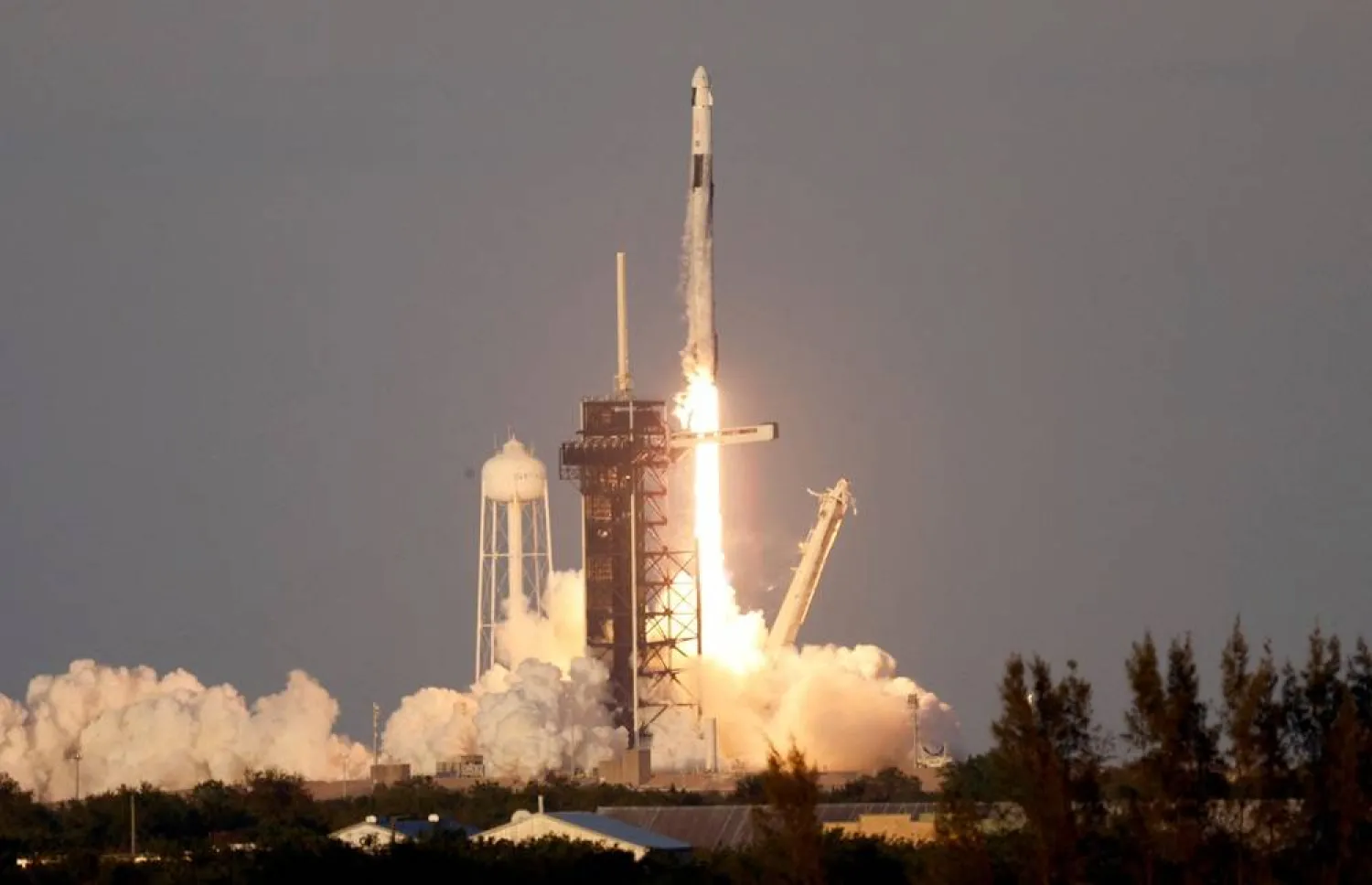
SpaceX's Falcon 9 rocket lifts off, carrying NASA's Crew-10 astronauts to the International Space Station at the Kennedy Space Center in Cape Canaveral, Florida, US, March 14, 2025. (Reuters)
TT

Five Astronauts Leave Space Station for Trip Back to Earth

SpaceX's Falcon 9 rocket lifts off, carrying NASA's Crew-10 astronauts to the International Space Station at the Kennedy Space Center in Cape Canaveral, Florida, US, March 14, 2025. (Reuters)

After nearly five months onboard the International Space Station, an international crew of five astronauts began their descent back down to Earth on a SpaceX capsule Friday.

US astronauts Anne McClain and Nichole Ayers, Japan's Takuya Onishi and Russian cosmonaut Kirill Peskov are expected to spend more than 17 hours in the capsule before splashing down off California's coast at 1533 GMT on Saturday.

Their return will mark the end of the 10th crew rotation mission to the space station under NASA's Commercial Crew Program, which was created to succeed the Space Shuttle era by partnering with private industry.

The Dragon capsule of billionaire Elon Musk's SpaceX company detached from the International Space Station (ISS) at 2215 GMT on Friday.

The capsule's dizzying drop back down to Earth will be slowed when it re-enters Earth -- and then again by huge parachutes to soften its landing.

After the capsule splashes down, it will be recovered by a SpaceX ship and hoisted aboard.

Only then will the astronauts be able to breathe Earth's air again, for the first time in months.

The astronauts, known as Crew-10, conducted numerous scientific experiments during their time on the space station, including studying plant growth and how cells react to gravity.

Their launch into space in March was heavily scrutinized because it finally allowed two US astronauts -- who had been unexpectedly stuck onboard the space station for nine months -- to return home.

When they launched in June 2024, Butch Wilmore and Suni Williams were only supposed to spend eight days in space on a test of the Boeing Starliner's first crewed flight.

However, the spaceship developed propulsion problems and was deemed unfit to fly back, leaving them stranded in space.

NASA announced this week that Wilmore has decided to retire after 25 years of service at the US space agency.

Last week, US astronauts Zena Cardman and Mike Fincke, Japan's Kimiya Yui and Russian cosmonaut Oleg Platonov boarded the ISS for a six-month mission.



Prince Harry, Wife Meghan Arrive in the UK as They Make a Fresh Start in Britain

Britain’s Prince Harry and his wife, Meghan. (AP)
TT

Prince Harry, Wife Meghan Arrive in the UK as They Make a Fresh Start in Britain

Britain’s Prince Harry and his wife, Meghan. (AP)

Prince Harry and his wife Meghan arrived in the United Kingdom on Wednesday, as they make a fresh start in Britain after six years in the United States, UK media reported.

The news comes less than a week after the couple surprised fans and critics alike with plans to return to Britain. The return was reported by media outlets including the BBC and Sky News, with the Daily Telegraph reporting their plane landed at Birmingham International Airport around noon.

Flight tracking websites showed a private charter flight from Van Nuys, California, arrived at the airport at 11:56 a.m.

The couple’s children, Prince Archie, 7, and Princess Lilibet, 5, have already enrolled at British schools and will start classes in September. The family plans to live at a private, nonroyal residence outside of London, but haven’t said exactly where that will be.

Harry and Meghan gave up their royal duties and moved to California more than six years ago to earn their living through lucrative contracts with Netflix and Spotify.

Relations with the rest of the royal family quickly soured as the couple said palace staff had been insensitive to Meghan’s mental health and leveled charges of racism and media manipulation at members of the royal family.

Harry recently expressed an interest in reconciliation so he could spend more time with his father, King Charles III, who is being treated for an undisclosed form of cancer. But relations with his brother, Prince William, who is heir to the throne, remain tense.


Social Media Use on the Rise Among Australian Under-16s After Ban

The TikTok logo is displayed on signage outside TikTok social media app company offices in Culver City, California on September 30, 2025. (AFP)
TT

Social Media Use on the Rise Among Australian Under-16s After Ban

The TikTok logo is displayed on signage outside TikTok social media app company offices in Culver City, California on September 30, 2025. (AFP)

Australian under-16s are increasing their use of social media apps, such as Instagram and TikTok, despite a world-leading ban, data provided by a parental control software company showed Wednesday.

Australia implemented legislation barring children from social media platforms in December, with the UK, France and others following suit.

Youngsters' use of social media fell across the board when the legal restrictions were first implemented, data from parental control app Qustodio showed.

But since then their social media activity has climbed -- even approaching pre-ban levels for some apps.

The use of apps TikTok, Instagram and Snapchat among 10–12-year-olds and 13- to 15-year-olds was on the rise, data from parental control app Qustodio showed.

In the case of video-sharing site TikTok, 25.9 percent of 13-15 year-olds are still using the app -- just over a percentage point lower than before the ban came into force.

And use among 10–12-year-olds was just 0.06 percentage points below where it was before the ban.

"They could be accessing these platforms with VPNs, or obfuscating their ages," Yasmin London, Global Online Safety Expert for Qustodio, said.

"But it could really be as simple as they're just accessing these apps because the restrictions aren't working."

The data also showed children increasingly turning to messaging platform WhatsApp, which is not affected by the ban.

Qustodio said the data was gathered by analyzing anonymized monthly social media app usage among Australian children and showed the percentages of kids that had used the app for more than five consecutive minutes at least once in a given month.

Australian officials have said the ban is designed to protect children from online bullying and "predatory algorithms".

A team of Australia-based researchers in a peer-reviewed study published in June found little evidence to suggest teenagers have turned away from social media as a consequence, however.

New Zealand's government also this week said it would introduce legislation that could see firms like Meta fined up to 10 percent of their global revenue if they fail to comply.


Drought-Hit Danube Gives Way to Fossil Hunt in Bulgaria

This photograph taken on August 21, 2026, shows unidentified remains found in the dried-out Danube riverbed near the village of Ryahovo, during an organized fossil hunt after a record low water level revealed mammoth bones there at the end of July. (AFP)
TT

Drought-Hit Danube Gives Way to Fossil Hunt in Bulgaria

This photograph taken on August 21, 2026, shows unidentified remains found in the dried-out Danube riverbed near the village of Ryahovo, during an organized fossil hunt after a record low water level revealed mammoth bones there at the end of July. (AFP)

Volunteers scanned the dried-up bank of the Danube in northern Bulgaria, close to where receding waters laid bare mammoth bones last month, hoping to find more fossilized fragments exposed by Europe's parching drought.

"I've found a tooth!" exclaimed Aleksandar Denkov, a 30-year-old amateur photographer, holding up a yellowish fragment protruding from the sand.

Denkov last week joined some 20 other volunteers, many hoping to find more mammoth fossils during the search organized by the regional history museum of the nearby city of Ruse, around 250 km (155 miles) northeast of Sofia.

Though their hopes were not fulfilled, the group found remains of a mammal -- "probably an aurochs or a European bison," according to the museum -- a horse jawbone in a subfossil state and a cluster of fossilized oysters dating back around 60 to 65 million years.

Europe's drought, exacerbated by human-induced climate change according to experts, has seen major rivers slow to a trickle, causing serious problems for cargo shippers and nuclear plants normally cooled by river water.

But the low waters have also revealed remains and historical artefacts not seen for decades -- or even millennia.

Finds in recent weeks along the Danube, Europe's second-longest river, have included World War II shipwrecks in Austria and Serbia and the remains of two German soldiers and a motorbike in the middle of Budapest.

- 'Close to history' -

Ruse Regional History Museum curator Krasimir Kirov said the museum decided to organize the field day "to teach people how to recognize different finds, show them what they might uncover, and give them safety tips."

"After the mammoth was discovered, I started getting dozens of calls from people telling me about what they'd found," he told AFP.

Last month, a resident of the village of Ryahovo -- some 30 kilometers from Ruse -- spotted by chance what museum specialists then identified as a mammoth jaw bone, fragments of tusks, part of a shoulder blade and a femur.

Announced on social media, the initiative to gather near Ryahovo for a guided search quickly sparked keen interest, with requests already pouring in for the next outing, according to Kirov.

The search began with a few instructions: the volunteers must advance in a line and, if someone spots something, raise a hand so that the whole group stops.

Above all, they must not touch any metal objects, which could be ammunition or explosives.

But the walk had barely begun when the line broke apart: enthusiasm won out over discipline.

"It's a very rare opportunity to feel this close to history," Ekaterina Yordanova, a 34-year-old psychologist, told AFP.

"Seeing the Danube in this state is worrying, but it also gives us the chance to discover new things."

Vladimir Tsvyatkov, a 44-year-old business owner, said he, his wife and their two children mainly came "for the adventure".

Having grown up on the banks of the river, he said he had "never seen the Danube so dried up."

- WWII remnants -

Further upstream in Bulgaria, the low Danube levels have also allowed archaeologists to document the foundations of a bridge, more than two km long, inaugurated under Emperor Constantine I in 328.

And elsewhere along the Danube, World War II weaponry and other remnants have been found.

In central Austria, two wrecks of German warships are protruding from the water.

Damaged in fighting with American tanks in 1945, they were later sunk by their own crews, according to local media.

In Serbia, near Prahovo, the receding river has likewise exposed wrecks of German warships, which were among dozens sunk by their own side in 1944 in an attempt to slow the Soviet Red Army's advance along Europe's second-longest river.

And in Budapest, a motorbike and the remains of two German soldiers were found, according to the German War Graves Commission.

The findings come as vast tracts of many of Europe's largest rivers have fallen to levels never recorded before in the month of July, according to data from European climate observatory Copernicus.