


Study: There Is Less Room to Store Carbon Dioxide, Driver of Climate Change, than Previously Thought

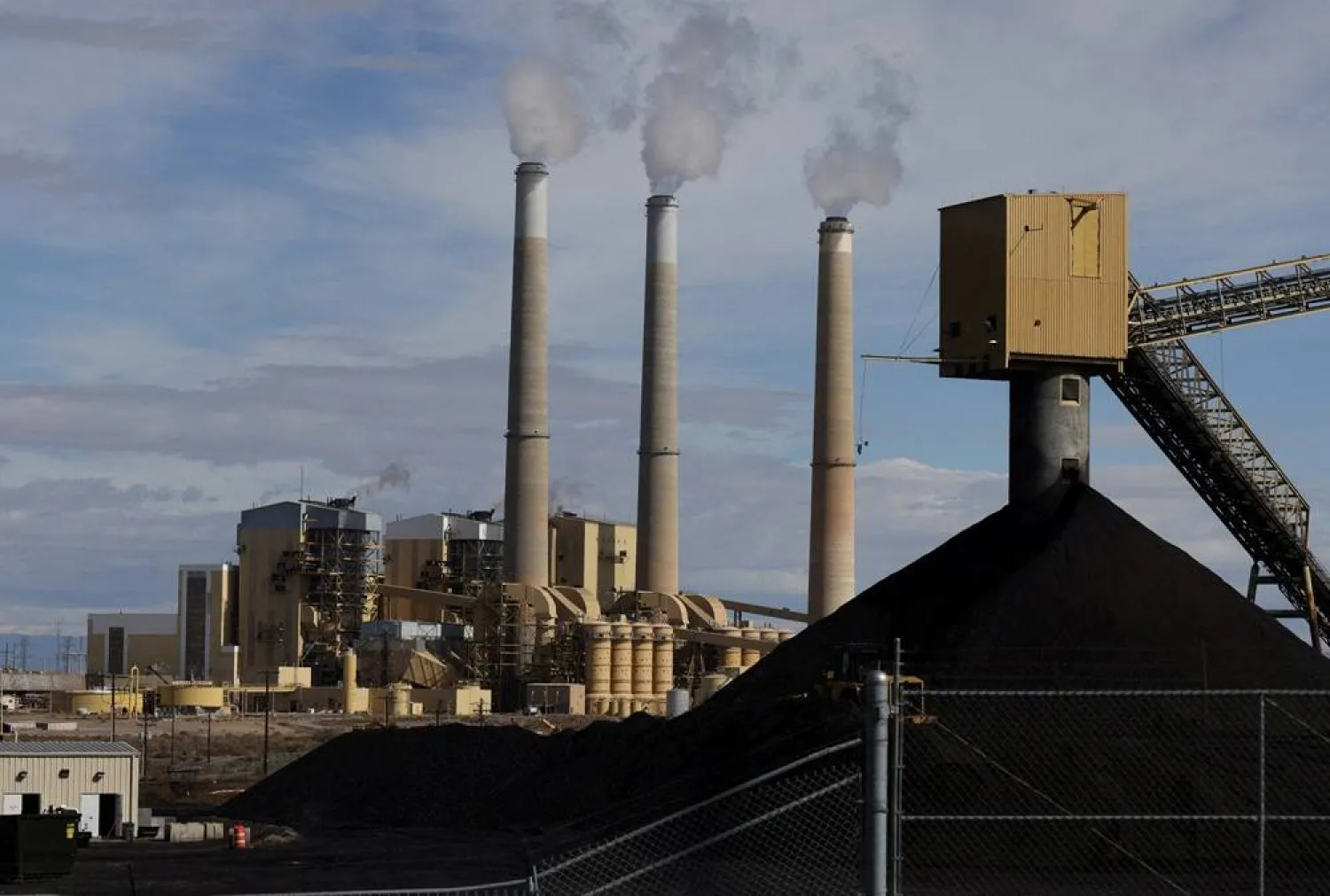
Fumes rise from the coal-fired Hunter Power Plant in Castle Dale, Utah, US, October 28, 2024. (Reuters)
TT

Study: There Is Less Room to Store Carbon Dioxide, Driver of Climate Change, than Previously Thought

Fumes rise from the coal-fired Hunter Power Plant in Castle Dale, Utah, US, October 28, 2024. (Reuters)

The world has far fewer places to securely store carbon dioxide deep underground than previously thought, steeply lowering its potential to help stem global warming, according to a new study that challenges long-held industry claims about the practice.

The study, published Wednesday in the journal Nature, found that global carbon storage capacity was 10 times less than previous estimates after ruling out geological formations where the gas could leak, trigger earthquakes or contaminate groundwater, or had other limitations. That means carbon capture and storage would only have the potential to reduce human-caused warming by 0.7 degrees Celsius (1.26 Fahrenheit) — far less than previous estimates of around 5-6 degrees Celsius (9-10.8 degrees Fahrenheit), researchers said.

“Carbon storage is often portrayed as a way out of the climate crisis. Our findings make clear that it is a limited tool” and reaffirms “the extreme importance of reducing emissions as fast and as soon as possible,” said lead author Matthew Gidden, a research professor at the University Maryland's Center for Global Sustainability. The study was led by the International Institute for Applied Systems Analysis, where Gidden also is a senior researcher in the energy, climate and environment program.

The study is the latest knock on a technology, for years promoted by oil and gas industry, that has often been touted as a climate solution. Today, carbon capture is far from being deployed at scale, despite billions of dollars in investments around the world, and the amount of carbon currently captured is just a tiny fraction of the billions of tons of carbon dioxide emitted every year.

Challenging assumptions

The 2015 Paris Agreement called for limiting average global temperature increase to 2 degrees Celsius (3.6 degrees Fahrenheit), but ideally below 1.5C (2.7F), compared to the early 1800s.

Many scenarios for achieving that have relied on carbon removal and storage, assuming the potential was “very large” because previous estimates didn’t account for vulnerable areas that might not be suitable, said study co-author Alexandre Koberle, a researcher at the University of Lisbon.

“That was never systematically challenged and tested,” said Koberle, adding that the study was the first to examine which areas should be avoided, leading to what they call a “prudent potential” that minimizes risks to people and the environment.

That’s not to say that carbon capture and storage isn’t important to keep global temperatures in check — but countries must prioritize how they use the limited storage and do so in conjunction with fast and deep emissions reductions, researchers said.

The technology ideally should be used for sectors that are difficult to decarbonize, such as cement production, aviation and agriculture, rather than to extend the life of polluting power plants or to prolong the use of oil and gas, Koberle said.

Industry officials defended carbon capture and storage as having an inherently low risk and say emerging technologies, such as storing carbon dioxide in basalt formations where it becomes mineralized, could dramatically increase total storage volumes.

What's more, its use is “not optional if we hope to address global warming,” said Jessie Stolark, executive director of the Carbon Capture Coalition, adding that it must be combined with other ways to reduce emissions and balanced with the need for reliable and affordable energy.

Rob Jackson, head of the Global Carbon Project, a group of scientists who monitor greenhouse gas emissions, praised the study for its cautionary perspective. And though he’s optimistic that carbon capture technology itself will work, he believes very little will ever be stored “because I don’t think we’re willing to pay for it.”

“If we aren’t willing to cut emissions today, why do we expect that people in the future will just automatically pay to remove our pollution?” Jackson said. “We’re just continuing to pollute and not addressing the root of the problem.”

How it works

Carbon dioxide, a gas produced by burning fossil fuels, traps heat close to the ground when released to the atmosphere, where it persists for hundreds of years and raises global temperatures.

Industries and power plants can install equipment to separate carbon dioxide from other gases before it leaves the smokestack, or it can be captured directly from the atmosphere using giant vacuums.

Captured carbon is compressed and shipped to a location where it can be injected deep underground for long-term storage in deep saline or basalt formations and unmineable coal seams — though about three-fourths is pumped back into oil fields to build pressure to help extract more oil.

In the US, such projects have faced criticism from some conservatives, who say it is expensive and unnecessary, and from environmentalists, who say it has consistently failed to capture as much pollution as promised and is simply a way for producers of fossil fuels like oil, gas and coal to continue their use.

The most commonly used technology allows facilities to capture and store around 60% of their carbon dioxide emissions during the production process. Anything above that rate is much more difficult and expensive, according to the International Energy Agency.

Gidden, the lead author, said it's clear that scaling up carbon storage will be important to achieving net-zero emissions and to eventually reduce them, and said the use of basalt formations is promising. But the world cannot wait for that to happen before acting decisively to slash fossil fuel emissions.

“If we prolong our dependence on fossil fuels for too long with the expectation that we will offset that by simply storing carbon underground, we’re likely saddling future generations with a nearly impossible task of dealing with not only our mess, but limited ways of cleaning it up,” he said.



Chile Fights Wildfires that Killed 19 and Left 1,500 Homeless

Mirtza Aguilera, right, and her daughter embrace in front of their home burned by wildfires in Tome, Chile, Monday, Jan. 19, 2026. (AP Photo/Javier Torres)
TT

Chile Fights Wildfires that Killed 19 and Left 1,500 Homeless

Mirtza Aguilera, right, and her daughter embrace in front of their home burned by wildfires in Tome, Chile, Monday, Jan. 19, 2026. (AP Photo/Javier Torres)

Firefighters in Chile are battling forest fires that started on Sunday and have killed at least 19 people and left around 1,500 homeless as they swept through thousands of acres in the center and south of the country, officials said.

Five large wildfires were still active Monday in the South American nation, with temperatures higher than usual due to a summer heatwave, said the National Service for the Prevention of Disasters, The AP news reported.

Chilean President Gabriel Boric declared a state of catastrophe in the central Biobio and neighboring Ñuble regions on Sunday. The emergency designation allows greater coordination with the military to rein wildfires.

Boric said on his X account on Monday morning that weather conditions are adverse, which means some of the fires could reignite.

Wildfires are common in Chile during the summer due to high temperatures and dry weather. The current outbreak of fires in central and southern Chile is one of the deadliest in recent years.

In 2024, massive fires ripping across Chile’s central coastline killed at least 130 people, becoming the nation’s deadliest natural disaster since a devastating 2010 earthquake.


Nepal Halts Search after Guide Killed, Iranian Climber Missing

A tourist looks at a view of Mt. Everest from the hills of Syangboche in Nepal December 3, 2009. REUTERS/Gopal Chitrakar
TT

Nepal Halts Search after Guide Killed, Iranian Climber Missing

A tourist looks at a view of Mt. Everest from the hills of Syangboche in Nepal December 3, 2009. REUTERS/Gopal Chitrakar

Bad weather forced Nepali rescuers to suspend the search Monday for an Iranian climber missing for four days after an accident which killed a Nepali team member, expedition organizers said.

Extreme conditions, including fierce winds, made rescue efforts impossible on the 8,481-meter (27,825-feet) high Mount Makalu, the world's fifth highest mountain.

Iranian climber Abolfazl Gozali, 42, and Nepali guide Phurba Ongel Sherpa, 44, were part of a rare winter expedition on the peak.

The four-member team successfully summited on Thursday, but during the descent the guide fell to his death.

Team lead Sanu Sherpa, who has climbed all 14 highest peaks in the world at least twice, and Lakpa Rinji Sherpa went to his aid but found that he had fallen hundreds of meters and did not survive.

When they returned to where they had left Gozali, he was no longer there.

"A team of eight experienced climbers have been sent but the wind has been very strong and affected the search," Madan Lamsal of expedition organizer Makalu Adventure told AFP.

"We hope to resume soon."

Lamsal said the rescuers intend to find Gozali, as well as recover the guide's body.

Phurba Ongel Sherpa was a highly experienced mountaineering guide with multiple summits of Everest and other major peaks.

Gozali is also an accomplished climber, who has climbed two of world's highest peaks and completed the "snow-leopard peaks" -- the five mountains of over 7,000 meters between Tajikistan and Kyrgyzstan.

This was his second attempt to summit Makalu in winter. Last year, freezing temperatures and high winds forced the team to turn back, just 800 meters short of the summit.

Nepal is home to eight of the world's 10 highest peaks, including Mount Everest, and welcomes hundreds of climbers every year during the spring and autumn climbing seasons.

Dangerous terrain and extreme weather can make winter expeditions particularly risky.


Shark Mauls Surfer in Sydney, 3rd Attack in Two Days

People stand next to warning signs in place, and beaches are closed after a surfer suffered a shark attack at Dee Why Beach in Sydney, Australia, January 19, 2026. REUTERS/Jeremy Piper
TT

Shark Mauls Surfer in Sydney, 3rd Attack in Two Days

People stand next to warning signs in place, and beaches are closed after a surfer suffered a shark attack at Dee Why Beach in Sydney, Australia, January 19, 2026. REUTERS/Jeremy Piper

A shark mauled a surfer off an ocean beach in Sydney on Monday in the Australian city's third shark attack in two days, authorities said.

The surfer, believed to be in his 20s, was in a critical condition in hospital with serious leg injuries after the attack at a northern Sydney beach, police said.

"The man was pulled from the water by members of the public who commenced first aid before the arrival of emergency services," New South Wales state police said in a statement.

All of Sydney's northern beaches were closed until further notice.

The attack at North Steyne Beach in the suburb of Manly came hours after a shark bit a large chunk out of a young surfer's board about 4 kilometers (2.5 miles) north along the coast at Dee Why Point.

That surfer, reportedly a boy aged about 11, was uninjured but the beach was closed immediately, AFP reported.

On Sunday, a large shark bit a 12-year-old boy in the legs as he played with friends at a beach in Sydney harbor, leaving him fighting for survival in hospital.

The boy and his friends were jumping from a six-meter (20-foot) rock into the water off Shark Beach in the eastern suburb of Vaucluse when the predator struck, police said.

"It was a horrendous scene at the time when police attended. We believe it was something like a bull shark that attacked the lower limbs of that boy," said Superintendent Joseph McNulty, New South Wales marine area police commander.

"That boy is fighting for his life now," he told reporters on Monday.

Recent heavy rain had drained into the harbor, and authorities believed the combination of the brackish seawater and the children's splashing created a "perfect storm" for a shark attack, McNulty said.

He warned people not to go swimming in the harbor or other river systems in New South Wales because of the risks.

He praised the boy's "brave" young friends for pulling him out of the water on Sunday.

Officers put the unconscious child in a police boat and gave him first aid, applying two tourniquets to stem the bleeding from his legs, McNulty said.

They tried to resuscitate the boy as they sped across the harbor to a wharf where ambulance paramedics were waiting.

The child, confirmed by police to be 12 years old, was in intensive care at Sydney Children's Hospital surrounded by family and friends, McNulty said.