German Investigated in Madeleine McCann Disappearance Released After Serving Time in Unrelated Case 

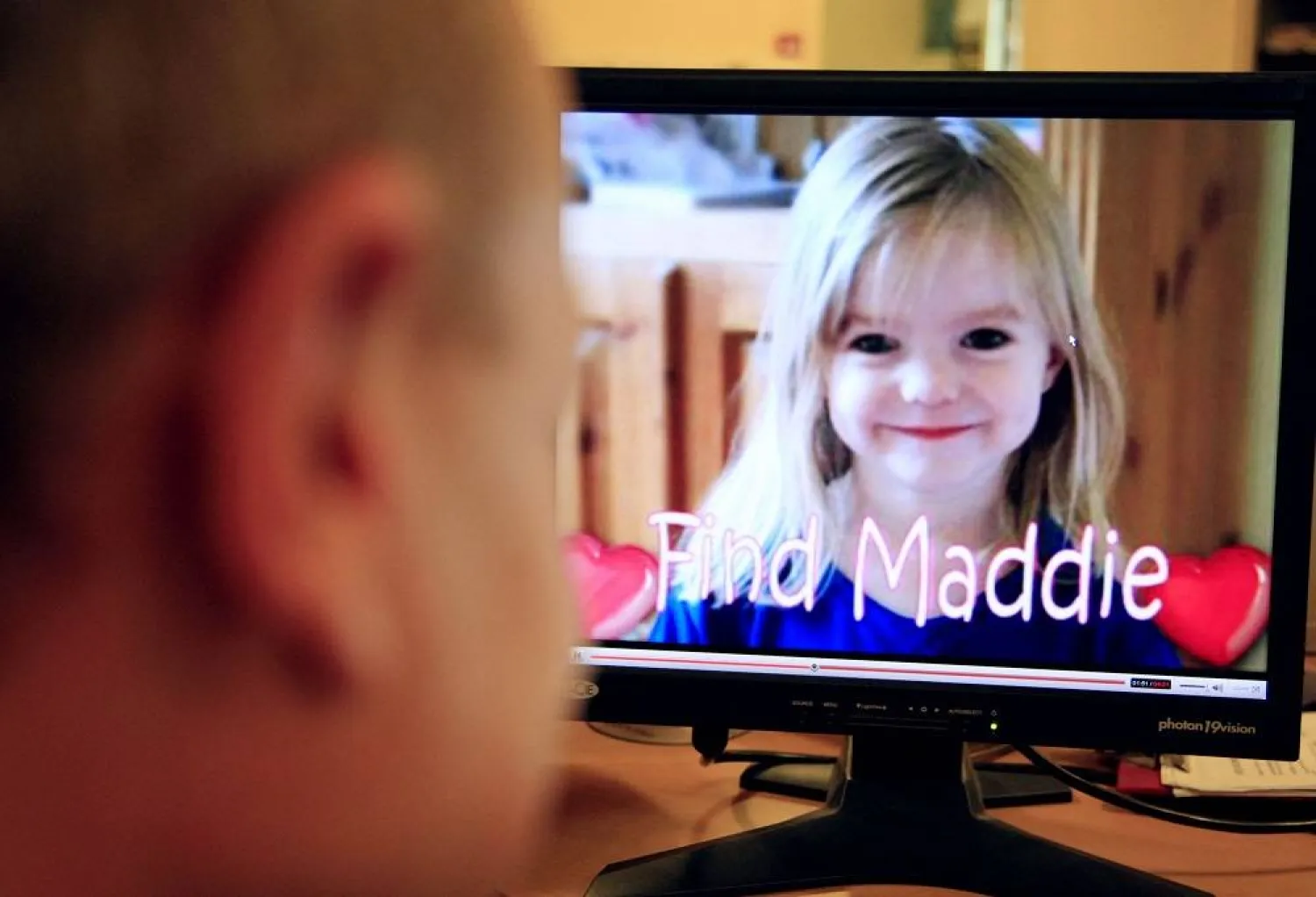
A picture of Madeleine McCann, who disappeared on a family holiday in Portugal, appears on a computer screen on the YouTube Internet site, 10 August 2007 in Paris. (AFP)
TT

German Investigated in Madeleine McCann Disappearance Released After Serving Time in Unrelated Case 

A picture of Madeleine McCann, who disappeared on a family holiday in Portugal, appears on a computer screen on the YouTube Internet site, 10 August 2007 in Paris. (AFP)

A German man who is under investigation in the disappearance of British toddler Madeleine McCann 18 years ago was released from prison Wednesday after serving his sentence in an unrelated case, police said.

The man, who has been identified by media as Christian Brückner, had been serving a seven-year sentence that stemmed from his 2019 conviction for the rape of a 72-year-old American woman in Portugal.

He left the prison at Sehnde, near Hannover in northern Germany, on Wednesday morning.

In June 2020, German prosecutors said the man was being investigated on suspicion of murder in connection with McCann’s disappearance on May 3, 2007, from an apartment complex in the Portuguese resort of Praia da Luz. They said they assumed the girl was dead.

Police have since carried out more searches in Portugal. But the suspect, who has denied any involvement in her disappearance, has not been charged in the case. The investigation is not affected by his release. He also remains a suspect in an investigation into McCann’s disappearance being conducted by Britain’s Metropolitan Police, who say he refused their request for an interview.

His lawyer, Friedrich Fülscher, has said charges would have been filed against his client long ago if there had been sufficient evidence.

The 48-year-old spent many years in Portugal, including in the Algarve resort of Praia da Luz around the time of Madeleine’s disappearance.

Investigators in the UK, Portugal and Germany are still piecing together what happened on the night 3-year-old Madeleine disappeared. She was in the same room as her brother and sister — 2-year-old twins — while their parents, Kate and Gerry, had dinner with friends at a nearby restaurant.

The suspect was tried last year over several unrelated sexual offenses he was alleged to have committed in Portugal between 2000 and 2017 and was acquitted in October. The presiding judge said the evidence was insufficient for a conviction, that the court heard from unreliable witnesses and that some had been influenced by media reports on the defendant.

The state court in Hildesheim has said it cannot legally disclose whether he will have to fulfill any conditions after his release. But Fülscher confirmed to regional public broadcaster NDR that his client will be required to wear an electronic foot tag, report regularly to probation services and give up his passport. German weekly Der Spiegel first reported on that decision, without naming sources.

He still faces an Oct. 27 court date in Oldenburg in northwestern Germany in a case in which he is accused of insulting a prison employee. A district court in the city sentenced him to six weeks in prison for that, but the defense has appealed.


British Writer John Harrison Wins 2026 Booker Prize for ‘The End of Everything’

British author John Harrison poses after winning the 2026 Booker Prize for his novel "The End of Everything" at the awards ceremony in London, Britain, 09 November 2026. (EPA)
TT

British Writer John Harrison Wins 2026 Booker Prize for ‘The End of Everything’

British author John Harrison poses after winning the 2026 Booker Prize for his novel "The End of Everything" at the awards ceremony in London, Britain, 09 November 2026. (EPA)

British author ‌John Harrison has won the 2026 Booker Prize for his novel, "The End of Everything," a dystopian satire that the prize says probes the limits of human understanding, becoming the oldest winner in the literary award's history at age 81.

Harrison's 13th novel follows Phillip Tennent and his elderly aunt Marnie on England's south coast years after social order has broken down ‌and mysterious entities ‌known as the iGhetti have arrived.

The ‌Booker ⁠judges unanimously selected ⁠the 198-page book, saying it "turns you upside down, raises a wry smile and, surprisingly, given the subject matter, leaves you with a twinge of optimism."

The victory was the first Booker Prize for Harrison, whose career as a ⁠novelist and critic spans six ‌decades and includes acclaimed science ‌fiction and fantasy works.

His win also marks ‌a rare triumph for speculative fiction.

Mary Beard, ‌chair of the judging panel, described the book as "the politics of now seen through the lens of the future", saying it depicts a society grappling ‌with a catastrophe its inhabitants do not fully understand.

Accepting the £50,000 ($67,235) prize at ⁠a ⁠ceremony in London, Harrison said literary awards remained important in a "landscape of industrialized fiction."

Speaking to the Booker Prize in August, Harrison said his novel was inspired by the 2008 financial crisis and asks what happens when "all of our expectations and explanations of the world become an ongoing disaster, but we still have to make a life."

Harrison beat a shortlist that included former Booker winners Douglas Stuart and Marlon James.


Fossil Fuel Emissions Fall Due to Iran War, Renewables, Research Finds

Vessels at the Strait of Hormuz, as seen from Musandam, Oman, November 9, 2026. (Reuters)
TT

Fossil Fuel Emissions Fall Due to Iran War, Renewables, Research Finds

Vessels at the Strait of Hormuz, as seen from Musandam, Oman, November 9, 2026. (Reuters)

Global fossil fuel emissions are projected to fall slightly in 2026 due to the expansion of renewable energy and the oil price shock sparked by the Iran war, researchers said Tuesday.

Emissions from the burning of oil, gas and coal -- the main drivers of climate change -- rose by 0.9 percent per year on average in the past decade, hitting a record high in 2025, according to the Global Carbon Budget report.

But they are expected to drop by 0.4 percent in 2026, according to the research, published as nations meet at the UN's COP31 climate summit in Antalya, Türkiye.

It would be the first annual drop since 2020, when the Covid pandemic paralyzed the global economy, trade and transport.

This year, the US-led war in Iran and closure of the Strait of Hormuz played a role in driving emissions down as it caused a drop in oil consumption amid soaring crude prices, the researchers found.

The deployment of solar panels, wind farms and electric vehicles also contributed to the drop. Two thirds of the increase in global energy demand is being met by solar and wind power and electric vehicles, the report found.

"A decline in fossil CO2 emissions is encouraging, but a reduction driven partly by geopolitical shocks is not a sustainable climate solution," said Pierre Friedlingstein, director of the Global Carbon Budget Office at the University of Exeter in Britain.

"The long-term answer remains the rapid deployment of clean energy technologies," said Friedlingstein, who led the study published in the journal Earth System Science Data.

- Rebound looms -

Corinne Le Quere, a climate change science professor at the University of East Anglia, noted that emissions rebounded when economies recovered following shocks such as Covid or the global financial crisis.

A rebound is likely "when the oil tensions go away", she said in a media briefing.

Oil-related emissions are projected to drop 1.9 percent last year but it was "likely a short-term response to the energy shock triggered by the Iran conflict", the researchers said.

Gas emissions are set to fall 0.3 percent while those from coal use will rise 0.6 percent.

Overall, fossil carbon dioxide emissions are expected to reach 38.2 billion tons in 2026.

Including emissions from land-use change such as deforestation, total CO2 emissions are projected to rise to 43.3 billion tons, from 42.8 billion tonnes last year.

The researchers said land-use emissions are projected to rise partly due to peat fires and forest degradation in southeast Asia, associated with drier conditions linked to this year's exceptionally strong El Nino climate pattern.

The report found that the world's carbon budget -- the amount of CO2 that can be emitted before global warming exceeds 1.5C above pre-industrial levels -- stands at 150 billion tons.

The researchers calculated that at the current, the carbon budget would be exhausted in less than four years.

Nations agreed at the 2015 UN climate talks in Paris to keep global warming "well below" 2C above pre-industrial levels, while pursuing efforts to limit it to 1.5C.

But the United Nations declared in September that the long-term 1.5C target would be missed in a matter of years.

Scientists say it is crucial to reduce greenhouse gas emissions from fossil fuels to limit the period of "overshoot" above 1.5C and bring temperatures back down as quickly as possible.


Food Industry Pushes Back on WHO Guidance for Products with Added Color, Sweeteners

Around 11 million deaths a year are linked to unhealthy diets, according to the agency, based on data from a global study. (Getty Images)
TT

Food Industry Pushes Back on WHO Guidance for Products with Added Color, Sweeteners

Around 11 million deaths a year are linked to unhealthy diets, according to the agency, based on data from a global study. (Getty Images)

Governments should consider regulating foods that include added colors, flavors or sweeteners designed to make the product more appealing to consumers, according to new draft World Health Organization guidance that has sparked swift pushback from the food industry.

The WHO draft aims to help governments identify which foods should be consumed in moderation as part of a healthy diet – and which products could be subject to measures like warning labels or taxes, depending on national priorities.

The new draft food-profiling model, published last week, marks the first time the UN health agency has included this type of ‌ingredient in its guidance, ‌previously only focused on nutritional content, including fat and salt.

“This draft ‌goes ⁠beyond traditional nutrient ⁠profiling by recognizing that foods may need to be considered not only for their nutrient content, but also for other aspects of their formulation” in order to prevent diet-related disease, said Katrin Engelhardt, technical officer at the WHO's department of nutrition and food safety.

Around 11 million deaths a year are linked to unhealthy diets, according to the agency, based on data from a global study.

The proposed new model is also the WHO’s attempt to guide member states through an increasingly polarized debate ⁠about ultra-processed foods (UPFs), a class of food or drink made using processing ‌techniques, additives and industrial ingredients, which often contain little ‌whole food. Examples include carbonated soft drinks or instant noodles.

BEYOND NUTRIENTS ALONE

Many food scientists say UPFs pose ‌numerous health risks but others – and the food industry – say they are defined too widely, ‌which risks demonizing healthy products.

The International Food and Beverage Alliance, an organization representing major multinational food and beverage companies, said it was concerned the proposed approach shifts attention away from nutritional quality and could capture more products for potential regulation.

"Of particular concern is the potential to undermine established nutrition priorities and reformulation ‌efforts,” said IFBA Secretary General Rocco Renaldi.

Other concerns for the food industry are higher costs from reformulating products or stringent labelling requirements, as well ⁠as the risk ⁠of class-action lawsuits as seen in the United States, and higher taxes for processed food companies.

Broadly, the WHO said the model covers “industrially-produced foods to be consumed in moderation” and is a bridge between its healthy diet recommendations and government policy on individual food products.

Lindsey Smith Taillie, co-director of the Global Food Research Program at the University of Chapel Hill, North Carolina, said the point of the model was to target unhealthy foods, combining both nutrients and UPFs.

“These two frameworks have never been mutually exclusive and can and should be used by policymakers as the starting place,” she said, adding that healthiness is measured by multiple criteria.

Kraft Heinz CEO Steve Cahillane last week told Reuters that industry players should have a say.

"We're in the food business and we care about consumers deeply," Cahillane said. "And so we ought to have a seat at the table as these discussions evolve."

The WHO proposal is out for consultation until November 27.