



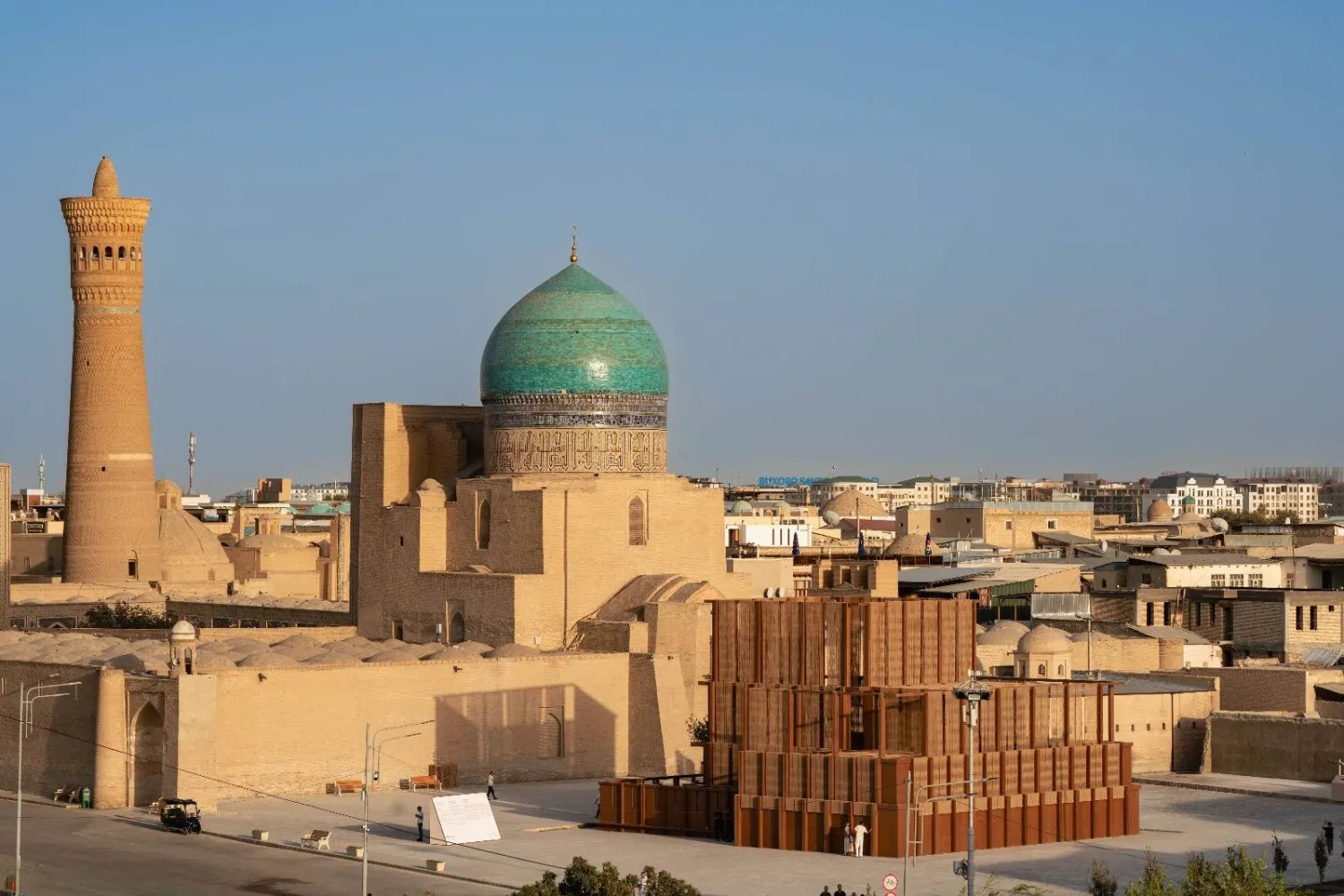

In the inaugural edition of the Bukhara Biennial, Saudi Arabia is represented through its artists and culture. A dramatic example is the winner of the AlMusalla Prize, which was first unveiled at the Jeddah Islamic Art Biennale earlier this year. Called "On Weaving", it was created by a team comprising Studio East Architecture, the international engineering firm AKT II, and artist Rayyane Tabet.
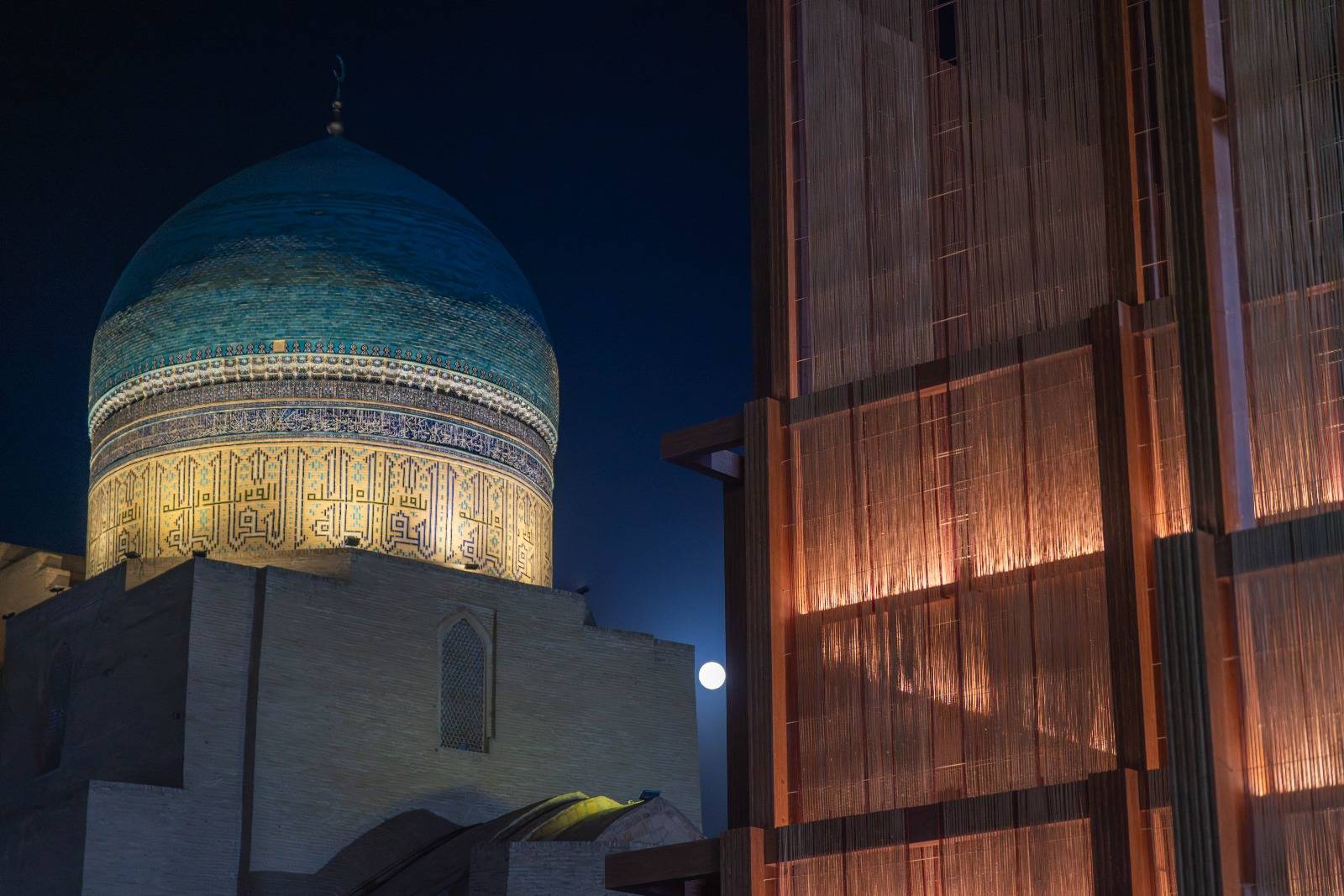
The prize-winning design is displayed outside the walls of Bukhara’s Great Mosque, its iconic blue dome providing a stunning backdrop to the installation. This juxtaposition of the historic 16th-century building with a completely modern feature, crafted from palm waste and inspired by traditional weaving techniques, creates a remarkable visual conversation, opening up avenues for discussion, contemplation and comparison.
The Art of Utilizing Open Spaces
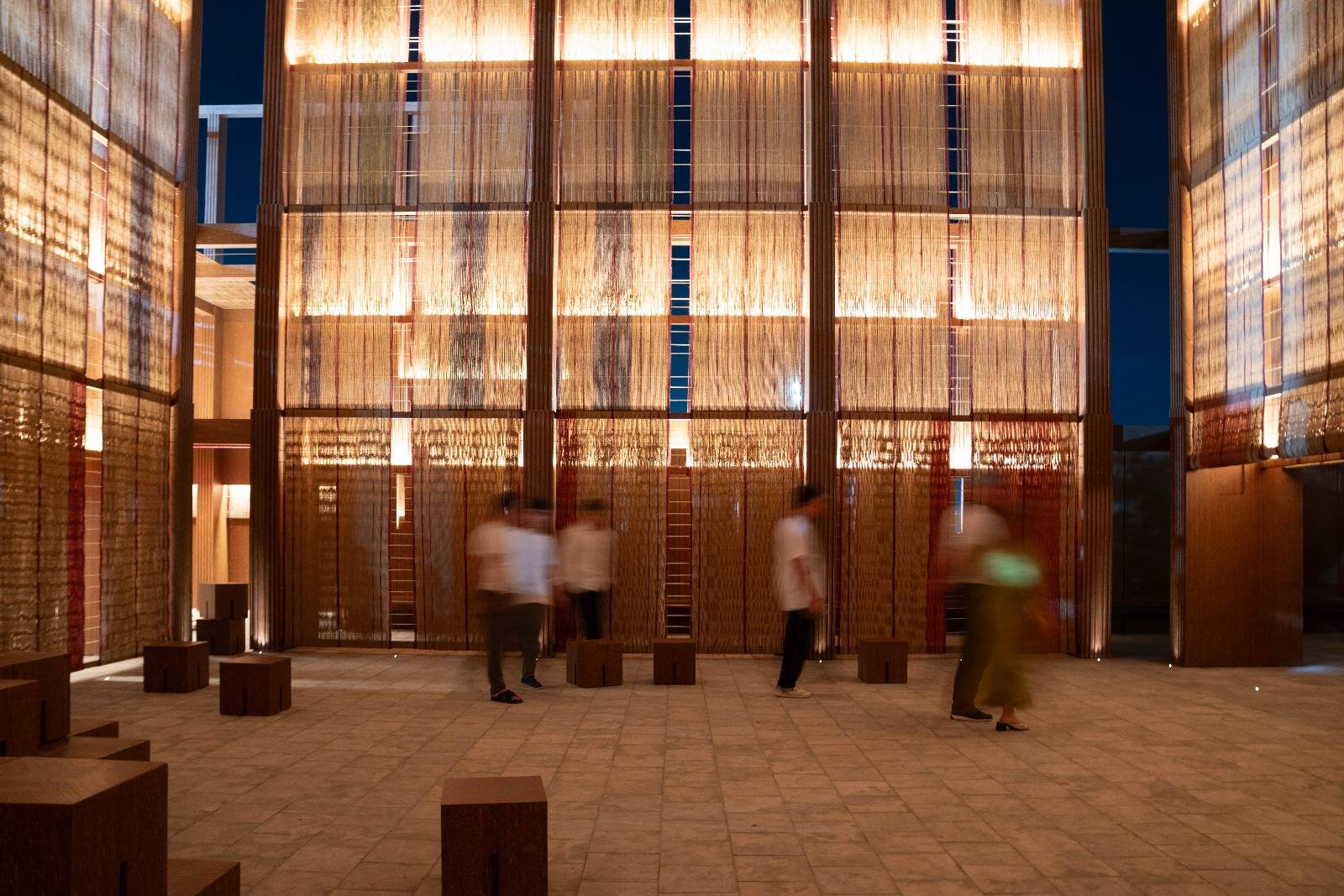
Inside the installation, I met Nicolas Fayyad, co-founder of the East Architecture Studio. Our conversation focuses on the new design and how open spaces can be utilized to create areas for worship, gathering and contemplation.
"We looked at the open space of the Great Mosque in Bukhara," he said, "and asked ourselves how to bring open spaces within the city to life. Placing the installation next to the Great Mosque was a way of framing this idea and exploring the use of space, from the vast courtyard within the old mosque to the smaller spaces surrounding it. We see these spaces as more than just places of prayer; they allow for gatherings, meetings and contemplation."
How does the design team view this juxtaposition of two buildings, separated by centuries of history and architectural styles? To answer this question, I turned to Christopher Blust, design director at AKT II. "Since both buildings are oriented towards Makkah," he explained, "this proximity is not accidental; the direction of the qibla (prayer direction) created this view. I think this juxtaposition has created a wonderful visual effect."
A Dialogue of Architecture and Design
Fayyad added: "There is also a dialogue that emerges between the two. Perhaps the first thing that comes to mind is the integration of two buildings from different backgrounds. Yet, upon closer observation, we feel that the two buildings are not strangers to each other. In a way, they complement each other."
And yet it’s hardly obvious what a 21st-century building and a 16th-century building have in common. "I think this is an important point," said Fayyad. "It’s closely related to the research we conducted. I see this courtyard as the unifying element between the two designs. There is a stylistic similarity and a dialogue between them. In Islamic societies, the courtyard wasn’t solely used for gatherings. It was sometimes used as a study hall. And other spaces, such as halls or prayer rooms, surrounded it."
Blust added that the design has connections to Jeddah. "We must remember that the materials used in constructing this prayer hall were inspired by the original building techniques there, from 200 or 300 years ago, and the materials used back then, such as mud, stone, and wood, are also present in this building."
It’s no surprise that the installation bears the imprint of its original location. However, it also establishes connections with the place to which it has been transported. How do the designers view this?
Fayyaz sees the connection between the new work and the Great Mosque in Bukhara, firstly geographically, and secondly through the shared history that binds them. Bukhara may be a new environment, but it is closely related to the original setting, as both cities share a rich history of openness to ideas and cultures from near and far.
Jeddah's location on the Red Sea made it a transit point for pilgrims on their way to the holy cities of Makkah and Madinah to perform the Hajj and Umrah rituals, and a destination for Muslims from all over the world, thus contributing to its unique cultural identity. At the same time, Bukhara served as a center of learning and knowledge along the Silk Road, fostering religious, scientific, artistic, architectural, and commercial exchange.
The design underwent a similar juxtaposition in Venice, where it was erected in the courtyard of the San Gregorio monastery as part of an exhibition called "Transitory and Rooted." The occasion was the 19th International Architecture Exhibition. This fact serves to highlight the design's flexibility, its ability to be disassembled, reassembled and reused. Fayyadh believed that the exhibition in Venice was "a beautiful dialogue between a Renaissance building and a piece from Saudi Arabia. The interaction between these two elements was very interesting."
Light as a Design Feature
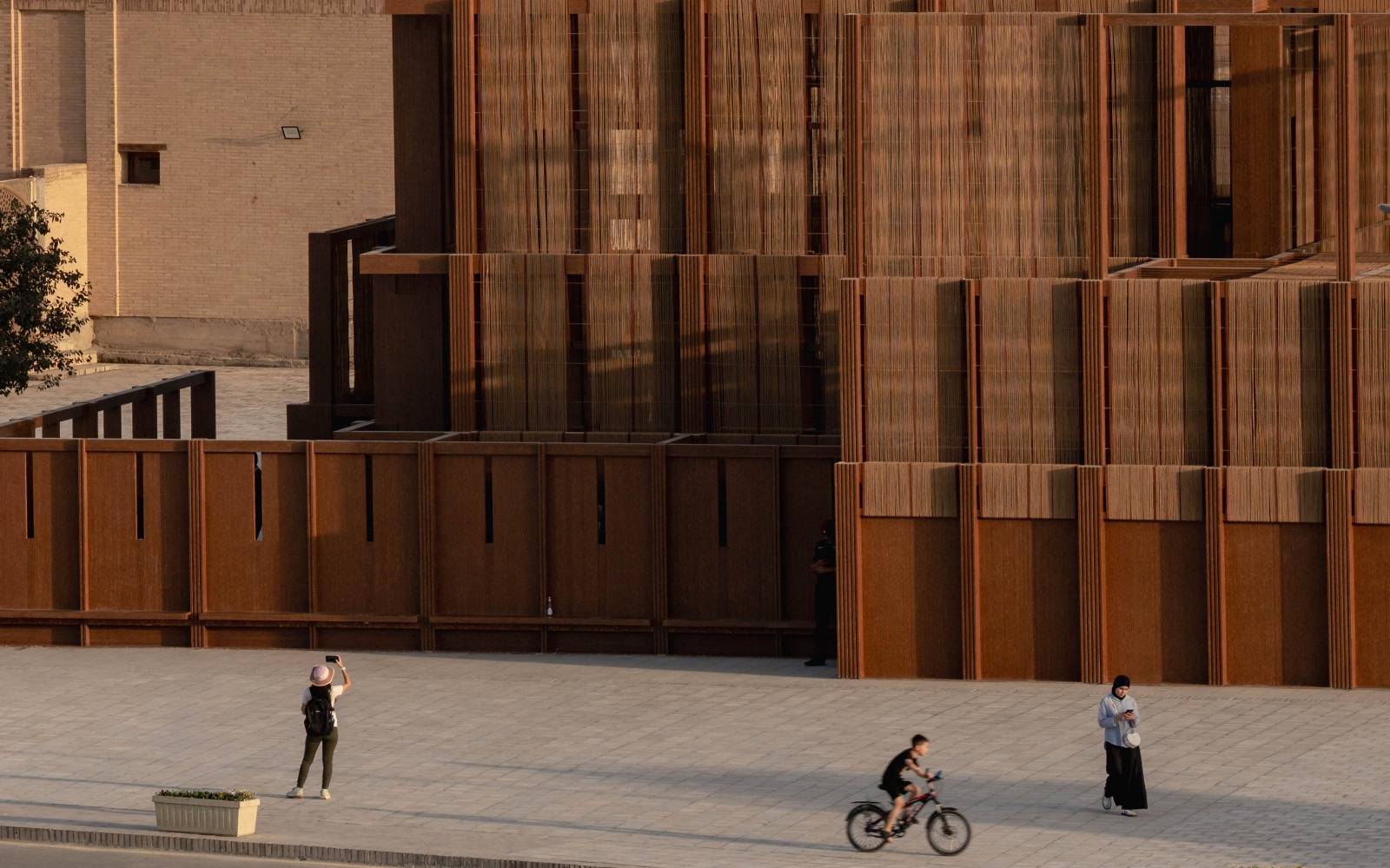
Light filters through the screens of the installation and Fayyadh said that this feature was extremely important: "We can observe a level of opacity and transparency, from bottom to top, so there is this intentional gradation of light. At the lower level, the opacity creates a sense of privacy, which is important in a mosque. But as you ascend, the light becomes brighter, giving the visitor a feeling of openness. It was, in fact, an interplay of light levels, and when the sun shines on the inner courtyard, the visitor feels as if they are standing under a tall palm tree."
The Next Stop
After Venice and Bukhara, what’s next for the installation? "We don't know yet," Fayyadh admitted, "but there is a plan to relocate it, to expand its legacy and story, and to give different communities the opportunity to experience it."


