


EU Takes Aim at Plastic Pellets to Prevent their Nightmare Cleanup

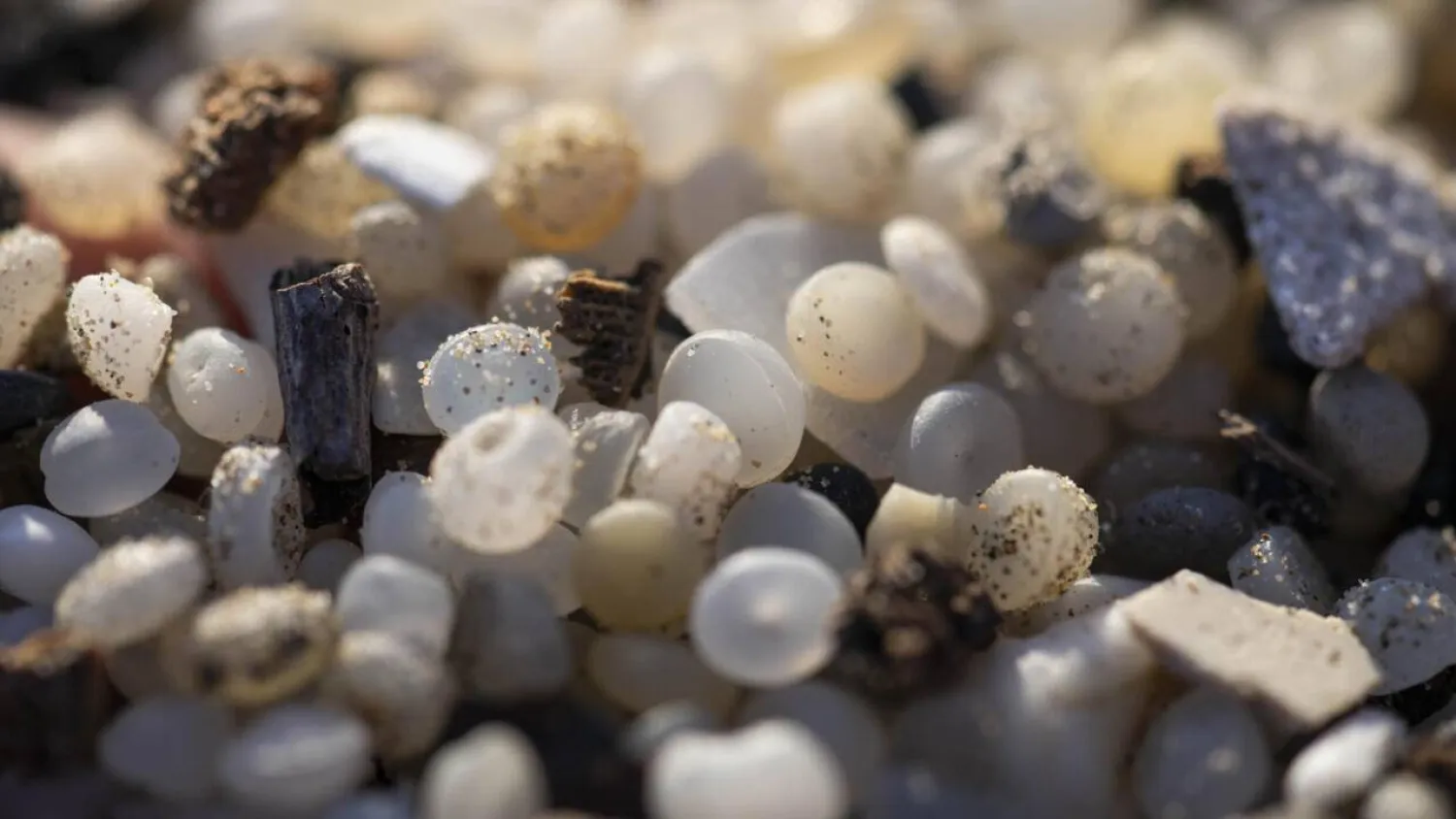
Industrial plastic pellets washed up on a Catalonian beach in 2024. Josep LAGO / AFP
TT

EU Takes Aim at Plastic Pellets to Prevent their Nightmare Cleanup

Industrial plastic pellets washed up on a Catalonian beach in 2024. Josep LAGO / AFP

At first glance, the tiny plastic pellets appear relatively harmless. No bigger than a lentil, these "nurdles" are destined to be melted down to make everything from car bumpers to salad bowls.

But when tens of millions of them spill from trucks or cargo ships they are devilish to clean up, blighting landscapes and washing up around the world for years to come.

On Thursday, the European Parliament could approve tougher new rules aimed at preventing such disastrous spills, and reducing their pollution impact, said AFP.

If approved, they will require companies in the European Union to adopt safeguards in handling and transporting nurdles, which are produced by petrochemical giants from fossil fuels.

Anywhere between 52,140 tons and 184,290 tons of pellets entered the environment in the EU in 2019, according to the European Commission, which proposed the regulations.

"This is equivalent to between 2,100 and 7,300 trucks full of pellets per year," the Commission said.

Light, buoyant and insoluble, these tiny pellets present an almost insurmountable challenge once scattered in nature.

Recovery is "a physically intense and time-consuming task" mostly done by hand, said Kevin Tallec from Cedre, a French non-profit organization that specializes in water contamination and cleanup.

"We can be 100 percent sure that if there's pellet pollution, we won't be able to recover all of them," Tallec, a marine biologist, told AFP in Brest, where Cedre is headquartered.

Chronic problem

One of the worst spills occurred off Sri Lanka in 2021 when thousands of tons of plastic pellets were lost from a stricken cargo ship.

Nurdles coated an 80-kilometer (50-mile) stretch of beach on the island's western coast, and fishing was prohibited for months.

In northwest Spain, volunteers used strainers to sift nurdles from sand along the Atlantic coast after containers full of pellets fell off a cargo vessel in late 2023.

"When I was little, I used to pick them up on the beaches, just a few at the time. But the pollution has become chronic," said Amandine Le Moan, co-founder of the French coastal conservation group Ystopia.

They are ingested by marine life, particularly sea birds and turtles, while the chemicals in microplastics also present a potential risk to human health, the Commission said.

The spills also hurt tourism and fishing, it added.

Nurdle spills often occur when an ill-placed shipping container tumbles overboard, and the International Maritime Organization (IMO) has issued non-binding recommendations to try to prevent this happening.

Major industry players that have adopted these recommendations include Armateurs de France, which represents French maritime transport and services companies.

"These containers must be identified, declared, and treated in a specific way, like chemicals and hazardous materials placed below deck," Laurent Martens, general delegate of Armateurs de France, told AFP.

Down the line

But transportation is not the only source of spills, Cedre's Tallec said, with nurdles also lost through operational channels.

"It's also a broader issue involving the value chain, which handles these pellets in a way that doesn't prevent their loss into the environment," said Lucie Padovani from Surfrider Foundation Europe, an ocean conservation group.

For example, in Ecaussinnes, an industrial town in Belgium that hosts large petrochemical operators, plastic pellets have been found scattered throughout the landscape and in local rivers.

French petrochemical giants Arkema, and the American companies Dow and ExxonMobil, declined to comment when reached by AFP.

Chemical trades groups, such as Plastics Europe and France Chimie, did not respond to AFP's requests for comment.

Plastics manufacturers insist they are not the weak link.

"We are well aware of all the issues, and obviously plastic pollution is something we need to get rid of," said Caroline Chaussard, director of sustainable development at Polyvia, an industry group for French plastics manufacturers.

"The biggest leaks are not at the processor level -- that's where they are easiest to contain, since they are in a limited area," she said.

Joseph Tayefeh, secretary general of Plastalliance, which represents European plastics makers, said "this is an expensive raw material that no one wants to waste".

"A kilo costs between 1 euro ($1.17) and 1.3 euros," he said.

Major oil- and gas-producing nations have resisted efforts to limit the amount of new plastic manufactured every year, a figure estimated at 400 million tons.

In August, the latest round of negotiations on a global treaty to combat plastic pollution collapsed without agreement.

Philippe Bolo, a French MP who lobbied for a tough treaty, said the scourge of nurdles "revealed the ubiquity of plastic" in modern life.

"The more we consume, the more we will need them," he said.


Saudi Arabia: National Wildlife Center Releases 124 Endangered Species in Imam Turki Royal Reserve

The National Center for Wildlife (NCW) logo
TT

Saudi Arabia: National Wildlife Center Releases 124 Endangered Species in Imam Turki Royal Reserve

The National Center for Wildlife (NCW) logo

The National Center for Wildlife (NCW), in cooperation with the Imam Turki bin Abdullah Royal Reserve Development Authority, has released 124 endangered wildlife species into the reserve as part of programs to breed and reintroduce them into their natural habitats.

The release included 100 rhim gazelles, 10 idmi gazelles, and 14 Arabian oryx, within the center’s efforts to reintroduce native species into their natural environments, restore ecosystems, and enrich biodiversity in natural reserves, thereby enhancing ecological balance and promoting environmental sustainability.

NCW CEO Dr. Mohammed Qurban noted that the release is part of the center’s ongoing efforts to reintroduce endangered native species into their natural habitats and to strengthen ecosystem stability within protected areas.

He added that this step builds on a series of releases carried out by the center in several natural reserves under its dedicated program for breeding and reintroducing endangered species, contributing to one of the key objectives of the Saudi Green Initiative and Saudi Vision 2030, which aim to create an attractive environment that improves quality of life and promotes sustainability.

Since its establishment, the NCW has been implementing strategic plans to protect wildlife, restore ecosystems, and enhance sustainability, while aiming to become a global leader in reintroducing endangered species into their natural habitats through advanced technologies and specialized scientific research.


Snow Cripples Air, Train and Road Traffic in the Netherlands

People walk through a winter shower with umbrellas in Amsterdam, the Netherlands, 04 January 2026. (EPA)
TT

Snow Cripples Air, Train and Road Traffic in the Netherlands

People walk through a winter shower with umbrellas in Amsterdam, the Netherlands, 04 January 2026. (EPA)

Snowfall disrupted air, train and road traffic in the Netherlands on Monday, as hundreds of flights were cancelled and all trains around Amsterdam came to a standstill.

Amsterdam Schiphol ‌airport, one ‌of Europe's ‌busiest ⁠hubs, cancelled almost ‌500 flights on Monday morning and expected that number to rise throughout the day.

The airport had already been forced to scrap hundreds of flights ⁠a day since Friday, due ‌to snow and ‍icy temperatures.

The ‍snow which covered large ‍parts of the Netherlands on Monday morning also crippled traffic, as no trains were operating in the region around Amsterdam and public transport was severely affected ⁠in many places across the country.

Ice and snow caused many delays and accidents on the roads, even as authorities had advised people to stay at home whenever possible.

Snowfall is expected to continue in the Netherlands throughout ‌the week.


UK Starts Ban on Junk Food Ads on Daytime TV and Online

This photo illustration taken on December 18, 2025 shows a venison burger at a popular market in London. (Photo by JUSTIN TALLIS / AFP)
TT

UK Starts Ban on Junk Food Ads on Daytime TV and Online

This photo illustration taken on December 18, 2025 shows a venison burger at a popular market in London. (Photo by JUSTIN TALLIS / AFP)

New regulations come into force Monday in Britain banning daytime TV and online adverts for so-called junk foods, in what the government calls a "world-leading action" to tackle childhood obesity.

The ban -- targeting ads for products high in fat, salt or sugar -- is expected to remove up to 7.2 billion calories from children's diets each year, according to the health ministry.

Impacting ads airing before the 9:00pm watershed and anytime online, it will reduce the number of children living with obesity by 20,000 and deliver around £2 billion ($2.7 bln) in health benefits, the ministry added.

The implementation of the measure -- first announced in December 2024 -- follows other recent steps, including an extended sugar tax on pre-packaged items like milkshakes, ready-to-go coffees and sweetened yoghurt drinks, AFP reported.

Local authorities have also been given the power to stop fast food shops setting up outside schools.

The government argues evidence shows advertising influences what and when children eat, shaping preferences from a young age and increasing the risk of obesity and related illnesses.

It notes 22 percent of children starting primary schooling in England -- typically aged around five -- are overweight or obese, rising to more than a third by the time they progress to secondary schools aged 11.

Tooth decay is the leading cause of UK hospital admissions for young children, typically aged five to nine, according to officials.

"By restricting adverts for junk food before 9pm and banning paid adverts online, we can remove excessive exposure to unhealthy foods," health minister Ashley Dalton said in a statement.

He added the move was part of a strategy to make the state-funded National Health Service (NHS) focus on preventing as well as treating sickness, "so people can lead healthier lives".

Katharine Jenner, executive director of the Obesity Health Alliance, said it was "a welcome and long-awaited step towards better protecting children from unhealthy food and drink advertising that can harm their health and wellbeing".

The charity Diabetes UK also welcomed the ads ban, with its chief executive, Colette Marshall, noting that type 2 diabetes is on the rise in young people.

"Obesity is a major risk factor for type 2 diabetes, and the condition can lead to more severe consequences in young people -- leaving them at risk of serious complications like kidney failure and heart disease," she added.
