Riyadh Season 2025 Draws 1 Million Visitors in 13 Days


Since its opening, Riyadh Season has featured major world-class events, drawing wide attention from local and global audiences. SPA
TT

Riyadh Season 2025 Draws 1 Million Visitors in 13 Days


Since its opening, Riyadh Season has featured major world-class events, drawing wide attention from local and global audiences. SPA

General Entertainment Authority (GEA) Chairman Turki Alalshikh said Riyadh Season 2025 has attracted one million visitors just 13 after its launch on October 10.

The milestone reaffirms the sixth edition’s status as the grandest entertainment destination in the region and the world, he added.

Since its opening, the season has featured major world-class events, drawing wide attention from local and global audiences. It started with a spectacular global parade organized in collaboration with US company Macy's, in a first-of-its-kind celebration combining visual splendor and artistic performance.

The lineup also included the Joy Forum 2025, which brought together some of the world's most prominent entertainment leaders and creators, as well as the Six Kings Slam tennis tournament, featuring top stars.


Woman Stuck on Tiny Pacific Island for 3 Years Can’t Get Transit Visa to Fly Home

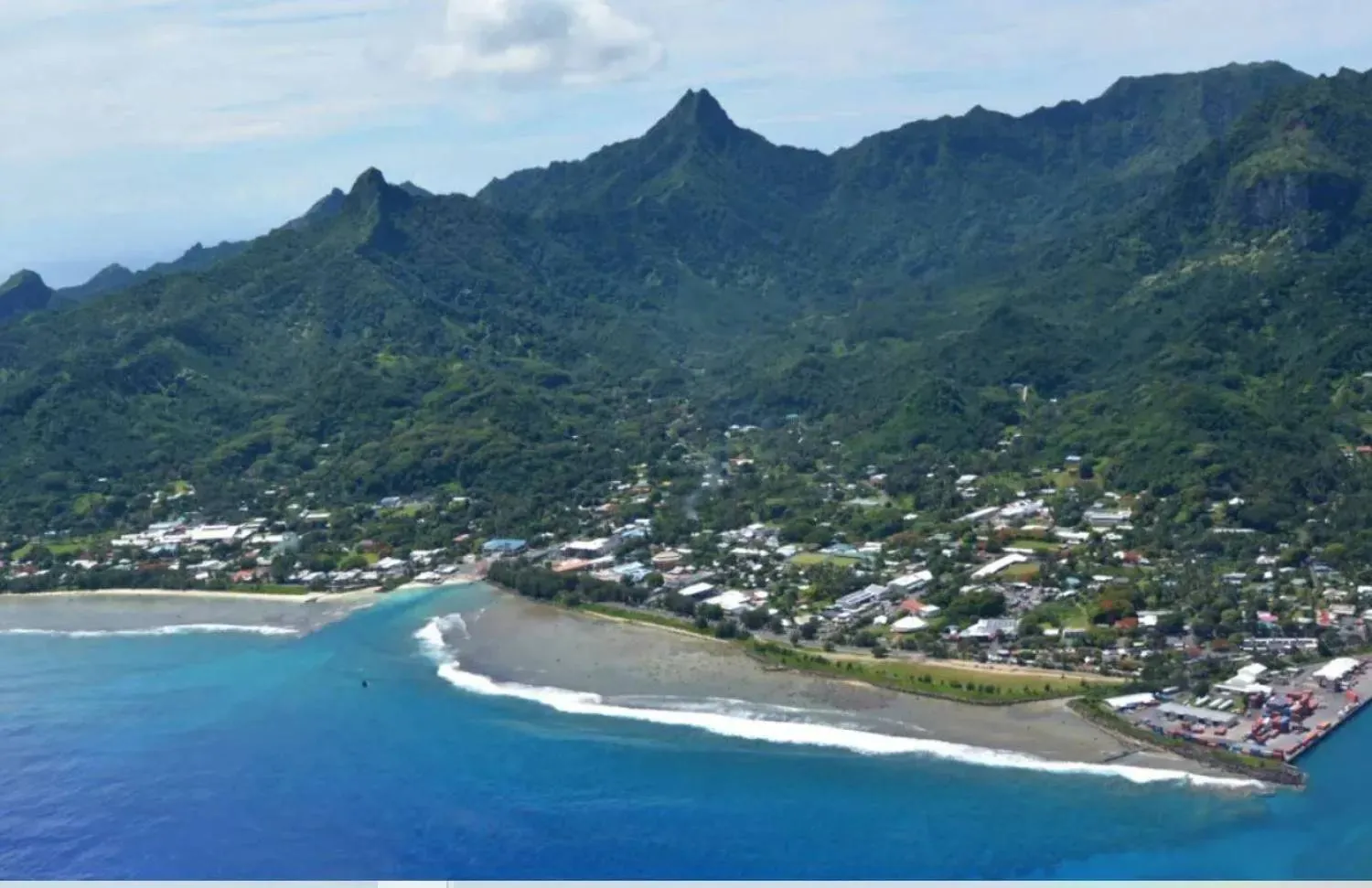
Cook Islands is known for its beaches and volcanic peaks - but Ruchira Ranasingha is an involuntary guest (AFP) 
TT

Woman Stuck on Tiny Pacific Island for 3 Years Can’t Get Transit Visa to Fly Home

Cook Islands is known for its beaches and volcanic peaks - but Ruchira Ranasingha is an involuntary guest (AFP) 

When Ruchira Ranasingha left Sri Lanka almost a decade ago, she could never have imagined she would end up stranded on a tiny archipelago in the South Pacific.

The 50-year-old has now been stuck in the Cook Islands for three years. She told the BBC she is desperate to go back to Sri Lanka and has even offered to go “handcuffed, bound and gagged.”

Ranasingha had been hoping to settle in New Zealand.

After seeking asylum there, she said she followed an immigration adviser’s recommendation to temporarily exit the country to apply for a work visa. But once in the Cook Islands, her application was rejected. And by leaving New Zealand, she had breached the terms of her existing asylum-linked visa.

Now New Zealand is refusing to issue her a transit visa that would allow her to fly home to Sri Lanka.

Australia is refusing too. The only other international destinations she can fly to from the Cook Islands - Tahiti and Hawaii - require her to give biometric information in New Zealand before any visa can be processed.

As a result, she has no feasible way of leaving.

“My son - my only child - is getting married in November and I really want to be there for his wedding. My mother is so worried about what has happened to me that she is constantly in and out of hospital,” she said through tears.

“I will do anything they ask of me - I just want to go home,” she added.

Ranasingha left Sri Lanka in 2018 after being forced to close her small T-shirt factory due to a loss of business. Struggling to repay loans, she moved to Hong Kong to work as a domestic caregiver looking after elderly people and children.

Her brother tells BBC Sinhala she had come under immense financial pressure. Her husband was a drug addict who died about seven years ago, he added.

In December 2022, Ranasingha headed to New Zealand, where she said she lived with a cousin on a two-month visit visa. As it came close to expiring, she said an immigration interpreter helped her apply for asylum on the grounds she was facing threats from lenders in Sri Lanka.

She was granted an asylum seeker “open work visa”, enabling her to work for almost any employer for a year.

She found a job at a restaurant, she says, which ultimately agreed to sponsor an employment visa, which she believed would give her longer-term stability.

But as asylum seekers generally cannot apply for other visas while their applications are processed in New Zealand, it was declined.

That’s when she got in touch with Immigration & Secretarial Services, a firm she claimed told her a fresh application for an employment visa could be made from overseas.

Email correspondence the BBC has seen shows its manager, Sylviane Gallant, saying she would initiate the process as soon as Ranasingha had left the country.

So she booked a short stay in the Cook Islands while the application was made.

It turned out to be a disastrous decision.

She was again refused the employment visa. And by leaving New Zealand, she had violated the terms of her existing visa. New Zealand authorities made it clear they would not grant her any future visas.

Gallant claimed to make various interventions on her behalf, including writing to politicians including Chris Penk, New Zealand’s then-immigration minister.

But ultimately, Ranasingha said Gallant admitted the situation was her fault and told her “there was nothing more she could do.”

“She told me I was better off going home. There was nothing holding me there so I agreed to go.”

But when she turned up at the airport with an Air New Zealand ticket to Sri Lanka in hand, she was told she couldn’t board the flight without a New Zealand transit visa.

Three applications for a New Zealand transit visa were rejected. Authorities said they weren’t convinced she would leave New Zealand. Four applications for Australian transit visas were rejected too.

In one of its rejections, New Zealand suggested she explore other routes. But both the US state of Hawaii and the French Polynesian island of Tahiti told her she would need to provide biometric information before any visa could be processed - and that could only be done in person in New Zealand.

Her latest application to New Zealand, which included all the details of the alternative routes she’d been trying, as well as her son’s upcoming wedding and mother’s failing health, was also rejected.

“I have lost so much money on tickets. For almost four years I have been just applying for visa after visa with nothing working out,” she said, breaking down.


Aviation Superfan Brings A380 Experience Into His Own Apartment

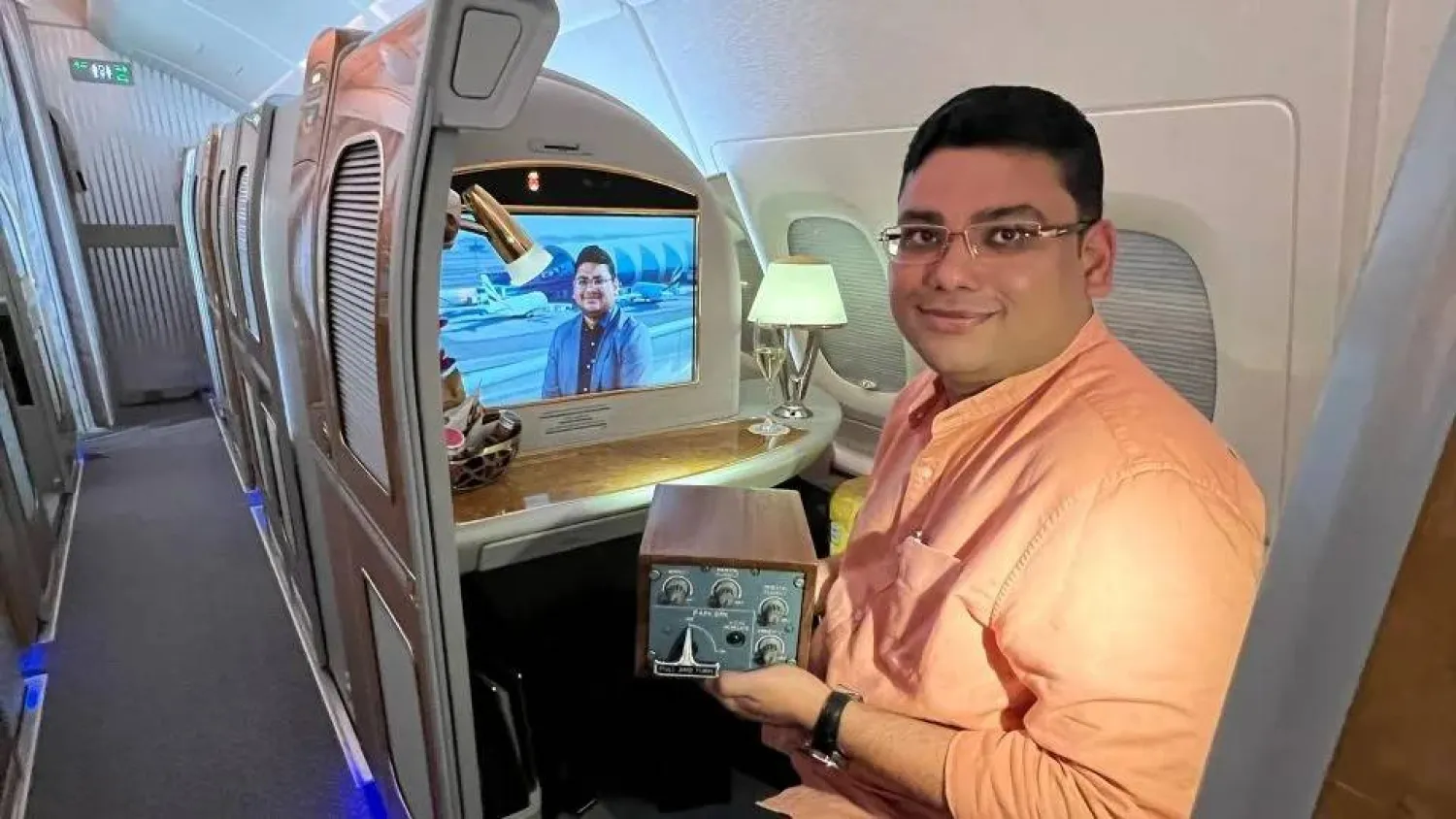
Arun Rajagopal, holding an Emirates A380 parking brake while a documentary featuring the A380 superfan plays in the background (Arun Rajagopal)
TT

Aviation Superfan Brings A380 Experience Into His Own Apartment

Arun Rajagopal, holding an Emirates A380 parking brake while a documentary featuring the A380 superfan plays in the background (Arun Rajagopal)

It wasn’t love at first flight for aviation superfan Arun Rajagopal and the Airbus A380. The turning point came on his fourth journey aboard the world’s largest passenger plane, flying business class to Singapore.

“The seats were huge, and you have a bar in the back of the plane,” he said. It gave him a “wow” feeling, like “experiencing comfort on another level.”

Soon, he was flying A380s as often as possible. So far he’s clocked 220 times and counting, covering roughly 715,000 miles across six continents, according to CNN.

In recent years, he has brought the A380 experience into his own Dubai apartment as well. He has two first-class seats from Emirates’ first A380, first-class cabin lamps, and an A380 wheel upcycled into a coffee table.

The pièce de résistance, however, is the meticulously restored and customized living-room from The Residence – Etihad Airways’ luxurious three-room private suite – which he spent a year constructing in his living room.

The Airbus A340-600 broke records as the world’s longest passenger plane when it was launched in 2002, but for most of the decades it’s been flying, it’s been a commercial flop.

Its four engines are thirsty and its 247-foot-long fuselage requires special runway clearance.

On top of this, its quirky design includes a downstairs lavatory tucked away in space usually reserved for cargo – which apparently has made it a tempting proposition for would-be members of the Mile-High Club.

While it never was a hit with the airline industry, the Airbus A340-600 has a strong cult following among aviation fans and aircrews, many of whom turned out at Washington Dulles International Airport this month to see the arrival of a flight that would mark the end of German carrier Lufthansa’s relationship with the aircraft.


New Restrictions Kick in as New Delhi Battles Pollution

Commuters ride along a street amid smog in Lahore on November 1, 2026. (Photo by Arif ALI / AFP)
TT

New Restrictions Kick in as New Delhi Battles Pollution

Commuters ride along a street amid smog in Lahore on November 1, 2026. (Photo by Arif ALI / AFP)

Authorities in New Delhi stepped up anti-pollution measures on Sunday, including higher parking fees and work-from-home orders, seeking to curb toxic smog in one of the world's most polluted capitals.

The restrictions, which came into force Sunday, include a doubling of vehicle parking charges and work-from-home arrangements for government and private-sector offices aimed at cutting traffic emissions, AFP reported.

Authorities will also bar vehicles that do not comply with mandated emission standards from entering the capital, while a ban on all dust-generating demolition and outdoor construction activity takes effect immediately.

"From November 1... Delhi's Winter Action Plan comes into effect with stricter pollution controls, stronger enforcement and 24×7 monitoring," Chief Minister Rekha Gupta's office said in a statement.

"We humbly request all Delhiites to follow the guidelines and contribute towards making Delhi's air cleaner and healthier."

Delhi's government has already rolled out a range of pollution-control measures over the past month, including a ban on rubbish burning and restrictions on food stalls using coal or firewood.

But similar efforts in previous years have done little to prevent the annual smog that engulfs the megacity from November to January, when cooler temperatures trap pollutants close to the ground.

Major sources of pollution include vehicle emissions, coal-fired power plants, industrial activity, construction dust and the burning of crop residue in neighboring states.

Vehicles account for 23 percent of Delhi's winter pollution, while biomass burning, including farm stubble fires, contributes 20 percent, according to India's environment ministry.

Industry, including coal-fired power plants, contributes about nine percent.

Levels of PM2.5, tiny cancer-causing particles that can penetrate deep into the lungs and bloodstream, frequently exceed 300 micrograms per cubic meter during peak winter months, around 20 times the World Health Organization's recommended daily limit.

Last year, pollution levels peaked at 846 micrograms per cubic meter, or 56 times the WHO guideline.

On Sunday, monitors recorded PM 2.5 at 201 micrograms per cubic meter, over 13 times the safe limit, a reading that was likely helped by intermittent rain over the last few days.

A 2024 study published in The Lancet Planetary Health estimated that 3.8 million deaths in India between 2009 and 2019 were linked to air pollution.