

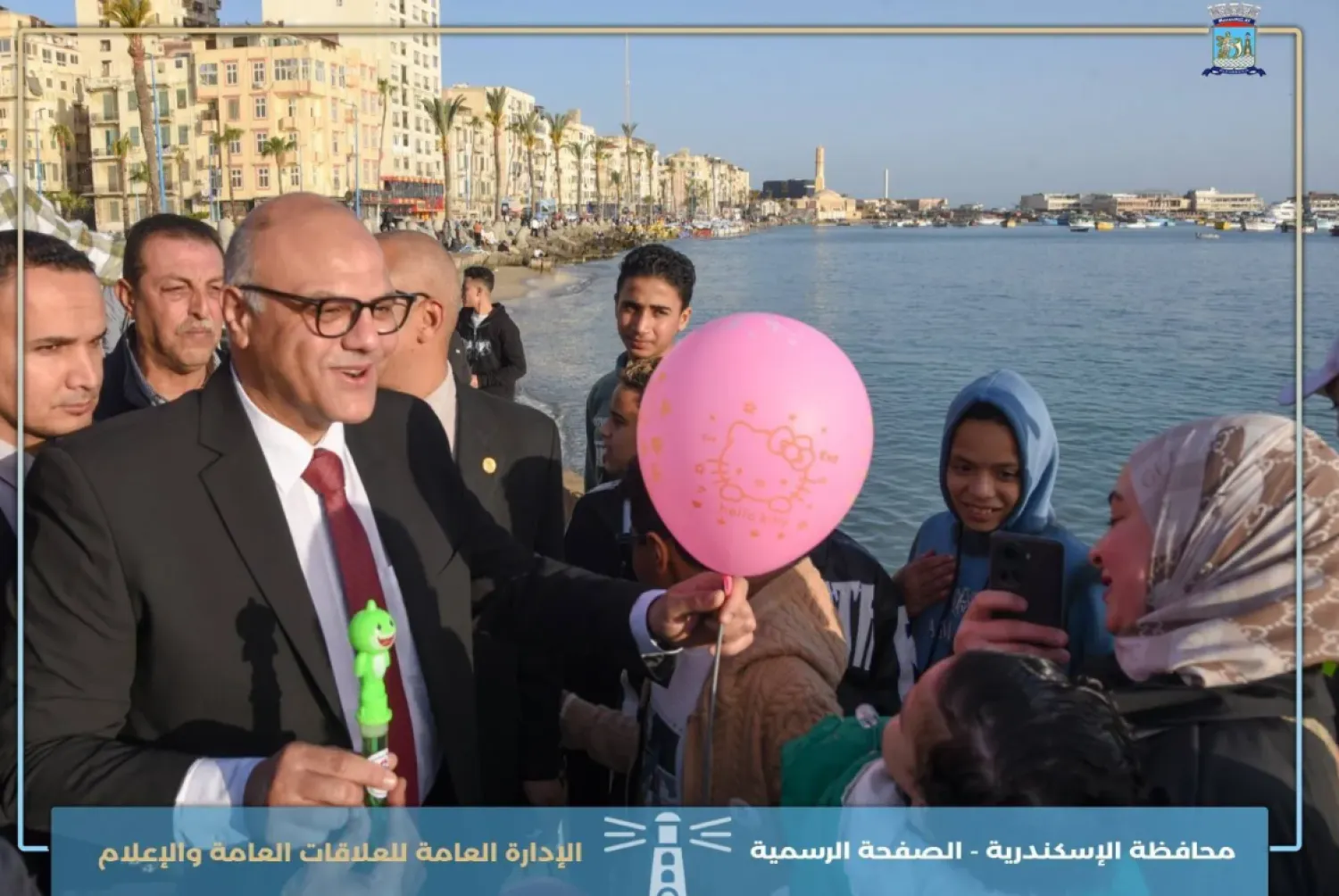

High Prices and Weather Affect Egyptians’ Outings During Eid al-Fitr

Bad weather reduced visits to the beaches - Alexandria Governorate.
TT

High Prices and Weather Affect Egyptians’ Outings During Eid al-Fitr

Bad weather reduced visits to the beaches - Alexandria Governorate.

Ahmed Bahgat, a father in his late twenties, was surprised when taking his family to a movie at Cinema El Tahrir in the Dokki district. He found that evening ticket prices had surged by 20%, reaching 120 EGP ($1 equals 52.3 EGP in banks), forcing him to abruptly increase his budget for the first night of the Eid holiday.

Bahgat told Asharq Al-Awsat that the price hikes were not limited to tickets but also extended to the popcorn and soda he bought for his two sons. He noted that prices had risen significantly since their last visit during the mid-year school break less than two months ago, a reality that has forced him to "calculate the cost of every group outing to avoid embarrassing situations."

The surge in fuel prices mid-month, which exceeded 30%, has prompted various service and commodity providers to implement price increases. Some cinemas have also adjusted their rates as a result of rising operational costs.

Entertainment as a Non-Essential Expense

Economic expert Karim el-Omda confirmed to Asharq Al-Awsat that recreational activities, such as going to the cinema or general outings, are among the sectors hardest hit during economic crises, as entertainment is often the first "non-essential" expense to be cut.

El-Omda added that reducing or halting spending on outings is a common occurrence in any society facing such pressures, not just in Egypt. He pointed out that "this trend will not be limited to the Eid period but is expected to continue in the coming months, potentially impacting turnout across various entertainment sectors."
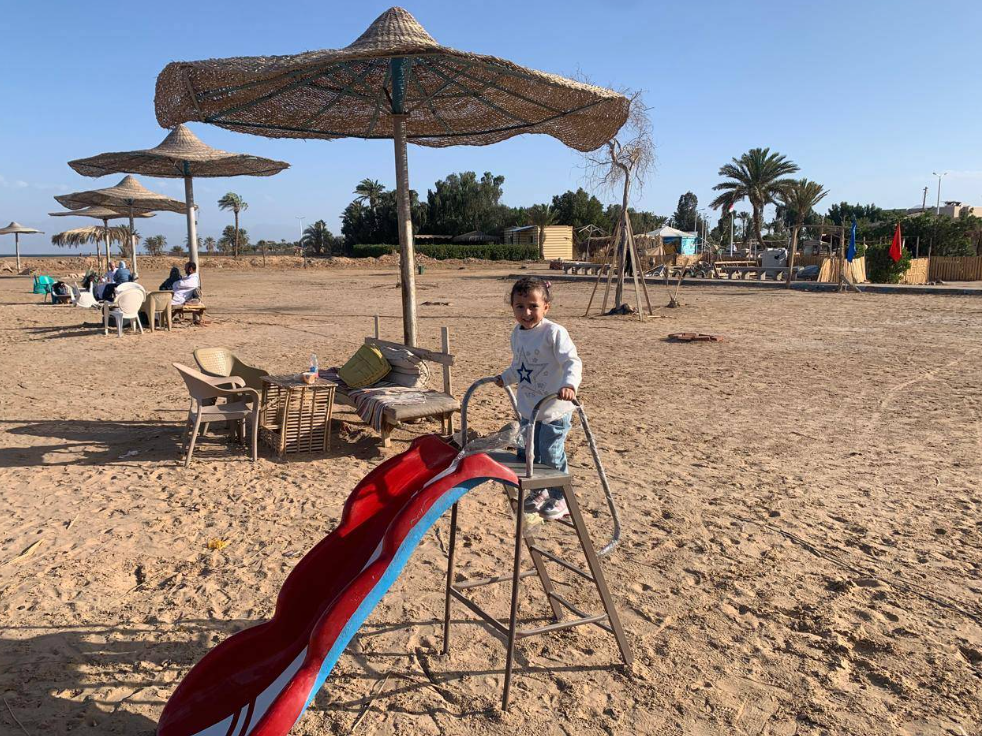
Bad weather curbed residents’ turnout at the beaches - South Sinai Governorate

Inclement Weather and Public Spaces

The holiday coincided with a wave of unstable weather, including warnings against traveling on certain highways during the first day of Eid, along with rain and wind in many areas. However, Ibrahim Metwally, Head of the Central Administration for Zoos, told Asharq Al-Awsat that ticket prices for provincial zoos remained unchanged. He noted that zoos that underwent renovations or added new animals saw a significant increase in visitors.

Metwally indicated that by the middle of the third day of Eid al-Fitr, ticket sales had increased by approximately 30% compared to the same period last year. He added that despite the unstable weather, the public’s desire to visit gardens and stay in open-air spaces to enjoy the festive atmosphere was remarkable across all age groups.

Conversely, the erratic weather drove many members of the Shooting Club (Nadi El Said) in Dokki to remain indoors, avoiding the club’s extensive green spaces and limiting their movement to periods of calmer weather.

Tourism and Pre-Bookings

Hotels in tourist hubs like Sharm El-Sheikh and Hurghada saw a noticeable influx of citizens for the Eid break. Most of these trips followed pre-arranged booking programs, typically lasting between three and four days, with a preference for hotels featuring private beaches.

Tourism expert Walid El-Batouty told Asharq Al-Awsat that the majority of bookings fulfilled during the Eid season were unaffected by recent price changes, as they were secured before the new hikes took effect.

El-Batouty added that while hotels are honoring previously set prices, they have already begun applying new rates to new bookings to avoid financial losses. He described this as a "standard periodic procedure" involving price adjustments for both Egyptian nationals and foreign tourists alike.



Plant-Based System for Treating 'Sick Building Syndrome'

Vertical gardens rely on growing plants vertically (University of Surrey).
TT

Plant-Based System for Treating 'Sick Building Syndrome'

Vertical gardens rely on growing plants vertically (University of Surrey).

A Spanish study has demonstrated the effectiveness of active vertical gardens, also known as green walls, in improving air quality inside buildings and enclosed spaces.

Researchers at the University of Seville explained that vertical gardens represent a natural alternative to industrial air purification systems, with lower energy consumption and a positive environmental impact. The results were published Monday in the journal Atmospheric Environment.

Vertical gardens are an innovative agricultural technology based on growing plants vertically on building facades or internal and external walls, instead of traditional cultivation in soil. These plants are installed within specialized support systems that include moisture insulation layers, alternative growth media, and integrated automated irrigation and nutrition systems.

These gardens aim to exploit limited urban spaces to enhance vegetation cover, which contributes to purifying the air from pollutants, lowering building temperatures, and reducing noise, while adding an aesthetic and psychologically soothing touch to the urban environment.

The researchers conducted their experiments inside a closed glass chamber to measure the ability of different plant species to reduce pollutant concentrations, amid growing global concern regarding indoor air pollution and its impact on public health.

The team noted that indoor air pollution represents a serious health problem in many countries, as it is linked to "Sick Building Syndrome", which negatively affects individual comfort and productivity, as well as students' ability to learn.

The study showed that sources of indoor pollution include paint solvents, perfumes and cosmetics, building materials, furniture, and tobacco smoke, along with daily activities such as cooking, heating, and cleaning, as well as the infiltration of outdoor pollutants such as urban dust.

The researchers relied on testing 5 plant species within an "active green wall" system, which are Spathiphyllum, Tradescantia zebrina, Philodendron scandens, Ficus pumila, and Chlorophytum comosum.

During the experiments, gaseous pollutants such as nitrogen dioxide and sulfur dioxide were introduced, in addition to volatile organic compounds (VOCs) such as formaldehyde, acetone, hexane, and heptane, and the changes in their concentrations inside the chamber were then monitored.

The results recorded a significant decrease in pollutant levels, especially formaldehyde and sulfur dioxide; the total removal rate ranged between 96 and 98 percent after 24 hours for all plant species. The results also showed that purification efficiency was highest for formaldehyde and nitrogen dioxide.

In a relatively short time, specifically just 15 minutes after the introduction of volatile organic compounds, their concentration decreased by a rate ranging between 24 and 40 percent across all plants, which indicates the rapid response of these systems, according to the team.

The findings indicated that the use of vertical gardens inside buildings can be an effective and sustainable solution for improving indoor air quality, thereby enhancing individual health and limiting the risks associated with pollution in closed environments.


Geologists Discover Earth’s Oldest Water Beneath Canadian Mine

The saltiness and bitterness of the water confirmed that it had been isolated for an incredibly long time. (Shutterstock)
TT

Geologists Discover Earth’s Oldest Water Beneath Canadian Mine

The saltiness and bitterness of the water confirmed that it had been isolated for an incredibly long time. (Shutterstock)

Geologists have unearthed the world’s oldest known water, hidden deep beneath the surface of a Canadian mine for around 2.64 billion years.

The find, which was detailed in a 2016 study published in Nature, has profound implications not only for understanding the planet’s history but also for the possibility of life on other planets.

Within the depths of a Canadian mine nearly 3-kilometers below the Earth’s surface, geologists stumbled upon an unexpected and extraordinary find: a pocket of water believed to be over 2.6 billion years old.

What they found was a water source that had been sealed within the rock for nearly the entire span of Earth’s existence, offering researchers a unique opportunity to study a pristine, untouched ecosystem.

The sheer volume of the water was unexpected, defying initial assumptions and opening new avenues for scientific exploration.

What makes this discovery even more significant is the evidence of life that the water contained. Scientists analyzed the water for traces of sulfate and hydrogen, chemicals that provide clues to the presence of microbial life from ancient times.

The traces found in the water indicate that microorganisms once thrived in this environment, even in the absence of sunlight.

The water’s chemical composition also raised intriguing questions about the Earth’s geological processes.

Researchers discovered that the sulfate found in the water was not modern sulfate that had flowed down from surface waters but rather sulfate produced by a reaction between the water and rock.

Long Li, an assistant professor at the University of Alberta, explained the significance of the finding. “The sulfate in this ancient water is not modern sulfate from surface water flowing down. What we’ve found is that the sulfate, like the hydrogen, is actually produced in place by reaction between the water and rock,” he said. “What this means is that the reaction will occur naturally and can persist for as long as the water and rock are in contact, potentially billions of years.”

Perhaps the most astonishing moment of this discovery came when Professor Sherwood Lollar took the unprecedented step of tasting the ancient water.

While not typical in scientific studies, Lollar’s decision to taste the water was motivated by a desire to understand its unique properties.

“If you’re a geologist who works with rocks, you’ve probably licked a lot of rocks,” she told CNN.

She noted that she was looking for a salty taste, as saltier water tends to be older, and to her surprise, the ancient liquid was “very salty and bitter,” much saltier than seawater.

The saltiness and bitterness of the water confirmed that it had been isolated for an incredibly long time, allowing for the accumulation of minerals and other substances that contributed to its distinct taste. Lollar’s tasting of the water further emphasized the extraordinary nature of this find.


Russian Spacecraft Antenna Problem Forces Manual Docking with ISS

FILE PHOTO: A Soyuz-2.1a rocket booster with a Progress MS-33 cargo spacecraft blasts off to the International Space Station (ISS) from the launch pad at the Baikonur Cosmodrome, Kazakhstan March 22, 2026. Roscosmos/Handout via REUTERS
TT

Russian Spacecraft Antenna Problem Forces Manual Docking with ISS

FILE PHOTO: A Soyuz-2.1a rocket booster with a Progress MS-33 cargo spacecraft blasts off to the International Space Station (ISS) from the launch pad at the Baikonur Cosmodrome, Kazakhstan March 22, 2026. Roscosmos/Handout via REUTERS

An unmanned Russian cargo spacecraft has a problem with an antenna so it will have to be manually docked when it reaches the International Space Station (ISS), Russia's Roscosmos state space corporation said in a statement.

A Soyuz-2.1a rocket launched the Progress MS-33 cargo spacecraft on Sunday from Baikonur in Kazakhstan ⁠but a problem with ⁠one of the KURS automated rendezvous antennas was identified, Roscosmos said.

Russian cosmonaut Sergei Kud-Sverchkov, the current ISS commander, will manually dock the cargo ship on ⁠Tuesday at about 13:35 GMT, Reuters quoted Roscosmos as saying.

"A manual approach of ships to the ISS is regularly practiced by cosmonauts in training," said Oleg Kononenko, head of Russia's Cosmonaut Training Center.

NASA said all other systems are operating as normal and that Roscosmos will continue troubleshooting the ⁠antenna.

The ⁠cargo ship is carrying about 2.5 tons of food, water, fuel, oxygen and supplies for the crew aboard the ISS.

There are currently seven crew aboard the ISS including Russians Kud-Sverchkov, Sergei Mikayev and Andrei Fedyaev, US astronauts Christopher Williams, Jessica Meir and Jack Hathaway, and France's Sophie Adenot.