



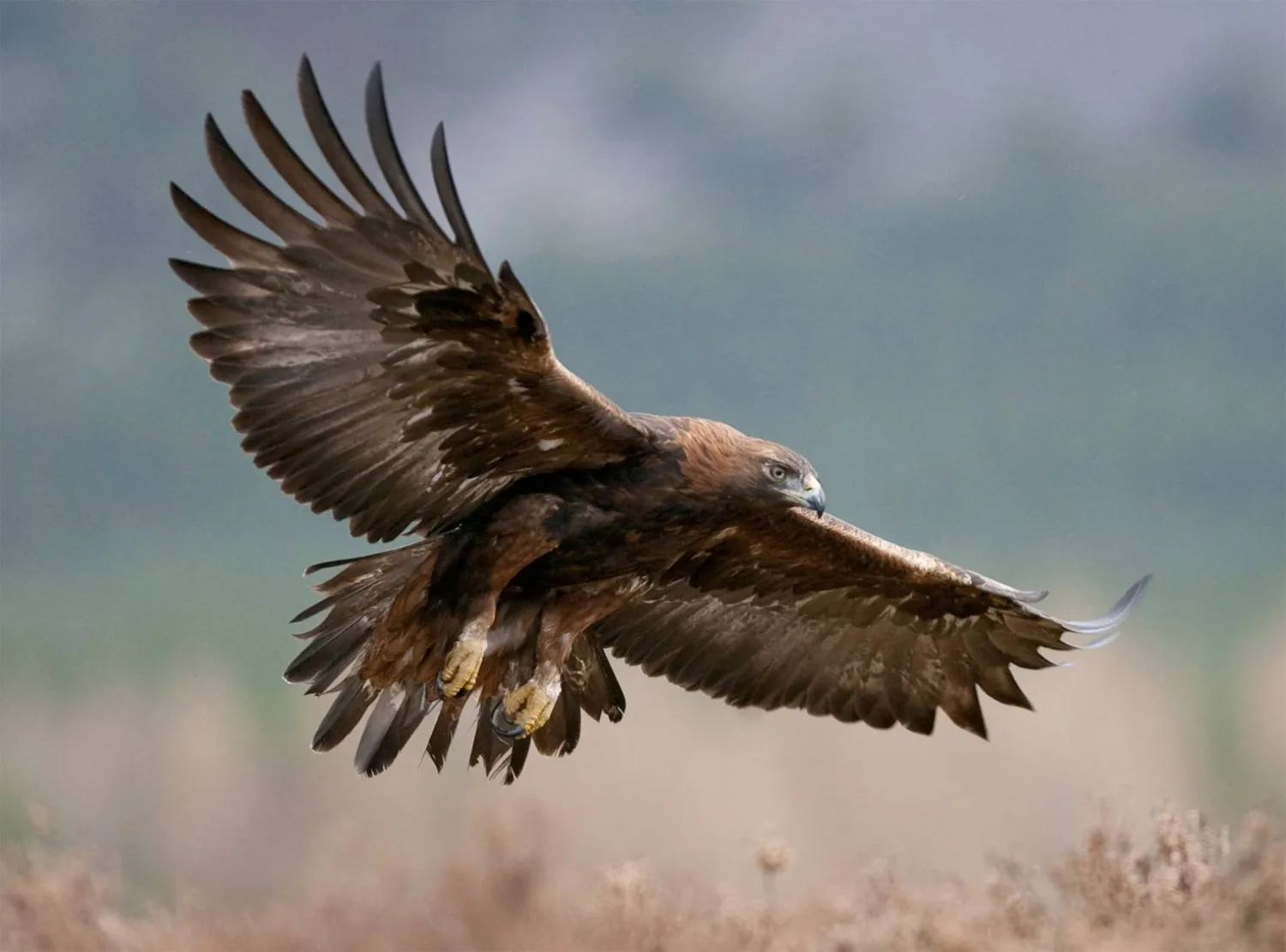

Golden eagles could return to England’s skies after an absence of more than 150 years, according to a study that identified eight areas capable of supporting populations of the species. The government has allocated about £1m for a reintroduction programme, according to The Guardian.
“The world is grown so bad that wrens make prey where eagles dare not perch.” So wrote Shakespeare in Richard III, in a line of social commentary that feels ever more relevant with age.
A note of good news then, in a world of so much bad, that the eagles the Bard was probably referring to could finally be reintroduced to England after more than 150 years.
The golden eagle, which was common in Shakespearean England – and which he mentioned more than 40 times, according to some scholars – has been largely absent from the country’s skies, with only a handful of pairs seen in the past 150 years.
The majestic bird of prey with a 2-metre wingspan has been effectively extinct in England since the last native golden eagle is thought to have died in 2015, having lived alone in the Lake District. Their decline was largely due to centuries of persecution from gamekeepers and farmers, who viewed them as a threat to lambs and game birds.
They are occasionally seen in areas such as Northumberland, crossing from southern Scotland where there is a growing population of the birds. But a study by Forestry England, published on Sunday, found that England now has the capacity to sustain golden eagle populations once again.
The paper identified eight potential “recovery zones” as the most suitable areas, mostly in the north of England, although it could take more than a decade until breeding populations are established in the area.
Satellite tracking indicates that some of these translocated birds have already begun to fly across the border and explore northern England, the government said. It is hoped the new funding will help to support these birds to settle south of the border, coupled with targeted reintroductions. Forestry England found that Scottish birds could be seen across northern England within 10 years, but it will take longer for breeding golden eagles to become established in England.
Mike Seddon, Forestry England’s chief executive, said: “The detailed findings of our feasibility study will guide us, with our partners, Restoring Upland Nature, to take the next steps to explore the recovery of golden eagles in northern England.”


