



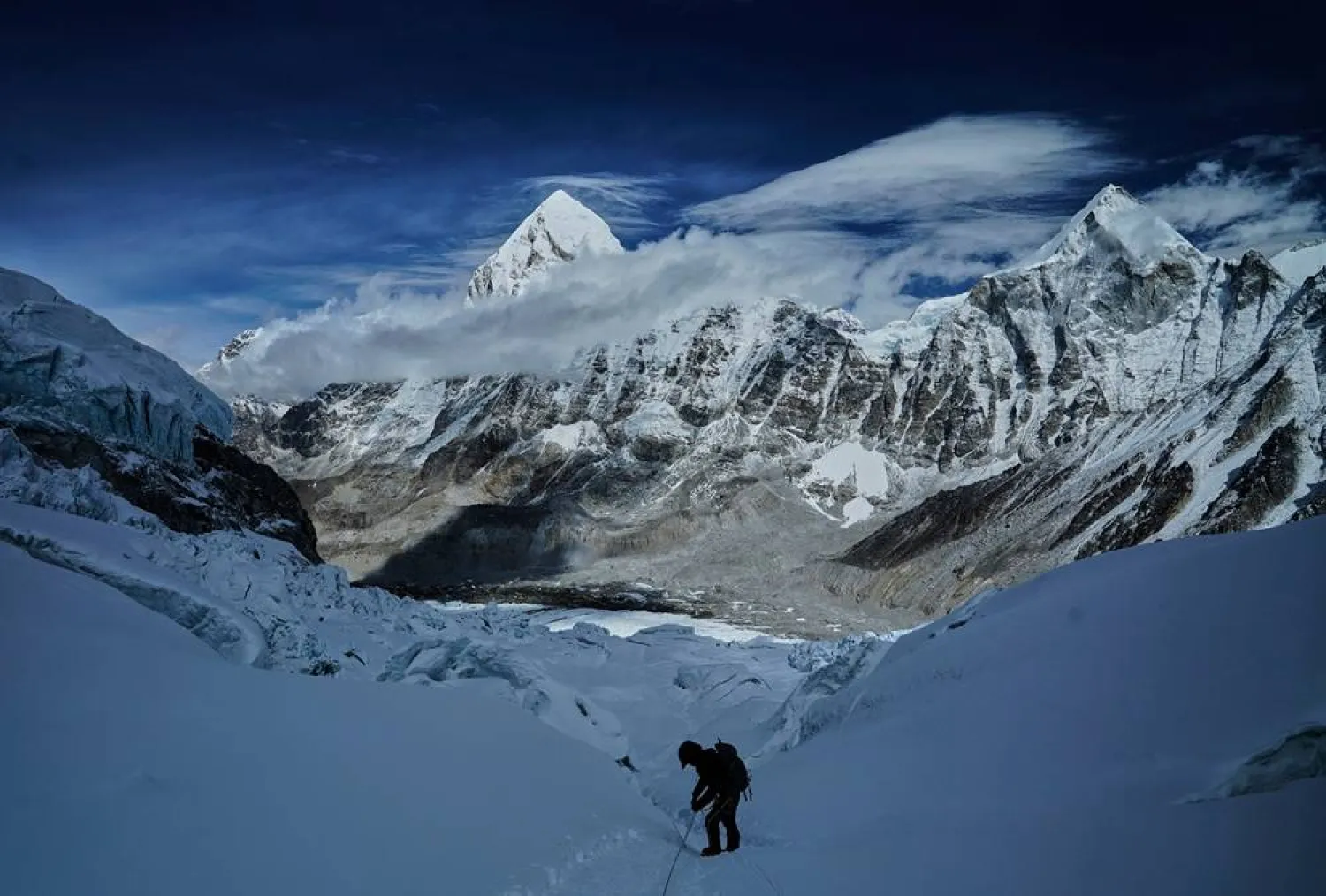

A group of Sherpa climbers have opened the route to Mount Everest that had been blocked for two weeks by chunks of ice and a giant serac, allowing mountaineers to make attempts to reach the summit, officials said on Tuesday.
The annual climbing season for the 8,849-m (29,032-ft) peak runs from April to May, months which offer the best weather conditions in which to reach the windswept summit.
But a massive 100-ft (30-m) serac, or column of ice, had blocked the path above base camp this month. Parts of it have now melted and broken away, allowing Sherpa climbers, called the icefall doctors, to fix ropes, place ladders and carve a safe route through the treacherous Khumbu icefall to Camp I located at 6,060 meters (19,880 ft).
Lhakpa Sherpa of the 8K Expedition hiking company, who is coordinating the opening of the route, said 19 Sherpa climbers had crossed the difficult portion of the icefall and reached the site of Camp I.
“They are expected to fix ropes to Camp II, which is not difficult,” Sherpa told Reuters from the base camp. Camp II is located at about 6,400 meters (21,000 ft).
Hundreds of mountaineers from different countries have been stranded at the Everest base camp for more than two weeks ahead of making summit attempts next month.
Department of Tourism official Nisha Thapa Rawal said climbers could now begin to climb from the base camp.
Some climbers said they hoped to complete their expedition in time despite the delay.
“I think there is some hope ... But such a delay will push summits back and possibly create crowding in the icefall and maybe the summit as teams try to make up for lost time,” said British climber Kenton Cool, who is trying to climb the peak for the 20th time, the most by any foreigner.
Authorities have issued 425 Everest permits so far this season, at a cost of $15,000 each. Another 153 climbers to neighboring Lhotse and Nuptse peaks also share part of the same route.
There is no limit on how many permits are issued, which has led to criticism in the past from mountaineering experts about the risk of long queues forming in what is known as the death zone because the air is dangerously thin.
American climber Garrett Madison of the Madison Mountaineering company said despite the opening of the route the area was still challenging.
"It’s not easy going around the serac, and perhaps a little bit dangerous," said Madison, 47, who is trying to make his 16th ascent.


