

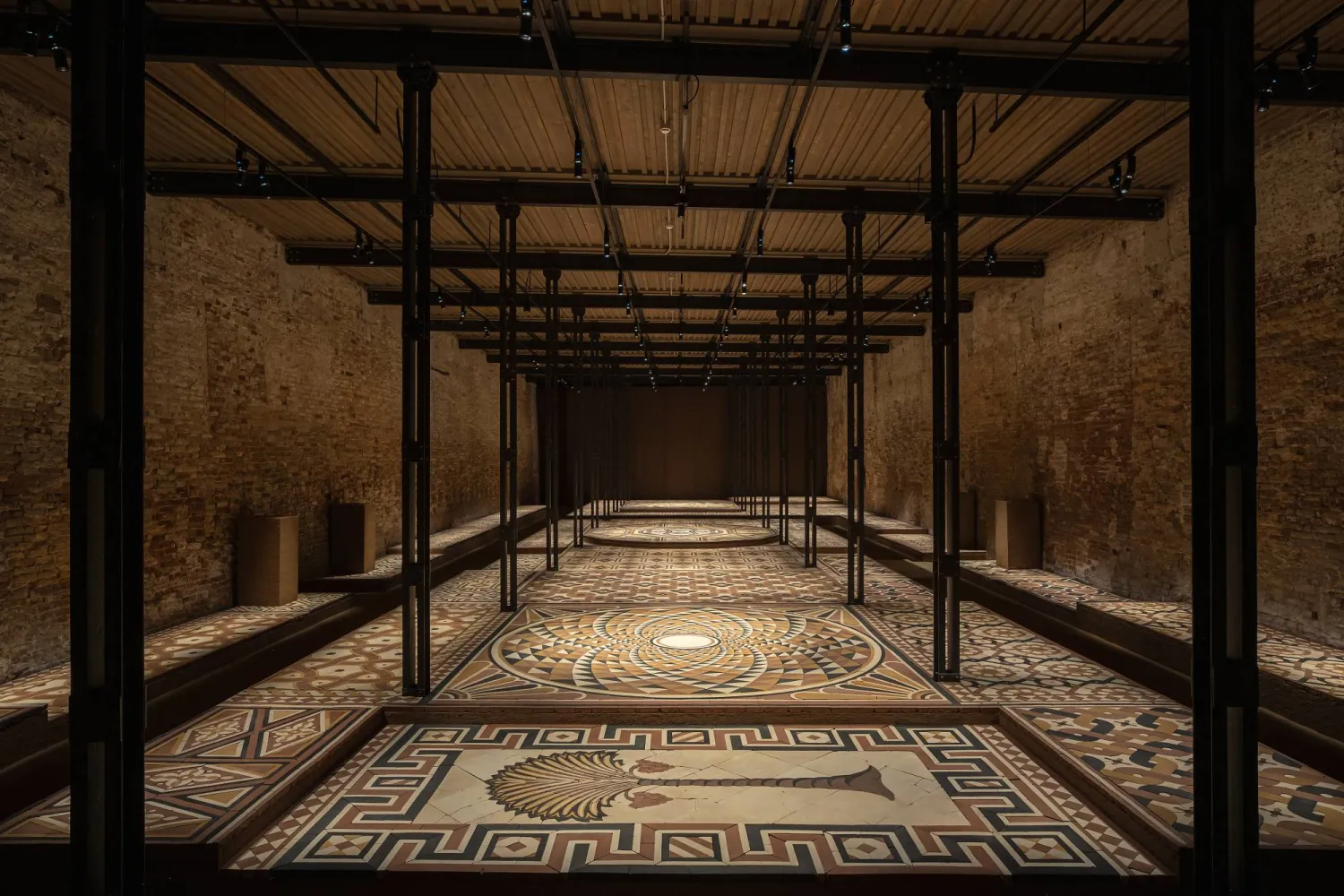

An Imaginary Archaeological Site Evokes the Fragility of Memory in the Saudi Pavilion at Venice

Titled "May Your Tears Never Dry, You Who Weep over Ruins" by Artist Dana Awartani

Mosaic carpet reviving the memory of destroyed places (Artist and Visual Arts Commission)
TT

An Imaginary Archaeological Site Evokes the Fragility of Memory in the Saudi Pavilion at Venice

Mosaic carpet reviving the memory of destroyed places (Artist and Visual Arts Commission)

In the Saudi Pavilion at the Venice Biennale, a Saudi artist of Palestinian origin, Dana Awartani, takes us on an immersive journey to discover an artistic map of archaeological and historical landmarks destroyed by war. It is not a geographical map, but rather a magnificent mosaic composed of thousands of clay pieces, molded and baked under the Riyadh sun, then colored with natural pigments to form geometric patterns and designs.

These patterns are drawn from historical sites, buildings, and monuments that stood for centuries in the Arab region, witnessing the rise and fall of states and kingdoms, until they too were destroyed, stripped of their place and significance in the collective Arab heritage.
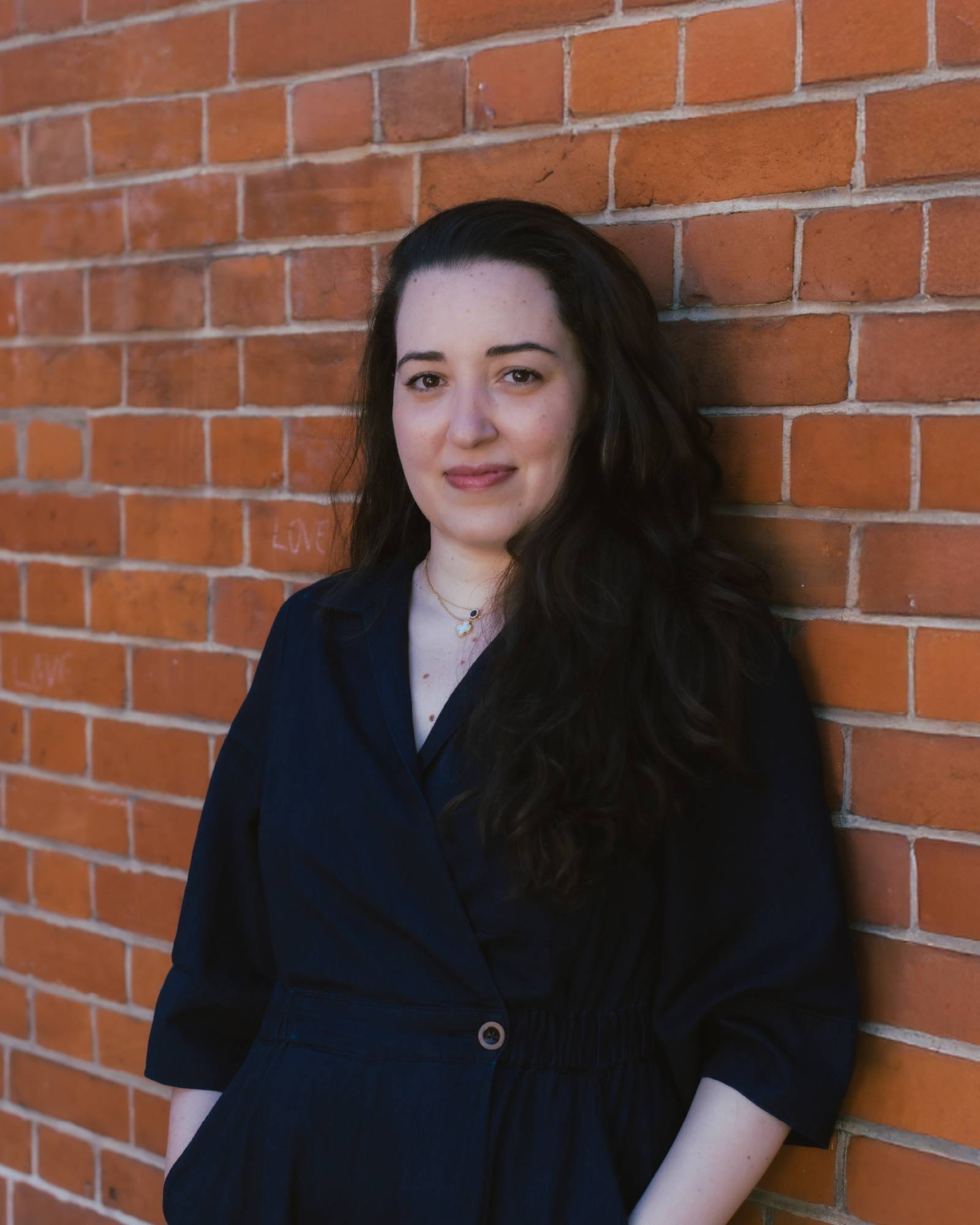
Artist Dana Awartani (Artist and Visual Arts Commission)

In her work, Awartani has consistently depicted these waves of demolition and destruction. Her monumental piece at the first Riyadh Contemporary Art Biennale, which encapsulated a part of the history of the Great Mosque in Aleppo, Syria, and the tiles of the Hammam al-Samra in Gaza, which she presented at the Bukhara Contemporary Art Biennale last year, was unforgettable.

Documentation with Clay and Colors

Awartani has been working on this theme for years, convinced that we must document what we lose daily, through destruction and attempts at erasure.

She speaks of her research to learn more about the increasing number of buildings and archaeological sites that are being demolished. Her work coincides with escalating violence in the region, thus providing an immediate commentary as events unfold.

In Venice, her work documents twenty-three sites of significant historical importance, each possessing immense cultural and material value.
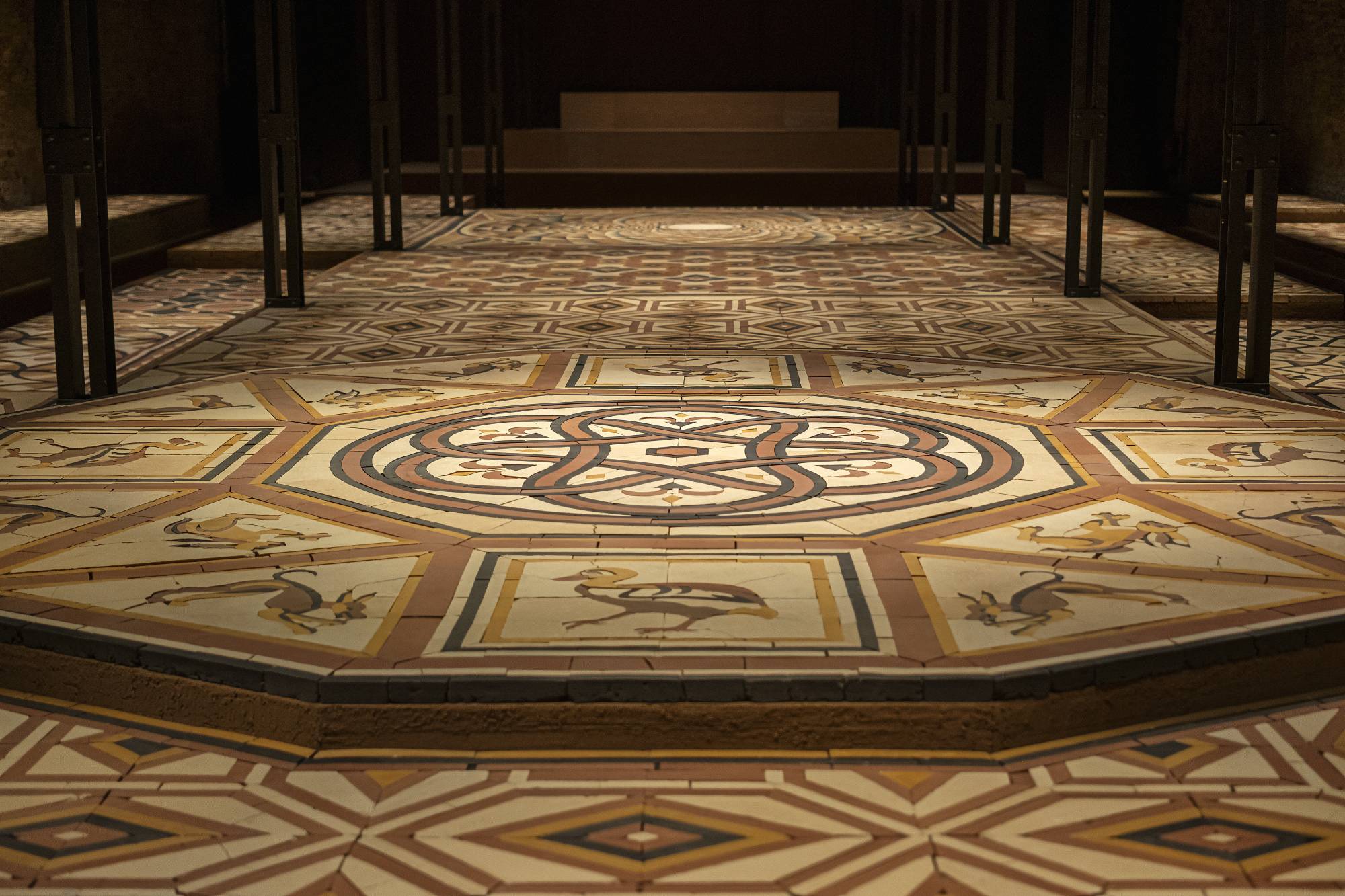
Part of the Saudi pavilion at the Venice Biennale (Artist and the Visual Arts Commission)

The Beginning in Riyadh

 In her studio in Riyadh, Awartani began working on the monumental piece that represents Saudi Arabia at this year’s Biennale. Under the scorching Arabian sun, workers and craftsmen were engrossed in shaping and arranging clay molds according to a meticulously detailed blueprint. Awartani would be there, overseeing the craftsmen’s labors, discussing how their pieces fitted into the larger concept.

For her Venice piece, she chose a title inspired by the poetry of Abu Nuwas: "May your tears never dry, you who weep over the ruins." However, for the poet such behaviour was a waste of time. Awartani begs to differ.

The theme of ruins is a recurring motif in her work. She has described numerous Arab monuments whose virtual destruction merits our tears. Her work involves a unique perspective on these remnants, incorporating them into her art.

During our interview, she spoke about archaeological sites, mosques, churches, and several synagogues that were reduced to rubble by an aggressive attack that disregarded history and culture.

In contrast to Abu Nuwas, she draws upon the melancholy of these places: “I believe that these stones carry their history and tell the stories of the people who lived here for hundreds of years. These stones were all that remained after the living had passed away. Therefore, I did not agree with that poem, but I quoted that particular sentence out of context and used it to illustrate my point of view.”
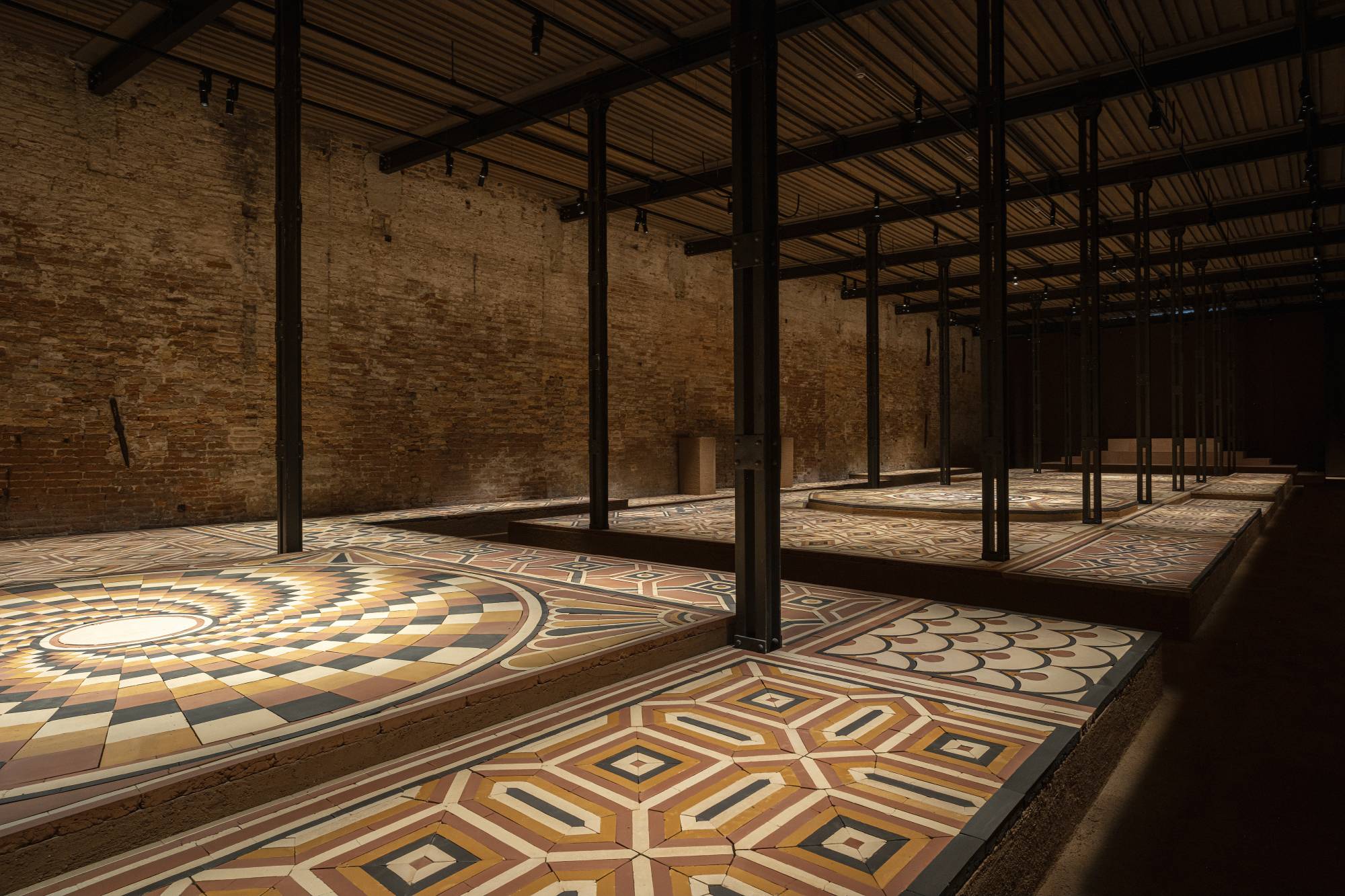
Her work draws on 23 historically significant sites (Artist and Visual Arts Commission)

The Mosaic Carpet

Awartani's work dominates the space of the Saudi pavilion, resembling a mosaic made from colorful bricks. The piece is divided into different visual themes, all inspired by the Middle East, as she explained during a special tour of her studio outside Riyadh last January. "All the motifs I used here are taken from different places in the Middle East, and all of them have been destroyed," she said.

In her research, she documented the damaged sites and what happened to them, then extracted distinctive artistic forms and motifs from each location. She points out that the shapes and decorations vary in origin and history, including Roman and Byzantine styles: "There are many shapes and designs, but I make sure that every design I present includes a reference to a place that’s been destroyed."

At the Venice exhibition, all this information is displayed on one of the walls.
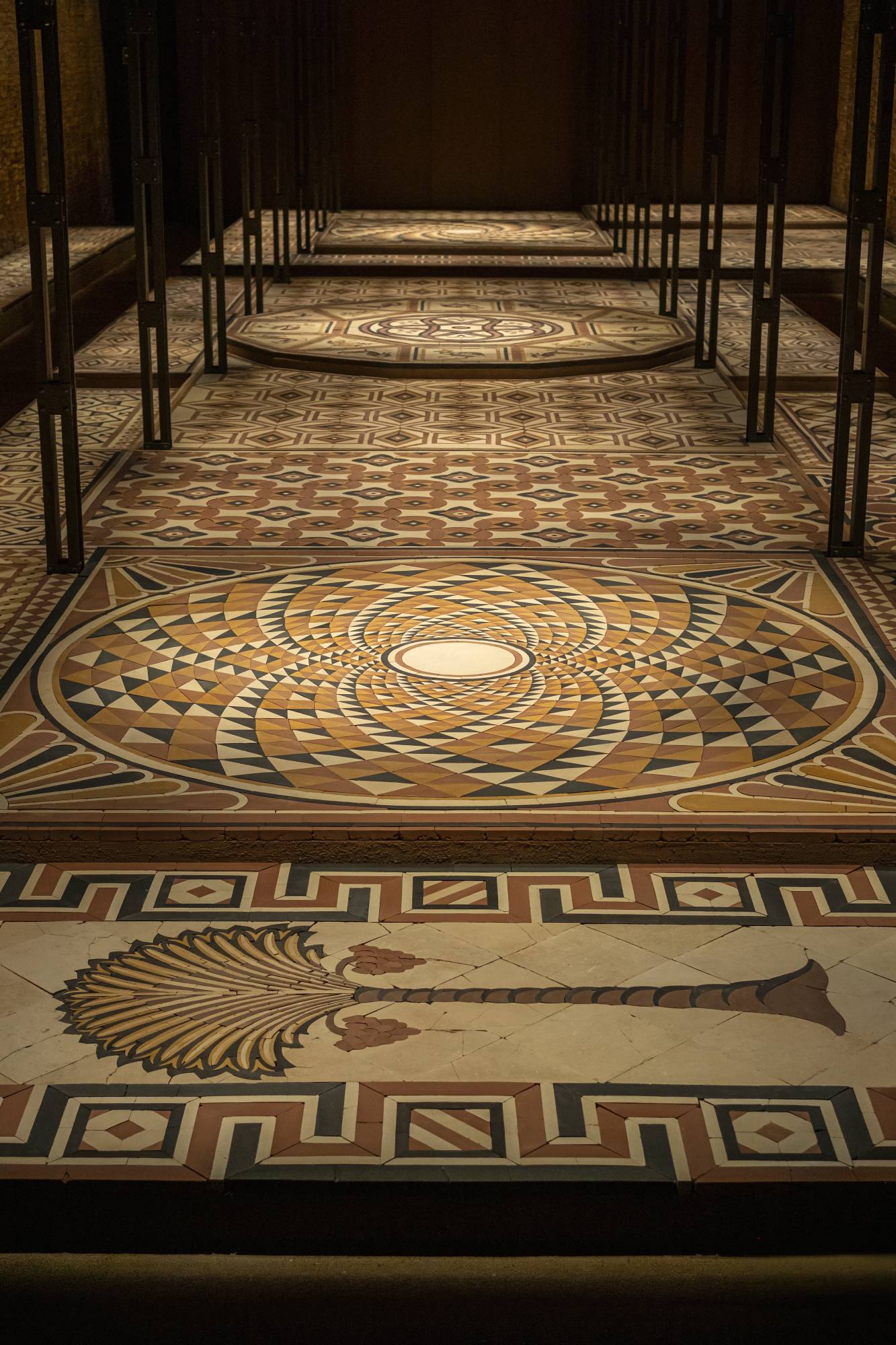
A mosaic carpet revives the memory of destroyed places (Artist and Visual Arts Commission)

An Imagined Archaeological Site

The location of the Saudi pavilion offered the artist a tremendous opportunity to showcase her work. The space is vast and abstract, and Awartani had the choice of several ways to present her piece, but she rejected ​the traditional modes of presentation. To convey the idea of "liberating antiquities from a colonial perspective," she wanted the viewer to be on the same level as the artwork, not gazing down at it from above. She also aimed to create an immersive experience, drawing visitors into the work. They walk through designated pathways between adjacent mosaic tiles, raised on wooden bases, without artificial or imposed boundaries. "I wanted the audience to feel like they were part of the work, walking among these elements," she says. "It's like an imagined archaeological site. That's why the entire floor is covered in earth."

She describes the work as an "immersive ground installation" that incorporates a mixture of different designs. "I didn't want to create a map showing the origin of each pattern, because many of these patterns exist in multiple locations. It's a shared heritage, and you can't simply say: this is a Palestinian pattern, this is a Syrian pattern, and this is a Lebanese pattern. They are all very similar; our heritage is shared and important to us all."

She explains the visual patterns and geometric designs used in the work: “There are two patterns from Gaza, one from the Al-Bureij mosaic, and the other from the Monastery of St. Peter. There is also a collection of forms from Beiteddine Palace in Lebanon, and a palm tree from a monastery in Syria. Upon entering the building, the visitor finds a wall plaque detailing the main concepts and listing all the sites. Most are residential spaces, such as houses or living rooms, but many are Christian sites: monasteries, churches, the Church of the Nativity, the Church of All Nations, and Bethlehem and Jerusalem, which have suffered historical damage. This is because mosaics are used extensively in these places.”
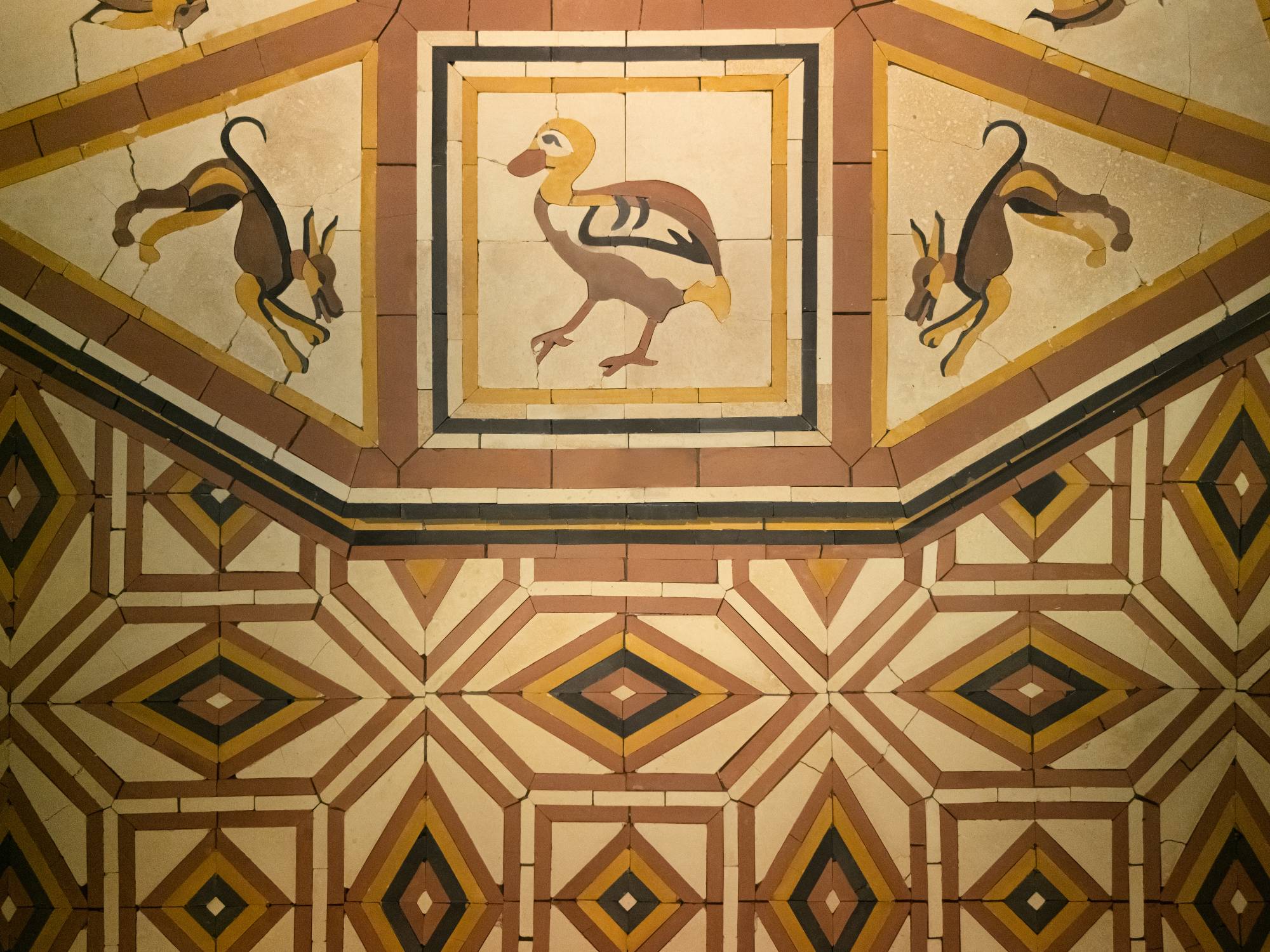
Architectural, botanical, and animal-inspired designs drawn from destroyed Arab sites (Artist and Visual Arts Commission)

Fragile Beauty

From the moment we enter the hall, the pieces unfold before us with serene and fragile beauty. We follow different patterns, noticing that each belongs to a specific place. Some are cracked and appear as if they have just arrived from their actual geographical location, a place of destruction and fragmentation. But this fragile state stems from the artist's desire for the work to reflect the condition of the damaged archaeological sites. In the clay mixture used, she omitted adding straw, which helps bind the pieces together, and left the clay pieces to the effects of nature. She believes that the occurrence of cracks is natural and serves the idea. She did the same when using natural colors to paint the brick pieces and did not try to fix them with artificial materials.

"It won't stay this vibrant, because the colors are natural and are absorbed by the clay, but I also didn't want to put a sealant or anything artificial on it."

Architectural designs inspired by destroyed sites (Artist and Visual Arts Commission)

Mosaics.. From East to West and Back

The artist chose to use mosaics as an embodiment of the connections between East and West. "During my research, I discovered that the first mosaics appeared in Mesopotamia, specifically in Iraq. They then spread to the Roman Empire, and mosaic art flourished in Italy, where it was widely used in Christian places of worship. When the Byzantines reached Palestine, Syria, and Lebanon, they brought this art back to the region. Therefore, most of the patterns I use here are inspired by traditional mosaics from that era."

The mosaics seem right at home in Venice, whose churches boast exquisite examples of them.

A Collaborative Endeavor

The work required over 30,000 hours of labor, involving thirty-two artisans from Riyadh and beyond. Awartani has regularly collaborated with traditional artisans and there is a philosophy behind this. She sees it as essential to her work: “I try to think of it this way: I wouldn’t go to a factory and ask them to carve the stones by machine. I prefer working with people in the traditional way because I also care about preserving the old techniques. The same applies to this project. It was done using an old kind of clay, but I modified the technique slightly. Traditional mud bricks contain sand and straw to make them strong and prevent cracking. I deliberately omitted these to make them crack. Moreover, mud bricks were used in building standing structures, but I use them as flooring. So, it’s essential to understand the craft we’re working with. I make sure to involve people throughout the process. They will see images of the project, and their names will be credited as my collaborators.”

*The Saudi Pavilion is commissioned by the Visual Arts Commission of the Ministry of Culture, under the supervision of curator Antonia Carver and assistant curator Hafsa Al-Khudairi.



NSG at LEAP 2026 Shapes the Future of Saudi Arabia’s Space Sector

The transformation of Saudi Arabia’s space sector reflects a national vision that positions space as a natural extension of the Kingdom’s technological capabilities. (SPA)
TT

NSG at LEAP 2026 Shapes the Future of Saudi Arabia’s Space Sector

The transformation of Saudi Arabia’s space sector reflects a national vision that positions space as a natural extension of the Kingdom’s technological capabilities. (SPA)

The transformation of Saudi Arabia’s space sector reflects a national vision that positions space as a natural extension of the Kingdom’s technological capabilities and a strategic domain for strengthening national sovereignty and advancing a knowledge-based economy, the Saudi Press Agency reported on Thursday.

At LEAP 2026, Neo Space Group (NSG) stood out as a key national entity driving this transformation through an integrated approach that encompasses developing and operating space capabilities, building infrastructure, localizing knowledge and expertise, and developing Saudi talent.

NSG contributes to strengthening the Kingdom’s independence in the space sector by developing and operating space capabilities locally, including, most notably, the Saudi Geostationary Satellite 1 (SGS-1), which represents a pivotal step toward establishing space communications systems managed from within the Kingdom.

The company is also developing advanced operational systems, including the infrastructure and supporting systems required to manage satellites and their services, thereby enhancing the Kingdom’s ability to manage its space sector efficiently and with full sovereignty.


Global Warming Will Exceed Limit, UN Says as it Maps Path to Get Back Below Danger Zone

This aerial picture shows a villager walking between dried-up rice fields with cracked soil caused by a prolonged dry season at Wening Galih village in Bogor, West Java on August 28, 2026. (AFP)
TT

Global Warming Will Exceed Limit, UN Says as it Maps Path to Get Back Below Danger Zone

This aerial picture shows a villager walking between dried-up rice fields with cracked soil caused by a prolonged dry season at Wening Galih village in Bogor, West Java on August 28, 2026. (AFP)

In a strategic retreat in the fight against climate change, the United Nations has acknowledged that Earth has lost its chance to prevent some of the worst of global warming's harms. So now the world must figure out how to get temperatures below the danger zone and back to safety, officials say.

Earth is soon going to exceed the safe temperature threshold agreed upon by the world in the 2015 Paris climate accord because of warming from the burning of coal, oil and gas, according to a bleak first-of-its-kind report issued by the United Nations Environment Program Wednesday.

Instead of giving up, scientists and UN officials recommend trying to limit excessive warming and then bring the temperature back down to the agreed-upon threshold. But it still will mean decades of increased weather-related disasters, rising seas, extinctions and melting ice and glaciers.

“Humanity is speeding past the limit to avoid climate catastrophe,” United Nations Secretary-General António Guterres said.

After a period of over-the-limit warming, the new strategy envisions getting back below the limit by ending fossil fuel use and developing some kind of way to suck industries' carbon dioxide out of the air.

“It's a reality check. We have to live with this warmer world,” said report co-author Richard Betts, a climate scientist at the University of Exeter. “But there's still a lot we can do to limit warming.”

A dog sits in the middle of a haze-shrouded road caused by forest and land fires in Palangkaraya city, Central Kalimantan, on August 28, 2026. (AFP)

Passing the longtime warming threshold

After the Paris climate accord, the United Nations ordered its climate science arm to study different warming limits. A goal of 1.5 Celsius (2.7 Fahrenheit) above mid-19th century temperatures became generally accepted after the scientists found dramatic impacts that affect people and the planet at 2 degrees Celsius (3.8 degrees Fahrenheit) but not at 1.5 degrees.

The world is now at 1.4 C (2.5 F) above pre-industrial levels, some scientists have calculated. The measure is based on a 20-year average, rather than a single year's temperatures.

Despite experts saying there's no way to limit warming to 1.5 degrees, UN officials long maintained the 1.5 window was still open. Wednesday's report finally admitted that the world will cross the 1.5 threshold “in the next few years.”

The report said the most optimistic scenario has warming peaking at 1.8 C (3.2 F) around mid-century if countries pursue ambitious climate goals, but that governments' current policies should push temperatures to 2.6 C (4.7 F) above pre-industrial levels by 2100.

So instead of preventing warming of 1.5 degrees, now the UN said it wants policymakers to “prepare for and navigate a future” in which the globe crosses that limit and then corrects course and cools temperatures. The report envisions that global temperatures will pass 1.5 “within the next few years,” follow a hump-shaped path of more warming, peak, then gradually cool to below the 1.5 mark, ideally by the end of the century. The report and experts call it “overshoot.”

“Let’s be very clear, 1.5 target is still the goal. But now we need to approach it differently from above,” said UNEP Executive Director Inger Andersen.

The 1.5 limit is not “some magical climate cliff” where it’s just game over, said University of Victoria climate scientist Andrew Weaver, who wasn’t part of the study. “Every tenth of a degree we avoid still means less damage.”

Limiting how high temperatures go past threshold is key

It's most important to first limit the new peak temperature and then reduce the amount of time above 1.5 degrees, Andersen said.

But the world likely will be in that overshoot period for “many, many decades,” Betts said.

Every five years of delay in reducing emissions adds at least a tenth of a degree to peak warming, said report co-author Joeri Rogelj, a climate scientist at Imperial College London.

“If we act now we can limit overshoot,” the report said. “Not a safe world, but safer than remaining above” 1.5 degrees for the long term.

“This is among the bleakest UN climate reports I have read. It carries the unmistakable tone of desperation, frustration and urgency — but not resignation,” Weaver said.

Climate scientist Bill Hare, CEO of Climate Analytics, said that “although UNEP does a good job of describing the hole we've dug ourselves into, it does a poor job of showing us that there's a way out.”

A photograph taken on August 24, 2026 shows a cornfield with dry ears, in Figarol, southwestern France. Due to the repeated heatwaves that have hit the south-west, Sébastien Maylin will be able to “barely cover the cost” of his fertilizer and seeds. (AFP)

Adapting to a deadlier, hungrier, thirstier world

Governments need to increase efforts to adapt to worsening warming, which hits the poor hardest, “because some impacts simply cannot be avoided,” Andersen said.

The report calls this phase “coping and containment.”

During this overshoot period, more people will die or get sick because of the worsening climate change and its extreme weather, the report said. Food production will drop, people will go hungry, water shortages will worsen, economies will be hurt and species like coral will go extinct, the report said.

Although the triggers behind the recent deadly Nepal flooding that came as part of a Himalayan glacier dislodging are complex, Betts said “unfortunately we do expect to see more of such things and this is exactly why we need to limit peak warming.”

The report warns of “tipping points” with irreversible and cascading effects, including the loss of the West Antarctic and Greenland ice sheets, the loss of the Amazon rain forest and the shutdown of the Atlantic Ocean circulation system that keeps much of Europe warm.

“Some locations might become more or less uninsurable or even uninhabitable,” the report said.

The last phase in overshoot is cooling the planet by removing carbon dioxide from the air and storing it somewhere. The report said the traditional approach of this is planting more trees, but it says planting trees could, at most, shave a tenth of a degree off global temperatures. So the authors said more novel carbon removal approaches will be needed.

Other scientists called that unreliable and expensive.

“We were unable to stop the runaway train of global emissions to avoid 1.5 C of warming,” said Stanford University climate scientist Rob Jackson, who wasn't part of the report. “Now overshoot scenarios require us to stop the train quickly and to back it up. Is it our best hope? Absolutely. Is it likely? Absolutely not.”


New York City to Ban AI in Public Schools Through Eighth Grade

The words “artificial intelligence,” a keyboard and robotic hands are seen in this illustration. (Reuters)
TT

New York City to Ban AI in Public Schools Through Eighth Grade

The words “artificial intelligence,” a keyboard and robotic hands are seen in this illustration. (Reuters)

New York City will ban the use of artificial intelligence for students in public schools through eighth grade, a source close to the matter told AFP on Wednesday, confirming US media reports.

Teachers and parents have warned against the use of AI in schools over concerns about harming children's mental health and cognitive development, as well as environmental damage.

AI use will only be allowed in high school, which begins in the ninth grade in the American school system, the source said.

Even then, it will be limited to specific uses, such as learning about the technology itself, they said.

Eighth graders in the US are typically about 13 years old.

New York City Hall and the city's education department did not immediately respond to AFP's request for comment.

According to the New York Times, AI "companion chatbots" offering psychological support will also be banned.

The rules, however, allow teachers to use AI for tasks including preparing lessons or writing messages.

The new rules are to be announced on Wednesday, the Times reported.

The city's education department recommends limiting screen time to 45 minutes in class for middle schoolers -- sixth through eighth grade -- and 30 minutes for elementary school students.

But the question remains of how to monitor AI use, since it often takes place outside the school environment.

The new rules follow an initial framework published in March, which used a traffic light system to determine which tasks AI would be used for.

The framework, which allowed students to use AI for research, exploration and creative projects, sparked fury among many parents and teachers who considered it too lenient.

In response, the city's schools chancellor Kamar Samuels said that leaders had "missed the mark" in their communications, adding his office would carefully review parents' feedback for incorporation into future rules.

The city had long planned to follow the March framework with a more comprehensive "guidebook" to take feedback into account, the education department has said.

The department will set up a task force made up of teachers, elected officials, experts and union representatives.

The task force is to produce a report in April, intended to serve as the basis for New York's AI-in-schools policy.

The city's public school technology policies are closely watched by the rest of the United States, as it is by far the largest school district in the country, with over 900,000 students in 2024-2025.
