China Set for Latest Space Launch, with Hong Kong Astronaut Aboard

Astronauts for China's Shenzhou-23 space mission Lai Ka-ying (L), Zhu Yangzhu (C) and Zhang Zhiyuan (R) wave during a press conference before the launch of the mission at the Jiuquan Satellite Launch Center in the Gobi desert in Jiuquan, in northwestern China's Gansu province on May 23, 2026. (Photo by CNS / AFP) / China OUT
TT

China Set for Latest Space Launch, with Hong Kong Astronaut Aboard

Astronauts for China's Shenzhou-23 space mission Lai Ka-ying (L), Zhu Yangzhu (C) and Zhang Zhiyuan (R) wave during a press conference before the launch of the mission at the Jiuquan Satellite Launch Center in the Gobi desert in Jiuquan, in northwestern China's Gansu province on May 23, 2026. (Photo by CNS / AFP) / China OUT

A Hong Kong astronaut will join a Chinese space mission for the first time as part of a three-person crew launching on Sunday, as Beijing edges closer to its goal of landing people on the Moon.

The Tiangong space station -- crewed by teams of three astronauts that are typically rotated every six months -- is the crown jewel of China's space program, boosted by billions in state investment in a bid to catch up with the United States and Russia.

The Shenzhou-23 mission will blast off at 11:08 pm (1508 GMT) on Sunday from the Jiuquan Satellite Launch Center in northwestern China, carrying three astronauts to the space station, China Manned Space Agency (CMSA) spokesman Zhang Jingbo told reporters on Saturday.

The team comprises Lai Ka-ying, hailed by state media as Hong Kong's first astronaut, Zhu Yangzhu and Zhang Zhiyuan, AFP quoted the spokesman as saying.

Hong Kong's Chief Executive John Lee congratulated Lai on passing "the rigorous selection and training process.”

Flight engineer Zhu, who participated in the Shenzhou-16 mission in 2023, will be the commander.

"This is a ... test of our physical and psychological endurance, emergency response capabilities, coordination and teamwork, as well as our ability to work and live in orbit," Zhu told reporters.

"As mission commander, what I have thought about most is how to make thorough preparations in every aspect and how to lead the team in successfully completing the flight mission with zero mistakes and zero errors."

The mission's primary objectives are to "continue carrying out space science and application work, conduct astronauts' extravehicular activities and cargo transfer in and out of the cabin", the CMSA's Zhang told reporters.

One of the astronauts will remain on the station for a year, he added, without specifying who.
"Arranging for an astronaut to carry out a one-year in-orbit residency experiment is by no means a simple matter of adding together two six-month missions in terms of duration," Zhang said.

The one-year space residency, Zhang said, will collect data on astronauts on longer-duration spaceflights and test health support capabilities.

China is "steadily" building operational experience for "sustained occupation" of its Tiangong space station, and year-long missions are an important step towards future lunar and potentially deep-space ambitions, said Macquarie University's Richard de Grijs.

"A year in orbit pushes both hardware and humans into a different operational regime compared with the shorter Shenzhou missions of the program's earlier phases," the professor of physics and astronomy told AFP.

Beijing's space program, the third to put humans in orbit, has also landed robotic rovers on Mars and the Moon.

China has ramped up plans to achieve its "space dream" under President Xi Jinping.

Beijing says it aims to send a crewed mission to the Moon by 2030, with the goal of constructing a base on the lunar surface.

The CMSA said on Saturday it would "make every possible effort and strive tirelessly" to achieve that goal.

Wreck of Australia's 1st Warship Built at Home Found 128 Years after Sinking

This undated photo, courtesy of the Royal Australian Navy and provided by the Australian National Maritime Museum, shows HMCS Spitfire, whose wreck was found 128 years to the day after it sank off the north coast of Queensland, Australia. (Royal Australian Navy via AP)
TT

Wreck of Australia's 1st Warship Built at Home Found 128 Years after Sinking

This undated photo, courtesy of the Royal Australian Navy and provided by the Australian National Maritime Museum, shows HMCS Spitfire, whose wreck was found 128 years to the day after it sank off the north coast of Queensland, Australia. (Royal Australian Navy via AP)

The wreck of the first Australian warship built in the country, HMCS Spitfire, was found 128 years to the day after it sank off the north coast of what is now Queensland state, officials said Thursday.

The 19-meter (62-foot) schooner was launched in Sydney in 1855 to fight a potential Russian invasion. But Spitfire had been operating as a fishing boat four decades later when it sprung a leak and foundered on Aug. 21, 1898, off Piper Island, documents show.

A Royal Australian Navy mine hunter vessel found and exposed 16 meters (52 feet) of the wreck nearly three months ago, also on Aug. 21, after a monthlong search using a dive team and remotely operated vehicles, a joint statement from multiple agencies said.

“It is remarkable luck that Spitfire was discovered on the 128th anniversary of its sinking,” The Associated Press quoted Queensland heritage officer Celeste Jordan as saying in the statement.

The discovery was not announced sooner because of reporting processes between government agencies required under laws designed to protect shipwrecks, the Defense Department explained Thursday.

Bearing the designation of HMCS, meaning Her Majesty’s Colonial Schooner, Spitfire was commissioned in 1855 during the Crimean War when the British colonial government of New South Wales in Sydney feared the Russian Pacific Fleet would invade, Australian National Maritime Museum archaeologist James Hunter said.

Britain was at war with Russia in a conflict centered on Ukraine’s Crimean Peninsula. Gold had recently been discovered in New South Wales and the neighboring colony of Victoria, making them lucrative targets for conquest.

The Australian colonies then relied on Britain’s navy for defense and British warships were rare in the most distant reaches of the empire.

The Crimean War ended in 1856 without the Australian two-mast sailing vessel ever being used in battle. Spitfire became a pilot vessel in 1857 at Moreton Bay in what would soon become the Colony of Queensland, but was then still part of New South Wales, documents show.

The Queensland government sold Spitfire in 1885 into private ownership for use as a fishing boat.

Shipbuilder John Cuthbert delivered Spitfire two months after winning the contract. The speed suggested the warship’s construction already had been underway for a different purpose, Hunter said.

It was built from native timbers including an ironbark keel, blackbutt frames and kauri planking. The ship had copper sheathing below the waterline.

Russia’s Pacific Fleet at the time was mostly iron-hulled, steam-powered and “armed to the teeth warships,” Hunter told Australian Broadcasting Corp.

Spitfire was armed with a single cannon that fired 32-pound (14.5-kilogram) iron cannonballs.

“Would that have bounced off the side of one of those larger, Russian iron-hulled warships? Probably,” Hunter said.

There are no plans to salvage the wreck, which is largely buried in seabed sand. Authorities have not revealed Spitfire's exact location because it lies at a depth that can be reached by scuba divers. The ship is protected by federal and state law.

Vice Admiral Matthew Buckley, chief of the Australian navy, said Spitfire represents the beginning of the service's continuing story.

“Spitfire occupies a unique place in Australia’s naval history as the first warship built in Australia for Australian service,” Buckley said.


Cincinnati Zoo Trying to Shake Loose Fiona the Hippo after she Swallowed a Hat

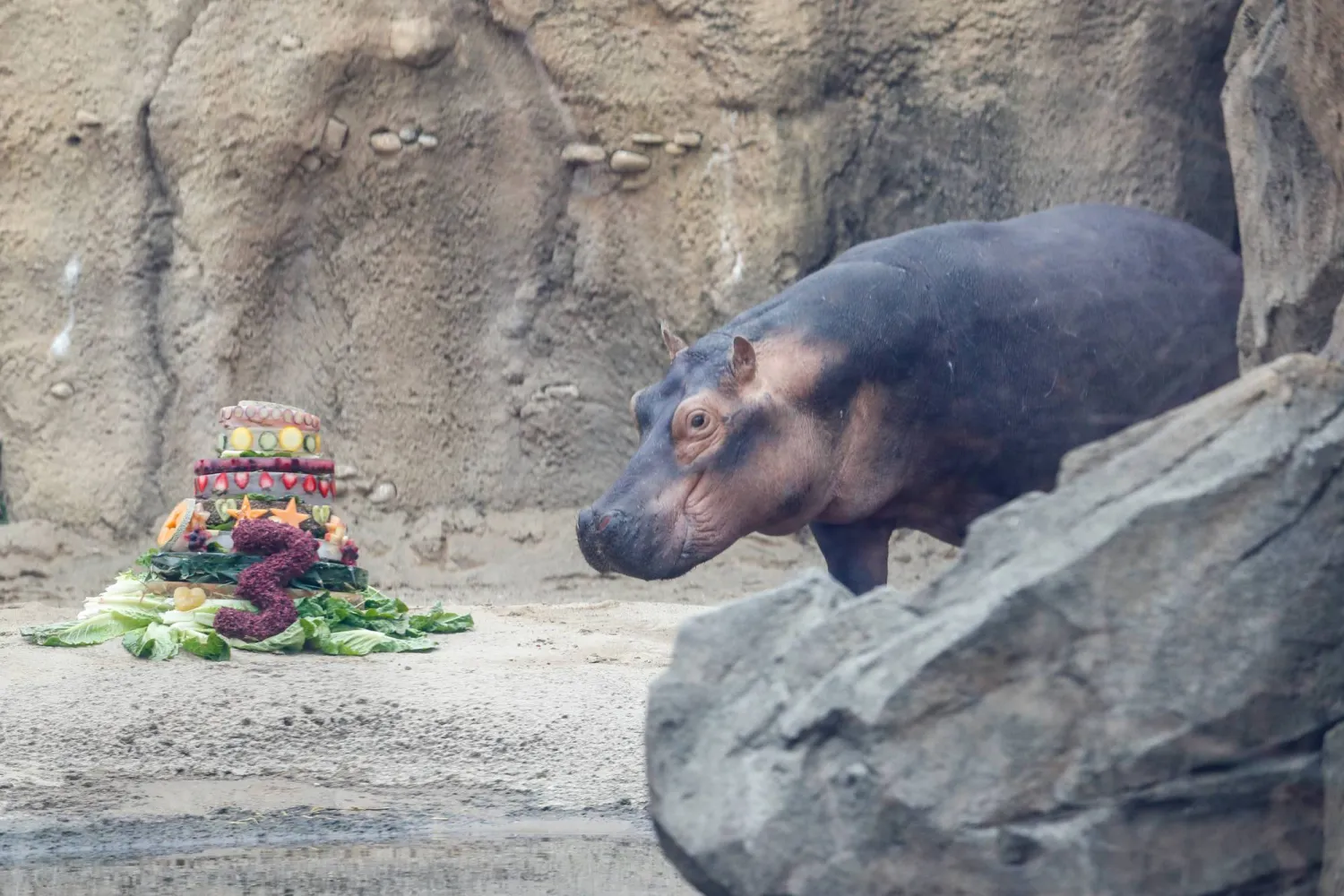
FILE - Fiona, a Nile Hippopotamus, prepares to eat her specialty birthday cake to celebrate turning three-years old this Friday, in her enclosure at the Cincinnati Zoo & Botanical Garden, Jan. 23, 2020, in Cincinnati. (AP Photo/John Minchillo, File)
TT

Cincinnati Zoo Trying to Shake Loose Fiona the Hippo after she Swallowed a Hat

FILE - Fiona, a Nile Hippopotamus, prepares to eat her specialty birthday cake to celebrate turning three-years old this Friday, in her enclosure at the Cincinnati Zoo & Botanical Garden, Jan. 23, 2020, in Cincinnati. (AP Photo/John Minchillo, File)

Fiona, the Cincinnati Zoo's famed hippo, underwent a colonoscopy this week, and now veterinarians are trying a new way to help her pass a knit cap that she swallowed after it slipped into her enclosure.

The zoo's animal care team borrowed a vibration plate from a horse farm, hoping the shaking will help move things along through her digestive tract, the zoo said Wednesday.

Video released by the zoo Wednesday shows Fiona snorting and moving about her indoor enclosure, The Associated Press reported.

Veterinarians sedated her Tuesday for a second time to evaluate her condition, said Mike Wenninger, the zoo’s director of animal health.

An ultrasound showed some bunching of her intestines, indicating she is still trying to pass the obstruction, Wenninger said. They also conducted a colonoscopy, using a 9-foot scope, he said.

Specialists have told the zoo that surgery isn’t an option for full-grown hippos, he said.

Fiona became a global sensation as a tiny newborn after her premature birth in 2017. During her first year, the zoo recorded her progress while fans worldwide followed her growth online.

She initially couldn’t stand on her own and weighed just 29 pounds (13.2 kilograms) at birth, 25 pounds (11.3 kilograms) less than the lowest recorded birth weight for her species.

The beloved hippo swallowed the hat just over a week ago. A visitor tossed it into the air, and a ceiling fan caught and catapulted it through a small opening above the area’s viewing windows, said zoo spokesperson Michelle Curley.

Zoo staff are now monitoring her around the clock, trying to keep her hydrated and giving Fiona her favorite foods to help her pass the knit cap, the zoo said.

“Her care team even offered her a sniff of coffee, a scent she has always liked,” Curley said Wednesday. “And they were happy to see her respond.”


Homo Erectus Was More Adaptable Than Previously Thought

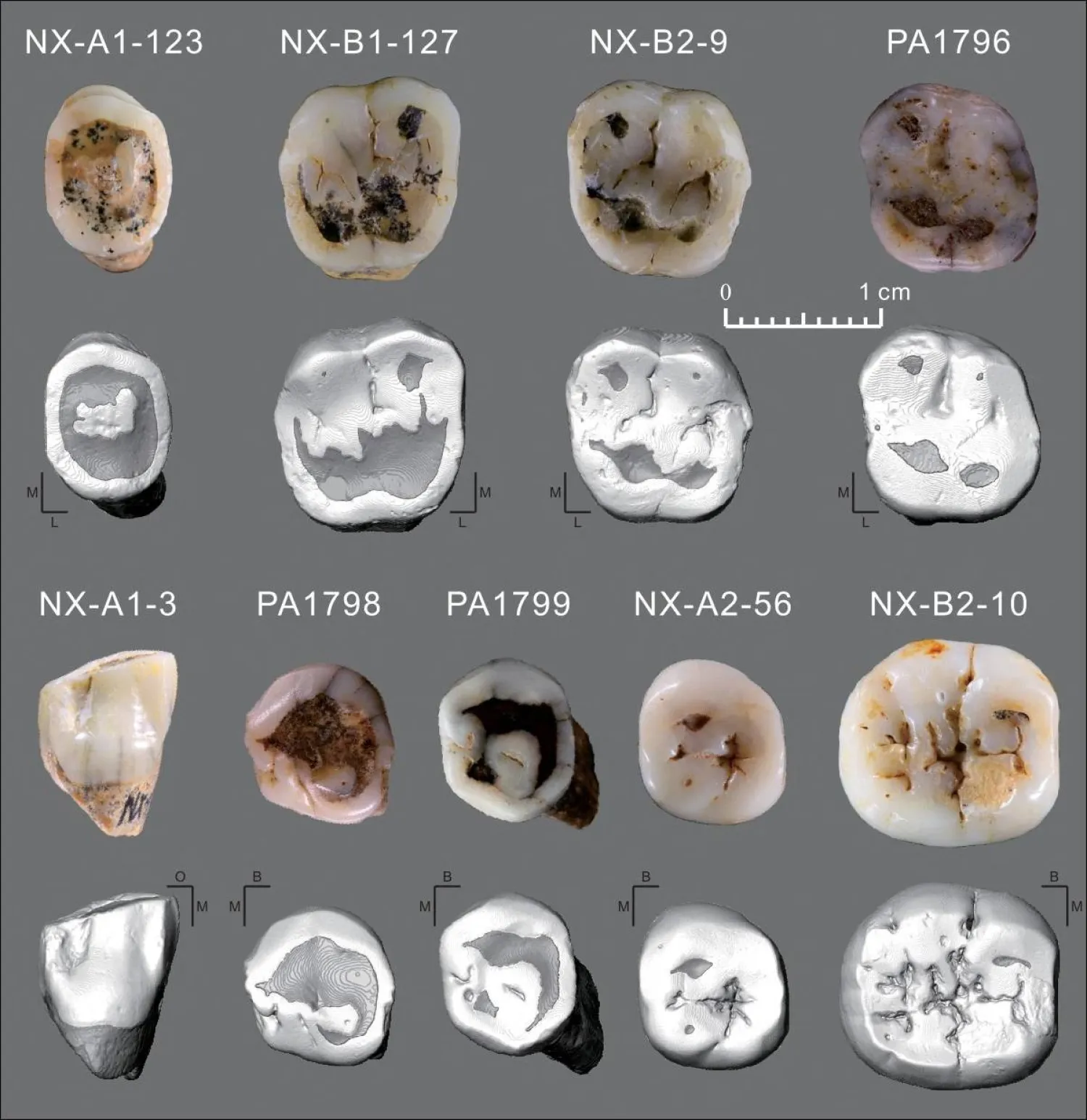
The nine human teeth found in the Naxian and Baxian caves in Guangxi province, southern China, eight of which have been confidently identified as belonging to the species Homo erectus, are shown in an undated composite image released on November 18, 2026.  Kira Westaway/Macquarie University/Handout via REUTERS
The nine human teeth found in the Naxian and Baxian caves in Guangxi province, southern China, eight of which have been confidently identified as belonging to the species Homo erectus, are shown in an undated composite image released on November 18, 2026. Kira Westaway/Macquarie University/Handout via REUTERS
TT

Homo Erectus Was More Adaptable Than Previously Thought

The nine human teeth found in the Naxian and Baxian caves in Guangxi province, southern China, eight of which have been confidently identified as belonging to the species Homo erectus, are shown in an undated composite image released on November 18, 2026.  Kira Westaway/Macquarie University/Handout via REUTERS
The nine human teeth found in the Naxian and Baxian caves in Guangxi province, southern China, eight of which have been confidently identified as belonging to the species Homo erectus, are shown in an undated composite image released on November 18, 2026. Kira Westaway/Macquarie University/Handout via REUTERS

Homo erectus -- our distant relative -- adapted to an environment in the dense forests of southern China, according to two studies published on Wednesday that challenge the prevailing theory about how it went extinct.

Our ancestors survived for nearly two million years -- far longer than Homo sapiens, the only human species in existence today, which has only been around for some 300,000 years.

The ancient humans migrated from the grassy savannas of Africa, across Asia, to the open environments and light forests of Java, where the most recent fossils dating back 108,000 years have been found.

Until now, scientists thought that their disappearance in Asia was due to their inability to adapt when their environment began to transform into a tropical rainforest.

"The prevailing view about Pleistocene hominins in East and Southeast Asia is that, other than Homo sapiens, they couldn't exploit forest environments," said paleontologist Yingqi Zhang, from the Chinese Academy of Sciences.

"They couldn't survive in the subtropical forest environments in southern China. So the forests in southern China formed a barrier for them to migrate. That's the former view. But our findings turn that around completely," he told reporters, according to AFP.

The two studies, published in Nature, focus on the discovery of nine fossilized hominin teeth in two neighboring caves in southern China.

Analysis of their proteins has made it possible to unambiguously attribute eight of them to Homo erectus, while the ninth remains unidentified for the time being.

Using several dating techniques, the scientists were able to show that the fossils date back to between 324,000 and 184,000 years ago.

Until now, the most recent fossils attributed to Homo erectus in China dated back to about 400,000 years ago.

"Our research fills that gap," said the researchers, who in the second study were able to reconstruct the environment in which the hominins lived.

In total, nearly 20,000 animal teeth were found in the two caves and were likely accumulated at the time by porcupines that collected bones to eat and sharpen their teeth.

"Basically, these teeth we found in the caves are the things they left behind," said Zhang.

The collection of animal remains included fossils of orangutans, elephants and rhinoceroses.

They also found fossils of the elephant-like Stegodon and Megalovis, which resembled a large goat, both of which are now extinct.

The researchers analyzed the carbon isotopes present in the animals' tooth enamel to uncover clues about their diets.

Renaud Joannes-Boyau, a geoarchaeologist at Southern Cross University in Australia, said food, drink and other elements in the environment are absorbed by various parts of the body.

"If it's in your teeth, it stays forever," he added.

"That carbon tells us what kind of plants in the environment are there and what kind of ecosystem. And then what we see is a very, very dense rainforest."

Because teeth grow in a manner similar to tree rings, scientists were also able to reconstruct the early years of these individuals, with even more surprising results.

Analysis of specific isotopes, which can be used to identify the environment, revealed that Homo erectus migrated long distances during childhood, from present-day Vietnam, some 250 kilometers (155 miles) away from the caves.

"Homo erectus was a survivor, a champion of resilience and adaptation to a lot of different climates. He was probably very resourceful," said Joannes-Boyau.

Kira Westaway, a researcher from Macquarie University in Australia, said the prevailing view of Homo sapiens was of adaptability and flexibility as well as skillfulness.

"Now as we start to do this kind of study in this kind of depth... we start to see other ancient humans having similar skill sets," she added.

"It really just throws up that question: if we're not as unique as we have always thought ourselves, what was the actual cause of it, why we survived and the others didn't.

"This really throws up a lot more questions than it answers."