
Pigeons May Be Navigating with Their Liver, Study Suggests

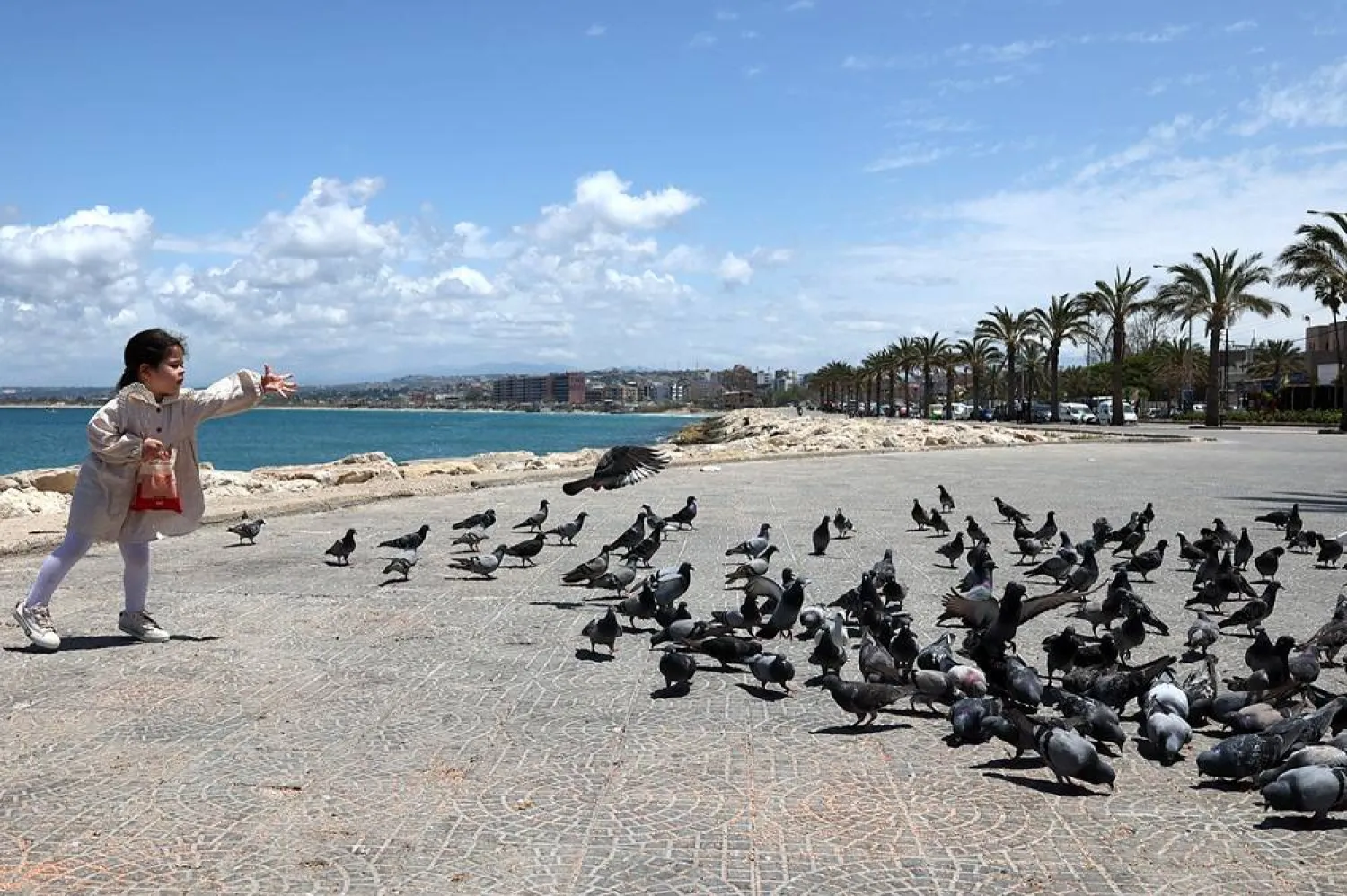
Palestinian girl Ilan, 4, feeds pigeons at the Flag Square in the coastal city of Tyre, southern Lebanon, 20 May 2026. (EPA)
TT

Pigeons May Be Navigating with Their Liver, Study Suggests

Palestinian girl Ilan, 4, feeds pigeons at the Flag Square in the coastal city of Tyre, southern Lebanon, 20 May 2026. (EPA)

A surprising gut feeling may help pigeons find their way home.

Animals use various techniques to navigate including following the stars and remembering key landmarks. Birds, fish and turtles orient themselves using Earth's magnetic field as a compass. But it's not yet clear how exactly they do this.

Pigeons are a well-known group of frequent flyers that can traverse hundreds of miles (hundreds of kilometers) in a single day. For thousands of years, humans have used them to carry news, notes and military messages.

Scientists have long tried to untangle how pigeons travel without getting lost. Some think the birds detect magnetic cues using light-sensitive molecules in their eyes, while others suggest it happens in the beak or inner ear.

“The magnetic sense has been this mystery for almost 100 years,” said Martin Wikelski with the Max Planck Institute of Animal Behavior in Germany.

In a new study, Wikelski and other researchers decided to draw back the curtain on pigeons' navigational secrets. They searched for magnetic clues in the birds' organs and found a strong signal in an unexpected place: the liver.

Specialized immune cells in the pigeon's liver break down red blood cells and store iron. When scientists temporarily stripped pigeons of those immune cells and let them fly, the birds “just couldn't find their way,” said Christian Kurts with the University of Bonn in Germany. That suggested the iron-rich liver cells might play a role in their sense of direction.

The birds' magnetic compasses only got scrambled on overcast days. That's because they also use the sun as a navigational guide.

Scientists have previously wondered whether immune cells could be involved in magnetic sensing, but the new study published Thursday in the journal Science is the first to present a full-fledged theory.

“I would never have guessed it, but once it was explained to me, it makes sense,” said behavioral ecologist Albert Kao with the University of Massachusetts Boston, who had no role in the study.

The immune cells are located near nerve fibers in the liver. That might be how they transmit their “magnetic sense” to the brain “and help the pigeons to navigate,” said study co-author Clivia Lisowski with the University of Bonn.

The researchers think other birds and animals like mice could operate using a similar magnetic GPS. But outside experts say more work is needed to verify the pigeons navigate this way and to firm up how these signals get to the brain.

While the researchers found the strongest magnetic signal in the pigeons' livers, such immune cells have also been spotted in other areas including the beak and spleen.

It's possible this magnetic puzzle doesn't have a single answer, wrote veterinary pathologist Simon Spiro and biologist Hal Drakesmith in an accompanying editorial. The birds could use different techniques to sense magnetic fields depending on the task, be it traveling long distances or finding a specific destination.

“Indeed, it could be prudent to have more than one way of getting home in the dark,” they wrote.


Think Tank: Singapore, Indonesia, Malaysia and Brunei Face High Risk of Severe Haze this Year

People stop by a cafe with murals painted on its facade in the Arab Street district of Singapore on June 16, 2026. (Photo by Roslan RAHMAN / AFP)
TT

Think Tank: Singapore, Indonesia, Malaysia and Brunei Face High Risk of Severe Haze this Year

People stop by a cafe with murals painted on its facade in the Arab Street district of Singapore on June 16, 2026. (Photo by Roslan RAHMAN / AFP)

Singapore, Indonesia, Malaysia and Brunei face a high risk of severe haze this year due to hot and dry weather conditions, biofuel demand and economic pressures, a research institute said Wednesday.

The Singapore Institute of International Affairs said it was the second time it had issued a red risk rating since launching its Haze Outlook report in 2019. The previous red risk rating was in ⁠2023, Reuters reported.

Here are some ⁠details:

August to September is the peak danger period for haze in the Southeast Asian region, driven by the El Niño and Indian Ocean Dipole weather phenomena, the report said.

The ⁠return of El Niño is expected to create a longer and stronger dry season at a time when fire preparedness could be adversely affected by economic uncertainty and cost pressures.

The SIIA said rising costs of fertilizer and fuel as a result of the Iran war could lead to unsustainable activity such as the use ⁠of ⁠fire rather than machinery to clear land and dispose of waste.

Land use could also intensify as demand for biofuels rises due to energy supply disruptions.

"This trend will continue even if the US-Iran agreement holds, as countries now want energy independence," said SIIA associate director Khor Yu-Leng.

ASEAN cooperation and sustainable land management will be critical to reducing risks, the report said.


Australian Shark Attack Survivor Briefly Emerges from Coma

A warning sign notifying the public that a shark-spotting drone is operating in the area is displayed at Coogee Beach following a shark attack on Saturday, in Sydney, Australia, June 16, 2026. (Reuters)
TT

Australian Shark Attack Survivor Briefly Emerges from Coma

A warning sign notifying the public that a shark-spotting drone is operating in the area is displayed at Coogee Beach following a shark attack on Saturday, in Sydney, Australia, June 16, 2026. (Reuters)

An Australian woman mauled by a shark at a popular Sydney beach briefly emerged from an induced coma and said "I love you" to family, according to an update from her brother.

Leah Stewart is in hospital on life support and has had multiple surgeries, including the amputation of her arm, since the June 13 attack at Sydney's Coogee Beach, according to a fundraising site set up to help her rehabilitation and care.

Doctors reduced her sedation to bring her out of the induced coma for a short time, her brother Joshua Stewart said in an update Tuesday to the GoFundMe page, which has raised Aus$492,000 ($340,000).

"This allowed Leah to share her first words 'I love you' with her Mum and partner Fernando who have been by her side in ICU since the incident. Her first thoughts were with her daughter August and wanted to check she was OK," he said.

"This is a lot faster than anyone expected, and for us this feels like a miracle and is everything so many of us have hoped and prayed for over the past week."

Leah Stewart, described by local media as a 34-year-old teacher from Coogee, had undergone five days of surgeries in the past week and was scheduled for more in the coming weeks, her brother said.

"Leah has a long road ahead and still remains in critical care, but this is such a positive first step and gives us hope for Leah's long term recovery."

Australian scientists believe rising ocean temperatures are shifting sharks' migratory patterns, which may be contributing to an uptick in attacks.

A 12-year-old boy died after he was bitten by a shark while swimming in Sydney Harbour in January.

Three divers were fatally mauled in separate incidents between May and June -- two in Western Australia and the third in Queensland.

There have been nearly 1,300 shark incidents around Australia since 1791, of which more than 260 resulted in death, according to a database of shark encounters with humans.


Congo Fan Who Poses as Living Statue of Independence Leader Lumumba Makes It to World Cup

Democratic Republic of Congo's supporter Michel Kuka Mboladinga, pays tribute to Democratic Republic of Congo's late prime minister Patrice Lumumba, by remaining motionless ahead of the 2026 World Cup Group K football match between Colombia and Democratic Republic of Congo at the Guadalajara Stadium in Zapopan on June 23, 2026. (AFP)
TT

Congo Fan Who Poses as Living Statue of Independence Leader Lumumba Makes It to World Cup

Democratic Republic of Congo's supporter Michel Kuka Mboladinga, pays tribute to Democratic Republic of Congo's late prime minister Patrice Lumumba, by remaining motionless ahead of the 2026 World Cup Group K football match between Colombia and Democratic Republic of Congo at the Guadalajara Stadium in Zapopan on June 23, 2026. (AFP)

Congo’s famous living statue finally made his World Cup debut on Tuesday.

Michel Nkuka Mboladinga, who gained fame during the Africa Cup of Nations for posing as a statue of Congo’s assassinated independence leader Patrice Lumumba for the entirety of games, attended Congo's 1-0 loss to Colombia after missing its opener against Portugal because of Ebola quarantine requirements.

Lumumba Vea, as the sharply dressed supporter is known for his resemblance to the slain leader, was at his seat about an hour before the game at Estadio Akron. He wore a bright red jacket and tie, yellow shirt and blue pants. When the game began, he stood motionless on a pedestal behind the Congo bench with his right arm raised.

Nkuka Mboladinga was a few minutes late back to the pedestal after halftime, but he stood there until the end and even a few minutes after the final whistle.

He did not want to be interviewed, but nodded and smiled when asked if he was happy to have finally made it to the World Cup.

Congo played Portugal to a 1-1 draw last week in Houston.

Nkuka Mboladinga also missed Congo’s World Cup playoff match against Jamaica earlier this year — when his nation secured a return to the tournament after 52 years — because he was unable to get a visa in time. He had traveled to Kenya and then Ethiopia in a bid to get a visa for the game, which was also played in Guadalajara.

Nkuka Mboladinga became a social media sensation at the Africa Cup for posing as a statue of Lumumba on a pedestal with his right hand raised and standing still throughout games.

Lumumba was an activist who helped to end Belgium’s colonial rule over Congo in 1960. He became the newly independent country’s first prime minister and was seen as one of Africa’s most promising leaders, but he was assassinated within a year during a struggle against a Belgian-backed secessionist movement in the mineral-rich Katanga region.

A Belgian court in March ordered a 93-year-old former diplomat to stand trial for the slaying. Etienne Davignon, who previously denied wrongdoing, is the last living among 10 Belgians suspected of involvement in the killing and has been charged with “participation in war crimes” for his role in the “unlawful detention and transfer” of Lumumba.