


Venice’s Growing Flamingo Population Finds Refuge in Recovering Wetlands

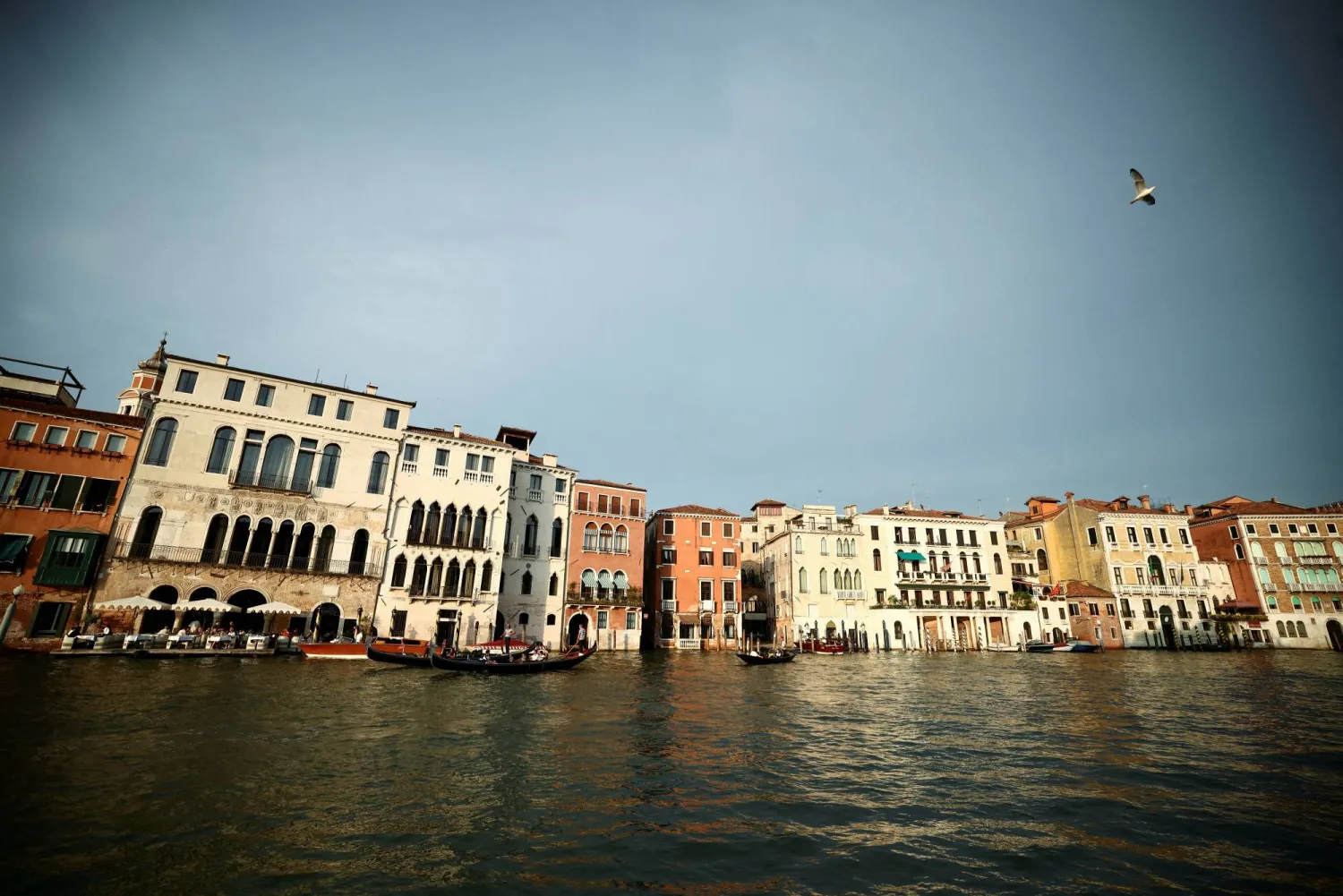
FILE PHOTO: A general view of the Grand Canal, in Venice, Italy, June 23, 2025. REUTERS/Yara Nardi/File Photo
TT

Venice’s Growing Flamingo Population Finds Refuge in Recovering Wetlands

FILE PHOTO: A general view of the Grand Canal, in Venice, Italy, June 23, 2025. REUTERS/Yara Nardi/File Photo

Perhaps nothing better illustrates the flamingo’s status as a newcomer to the Venetian Lagoon than the fact that the local dialect has no word for them.

But the pale pink birds — called “fenicotteri” in Italian — are now flocking to Venice in record numbers, as ecological efforts to restore damaged wetlands could help expand their habitat and possibly induce them to nest in the lagoon, The Associated Press reported.

Flamingos — which most famously nest in Spain and France — started showing up in the vast Venetian Lagoon in the early 2000s, mostly in fishing valleys and mudflats in the lagoon’s furthest reaches, with only rare sightings in the canaled historic center of Venice that is most frequented by global tourists.

Venice Lagoon becomes an unlikely flamingo haven Environmentalists say their arrival in Venice as the European flamingo’s range expands is a sign of the lagoon’s health and suitability as a feeding ground.

Last year, the number of wintering flamingos in Venice peaked at a record of nearly 24,000. That is 8,000 more than the previous year, numbers “that position the Venetian Lagoon as one of the most important wintering spots in its entire habitat range,” said ornithologist Alessandro Sartori.

Sartori surveys the lagoon weekly by boat for signs of nesting, which would indicate a self-sustaining Venetian colony. So far there are no fresh signs after two nesting attempts, in 2008 and 2013, in northern lagoon fishing valleys suffered serious setbacks, including violent hail that killed dozens of birds.

More than 90% of the birds counted in last year’s census were in the northern lagoon, which contains a large area of natural salt marsh. The flamingos are also attracted by the traditional fishing valleys, semi-natural embanked wetlands that provide abundant food but can also bring them into conflict with human activity.

Venice seeks to recover its lost marsh A project to reconstruct salt marshes in the more isolated southern lagoon — past the historic center and the industrial port — raises prospects that flamingo numbers will increase there as well by offering a new habitat in an area of the lagoon where wetland erosion has been especially severe. It could also draw the birds away from competing human uses in the north.

The Venetian Lagoon, covering an expanse of 550 square kilometers (more than 200 square miles), was originally nearly half salt marsh. Today the area of salt marsh — or “barene” in the Venetian dialect — is just about 7%, about half of it reconstructed, said Jane da Mosto, the executive director of We Are Here Venice, the local partner in the EU’s 23.6 million euro ($27.5 million), 5-year WaterLANDS project to restore wetlands across Europe.

The damage is especially stark in the central and southern lagoon, due to the combination of natural erosion and the dredging of shipping channels to access the Marghera industrial port in the 1960s.

“And since then, there’s been much more widespread erosion and loss of sediments from the lagoon to the point that Venice is now on a trajectory to becoming a marine bay,” said da Mosto. The wetlands reconstruction project “is specifically to show that it’s possible to address this trend and change the course of history.”

Rebuilding the salt marshes increases the lagoon’s ability to capture carbon dioxide, a greenhouse gas and driver of climate change, and mitigates the effects of rising sea levels. But da Mosto said much larger areas would need to be restored to produce meaningful climate benefits. The goal of the EU project is to make salt marsh reconstruction scalable.

Flamingos can also benefit as biodiversity increases.

Da Mosto’s team is researching ways to increase biodiversity on the reconstructed marshes, including planting species that can help reduce erosion and make the wetlands more resilient.

The mudflat where they are working contains signs of flamingo activity, chiefly stray pink feathers. On a recent day, a flock of some 30 were perched in the distance — scattering when a pair of squawking oystercatchers alerted them to visitors.

Already, Sartori believes that the reconstruction has begun to draw more flamingos to the area. Over the last three years, he has seen their numbers in the southern lagoon grow from just a handful to as many as 300 to 400 in certain periods.

“The hope is that they can find — as they have found in other parts of the Mediterranean — right here on these barene, places where they can nest,” Sartori said.

Venice’s pink newcomers could draw a different kind of visitor The flamingos' presence in the lagoon underlines the importance of the Venetian ecosystem and offers a new way for visitors to interpret the canaled city and outer islands through their ecological — and not just historical and artistic — significance.

Still, visitors to Venice who hope to casually spy flamingos will probably be disappointed, and AP reporters recently had to travel by boat for an hour to spot any. The flamingos inhabit shallow, difficult-to-access reaches of the lagoon where navigating safely requires close attention to tides and channels.

Even at a distance, the birds are easily disturbed and quick to take flight.

Sartori predicts flamingo spotting — already a possibility from the shores of the small lagoon islands of Murano and Burano but rare in the historic center — could become more common as their numbers continue to grow.

“Obviously this should always be done with respect for the animals, keeping a safe distance and not interfering with their daily lives,” he said.



'I Thought I Would Perish': Everest Survivor Recounts Ordeal

Medics and rescuers carry mountaineer Dawa Sherpa upon his arrival at the HAMS Hospital in Kathmandu on June 4, 2026. (Photo by PRABIN RANABHAT / AFP)
TT

'I Thought I Would Perish': Everest Survivor Recounts Ordeal

Medics and rescuers carry mountaineer Dawa Sherpa upon his arrival at the HAMS Hospital in Kathmandu on June 4, 2026. (Photo by PRABIN RANABHAT / AFP)

A Nepali mountaineer who survived nearly a week on Mount Everest said he "chewed ice" to stay alive, as he recovered in a hospital after a miraculous rescue that stunned the climbing community.

Dawa Sherpa, 57, disappeared in brutal conditions on the upper slopes of the world's tallest mountain on May 30 during one of the final climbs of the spring season.

With few climbers still on the peak and his oxygen exhausted, relatives had given up hope and begun ritual mourning prayers, believing he had died on the mountain.

"I didn't think I would be alive," he told BBC Nepali on Friday from his hospital bed.

"I thought I would perish this way. I didn't get lost. As the oxygen ran out, I fell behind. After the oxygen finished, I couldn't walk."

Left stranded in freezing temperatures near Everest's "death zone", where oxygen levels are critically low, Dawa Sherpa said he survived for days with almost no food or water.

"I didn't eat anything for the first two days. Then I began chewing ice. It hurt my teeth. I chewed the ice hard," AFP quoted him as saying.

He survived on a few chocolates and snacks he found in his pockets.

"I soaked them in water and had them," he said.

Dawa Sherpa, also known as "Hillary" after legendary climber Edmund Hillary, had told others after his rescue that at one point he fell into a crevasse before managing to climb out.

"Stepping on the snow, I stood up and looked above... It felt I could get out from there," he said.

"I then looked for ropes and found one. Then I held on to it and walked... eventually I came down."

He said he walked day and night towards base camp until finally encountering people almost a week later.

He was found crawling towards the base camp on the morning of June 4 by the Sagarmatha Pollution Control Committee (SPCC), a Nepali team that helps set routes on Everest and clean up waste left behind.

"Boys from SPCC were going up to collect the waste. I met them. They carried me down."

He was flown to Kathmandu for treatment for frostbite, severe dehydration and a fractured thigh bone, doctors said.

"He is doing well. We had a chat," his daughter Mendo Lhamu Sherpa told AFP.

His survival has sparked celebration among fellow climbers, but also anger from family members who accused rescue teams of failing to locate him sooner.

Nepal Mountaineering Association President Fur Gelje Sherpa called the survival extraordinary but said the incident highlighted serious concerns over climber safety.

"It is irresponsible and inhumane to leave a person behind," he said. "I believe that an investigation committee must be formed to hold the responsible people accountable for this."

Everest guide Rinji Sherpa, who comes from the same village as Dawa Sherpa, said the climber was highly experienced and familiar with the dangers of high-altitude mountaineering.

"He is very lucky, he has had several close calls before but he has survived," he said.

At least five climbers -- two Indians and three Nepalis -- died during this year's Everest season.

More than 1,000 climbers reached Everest's summit this season, according to preliminary Nepali government figures, making it the busiest season on record.


Shark Attack Kills Man Off Western Australia Coast

A shark swims close to a diving cage during a shark cage diving experience off the coast of Gansbaai, Western Cape, South Africa, May 15, 2026. REUTERS/Esa Alexander
TT

Shark Attack Kills Man Off Western Australia Coast

A shark swims close to a diving cage during a shark cage diving experience off the coast of Gansbaai, Western Cape, South Africa, May 15, 2026. REUTERS/Esa Alexander

A man has died after being attacked by a shark while fishing off the coast of Western Australia state, police said on Saturday, the third fatal shark attack in Australia in three weeks.

The 35-year-old was attacked on Saturday morning while spearfishing with family off the state's south coast at Michaelmas Island, close to ⁠the town of ⁠Albany, about 388 km (241 miles) south of state capital Perth, police said.

Reuters said he was taken ashore where he was treated by paramedics but died of his ⁠injuries.

A 4.5 meter (14.8 feet) shark, of an unknown species, was spotted by a member of the public near Michaelmas Island, a nature reserve that receives few visitors, on Saturday, state authorities said.

On May 24, a 39-year-old man died after being attacked by a shark while fishing on ⁠the ⁠Great Barrier Reef. The death followed that of a 38-year-old mauled off an island near Perth 10 days earlier.

There are around 20 shark attacks in Australia every year but the vast majority are not fatal, according to data from conservation groups. Far more people drown on the country's beaches.


Excitement and Joy at Ljubljana Zoo after Birth of 3 Siberian Tiger Cubs

A visitor watches the Siberian tiger cubs with their mother on a screen at the zoo in Ljubljana. AP
TT

Excitement and Joy at Ljubljana Zoo after Birth of 3 Siberian Tiger Cubs

A visitor watches the Siberian tiger cubs with their mother on a screen at the zoo in Ljubljana. AP

A zoo in Slovenia's capital Ljubljana has presented its newest residents: three Siberian tiger cubs who were born there under two weeks ago.

The Siberian tiger is one of the world’s most endangered big cat species, with experts estimating that about 500 remain in the wild. Their survival is threatened primarily by habitat loss and poaching.

Zoo workers said the cubs were born to mother Arisa and father Ussuri, which arrived in Ljubljana in 2004, after careful planning and much hoping, The Associated Press reported.

“We were not really expecting, but hoping, working on it because we have a good breeding pair,” she said. Though the couple were introduced to each other at the right time “we weren't completely sure,” she added.

“So we were also a bit surprised and of course very happy,” Strus said.

Breeding wild animal species in enclosed spaces is known to be hard and often does not succeed.

The cubs, born on May 27, are highly vulnerable and need to be isolated from others except their mother, but zoo staff and visitors have been able see them on a screen streaming live video footage.

Visitors could be seen smiling as they watched the mother with her babies on the screen. Barbara Gallaido, from San Francisco, said the sight was “really fabulous.”

“I’ve seen tigers in the wild in India, but not like this, not with cubs,” she said. “It was really great.”

Arisa is a first-time mother at the age of 4, Strus said. She appears to be doing very well so far.

“She is constantly licking them (cubs,) breastfeeding them and they are resting together,” she said. “So far so good. But ... we still need to wait and see what will happen.”

According to Strus, tiger cubs open their eyes and begin hearing about two weeks after birth. She said the mother is expected to bring them out of the den for the first time when they are one month old.
