


Scientists Find Yeast in Ancient Iceman's Guts -- and Make Bread

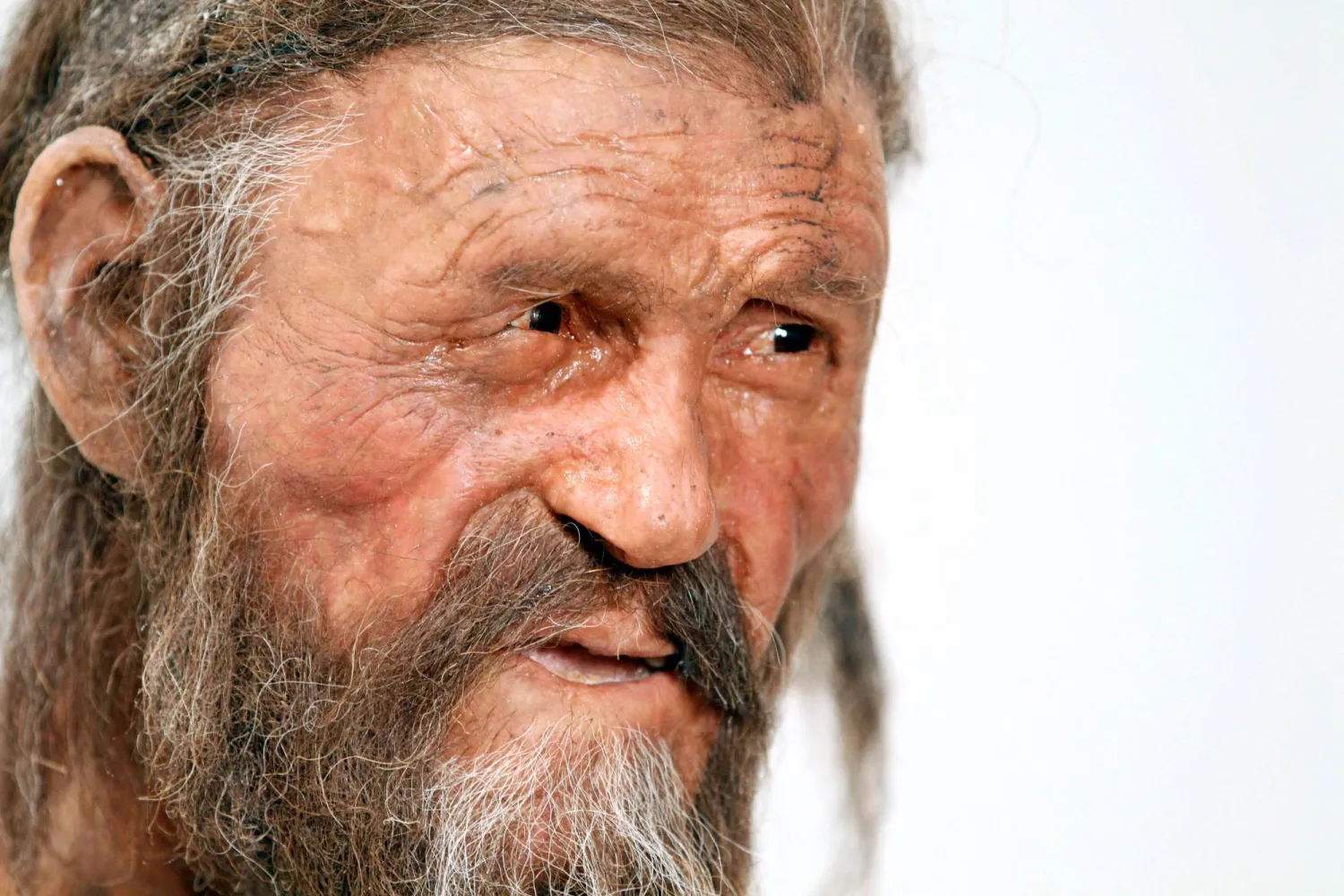
(FILES) A statue representing an iceman named Oetzi. (Photo by Andrea Solero / AFP)
TT

Scientists Find Yeast in Ancient Iceman's Guts -- and Make Bread

(FILES) A statue representing an iceman named Oetzi. (Photo by Andrea Solero / AFP)

Yeast has been growing in the guts of a frozen mummy called Oetzi the Iceman for thousands of years, scientists have discovered, telling AFP they used it to make a tasty sourdough bread.

More than 5,300 years ago -- before the Egyptian pyramids were built -- Oezti was strolling through the Alps on the border of Austria and Italy when he was killed by an arrow in the back.

He remained frozen in the ice until two German hikers stumbled across his mummified remains in 1991 in the northern Italian region of South Tyrol.

Since then, his stunningly well-preserved remains have been kept at the same temperature -- minus six degrees Celsius -- as his icy tomb.

This has allowed scientists to carefully study Oetzi, who offers an incredibly rare window into ancient human life.

For the latest research, published in the Microbiome journal on Wednesday, an Italy-based team found evidence that both ancient and modern microbial life remain active in the frozen body.

"What we didn't expect to find was yeast," lead study author Mohamed Sarhan of the Eurac Research institute in the Italian city of Bolzano told AFP.

The scientists discovered four different yeasts that can survive sub-zero temperatures in Oetzi's guts, skin and "brownish" water that melted off his body when he was partially unfrozen.

These kinds of yeast only live in very cold conditions such as Antarctica, so are believed to have entered Oetzi's body at some point after he died.

Genetic analysis revealed "DNA damage levels very comparable to the original microbes" in the Iceman's guts, suggesting the yeast entered his body soon after death, Sarhan said.

"These yeasts have accompanied Oetzi on his long journey through the millennia," study co-author Frank Maixner said in a statement.

The scientists then reproduced the gut yeast in a fridge.

"If you tell anyone you have yeast, they immediately ask: can we use it for bread?" Sarhan said.

So they tried to make a sourdough loaf.

"Initially it didn't work," the microbiologist admitted.

But after three months of effort "we had a very, very good sourdough," Sarhan said with a laugh.

The study contained more serious possible uses for the yeast.

When the mummy was found in 1991, it was initially treated as a normal cadaver. A chemical called phenol was used to stop fungus from growing in the body.

However, the strange yeast was able to eat the phenol, meaning that in the future it could help break down the chemical in contaminated environments, the scientists said.

The yeast was not the only surprising discovery in Oetzi's body.

An analysis of his microbiome revealed a particular kind of a gut bacteria that is almost non-existent among modern humans.

Though gone from the stomachs of people in the industrialized world, the bacteria has been detected among tribes in Africa and South America, Sarhan said.

It has also been found in 3,000-year-old feces preserved in a salt mine in Hallstatt, Austria -- which serves as one of the only other available views into the ancient human microbiome.

Oetzi and these Bronze Age salt miners ate more fiber and whole grain than modern-day people, Sarhan explained.

The study said it "reveals that the Iceman is not a biologically 'frozen' time-capsule but rather a complex ecosystem.”

It is too early to say whether the yeast is harming the mummy, Sarhan said, calling for more research.

Nikolay Oskolkov, a researcher at the Latvian Institute of Organic Synthesis not involved in the study, told AFP it was interesting that "the Iceman's microbiome is not 'frozen'.”

However Oskolkov, who previously discovered ancient fungus in the mummy's guts, cautioned that the yeast samples were only taken in 2010 and 2019.

This provides "very little evidence that the yeasts have been multiplying over millennia," he said, adding that he believed they were "relatively recent colonists of the mummy's body.”



Foxes, Sharks and Puffins in Line to Replace Historic Figures on UK Banknotes

A person walks with an umbrella during the rain in the City of London financial district in London, Britain, 02 June 2026. EPA/TOLGA AKMEN
TT

Foxes, Sharks and Puffins in Line to Replace Historic Figures on UK Banknotes

A person walks with an umbrella during the rain in the City of London financial district in London, Britain, 02 June 2026. EPA/TOLGA AKMEN

Foxes, sharks and puffins are on a shortlist of wildlife to appear on Britain's next banknotes, replacing historic figures including World War Two leader Winston Churchill, novelist Jane Austen and mathematician Alan Turing.

In all, the Bank of England and wildlife experts have selected 18 animals for the public to choose from after a consultation last year determined the choice of theme.

Not everyone is happy and leaders of Britain's opposition political parties, including the Conservatives, Reform UK, and the Liberal Democrats have all said it will remove important figures from the public eye.

The reigning ⁠British monarch has ⁠been on British bank notes since 1960 and will continue to appear on the next series, which is some years away from coming into circulation, Reuters quoted the Bank of England as saying.

People can recommend which animals they want to feature alongside the monarch before July 3, and a decision is due by the end of the year.

Richard Easton, 48, who ⁠works in financial services in London, was among those who would prefer to keep a human focus.

"Some people have an issue at the moment with certain aspects of the past and history," he told Reuters. "But I think it's important that people put these things into context and look at them in the time and place that they actually occurred."

Marketing professional, Gus Charlier, 27, favored wildlife and said he would choose a red kite - a bird of prey - if he could.

"It's about time that animals got the attention that they deserve and should be nationally recognized on our currency," he said.

Red ⁠kites are not ⁠on the list from which four animals will be selected, one each to appear on the £5, £10, £20, and £50 banknotes as well as other elements from nature.

The BoE said Governor Andrew Bailey will make the final decision. It will not necessarily reflect the animals that receive the most public support because of the need to make the notes easily distinguishable and to reflect the four nations of England, Scotland, Wales and Northern Ireland.

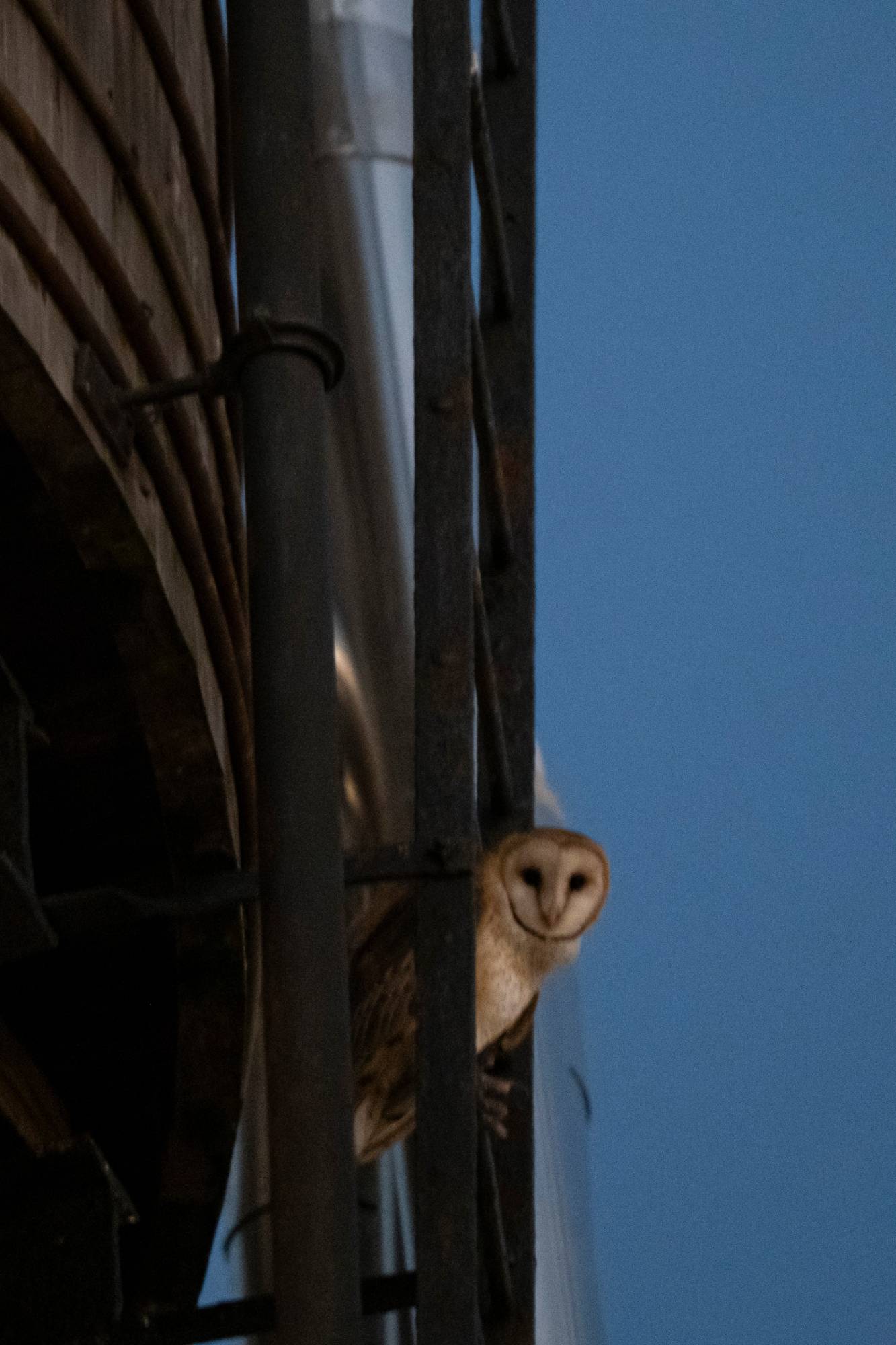
The full list of animals is: the bottlenose dolphin, Atlantic puffin, Atlantic salmon, brown hare, barn owl, basking shark, European hedgehog, common kingfisher, buff-tailed bumblebee, grey seal, Eurasian curlew, common frog, pine marten, great spotted woodpecker, emperor dragonfly, red fox, white-tailed eagle and the marsh fritillary butterfly.


China Goes After ‘Ghost Kitchens’ on Food Delivery Apps

In one province, delivery riders have been roped in to whistleblow on ‘ghost kitchens’ (Getty)
TT

China Goes After ‘Ghost Kitchens’ on Food Delivery Apps

In one province, delivery riders have been roped in to whistleblow on ‘ghost kitchens’ (Getty)

Chinese authorities have taken aim at a new target as they rein in the country's cut-throat food delivery industry: “ghost kitchens,” or restaurants that don't actually exist but appear on apps.

The “ghost kitchens” outsource orders to third-party vendors, which fulfill them at lower costs, allowing merchants to push down prices and maximize profits, according to BBC.

Authorities have found thousands of these “ghost kitchens” across China, raising concerns that the cheap prices are coming at the cost of food safety.

Starting this week, apps must verify restaurants' licenses and addresses, while merchants must ensure the listing online matches the physical business and specify if it offers dine-in services.

The scrutiny of “ghost kitchens” began last year, after a man in Beijing lodged a complaint over an unsatisfactory cake topped with inedible flowers. He had ordered it on a food delivery app, state media reported.

Officials found that the cake chain he had ordered from listed nearly 380 locations on major e-commerce platforms but did not have a single physical store. Its online shops also allegedly used forged business licenses.

As the investigation continued, it revealed that the chain accepted orders which were then transferred to a different platform - and that is where the orders were outsourced to various third-party vendors, depending on who had the lowest bid.

Authorities found a total of 3.6 million cake orders across two order-transfer platforms, state news agency Xinhua reported last month.

They also recorded 67,000 “ghost shops” across seven major food delivery apps, which together with the order-transfer sites “formed an illegal supply chain through mutual collusion,” according to Xinhua.

Food delivery platforms were complicit in these arrangements, it added.

“If we're too strict in our review, the merchants would go to other platforms,” a staff member from one delivery app reportedly told officials.


Renewable Energy Helps Red Sea Global Avoid 118,000 Tons of Carbon Emissions

Red Sea Global (RSG) has successfully avoided 117,879 tons of carbon dioxide equivalent (tCO₂e) emissions during 2024. (SPA)
TT

Renewable Energy Helps Red Sea Global Avoid 118,000 Tons of Carbon Emissions

Red Sea Global (RSG) has successfully avoided 117,879 tons of carbon dioxide equivalent (tCO₂e) emissions during 2024. (SPA)

Red Sea Global (RSG) announced on Tuesday a major sustainability milestone, revealing that it successfully avoided 117,879 tons of carbon dioxide equivalent (tCO₂e) emissions during 2024.

The achievement was independently verified and officially certified by DNV, confirming the company's full reliance on renewable energy and low-carbon operations.

In a statement, Red Sea Global said this figure represents the volume of emissions that would have been generated had conventional energy sources and transportation systems been used. To put the impact into perspective, the achievement is equivalent to removing approximately 27,500 cars from the roads for an entire year or eliminating the annual electricity consumption of nearly 24,500 homes.

Group Chief Environment and Sustainability Officer at Red Sea Global Raed Albasseet said: "Avoiding nearly 118,000 tons of emissions at this advanced stage of development demonstrates the powerful impact of embedding sustainability into operations from day one.”

“As our destinations continue to expand, this positive impact will grow further, proving to the world that luxury tourism can be a leading force in protecting and regenerating nature,” he added.

He stressed that these results stem from Red Sea Global’s strong commitment to clean energy principles. The Red Sea destination is currently powered entirely by 100% renewable electricity, supported by more than 760,000 solar panels and the world’s largest battery storage facility, ensuring a continuous supply of clean energy around the clock.

In the field of sustainable mobility, he explained that the company operates an advanced fleet of electric vehicles and buses, supported by a network of 150 renewable energy-powered charging stations.

Albasseet also noted that Red Sea International Airport has taken pioneering steps by beginning the use of Sustainable Aviation Fuel (SAF) and Lower-Carbon Aviation Fuel (LCAF) for seaplane operations, while continuing to work with partners to expand their use on commercial flights serving the destination.

These initiatives form a key pillar of Red Sea Global’s journey toward achieving net-zero emissions (Scopes 1 and 2) by 2030. The results align with the goals of Saudi Vision 2030 and the Kingdom’s Circular Carbon Economy Framework, supporting Saudi Arabia’s ambition to reach net-zero emissions by 2060.

By combining advanced technological solutions with a science-based approach, Red Sea Global continues to strengthen its position as a leading global model, demonstrating how regenerative tourism can deliver measurable and large-scale climate benefits.
