


Genome Study Shows What Made the Extinct Ice Age Cave Lion Unique

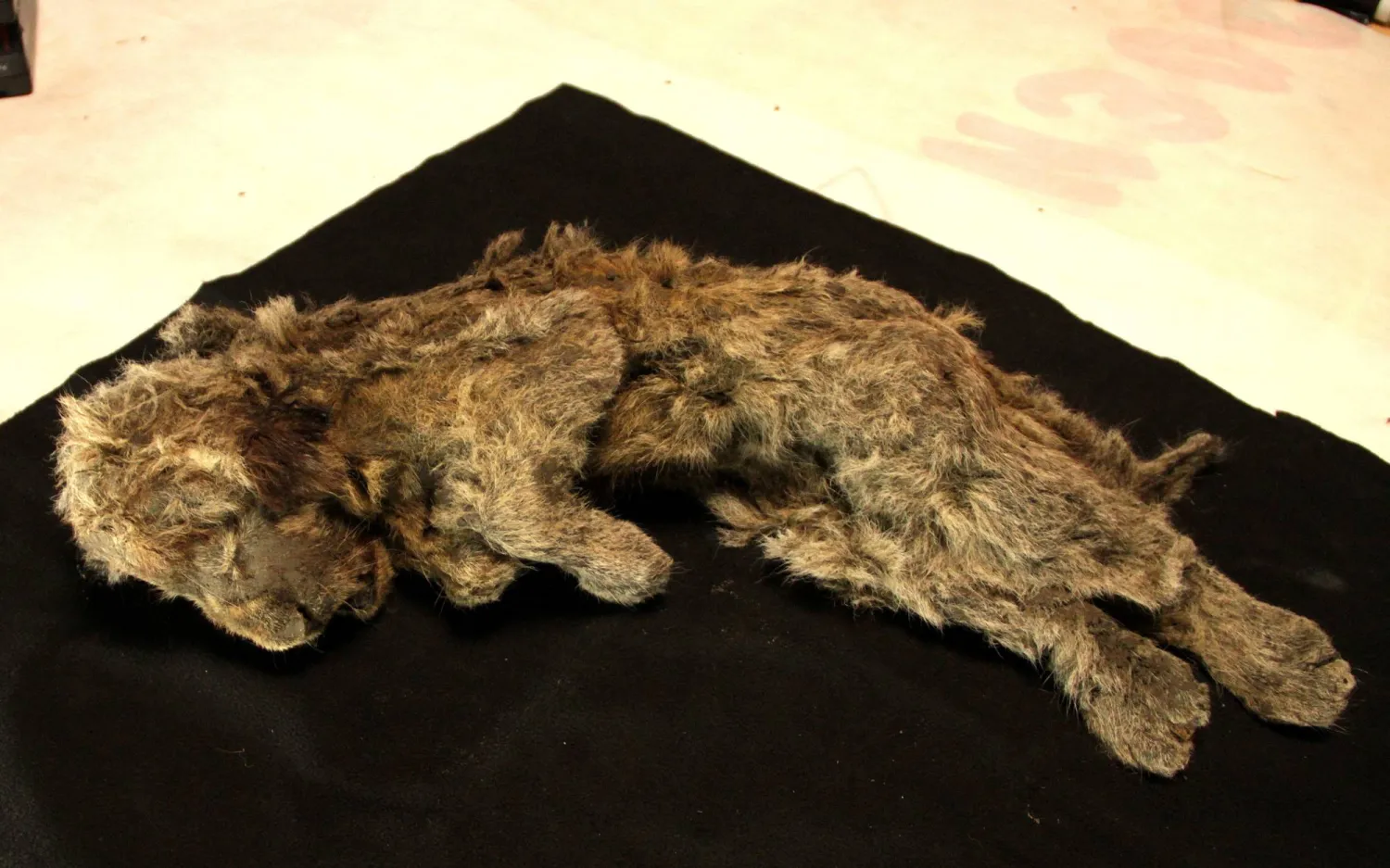
The remains of a frozen female cave lion cub named Sparta, about 32,000 years old and recovered in northeastern Siberia, are pictured in Yakutsk, Russia, in this photograph from 2018, obtained on June 3, 2026. Love Dalen/Handout via REUTERS
TT

Genome Study Shows What Made the Extinct Ice Age Cave Lion Unique

The remains of a frozen female cave lion cub named Sparta, about 32,000 years old and recovered in northeastern Siberia, are pictured in Yakutsk, Russia, in this photograph from 2018, obtained on June 3, 2026. Love Dalen/Handout via REUTERS

The cave lion was one of the biggest cats to ever live, prowling a huge swathe of territory from Western Europe across Siberia and into North America and hunting large prey - and perhaps even people - before going extinct around the end of the Ice Age.

New genome research reveals what made this big cat unique and how it differed from the modern lion, its smaller cousin, though the two species did sporadically interbreed. The cave lion, whose scientific name is Panthera spelaea, died out roughly 14,000 years ago.

The researchers compared the genomes of 12 cave lions that lived from 17,000 to 148,000 years ago in places such as Russia, Austria and Canada's Yukon territory with the genomes of 20 modern lions. Cave lion DNA was extracted mostly from bones and teeth, but also from soft tissue in well-preserved frozen cubs from Siberia, where cold conditions helped preserve ancient genetic material. One of these, a female called Sparta, is among the best Ice Age specimens ever found.

"We show that cave lions were not simply Ice Age versions of modern ⁠lions, but ⁠instead represented a highly distinct evolutionary lineage," said evolutionary geneticist Love Dalén of the Centre for Palaeogenetics, a collaboration between Stockholm University and the Swedish Museum of Natural History, senior author of the study published in the journal Cell.

According to Reuters, the study showed that the evolutionary lineages of the two species diverged probably around 1.7 million years ago during the Pleistocene Epoch. Each species possessed unique genetic variants that likely adapted them to their different habitats and behaviors. These genetic differences related to growth, vision, brain function and circulatory development.

The cave lion, which despite its name did not actually live in caves, was significantly larger and built more robustly than the modern lion. It dwelled in colder ⁠climes, favoring the open grasslands and tundras of northern Eurasia and northwestern North America. This vanished ecosystem, called the mammoth steppe in a nod to its most prominent inhabitant, resembled today's African savanna but with frigid temperatures.

"The cave lion was absolutely an apex predator, and as such filled an incredibly important and impactful ecological role," said evolutionary geneticist and study lead author David Stanton of Cardiff University in Wales. "They were one of the most widespread carnivores to ever live."

Among its probable prey were woolly mammoths - most likely young or elderly individuals - as well as woolly rhinoceroses, antelope, reindeer, horses and bison. Humans also dwelled in these regions in the Ice Age's later stages.

"While there is no clear evidence that cave lions preyed on humans, it seems highly likely that they occasionally did so. Cave paintings show that Ice Age people were highly familiar with these animals. They are often depicted with remarkable accuracy, and are usually shown without the large mane characteristic of modern male lions," Dalén said.

Other predators sharing the landscape included wolves, cave hyenas, ⁠brown bears, cave bears and ⁠the scimitar-toothed cat Homotherium. The powerful saber-toothed cat Smilodon was a more southern species, but may have come into contact with cave lions in the Yukon and Alaska regions during brief periods of Pleistocene climate warming.

The modern lion did not venture as far north as the cave lion's usual domain. But the study showed that the two species came into contact at particularly cold stretches of the Ice Age when growing continental ice sheets and expansion of the steppe tundra brought cave lions southward, causing their ranges to overlap.

"Climate appears to dictate the level of interbreeding that we see between these species," Stanton said.

The researchers said this interbreeding may have occurred in places like modern-day Iran. That region once was home to a sizable population of modern lions, though they are now largely restricted to Africa.

The warming at the end of the Ice Age contributed to the extinctions of many of the large Pleistocene animals, or megafauna, with human hunting presenting another destabilizing factor.

"Cave lions, like the rest of the megafauna at the end of the Pleistocene, were under a huge amount of pressure due to rapid changes in climate combined with increasing human population densities. The extinction of cave lions falls into the general pattern that we see of mass extinction of megafauna at this time, but for reasons that we don't completely understand," Stanton said.


'I Thought I Would Perish': Everest Survivor Recounts Ordeal

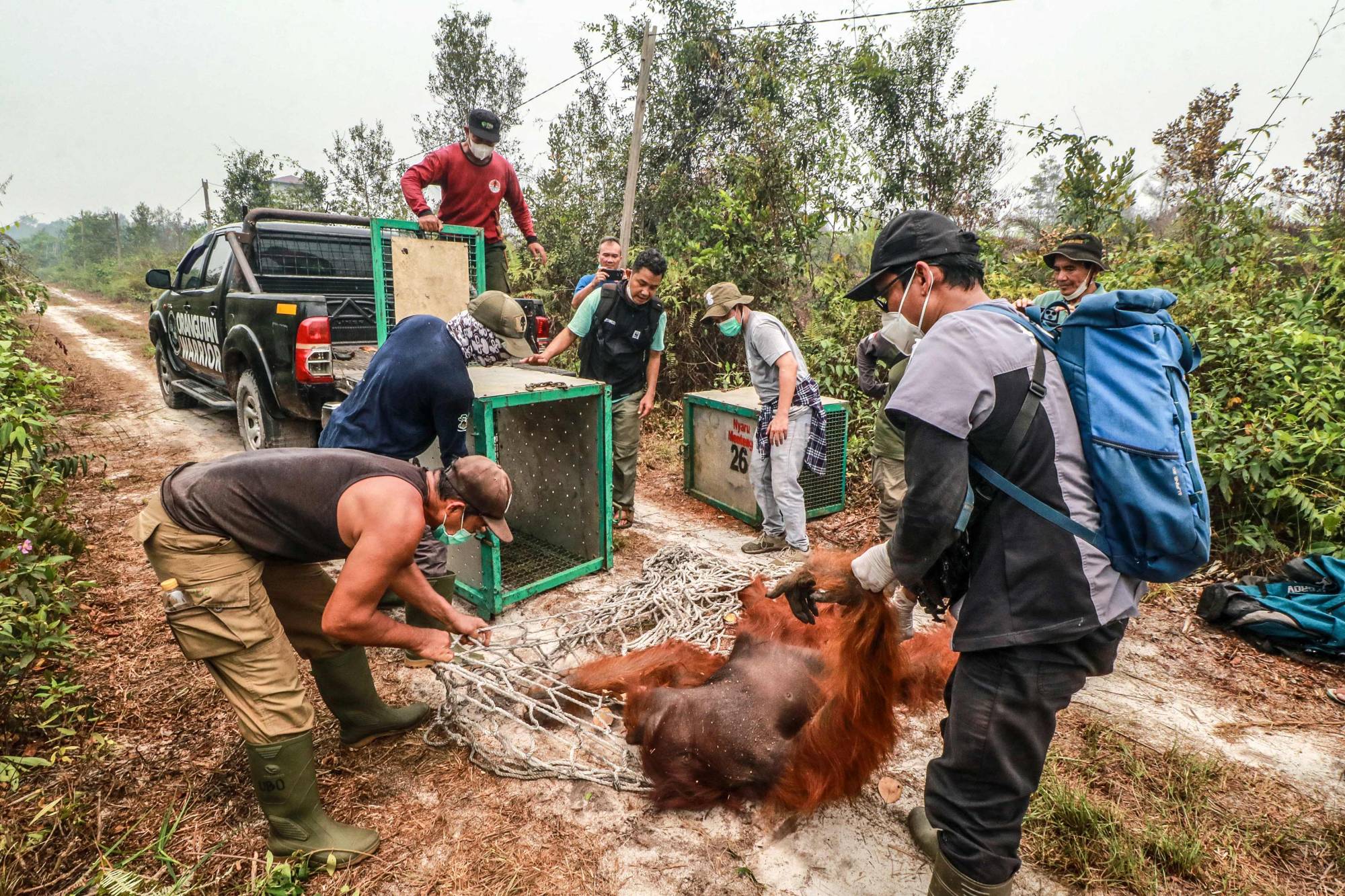
Medics and rescuers carry mountaineer Dawa Sherpa upon his arrival at the HAMS Hospital in Kathmandu on June 4, 2026. (Photo by PRABIN RANABHAT / AFP)
TT

'I Thought I Would Perish': Everest Survivor Recounts Ordeal

Medics and rescuers carry mountaineer Dawa Sherpa upon his arrival at the HAMS Hospital in Kathmandu on June 4, 2026. (Photo by PRABIN RANABHAT / AFP)

A Nepali mountaineer who survived nearly a week on Mount Everest said he "chewed ice" to stay alive, as he recovered in a hospital after a miraculous rescue that stunned the climbing community.

Dawa Sherpa, 57, disappeared in brutal conditions on the upper slopes of the world's tallest mountain on May 30 during one of the final climbs of the spring season.

With few climbers still on the peak and his oxygen exhausted, relatives had given up hope and begun ritual mourning prayers, believing he had died on the mountain.

"I didn't think I would be alive," he told BBC Nepali on Friday from his hospital bed.

"I thought I would perish this way. I didn't get lost. As the oxygen ran out, I fell behind. After the oxygen finished, I couldn't walk."

Left stranded in freezing temperatures near Everest's "death zone", where oxygen levels are critically low, Dawa Sherpa said he survived for days with almost no food or water.

"I didn't eat anything for the first two days. Then I began chewing ice. It hurt my teeth. I chewed the ice hard," AFP quoted him as saying.

He survived on a few chocolates and snacks he found in his pockets.

"I soaked them in water and had them," he said.

Dawa Sherpa, also known as "Hillary" after legendary climber Edmund Hillary, had told others after his rescue that at one point he fell into a crevasse before managing to climb out.

"Stepping on the snow, I stood up and looked above... It felt I could get out from there," he said.

"I then looked for ropes and found one. Then I held on to it and walked... eventually I came down."

He said he walked day and night towards base camp until finally encountering people almost a week later.

He was found crawling towards the base camp on the morning of June 4 by the Sagarmatha Pollution Control Committee (SPCC), a Nepali team that helps set routes on Everest and clean up waste left behind.

"Boys from SPCC were going up to collect the waste. I met them. They carried me down."

He was flown to Kathmandu for treatment for frostbite, severe dehydration and a fractured thigh bone, doctors said.

"He is doing well. We had a chat," his daughter Mendo Lhamu Sherpa told AFP.

His survival has sparked celebration among fellow climbers, but also anger from family members who accused rescue teams of failing to locate him sooner.

Nepal Mountaineering Association President Fur Gelje Sherpa called the survival extraordinary but said the incident highlighted serious concerns over climber safety.

"It is irresponsible and inhumane to leave a person behind," he said. "I believe that an investigation committee must be formed to hold the responsible people accountable for this."

Everest guide Rinji Sherpa, who comes from the same village as Dawa Sherpa, said the climber was highly experienced and familiar with the dangers of high-altitude mountaineering.

"He is very lucky, he has had several close calls before but he has survived," he said.

At least five climbers -- two Indians and three Nepalis -- died during this year's Everest season.

More than 1,000 climbers reached Everest's summit this season, according to preliminary Nepali government figures, making it the busiest season on record.


Shark Attack Kills Man Off Western Australia Coast

A shark swims close to a diving cage during a shark cage diving experience off the coast of Gansbaai, Western Cape, South Africa, May 15, 2026. REUTERS/Esa Alexander
TT

Shark Attack Kills Man Off Western Australia Coast

A shark swims close to a diving cage during a shark cage diving experience off the coast of Gansbaai, Western Cape, South Africa, May 15, 2026. REUTERS/Esa Alexander

A man has died after being attacked by a shark while fishing off the coast of Western Australia state, police said on Saturday, the third fatal shark attack in Australia in three weeks.

The 35-year-old was attacked on Saturday morning while spearfishing with family off the state's south coast at Michaelmas Island, close to ⁠the town of ⁠Albany, about 388 km (241 miles) south of state capital Perth, police said.

Reuters said he was taken ashore where he was treated by paramedics but died of his ⁠injuries.

A 4.5 meter (14.8 feet) shark, of an unknown species, was spotted by a member of the public near Michaelmas Island, a nature reserve that receives few visitors, on Saturday, state authorities said.

On May 24, a 39-year-old man died after being attacked by a shark while fishing on ⁠the ⁠Great Barrier Reef. The death followed that of a 38-year-old mauled off an island near Perth 10 days earlier.

There are around 20 shark attacks in Australia every year but the vast majority are not fatal, according to data from conservation groups. Far more people drown on the country's beaches.


Excitement and Joy at Ljubljana Zoo after Birth of 3 Siberian Tiger Cubs

A visitor watches the Siberian tiger cubs with their mother on a screen at the zoo in Ljubljana. AP
TT

Excitement and Joy at Ljubljana Zoo after Birth of 3 Siberian Tiger Cubs

A visitor watches the Siberian tiger cubs with their mother on a screen at the zoo in Ljubljana. AP

A zoo in Slovenia's capital Ljubljana has presented its newest residents: three Siberian tiger cubs who were born there under two weeks ago.

The Siberian tiger is one of the world’s most endangered big cat species, with experts estimating that about 500 remain in the wild. Their survival is threatened primarily by habitat loss and poaching.

Zoo workers said the cubs were born to mother Arisa and father Ussuri, which arrived in Ljubljana in 2004, after careful planning and much hoping, The Associated Press reported.

“We were not really expecting, but hoping, working on it because we have a good breeding pair,” she said. Though the couple were introduced to each other at the right time “we weren't completely sure,” she added.

“So we were also a bit surprised and of course very happy,” Strus said.

Breeding wild animal species in enclosed spaces is known to be hard and often does not succeed.

The cubs, born on May 27, are highly vulnerable and need to be isolated from others except their mother, but zoo staff and visitors have been able see them on a screen streaming live video footage.

Visitors could be seen smiling as they watched the mother with her babies on the screen. Barbara Gallaido, from San Francisco, said the sight was “really fabulous.”

“I’ve seen tigers in the wild in India, but not like this, not with cubs,” she said. “It was really great.”

Arisa is a first-time mother at the age of 4, Strus said. She appears to be doing very well so far.

“She is constantly licking them (cubs,) breastfeeding them and they are resting together,” she said. “So far so good. But ... we still need to wait and see what will happen.”

According to Strus, tiger cubs open their eyes and begin hearing about two weeks after birth. She said the mother is expected to bring them out of the den for the first time when they are one month old.
