Independent Researcher Exposes Basic Blunder in Scores of Cancer Studies

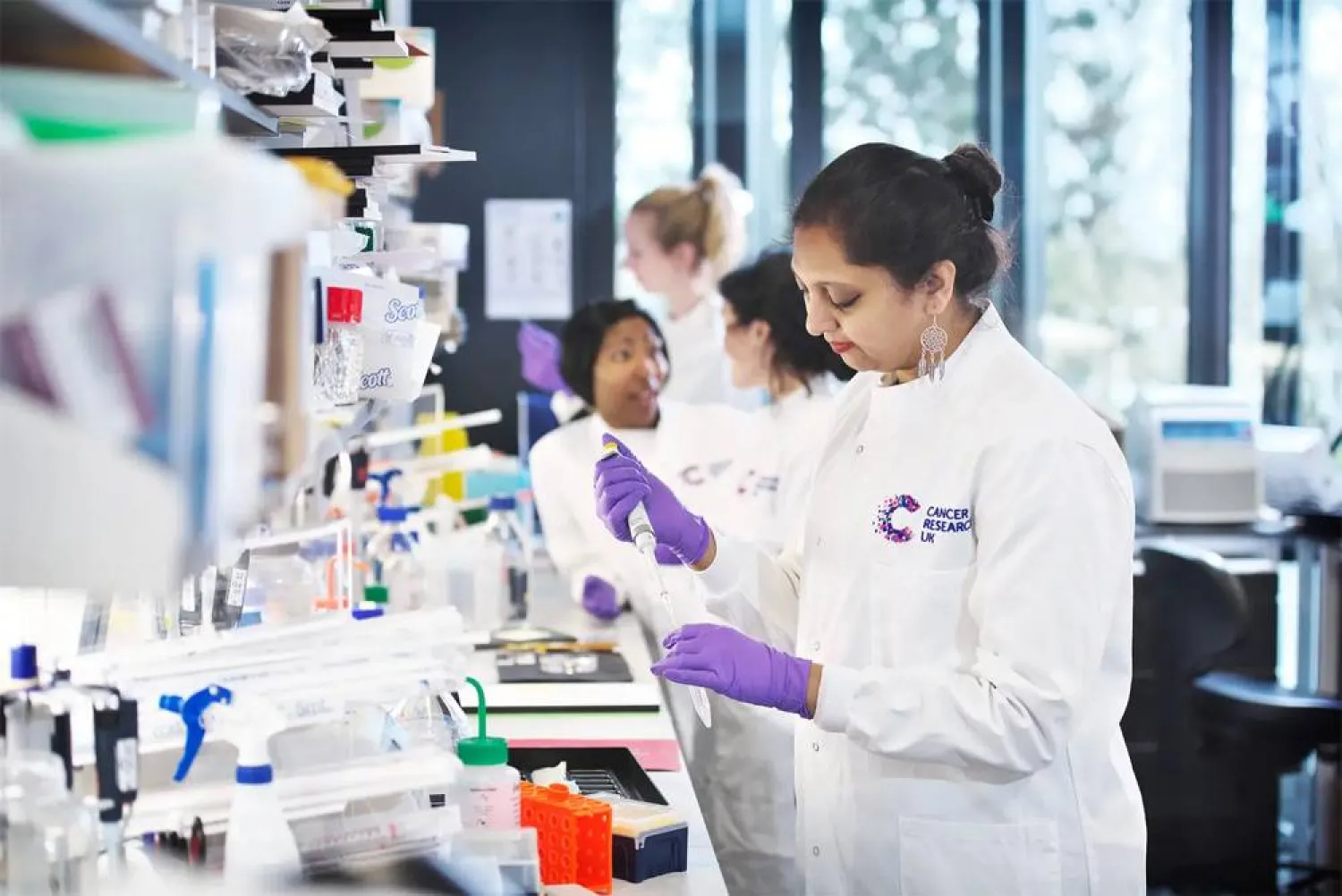
Researchers at the laboratory. (Cancer Research UK, Cambridge Institute)
TT

Independent Researcher Exposes Basic Blunder in Scores of Cancer Studies

Researchers at the laboratory. (Cancer Research UK, Cambridge Institute)

An independent researcher has uncovered potential blunder in scores of scientific studies, including cancer-related research, as a result of inappropriate antibody use in laboratory experiments, raising questions about the reliability of some of the results published in prestigious scientific journals.

The researcher found that scientists at Cambridge, Oxford, Stanford and other universities appear to have accidentally used the wrong ingredient in their experiments, muddling two proteins with similar names but entirely different sequences and functions.

Several British media outlets said researcher Sholto David reviewed the full text of 334 research papers to determine whether the antibody used in the studies was correctly intended for p16-ARC or incorrectly used to try and bind p16-INK4a.

P16-INK4a acts as a tumor suppressor by halting the cell cycle and is widely studied in cancer biology and is considered a key biomarker of ageing.

He found astonishing result: 95% of these papers have got it wrong.

“The vast majority of researchers who purchased antibodies have tried to use them to investigate p16-INK4a expression. Only 17 used these p16-ARC antibodies correctly,” he said in his research.

David said the implications are not good, to put it mildly.

“And these are not just insignificant papers. There are papers with hundreds of citations in high impact journals claiming to probe for p16-INK4a with antibodies which do not bind p16-INK4a,” he noted.


Norway Brought Its Own Food to the World Cup. But Not Because It Distrusts US Products

Soccer Football - FIFA World Cup 2026 - Group L - England v Ghana - Boston Stadium, Foxborough, Massachusetts, US - June 23, 2026 General view inside the stadium during the warm up before the match REUTERS/Pilar Olivares/File Photo
TT

Norway Brought Its Own Food to the World Cup. But Not Because It Distrusts US Products

Soccer Football - FIFA World Cup 2026 - Group L - England v Ghana - Boston Stadium, Foxborough, Massachusetts, US - June 23, 2026 General view inside the stadium during the warm up before the match REUTERS/Pilar Olivares/File Photo

As Norway excels in its first World Cup appearance since 1998, false claims about what the team is eating are also grabbing attention online, The Associated Press said.

The allegations focus on the quality of American food — more specifically, that the Norwegians distrust it so much that they brought food from home to avoid eating it. Norway's team is based in Greensboro, North Carolina, for the duration of the 2026 tournament, which is being co-hosted by the US, Canada and Mexico.

It's true that the team shipped certain products from Norway for the World Cup, but the reason has nothing to do with concerns about quality.

Here's a closer look at the facts.

CLAIM: The Norwegian men's national soccer team brought its own food to the 2026 World Cup because it doesn't trust the quality of food in the US.

THE FACTS: This is false. The team brought some products from Norway to maintain consistency in players' diets and provide a taste of home, according to its head chef Aron Espeland. Other ingredients have been sourced locally. Nutrition experts say that such a practice is common among elite athletes who play internationally.

“When athletes are competing at the highest level, consistency is important,” Espeland said. “The players are used to certain products and flavors, and familiar foods can contribute both to nutrition and overall well-being during a demanding competition.”

He continued: “Overall, the experience of cooking for the team in the US has been excellent. We have had access to high-quality local ingredients, and our approach has been to combine those with a selection of Norwegian products that help create continuity and a sense of home for the players during the tournament.”

Many of the claims spreading online say the team brought in 1,000 kilograms (2,200 pounds) of food from Norway for the World Cup. Espeland confirmed that the amount is actually about 580 kilograms (1,276 pounds). That consists of 300 kilograms (660 pounds) of Norwegian salmon and trout, 100 kilograms (220 pounds) of halibut, 80 kilograms (176 pounds) of Norwegian brown cheese, and 100 kilograms (220 pounds) of Jarlsberg cheese.

The team, whose support staff includes three chefs, did not bring oranges from Norway, despite social media posts claiming otherwise. Espeland said that players are served freshly squeezed orange juice every morning, made from oranges sourced locally in the US.

Plenty of other teams travel with their own chef and have taken their own food to past World Cups. For example, Argentina and Uruguay each brought thousands of pounds of meat to Qatar in 2022. The US squad traveled to Brazil in 2014 with oatmeal, Cheerios, peanut butter and A1 Steak Sauce.

Such practices are not unusual for elite athletes who compete in different countries, according to experts. The reasons include maintaining routine and consistency, reducing risk of adverse reactions, providing cultural familiarity and accommodating personal preferences.

“Interpreting this practice as a lack of trust in the host nation’s food system misunderstands the purpose of high-performance nutrition,” said Rafaela G. Feresin, an associate professor of nutrition at Georgia State University. “The goal is not to evaluate local food quality; it is to eliminate unnecessary variability during competition. Bringing a chef and familiar ingredients to a major tournament is standard, performance-driven logistics.”

Amy Goodson, a sports dietitian who has worked with professional teams including the Dallas Cowboys and the Texas Rangers, explained that bringing food to international competitions is more about “control, consistency, and performance” rather than distrust.

“Nutrition is a performance variable at the World Cup level,” she said. “These athletes train, travel, and compete with elite intensity, often multiple times in a short window, while managing weather and time zone changes. What they eat directly impacts energy availability, hydration status, recovery, immune function, and even decision-making on the field. When margins are razor thin, fueling consistency becomes critical.”


Secret Cameras, Mics and AI Reveal Rare Cambodia Wildlife

Hidden microphones, cameras and artificial intelligence to reveal the secrets of species living deep in Cambodia's Cardamom Mountains. TANG CHHIN Sothy / AFP
TT

Secret Cameras, Mics and AI Reveal Rare Cambodia Wildlife

Hidden microphones, cameras and artificial intelligence to reveal the secrets of species living deep in Cambodia's Cardamom Mountains. TANG CHHIN Sothy / AFP

Above the patter of rain cascading through the jungle canopy comes the haunting call of a pileated gibbon singing to fend off intruders in Cambodia's Cardamom Mountains.

It is being recorded as part of work harnessing hidden microphones, cameras and artificial intelligence to reveal the secrets of species living deep in the rainforest and help protect them.

To conservationist Ratha Sor, the whoops and whistles are the sound of hope -- a sign that the country's largest remaining stretch of intact rainforest is healthy enough to support the endangered species, said AFP.

Gibbons are "indicators that our forest is still alive", he said.

By showing that everything from pangolins to elephants call the Cardamom Mountains home, conservationists hope to secure its future, in a country that has lost over a third of its forest cover in the last 25 years.

"This is the real evidence... we are conserving very unique species in our landscape," said Ratha Sor, biodiversity and science manager at Conservation International (CI), a US-headquartered non-profit.

The Cardamoms range, spread across more than a million hectares (2.47 million acres) in southwest Cambodia, is regarded as one of the most important remaining rainforests in the region.

For decades, it was eaten away by rampant deforestation and emptied by poaching.

Bolstered protections have helped slow both, though infrastructure projects, including dams, remain a serious threat.

In 2024, CI published the results of the first-ever systematic camera trap survey of the Central Cardamom region, revealing more than 100 resident species, nearly two dozen of them either vulnerable or endangered.

That effort, involving nearly 150 devices placed at regular intervals, will be repeated later this year.

It is supplemented by ongoing targeted camera trapping, focused on areas where animals are likely to be and offering deeper understanding of how populations are changing and behaving.

- Macaques, dholes, elephants -

AFP joined conservationists, rangers and locals this month as they retrieved and replaced cameras and microphones in the forest.

Under a chaotic canopy woven with vines and studded with fearsome spiked stems, the group crossed streams, waded through mud and picked off dozens of leeches.

Local community members like Pan Sok, a member of the Chong Indigenous minority, guide CI on where to place devices.

The 50-year-old lives outside the forest but calls himself a "jungle man" after years tapping resin from its trees.

He sat to review black-and-white footage from a camera he helped locate, describing "pride" at the sight of pig-tailed macaques, endangered wild dogs called dholes and his favorite, elephants.

"My efforts paid off," said Pan Sok.

Some of these species are seen fairly regularly elsewhere in Southeast Asia, but encounters can be vanishingly rare in the Cardamoms.

A ranger told AFP he had not seen an elephant once in 12 years patrolling.

While camera traps can capture many of the forest's inhabitants, gibbons are rarely seen because they live in treetops and move too quickly, so CI is turning to bioacoustic monitors and AI.

Its staff spent three months training a machine-learning program to identify calls recorded by dozens of monitors placed at 10 sites.

They are set at least three kilometers (1.9 miles) apart, as close as gibbon groups come to each other without fighting, meaning each device is picking up a different troop.

- 'This is gibbon, this is not' -

In just six weeks, the monitors recorded nearly 800 calls.

The team labelled up to half the data for the AI, teaching it "this is gibbon, this is not", said Ratha Sor.

AI then processed the rest, and in the future will be trained to distinguish male from female, and eventually individual calls.

Experts say poaching in the region has waned, though a ranger found part of an old snare during AFP's visit.

Patrolling has also reduced small-scale encroachments, but infrastructure projects including multiple dams are still driving deforestation.

In the last five years, the Central Cardamom protected region has lost nearly 7,000 hectares of tree cover, Global Forest Watch data shows.

Ratha Sor trod carefully when asked about government-backed infrastructure projects responsible for some of that deforestation.

"It's out of our control," he said.

But he hopes evidence of the region's rich wildlife will show the benefits of leaving the forest standing.

"It is an encouragement to protect... one of the very pristine evergreen forests in this Cardamom Mountains."


‘Fingerprints’ of Black Hole’s Event Horizon Detected for First Time

An actual image of the black hole where scientists looked for a ring of light, which is matter and radiation circling at extreme speeds around a region of darkness representing the black hole. (Event Horizon Telescope collaboration)
TT

‘Fingerprints’ of Black Hole’s Event Horizon Detected for First Time

An actual image of the black hole where scientists looked for a ring of light, which is matter and radiation circling at extreme speeds around a region of darkness representing the black hole. (Event Horizon Telescope collaboration)

Scientists have detected the "fingerprints" of a black hole's event horizon -- the boundary from which nothing can escape -- for the first time, according to research published on Wednesday.

The discovery was made by studying ripples in space-time called gravitational waves that were created when two black holes violently smashed into each other.

A black hole's event horizon is known as the "point of no return" because not even light can avoid being swallowed into its darkness.

This has made them incredibly difficult to learn anything about.

However, there is one event of such cataclysmic violence that it could offer a chance to glimpse this extreme phenomenon -- when two black holes merge into one.

When this cosmic death spiral occurs, it shoots gravitational waves across the universe which scientists have been detecting for the last decade.

For the new research published in Nature, an international team of researchers analyzed data from the strongest gravitational wave ever recorded, known as GW250114, detected by the LIGO observatory in January 2025.

By isolating the last burst of waves -- known as "direct waves" -- from this black hole merger, the scientists said they were able to extract information from closer to an event horizon than ever before.

"This black hole horizon concept normally appears in science fiction," lead study author Sizheng Ma of the Perimeter Institute for Theoretical Physics in Canada told AFP.

"But now we are really able to touch the region around the horizon with gravitational data," he added.

"Sometimes I cannot believe this is really happening."

- Causing a stir -

The last stage of two black holes merging is like a spoon stirring a glass of water, Sizheng Ma explained.

The resulting swirl in space creates the ripple of gravitational waves that travel at the speed of light in all directions.

If the metaphorical spoon is stirring close enough to the black hole's event horizon, "this offers us a chance to decode the physics around that region", Sizheng Ma said.

By supporting the theory of general relativity, the results "proved that Einstein was correct again," he added.

The scientists emphasized that more research was needed to decipher what can be gleaned about event horizons using this method.

But they did detect information about how black holes twist space around themselves as they rotate -- a phenomenon known as "frame dragging".

"This is similar to pushing a glass into a table and twisting it, so that the tablecloth winds up around it," Maximiliano Isi, a gravitational wave astrophysicist at Columbia University, told AFP.

In the future, the team of scientists hope to find signs of tiny changes known as quantum fluctuation.

"In this way, we can really probe this near horizon region to look for a new physics," including searching for a deviation from general relativity, Sizheng Ma said.

- Reaction mixed -

Experts not involved in the study urged caution.

Francesco Sannino, an Italian theoretical physicist who studies black holes, told AFP it was "compelling analysis" but needed to be checked by other researchers.

Still, it was "striking" that the scientists were able to show that gravitational waves carried the event horizon's "fingerprints," he said.

The astrophysicist Isi described the work as "tantalizing".

"More generally, understanding the physics of black holes and their mergers is important as it might shed light on how space and time are woven together at a more fundamental level," he told AFP.

Sean McWilliams, an astrophysicist at West Virginia University, was skeptical that the gravitational wave frequency analyzed by the scientists was actually "dictated" by the event horizon.

For this reason, "the actual observed signal doesn't really tell us anything about the horizon or the other properties directly related to it", he told AFP.

Sizheng Ma said McWilliams's statement was "not correct," suggesting he had conflated two different aspects in the paper.

"There is often considerable resistance and criticism in the early stages of promoting a new concept," he said, adding he is working on another paper to "clarify these confusions and possible misinterpretations".