


Satellite Observations Detect 'Urban Pulse' of Six Global Cities

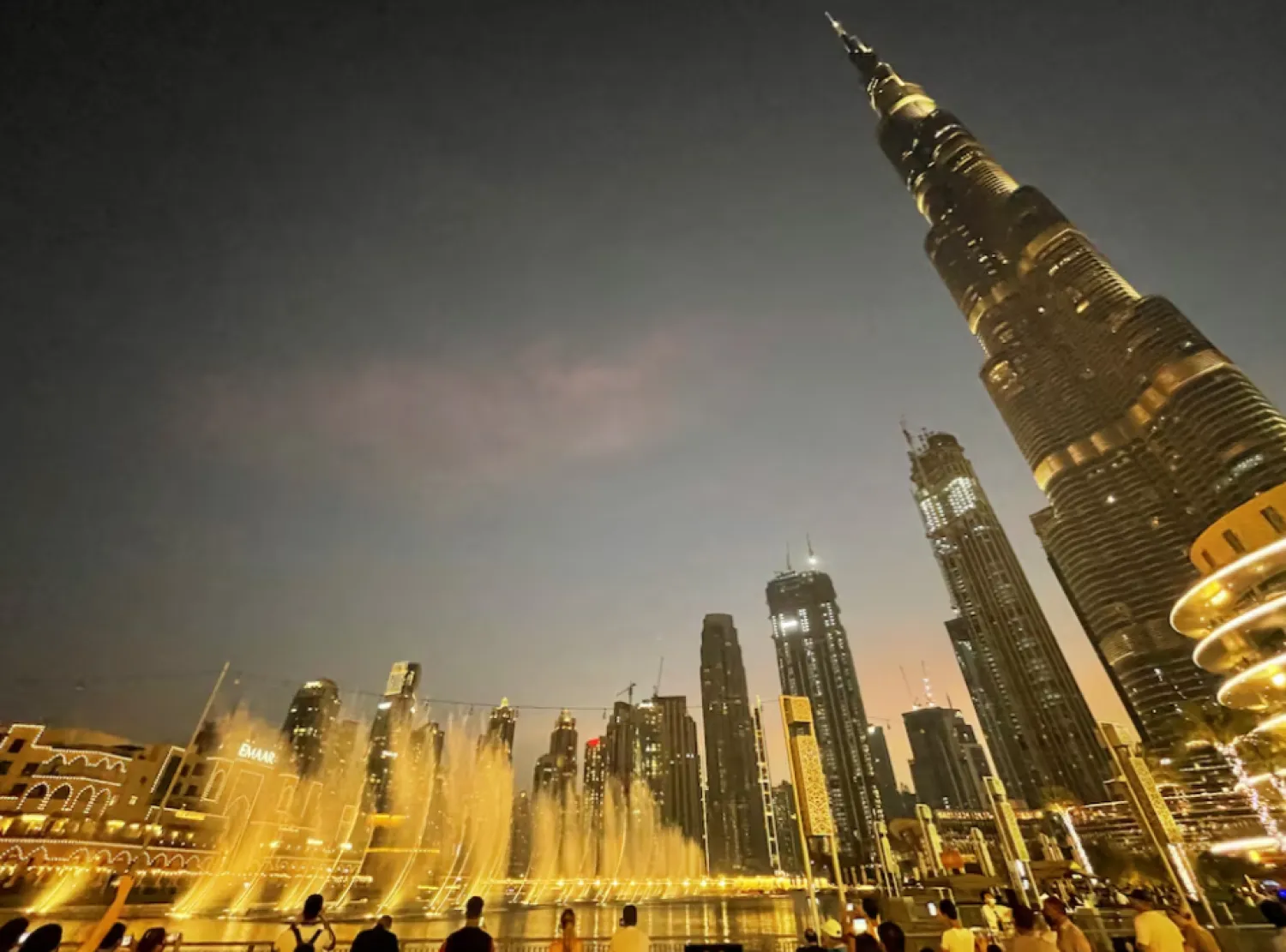
General view of the Burj Khalifa and the downtown skyline in Dubai, United Arab Emirates, September 30, 2021. REUTERS/Mohammed Salem/File Photo Purchase
TT

Satellite Observations Detect 'Urban Pulse' of Six Global Cities

General view of the Burj Khalifa and the downtown skyline in Dubai, United Arab Emirates, September 30, 2021. REUTERS/Mohammed Salem/File Photo Purchase

While a city is not a living organism, it behaves very much like one. Its metabolic processes may be manifested in growth spurts, metamorphosis over time and even decay. Researchers using satellite imagery have tracked the vital signs of six major global cities, detecting a distinctive "urban pulse" in each.

The researchers looked at Dubai, Lagos, Mexico City, Mumbai, Seattle and Shenzhen using a new way to document dynamic changes unfolding in each of these cities in near real-time.

Historically, experts have relied upon aggregated and infrequent data to document urbanization, such as a yearly census, annual economic figures or a map showing how a city's footprint has changed over a decade - essentially using specific outcomes as metrics. But the scientists behind the new study said such an approach provides an incomplete understanding of a city and can miss the nuances as a metropolis evolves, Reuters reported.

"We got the inspiration from the human pulse, which tells us different information about our health than weight or height," said study lead author Zhe Zhu, a professor of remote sensing and director of the Global Environmental Remote Sensing Laboratory at the University of Connecticut's Department of Natural Resources and the Environment.

"The urban pulse measures the high-frequency process of development, and therefore we can spot early warning signs of economic stress or stagnation before they become full-blown crises," Zhu said. "We compare traditional metrics to looking at a heart attack - the outcome - whereas the 'urban pulse' is like monitoring the daily lifestyle and vital signs leading up to that heart attack - the process."

The biggest takeaway from the study, published in the journal Proceedings of the National Academy of Sciences, is that urbanization is not smooth and steady, the researchers said.

"Urbanization is actually 'spiky,' meaning that it happens in abrupt, intense bursts, or 'cyclical,' moving through boom-and-rest phases that don't match annual seasons, or 'asynchronous,' as different neighborhoods in the exact same city develop at completely different, uncoordinated times," said study senior author Karen Seto, a Yale University professor of geography and urbanization science.

"This is important because, for decades, researchers have characterized cities through static maps," Seto said.

CITIES WITH DIFFERENT CONDITIONS

The researchers used dense and high-frequency satellite imagery from the US space agency NASA's Landsat and the European Space Agency's Sentinel-2 satellites. They tracked physical changes in the cities such as new building construction, demolition, major infrastructure improvements and expansion into green spaces.

"We selected cities with a wide range of political-economic conditions including the state-led development of Shenzhen, the market-driven growth of Seattle, the informal expansion of Lagos and the megaprojects of Dubai," Zhu said.

Shenzhen, formerly a small fishing village near Hong Kong that has become a megacity, exhibited the highest magnitude and intensity of growth, characterized by massive and clustered spikes reflecting rapid, state-led mobilization of capital.

Dubai, the most populous city in the United Arab Emirates, also showed huge growth.

In Nigeria's largest city Lagos, the "pulse" was highly fragmented, with long periods of inactivity punctuated by brief and intense surges.

Seattle, the largest metropolis in the US Pacific Northwest, reflected a market-driven pulse of redevelopment and densification.

Mumbai, India's financial and commercial powerhouse, and Mexico City, North America's most populous city, proved to be highly resilient and showed less disruption during global shocks such as the COVID-19 pandemic than the others.

"Just as a human pulse reacts to illness, our data captured the exact moment COVID-19 triggered a synchronized 'cardiac arrest' in development worldwide. But the recovery was entirely unequal," Zhu said.

"Shenzhen saw a sharp, coordinated dip followed by a rapid rebound. Lagos experienced a muted pulse that transitioned into smaller, incremental changes. Meanwhile, cities like Mumbai and Mexico City showed much less of an impact. It showed us that global shocks don't manifest the exact same way in every city's 'body,'" Zhu said.

The researchers see practical applications for their method.

"For urban planners and policymakers, it functions as a diagnostic tool. Instead of reacting to a crisis after the fact, they can see exactly when and where a neighborhood's 'pulse' is slowing down and intervene early to prevent infrastructure collapse or economic decay. It also prevents cities from overheating their labor and material markets," Seto said.




Sea Snail Named Aldisa Vozinha in Honor of Cape Verde Keeper

FILE PHOTO: Cape Verde's Vozinha celebrates after the match in Atlanta Stadium, Atlanta, Georgia, US, June 15, 2026. IMAGN IMAGES via Reuters/Brett Davis/File Photo
TT

Sea Snail Named Aldisa Vozinha in Honor of Cape Verde Keeper

FILE PHOTO: Cape Verde's Vozinha celebrates after the match in Atlanta Stadium, Atlanta, Georgia, US, June 15, 2026. IMAGN IMAGES via Reuters/Brett Davis/File Photo

Spanish biologist and soccer fan Jesus Ortea has named a newly discovered species of sea snail in honor of Vozinha, the Cape Verde goalkeeper who stunned fans by denying all goal attempts by Spain in his World Cup debut.

Ortea discovered the tiny, bright red mollusc, now named Aldisa vozinha, in the Caribbean and timed his announcement to coincide with ⁠the World Cup.

"We ⁠have chosen the name vozinha in honor of Vozinha ... who played a prominent role in his country's World Cup debut against The Reds (Spain)," Ortea said in his paper.

"The coloration of ⁠the species is intended as a tribute to that achievement."

Vozinha, 40, became one of the breakout stars of the tournament, helping his country reach the Round of 32, where he again distinguished himself in a dramatic extra-time loss to world champions Argentina.

Ortea, professor emeritus at the University of Oviedo, has worked extensively ⁠in ⁠the waters around the Cape Verde archipelago and in 2023 was awarded a Medal of Merit by the island nation.

The 75-year-old biologist's passion for soccer has previously manifested itself in the naming of marine species after former Costa Rica and Real Madrid goalkeeper Keylor Navas and Quini, the Spain and Sporting Gijon striker of the 1970s and 1980s.


Man Nearly Sucked Out of 'Detached' Window on Ryanair Flight

FILE PHOTO: A Ryanair plane on the tarmac of Makedonia airport in Thessaloniki, Greece, May 7, 2026. REUTERS/Alexandros Avramidis/File Photo
TT

Man Nearly Sucked Out of 'Detached' Window on Ryanair Flight

FILE PHOTO: A Ryanair plane on the tarmac of Makedonia airport in Thessaloniki, Greece, May 7, 2026. REUTERS/Alexandros Avramidis/File Photo

A man was nearly sucked out the window of a Ryanair flight when it "detached" mid-air en route to Germany, with other passengers pulling him back inside, witnesses and officials said Friday.

The passenger, described as a tourist from Serbia on a flight from Thessaloniki in Greece to Memmingen in Germany, has been hospitalized with friction burns but was otherwise in good condition, authorities said.

"Most of us had fallen asleep, we had closed our eyes. There was a noise, like a tire bursting," a fellow passenger told Radio Thessaloniki, according to AFP.

"We immediately realised there had been a decompression. There were screams ... for a moment I thought someone had accidentally opened the emergency door," the woman said.

"The masks dropped and there was a strong smell. The head and shoulders of one passenger were outside the window. Fortunately, he hadn't taken off his seat belt."

Other passengers near the man helped to pull him in, she said.

Greek media reported the incident had occurred over North Macedonia, and said the window had been broken by a piece of debris that detached from one of the plane's engines.

Ryanair in a statement said the flight "returned to Thessaloniki shortly after takeoff when a passenger window detached during the flight. The aircraft landed normally and the passengers returned to the terminal."

A replacement aircraft was made available to transport the remaining passengers to Memmingen, the Irish carrier said.


H5 Bird Flu Detected in Australian Seabird for 1st Time

FILE PHOTO: An ibis bird perches next to the Reserve Bank of Australia headquarters in central Sydney, Australia February 6, 2018. REUTERS/Daniel Munoz/File Photo
TT

H5 Bird Flu Detected in Australian Seabird for 1st Time

FILE PHOTO: An ibis bird perches next to the Reserve Bank of Australia headquarters in central Sydney, Australia February 6, 2018. REUTERS/Daniel Munoz/File Photo

Scientists have detected the highly contagious H5 bird flu in an Australian seabird for the first time, the government said Friday.

Australia was for years the only continental landmass to be free of the H5 strain, which has caused severe disease and high death rates in poultry and wild birds worldwide.

A total of 12 cases of H5 bird flu have been confirmed in Australia since June but all of them were in migratory sea birds, not local wildlife.

Laboratory testing confirmed the disease had infected a greater crested tern in the town of Robe, South Australia.

"While this, of course, is a concerning development it is not unexpected," AFP quoted Agriculture Minister Julie Collins as saying.

"I do want to reiterate, though that at this time there is still no evidence of any mass mortality due to the H5 bird flu," she told a news conference in Hobart, capital of the island state of Tasmania.

There was no sign the virus had spread to other animal populations, poultry or agriculture systems, "and there remains a low risk to human health", the minister said.

Scientists were seeking to establish the potential pathways for the virus's spread to the Australian bird, Collins added.

"What we do know is that this is a coastal seabird that has an overlapping coastal range with migratory sea birds that have previously tested positive for H5."

The South Australian state government had implemented "enhanced surveillance" in the area where the bird was found, she said.

There has been concern that the deadly disease could add to the extinction risks faced by Australian fauna, many of which are unique to the vast continent.

Almost half of Australia's wild bird species, and 83 percent of its mammals, are found nowhere else.

The wild birds most affected by the H5 strain include waterfowl, shorebirds, seabirds and birds of prey.

Marine mammals have also been affected, with some detections in other animals such as cats, goats, alpacas and pigs.

Officials have previously said they are investigating if the disease arrived in Australia via birds migrating from the sub-Antarctic.

Scientists said in June the H5 bird flu strain had killed more than 13,000 elephant seal pups after infecting a breeding colony on the remote Heard and McDonald Islands, one of Australia's external territories in the sub-Antarctic.