

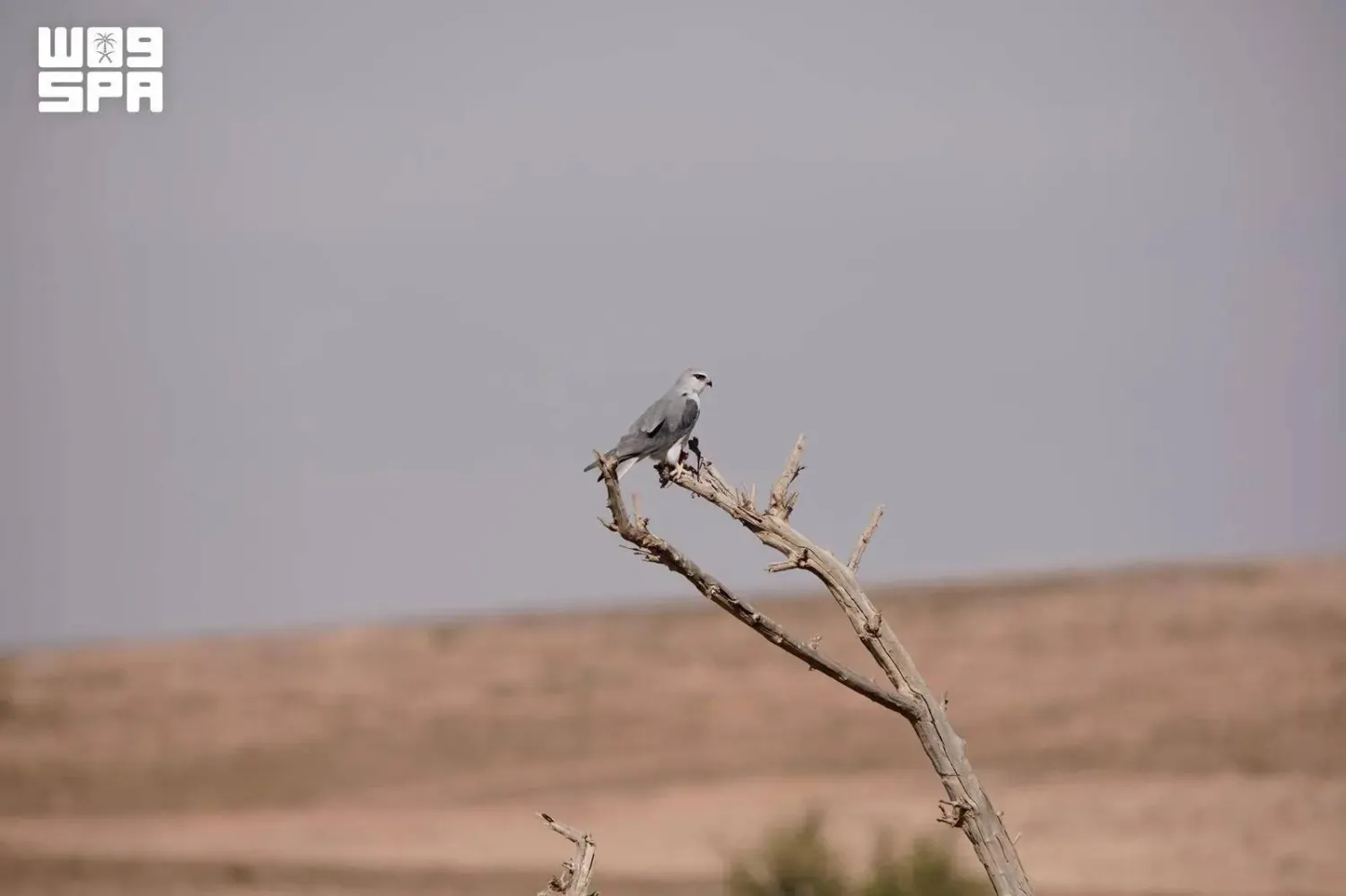

First Confirmed Black-winged Kite Nesting Documented in Saudi Arabia’s King Abdulaziz Reserve

The Black-winged Kite is a bird of prey associated with open habitats that provide suitable nesting trees and reliable food sources. (SPA)
TT

First Confirmed Black-winged Kite Nesting Documented in Saudi Arabia’s King Abdulaziz Reserve

The Black-winged Kite is a bird of prey associated with open habitats that provide suitable nesting trees and reliable food sources. (SPA)

The King Abdulaziz Royal Reserve Development Authority announced the documentation of the first confirmed nesting record of Elanus caeruleus, commonly known as the Black-winged Kite, within the boundaries of the King Abdulaziz Royal Reserve, reported the Saudi Press Agency on Monday.

Providing new scientific evidence of the reserve's suitability as a natural habitat that supports wildlife settlement, breeding, and biodiversity conservation, the achievement aligns with the strategic objectives of the royal reserves and the Saudi Green Initiative in support of Saudi Vision 2030.

The nesting activity was recorded between January 20 and May 26, 2025, based on field surveys conducted in several natural meadows characterized by dense Sidr tree growth.

Adult and juvenile birds of the species were observed throughout the season, before researchers discovered an active nest on May 14, 2025, atop a Sidr tree approximately 2.9 meters high. The nest contained three eggs, providing direct evidence of local breeding within the reserve.

The Black-winged Kite is a bird of prey associated with open habitats that provide suitable nesting trees and reliable food sources.

Its documentation within the reserve reflects the authority’s efforts to protect and manage natural habitats and provide safe environments capable of supporting raptor populations, particularly in areas undergoing ecological recovery and improvements in vegetation cover.
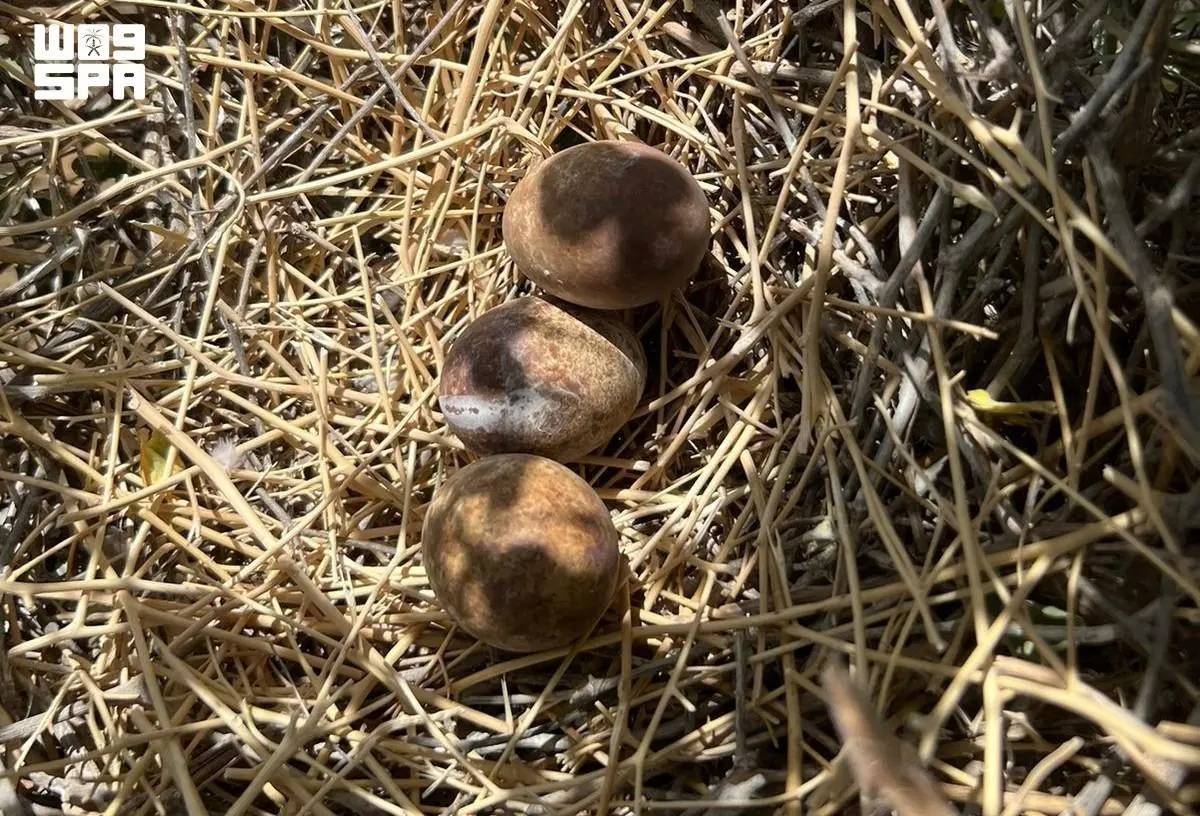
The nesting activity was recorded between January 20 and May 26, 2025, based on field surveys conducted in several natural meadows characterized by dense Sidr tree growth. (SPA)

The authority also holds scientific records confirming the expansion of the species’ breeding range within Saudi Arabia through a combination of field observations in the reserve and national records published in a global biodiversity database.

These findings indicate a seasonal pattern of occurrence that supports the hypothesis of local breeding synchronized with seasonal movements and dispersal across several regions of the Kingdom.

The findings were published in a peer-reviewed study in the international journal Zoology and Ecology. The study was conducted by a joint research team comprising researchers from the King Abdulaziz Royal Reserve Development Authority and King Saud University as part of efforts to promote scientific research and document biodiversity within the reserve in accordance with internationally recognized scientific standards.

The authority underlined the importance of continuing environmental monitoring and surveillance programs in the reserve, identifying new nesting sites and incorporating them into conservation programs. These efforts contribute to protecting natural habitats, supporting wildlife, and advancing scientific knowledge of biodiversity in Saudi Arabia.



Scientists Sail for Greenland to Study Glacier Melt Risk

Sam Smith, an Operations Engineer, alongside Auto Sub Boaty McBoatface aboard the RRS Sir David Attenborough ahead of a mission to Greenland to study how warming affects the ice sheet and improve forecasts of its impact on the Atlantic, in Harwich, Britain, July 14, 2026. REUTERS/Chris Radburn
TT

Scientists Sail for Greenland to Study Glacier Melt Risk

Sam Smith, an Operations Engineer, alongside Auto Sub Boaty McBoatface aboard the RRS Sir David Attenborough ahead of a mission to Greenland to study how warming affects the ice sheet and improve forecasts of its impact on the Atlantic, in Harwich, Britain, July 14, 2026. REUTERS/Chris Radburn

An international team of around 80 scientists and crew will set sail on polar research ship the RSS David Attenborough for Greenland this week to investigate whether the island's rapidly melting glaciers could disrupt a major Atlantic Ocean current system and with it Europe's climate.

The five- to six-week mission departs Britain after the country and Western Europe just experienced the warmest June months on record, disrupting power supplies, shutting schools and causing excess deaths.

"The heat waves in the UK and in Europe the last few months have really driven home ⁠that it's difficult ⁠for us to adapt to even quite small changes in our climate," Kelly Hogan, a marine geophysicist at the British Antarctic Survey which is leading the mission, told Reuters in an interview on board the vessel.

The expedition is part of a £20 million project called GIANT - Greenland Ice sheet to AtlaNtic Tipping points - which seeks to understand how the glaciers melt and break into the ocean ⁠and the impact this has.

Scientists are concerned that the melting freshwater could disrupt a system of rotating ocean current that helps to regulate Europe’s climate, which could lead to more extreme weather and rising sea levels.

Ship Captain Matt Neill, who made his first trip to Antarctica as a cadet with BAS in 2011, said he has already witnessed firsthand the impact of the world's changing climate.

"Lots of the glaciers are all receding very very quickly, and much more than you would think... So it's even more important than than ever during these very dynamic times that we are out there and gathering the ⁠data and ⁠improving the models," he said.

Officially the ship is named after the veteran naturalist Attenborough, but to many Britons it will always be known as "Boaty McBoatface", after that suggestion topped a public poll to name the vessel in 2016.

The name has instead been given to a high tech submersible on the vessel which will dive 1,500 meters below the glacier mélange – a mixture of sea ice and snow that builds up where the glacier meets the sea - mapping its geometry and how it influences the glacier.

"It's going to be collecting a lot of data that's never really been collected before," Sam Smith, operations engineer at the National Oceanography Centre, said.

Data collected from the mission will feed into next-generation climate models and an early-warning system for glacier collapse.


Japan Family Finds Bear in Kitchen, Calls Police

This frame grab from an AFP TV video shows a small female black bear tranquillized on the ground as wild bear experts Akiko Takii (R) and Shinshu University professor Shigeyuki Izumiyama collect blood and fur samples for academic research in Ina, Nagano Prefecture, on July 14, 2026, before the researchers weigh and measure the bear, believed to be about 18 months old, before releasing it back into the wild. (Photo by Harumi OZAWA / AFP)
TT

Japan Family Finds Bear in Kitchen, Calls Police

This frame grab from an AFP TV video shows a small female black bear tranquillized on the ground as wild bear experts Akiko Takii (R) and Shinshu University professor Shigeyuki Izumiyama collect blood and fur samples for academic research in Ina, Nagano Prefecture, on July 14, 2026, before the researchers weigh and measure the bear, believed to be about 18 months old, before releasing it back into the wild. (Photo by Harumi OZAWA / AFP)

A family in northern Japan called police after finding a bear in their kitchen, an official said Wednesday, as anxiety over the animals grows following a surge in deadly maulings.

Bears have killed at least five people in Japan since April 1, all in the northern region of Tohoku, after a record 13 fatal attacks across the country in the last fiscal year, according to the environment ministry.

Police in the northern region of Iwate, which is part of Tohoku, received a call Monday evening from a family saying a bear had intruded into their home.

The animal "opened the fridge, scattering its content nearby," a local police official told AFP, declining to be named.

Footprints suggest the bear then "made its way out through a back door adjacent to the kitchen and also hunted through a bin for food waste," the official said.

The incident occurred in the town of Shizukuishi, where at least four other households have reported bear intrusions since July 5, he added.

In recent months there has been a jump in sightings after the bears emerged from hibernation, and more bears have been straying into towns and cities.

In June, dozens of police, hunters and city officials needed four days to trap a bear roaming Utsunomiya, north of Tokyo, forcing mass school closures.

Before that another bear described as "extremely intelligent" -- it opened a window and turned on a tap -- attacked four people at two factories in Fukushima and remained at large for days.

Scientists attribute the sharp rise in incidents to an increase in the bears' population, a declining number of people in rural areas and other factors including variations in the availability of bears' usual food.


‘Gus’ the T. Rex Fetches Record $50.1 Mn at US Auction

This undated photo provided by Sotheby's on Tuesday, July 14, 2026, shows "Gus," one of the largest and most complete Tyrannosaurus rex specimens ever discovered. (Matthew Sherman/Sotheby's via AP)
TT

‘Gus’ the T. Rex Fetches Record $50.1 Mn at US Auction

This undated photo provided by Sotheby's on Tuesday, July 14, 2026, shows "Gus," one of the largest and most complete Tyrannosaurus rex specimens ever discovered. (Matthew Sherman/Sotheby's via AP)

A Tyrannosaurus rex skeleton nicknamed "Gus" sold Tuesday for $50.1 million at Sotheby's in New York, making it the most valuable dinosaur fossil bought at auction after a 10-minute battle between seven bidders.

"Gus" is one of the world's most complete T. rex skeletons -- with 183 fossilized bones -- and was discovered on a cattle ranch in South Dakota in 2021.

The giant beast lived some 72 to 66 million years ago -- a period characterized by a warm climate, high sea levels and vast floodable coastal plains.

The skeleton measures 38 feet (11.6 meters) in body length, making it one of the largest T. rexes ever discovered. It is roughly 63 percent complete.

Tuesday's purchase by an anonymous buyer highlights a surging market for dinosaur bones -- a trend that has drawn criticism from some paleontologists over the specimens going into private hands.

"The United States is the only country in the world where fossils like this are considered personal property," Cassandra Hatton, head of science and natural history at Sotheby's, told AFP before the auction.

"If you own the land, you own the fossil and you have the right to sell it. So if you want a dinosaur, this is the only place that you can get it," she said.

The previous record for a fossil auction was "Apex" the Stegosaurus, bought for $44.6 million in 2024 by hedge fund billionaire Ken Griffin.