


Scorching Heat Shuts Paris Landmarks Early as France Swelters

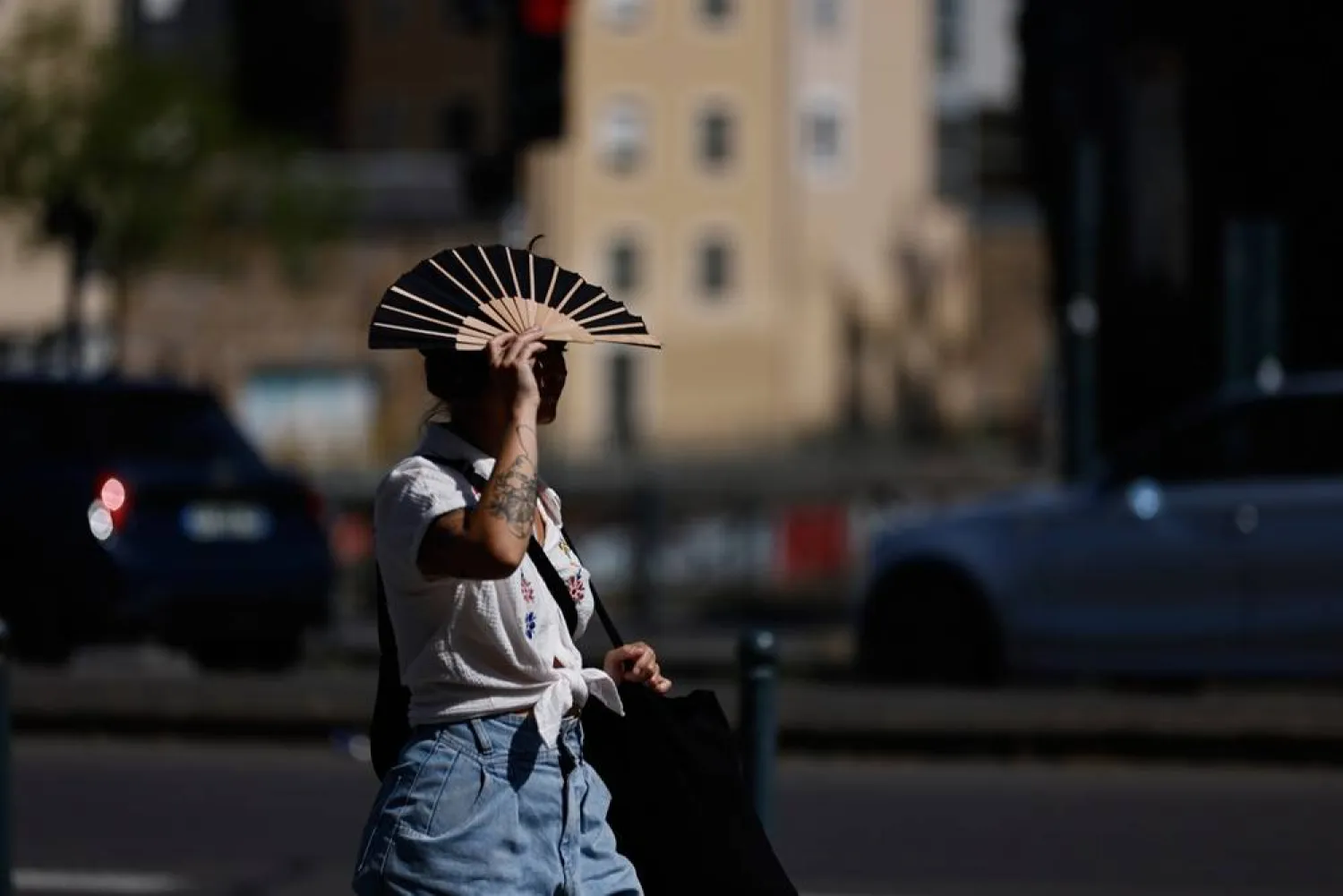
 A woman shields herself from the sun with a fan in Rennes, western France, Monday, June 22, 2026. (AP)
A woman shields herself from the sun with a fan in Rennes, western France, Monday, June 22, 2026. (AP)
TT

Scorching Heat Shuts Paris Landmarks Early as France Swelters

 A woman shields herself from the sun with a fan in Rennes, western France, Monday, June 22, 2026. (AP)
A woman shields herself from the sun with a fan in Rennes, western France, Monday, June 22, 2026. (AP)

The severe heatwave sweeping France has forced the early closures of top Paris tourist hotspots the Eiffel Tower and the Louvre museum, their respective managers said Tuesday. 

A deadly heatwave has battered France since last week, disrupting daily life as well as forcing school closures and train cancellations, with some of the most visited tourist sites in the world the latest to take precautionary measures. 

The operator of the Eiffel Tower, a monument made of latticed steel girders, said the site would "exceptionally close" early on Tuesday at 4 pm (1400 GMT). 

During the high season, starting in mid-June, the tower is open from 9 am to 12:45 am. 

"Due to the high temperatures forecast, the Eiffel Tower will be adjusting its operations," said the operator. 

It is "very likely" that the monument will close again early on Wednesday, the operator said, adding that visitors would be refunded for their tickets. 

Seven million tourists pay to visit the 324-meter (1,063-foot) tower each year. 

Unveiled in 1889 for the World Fair in Paris by engineer Gustave Eiffel, the "Iron Lady" has since become the French capital's symbol. 

Shortly after the Eiffel Tower announcement, the Louvre management said the world's most visited museum would from Wednesday to Saturday close two hours early at 4 pm due to the heatwave. 

Soaring temperatures in Paris have made "visiting and working conditions difficult during the hottest hours of the day", the management said, noting that "it is at the end of the day that heat builds up most, exacerbated by high visitor numbers". 

Home to iconic pieces of art including Leonardo da Vinci's "Mona Lisa", the Louvre receives around nine million visitors a year. 

It is housed in a vast palace in central Paris on the banks of the Seine River, built over centuries by various French monarchs and presidents. 

The management said on Tuesday the historic building is "vulnerable and is not sufficiently adapted to climate change". 

Its director Christophe Leribault warned last week the museum was "running out of steam" as it struggles to find funding to upgrade its ageing facilities. 

The museum has faced a litany of problems that recently included a brazen $100-million jewellery heist, a water leak and other maintenance issues. 

Other tourist sites have also announced early closures or warnings as more than half of mainland France remains under the weather services' highest alert level. 

The most visited tourist attraction outside of the capital region, Mont Saint Michel island in Normandy, on Tuesday warned visitors to "put off your visit during the red alert". 


Guinness Crowns Canberra Town Crier as the World's Loudest Person at 122.4 Decibels

In this image taken from video, Joseph McGrail-Bateup demonstrates his loud voice in Canberra, Australia, Tuesday, June 23, 2026, after he was been recognized by Guinness World Records as the world's loudest person. (Australian Broadcasting Corp. via AP)
TT

Guinness Crowns Canberra Town Crier as the World's Loudest Person at 122.4 Decibels

In this image taken from video, Joseph McGrail-Bateup demonstrates his loud voice in Canberra, Australia, Tuesday, June 23, 2026, after he was been recognized by Guinness World Records as the world's loudest person. (Australian Broadcasting Corp. via AP)

Joseph McGrail-Bateup, an Australian professional air conditioner cleaner and honorary town crier, has been recognized as the world’s loudest person.

Guinness World Records last week acknowledged the 58-year-old Canberra resident recorded the loudest ever shout by an individual. He yelled “now” at 122.4 decibels.

That broke the previous record of 121.7 dB set by Northern Ireland schoolteacher Annalisa Flanagan in 1994. She had yelled an ear-piercing “quiet”, The Associated Press said.

That is in the noise range of a chain saw, a jet aircraft taking off and an ambulance siren at close range.

The record attempt was not something McGrail-Bateup could train for, he said Tuesday.

“There’s no way that you can actually practice for it. You have to just keep it for the day, especially with the world record attempt,” McGrail-Bateup said.

“It took me seven attempts just for one word, which was the word ‘now,’ and my voice was shot for the next couple of days as well. It was husky. It was terrible. So no, you can’t really practice for it. But it’s a lot of fun when you’re doing it,” he added.

McGrail-Bateup considered himself the world’s loudest man rather than the loudest person, he said. There was no previous record for the loudest man.

“I’m pleased that she (Flanagan) gets to keep her record. So she’s still the loudest woman in the world and I’m the loudest male in the world,” McGrail-Bateup said.

McGrail-Bateup said he stumbled upon Flanagan's record when searching Guinness World Records unsuccessfully for feats in the realm of town crying.

He became competitively loud when he was appointed the official town crier of the national capital Canberra in 2017. It’s an honorary and part-time role established by the local government which he considers “a bit of fun.” His town crier name is Lord Joseph.

He makes announcements at community events, school fetes and car shows.

With the job came membership of the Ancient and Honorable Guild of Australian Town Criers, a competitive professional organization dedicated to preserving members’ historic and ceremonial roles.

He won a 2024 guild competition with the loudest “Oyez, Oyez, Oyez,” at 98 dB. That was a command for silence and attention before an Australian town crier makes a proclamation.

He experimented with several words for his world record attempt before settling on “now.”

His shout was recorded May 2 in a Canberra radio studio by a professional acoustic engineer and with witnesses present. The files were sent to Guinness World Records, which announced the record Friday.

It’s the second time McGrail-Bateup has broken a world record. In 2019, he broke a speed record for an archer shooting 10 arrows. His time of 60.03 seconds shaved a fraction of a second off a record that had stood since 2015.

Nine months later, a 7-year-old boy shattered McGrail-Bateup's record by 11.4 seconds.

McGrail-Bateup wasn’t interested in attempting to regain the archery record or in keeping his shouting record.

“If someone beats me, that’s fantastic,” he said. “Records are meant to be broken.”


Sri Lanka Troops to Battle Deadly Dengue Mosquitoes as Cases Rise

A worker from the Medical Officer of Health (MOH) department fumigates a residential area during a mosquito control program in Colombo, Sri Lanka, June 19, 2026. (Reuters)
TT

Sri Lanka Troops to Battle Deadly Dengue Mosquitoes as Cases Rise

A worker from the Medical Officer of Health (MOH) department fumigates a residential area during a mosquito control program in Colombo, Sri Lanka, June 19, 2026. (Reuters)

Sri Lanka is deploying the military to contain the spread of mosquito-borne dengue fever, as health authorities warned on Tuesday that hospitals are being overwhelmed with more than 1,000 admissions daily.

President Anura Kumara Dissanayake's office said army, navy and air force officers would join a special unit to identify and destroy mosquito breeding sites.

Dengue causes high fevers, headaches, nausea, vomiting, muscle pain and, in the most serious cases, bleeding that can lead to death.

Nearly 50,000 cases have been reported this year, with 29 deaths, although that is still far below the 2017 peak, when 186,000 patients and 440 deaths were reported.

The Aedes mosquito that spreads dengue -- identifiable by its black and white striped legs -- breeds in stagnant pools.

"Laws will also be strictly enforced against those allowing mosquito breeding on their premises, in addition to setting up the special military unit," the statement said.

A nationwide campaign to clean up breeding sites will be launched on Wednesday.

The World Health Organization (WHO) has warned that dengue and other mosquito-borne viruses are spreading faster and further due to climate change.

Sri Lanka has seen a surge in dengue cases since the start of June, with more than 1,000 reported in a single day this week, according to official data.

The government's dengue unit said it feared state and private hospitals may not be able to handle a further increase.

"Hospitals are already under pressure," the head of the unit, Kapila Kannangara, told reporters in Colombo. "We don't want to have a situation like the one we faced in 2017."

Monsoon rains, stagnant water from recent flooding, and haphazardly dumped waste have created ideal conditions for the rapid spread of mosquitoes.


Why Do Some Tropical Butterflies Live 25 Times Longer Than Their Relatives?

A Heliconius melpomene butterfly feeds on pollen. (Nature Communications)
TT

Why Do Some Tropical Butterflies Live 25 Times Longer Than Their Relatives?

A Heliconius melpomene butterfly feeds on pollen. (Nature Communications)

Most butterflies have short lifespans, fluttering between colorful flowers for a few weeks before dying, but a few rare exceptions have stumped scientists. Now, some long-lived tropical butterfly species are shedding light on the secrets of longevity.

Butterflies belonging to the Heliconius genus, which inhabit the tropical rainforests of South and Central America, have lifespans that vary wildly. The Dione juno butterfly lives for 14 days after reaching adulthood, while Heliconius hewitsoni lives for 348 days — nearly 25 times longer.

Other Heliconius species also have impressively lengthy lives, enduring between 106 to 277 days, according to a study on the phenomenon published Tuesday in the journal Nature Communications.

Some scientists have speculated that Heliconius’ extended adulthood is due to the insects consuming an enhanced diet, rather than relying purely on carbohydrates like other butterflies.

But the exact reasons behind this unexpected longevity have been unclear, which is what inspired Dr. Jessica Foley, the study’s lead author and a postdoctoral scholar at Tufts University’s Jean Mayer USDA Human Nutrition Research Center on Aging in Boston, to take an in-depth look at the intriguing butterfly genus.

“We see vast differences in lifespan across the animal kingdom — adult mayflies famously live only for a day, whereas some whales and sharks can live for hundreds of years,” Foley wrote in an email.

“I’m interested in the evolutionary basis of these kinds of lifespan differences because they might hold insights relevant for healthy ageing in humans,” she added.

Foley and her colleagues discovered that while nutrition has its part to play, some Heliconius have also evolved an anti-aging mechanism the researchers are still unraveling — and how it could be a model for understanding human longevity.

The new research shows that Heliconius can be a potential model insect group for studying increased longevity, including adaptations that could slow aging and have potential applicability to humans, said Dr. Jaret C Daniels, curator and interim associate director for the McGuire Center for Lepidoptera and Biodiversity at the Florida Museum of Natural History. Daniels was not involved in the study.

“This study reinforces the utility of many insect groups and important model organisms for various fields of research,” Daniels said in an email.

“Since many insects are often overlooked or underappreciated by humans, studies like this can help change that perspective,” Daniels added.
