
Steam Railway That Travels Through the Swiss Alps Celebrates Its 100th Anniversary

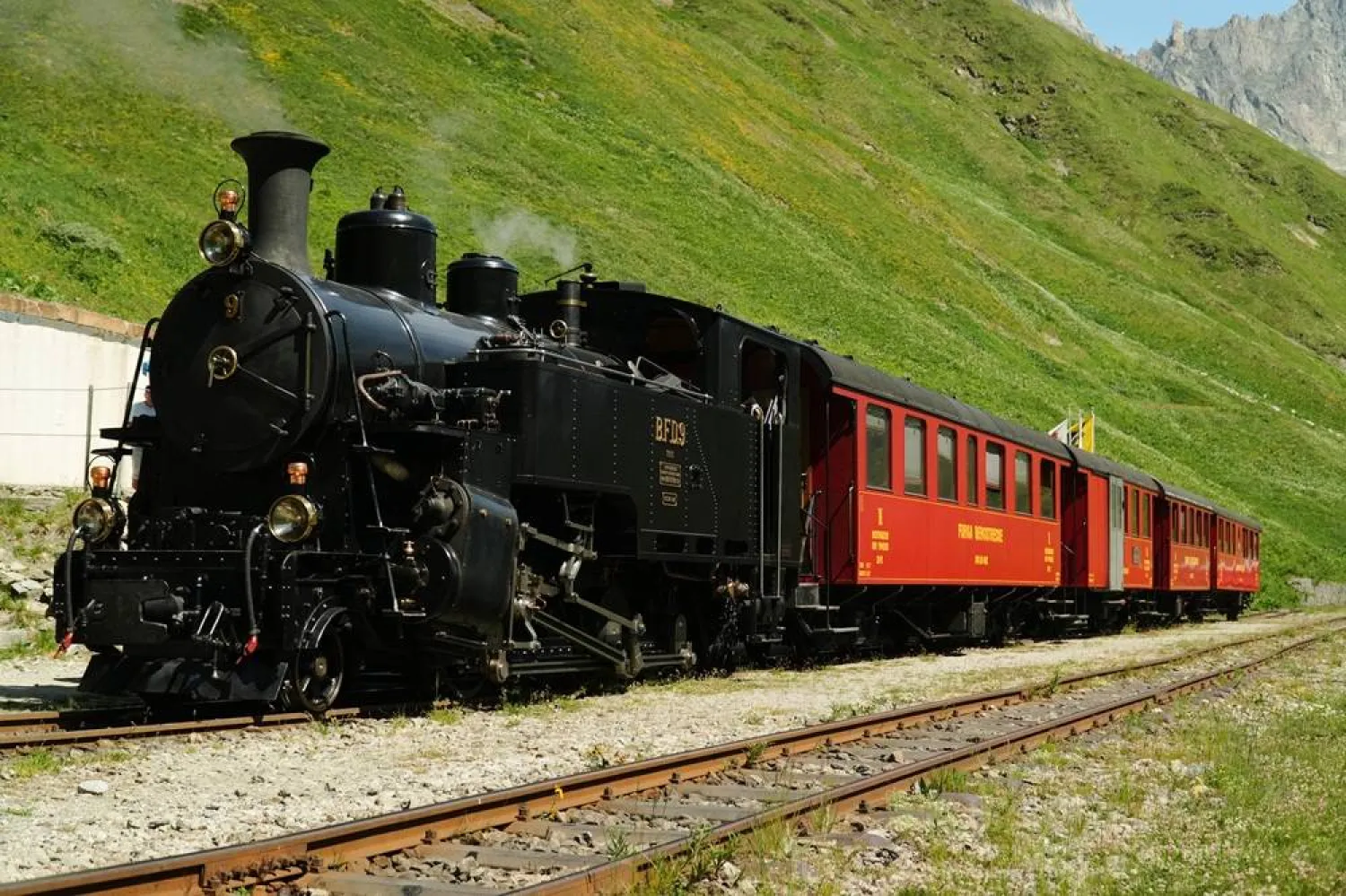
 One of DFB's historic steam trains travels from Realp to Oberwald during a stop at the Furka station, Switzerland, Friday, June 26, 2026. (AP)
One of DFB's historic steam trains travels from Realp to Oberwald during a stop at the Furka station, Switzerland, Friday, June 26, 2026. (AP)
TT

Steam Railway That Travels Through the Swiss Alps Celebrates Its 100th Anniversary

 One of DFB's historic steam trains travels from Realp to Oberwald during a stop at the Furka station, Switzerland, Friday, June 26, 2026. (AP)
One of DFB's historic steam trains travels from Realp to Oberwald during a stop at the Furka station, Switzerland, Friday, June 26, 2026. (AP)

Train enthusiasts will celebrate the 100th anniversary of a historic Swiss railway this weekend as vintage steam locomotives ferry tourists through the stunning Alpine scenery as part of the celebration.

The Furka Pass, at an altitude of 2,431 meters (7,976 feet), is among Switzerland's highest Alpine passes and famous for its hairpin curves featured in the 1964 James Bond “Goldfinger” movie.

But long before 007 actor Sean Connery filmed a harrowing car chase scene there, a steam train first traversed the steep and winding route in a continuous journey on July 3, 1926, kicking off a vital rail link between the regions of Uri and Valais in central Switzerland for decades.

In the early 1980s, a tunnel at the base of the Alps diverted rail traffic and prompted the closure of the historic mountain route until volunteers stepped in. Hundreds of them, nicknamed the railway's “pioneers,” have spent hours to restore, maintain and operate the historic tracks and trains so they run the same as a century ago.

The first section of the line reopened as a heritage railway in 1992, and the 18-kilometer (11-mile) track was ready for travel in 2010. The steam trains now operate exclusively as a tourist attraction in the summers between the stations of Realp and Oberwald, where visitors can hop aboard vintage carriages and marvel at the scenery of rivers, Alpine meadows and lush green pastures where patches of snow still linger.

Tourists last month enjoyed their trips through the German-speaking region aboard the “dampflokomotive.” Passenger Stephan Willareth called his journey “wonderful,” while Kurt Guldemann, a former employee of the Swiss railways, heralded the history of the machines.

Bernhard Lang, one of the many enthusiasts who volunteer to drive the vintage steam trains, said it can take years to master the skill.

“It’s something like a living machine, so you have to get kind of the feeling for it," he said. “To feel how it behaves, how it moves, how it smells, how it sounds.”

Jacob Kallert, a 21-year-old German transport engineering student and the youngest train manager, said it's important to listen to the locomotives.

“You hear every sound, you hear if everything is right," he said. “You can pretty much feel how it was then and how it is now.”

Volunteer Sergio Rovelli said anyone who has dedicated their time to the project gets hooked.

"We say, in German, that everyone who works here has the ‘Furka Virus, the Furka disease,’" he joked. “Once you come here, you like it, and you stay.”

A one-way ticket starts at 46 Swiss francs ($56.82) for a journey that lasts just under 2 1/2 hours. The anniversary celebration began Friday and continues through the weekend.


Japan to Survey Animal Cafes for 1st Time over Welfare and Disease Concerns

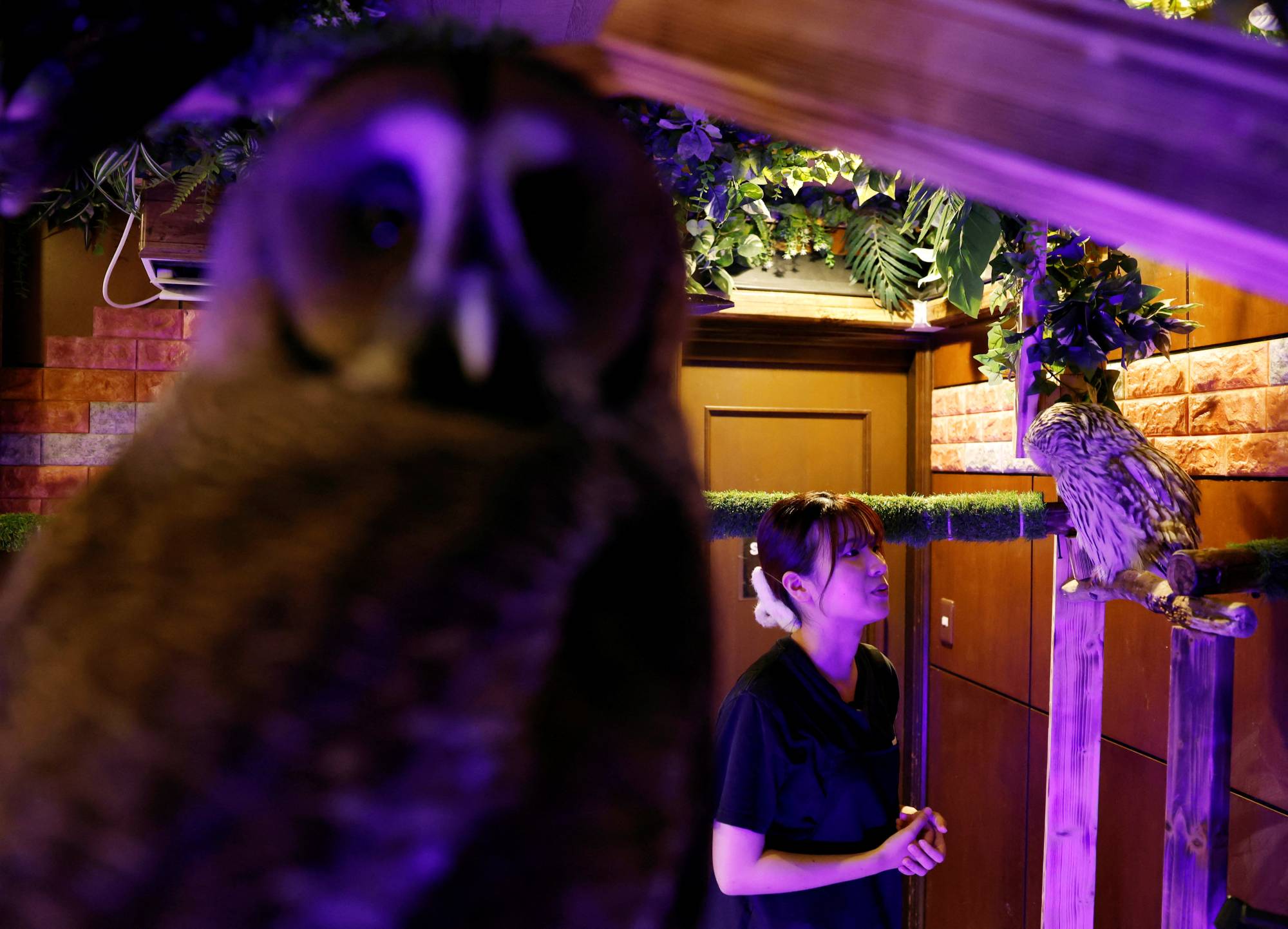
Syaina Nozaki, manager of Owl Otter Cafe, holds food for Asian small-clawed otters at the cafe, which houses rescued animals, in Kamakura, Kanagawa Prefecture, Japan, September 24, 2026. REUTERS/Kim Kyung-Hoon
TT

Japan to Survey Animal Cafes for 1st Time over Welfare and Disease Concerns

Syaina Nozaki, manager of Owl Otter Cafe, holds food for Asian small-clawed otters at the cafe, which houses rescued animals, in Kamakura, Kanagawa Prefecture, Japan, September 24, 2026. REUTERS/Kim Kyung-Hoon

Japan has started its first nationwide survey of animal cafes amid concerns over animal welfare, hygiene and public health, a government official said, bringing greater scrutiny to the popular but lightly regulated sector.

The desktop survey, which began this month, will examine the number of facilities, the types of animals they house and the conditions they are held in, and how visitors interact with the animals.

Exotic animal cafes, where visitors can interact with species ranging from otters to owls and marmots, have become popular attractions ⁠for both Japanese ⁠and foreign tourists. But researchers say some facilities keep threatened species, raising concerns about animal welfare and the trade in wildlife.

Japan lacks specific standards governing such cafes and handling of many exotic species, said Takuya Ishikawa, an official at the Environment Ministry.

"There has been strong public interest, including from animal welfare groups, which have regularly shared findings from their own research with the ministry," Reuters quoted Ishikawa as saying. "Experts on a ⁠government advisory panel have also frequently raised concerns about potential problems at such cafes."

Cafes with domesticated animals including cats and dogs will also be included in the survey.

The government also plans a public awareness campaign, acknowledging that it had not done enough to inform public about the risks of interacting with exotic animals.

The prospect of tighter oversight has been welcomed by some in the industry.

Syaina Nozaki, manager of Owl Otter Cafe, which houses rescued animals, checks on owls at the cafe in Kamakura, Kanagawa Prefecture, Japan, September 24, 2026. REUTERS/Kim Kyung-Hoon

"Japan is clearly lagging behind when it comes to (animal welfare) regulation," said Syaina Nozaki, manager of Owl Otter Cafe in Kamakura, near Tokyo, which houses rescued animals.

Nozaki said that she hoped that regulations will help distinguish facilities like hers from less ⁠responsible operators focused ⁠solely on profit.

Japan, which has a large domestic pet market, ranked as the world's second-biggest importer of both live reptiles and mammals by value in 2024, a report by the World Wildlife Fund this month said, highlighting risks including invasive species introduced through pet releases and the spread of zoonotic diseases.

Of about 80 registered wildlife animal cafes in Tokyo and Osaka, three-quarters were also registered to sell animals, according to a separate report by WWF and Hokkaido University.

Researchers visiting 25 cafes found more than 1,700 animals on display, 27% of them threatened species. More than 90% of the cafes displayed animals considered at high risk of causing injury through contact, while samples from four cafes tested positive for enterohemorrhagic E. coli (EHEC), which can cause bloody diarrhea.


Fat Bear Week: Nepobaby Wins Alaska Contest

This handout photo from the National Park Service shows Chunk (Bear 32), the 2025 Fat Bear Week champion, a wild brown bear in Katmai National Park and Preserve in southwest Alaska. (Photo by T. CARMACK / NATIONAL PARK SERVICE / AFP)
TT

Fat Bear Week: Nepobaby Wins Alaska Contest

This handout photo from the National Park Service shows Chunk (Bear 32), the 2025 Fat Bear Week champion, a wild brown bear in Katmai National Park and Preserve in southwest Alaska. (Photo by T. CARMACK / NATIONAL PARK SERVICE / AFP)

The winner of this year's Fat Bear Week has been crowned after a nail-biting final -- and it's the son of a former champion.

Backpack, a 20-year-old male beloved by rangers in Alaska for his quiet determination, edged out female fellow finalist Dancing Queen in the annual ursine eating competition at Katmai National Park.

More than 2.3 million people voted in the week-long competition that sees bears unwittingly jostle in a series of head-to-head contests to decide which one of them has most impressively piled on the pounds ahead of hibernation.

Viewers watch a livestream of the enormous animals as they scoop salmon from the Brooks River, while visitors to a dedicated website can browse biographies of some of the top contenders, including before-and-after pictures showing how much weight the bears have gained over a summer of feasting.

Backpack's victory -- by a razor-thin margin of just 5,000 votes out of 200,000 cast for the final alone -- continues something of a family tradition: his mother Holly is a previous winner.

The animal, known officially by the more prosaic name Bear 89, was nicknamed Backpack by rangers who noted his habit of climbing on his mother's back when she swam across the river, AFP reported.

He previously suffered a leg injury that left him with a limp and has apparently adapted his lifestyle, preferring to spend his time lazing on a rock, rather than fighting with fellow bears.

"Unlike many large adult male bears, Backpack hasn't shown much aggression toward his competitors," his contestant profile says.

Sarah Bruce, a Katmai park ranger, told Alaska Public Media that Backpack now weighs around 1,200 pounds (544 kilograms) and is a clear fan favorite.

"He's one of the bears that we've been able to watch on the live cams since the live cams were put in in 2012," she said.

The bears of Katmai spend summer and early autumn gorging themselves on salmon as they look to bulk up ahead of a long winter of hibernation.

For five months, the creatures will not eat or drink, slowing all bodily functions as they shelter away from the harsh Alaskan weather.

While the increasingly popular annual competition is largely for fun, organizers say it is helpful in raising awareness of brown bears and their Alaskan habitats, as well as the risks they face from human activity.


Butterfly Wing Patterns May Trick Predators with Motion Illusions

A green-veined white butterfly perches on a cluster of purple lilac flowers, taken in Mareil-Marly, France, on April 22, 2019, in this photograph released on September 30, 2026. Helen Briolat/Handout via REUTERS
TT

Butterfly Wing Patterns May Trick Predators with Motion Illusions

A green-veined white butterfly perches on a cluster of purple lilac flowers, taken in Mareil-Marly, France, on April 22, 2019, in this photograph released on September 30, 2026. Helen Briolat/Handout via REUTERS

When a bird lunges at a butterfly in mid-flight, it may see something that is not there — the insect's wings flashing beneath may not be moving where they appear to be moving. By the time the predator realizes the illusion, the butterfly already may have escaped.

Researchers studying this natural defense have found that contrasting wing patterns can work together with wing movements to create misleading motion signals, making it harder for predators to judge a butterfly's speed and direction during flight.

"The patterns on butterfly wings combine with their wingbeats to create optical illusions, making it look like the butterfly is moving in a different direction to its actual course," said Jolyon Troscianko, a professor at the University of Exeter in England and a leader of the study published in the journal Nature. "This is likely enough to save a butterfly from the split-second moment when a bird would try to catch it."

The idea that stripes and other bold markings can create "motion dazzle" has long been ⁠proposed by scientists. ⁠But experiments involving animals including zebras, snakes and lizards have produced mixed evidence, and many studies did not account for the movements of wings or limbs.

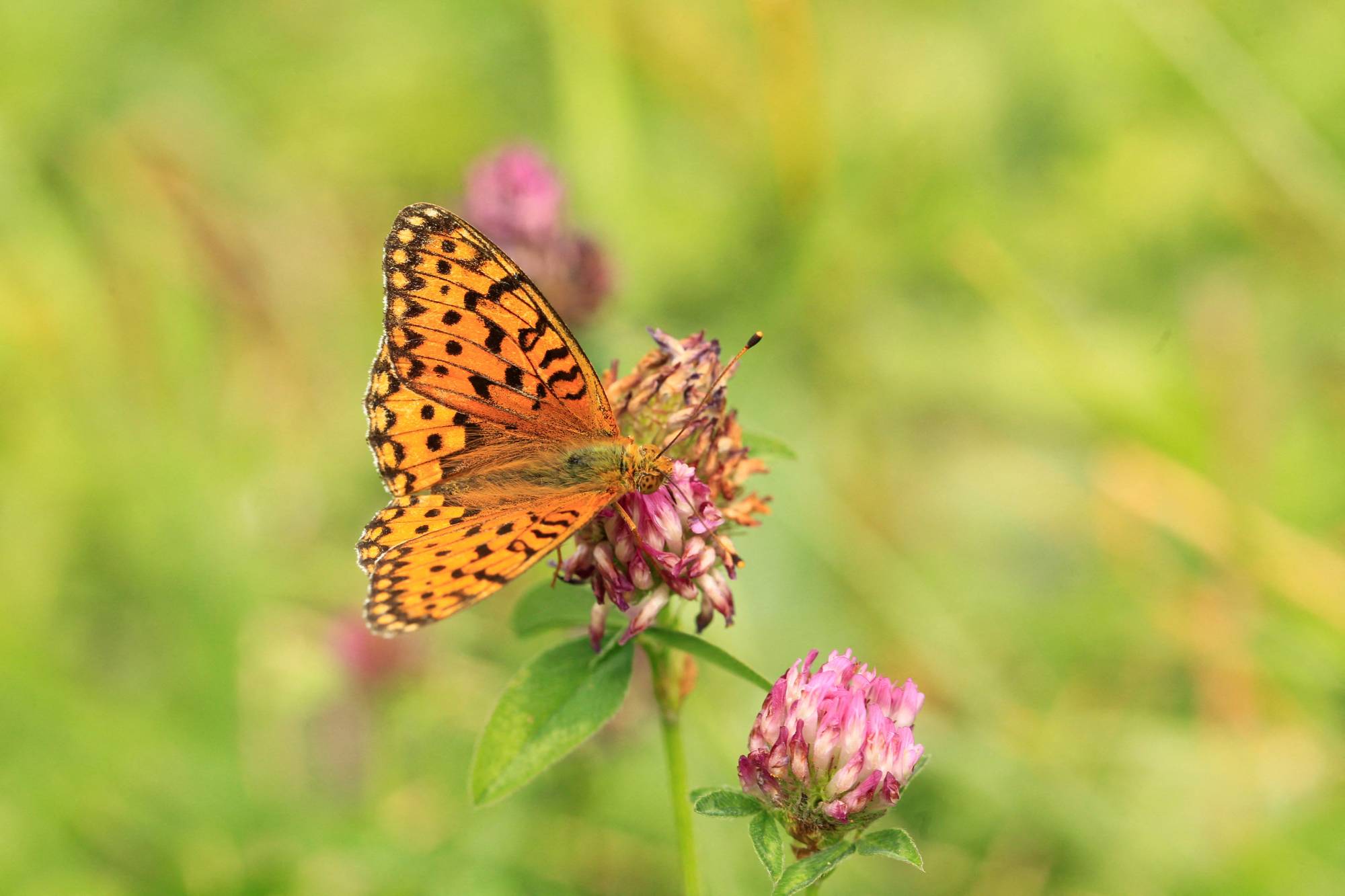
A fritillary butterfly perches on red clover flowers, taken in Le Planay, Areches-Beaufort, France, on July 25, 2026, in this photograph released on September 30, 2026. Emmanuelle Briolat/Handout via REUTERS

"Butterfly wings are flexible surfaces that clap together and fling apart, and also pivot forwards and backwards in a figure-of-eight as they fly. This movement means that a stripe across the forewings can be visibly and slowly moving down on the down-stroke," Reuters quoted Troscianko as saying.

"But on the up-stroke, this stripe is rapidly folded away and twisted in line with upwards flight direction. Together these make the downwards motion of the butterfly much more visible than its upwards motion, even though it ⁠is flying up," Troscianko added.

To investigate the idea, the researchers combined high-speed filming of real butterflies, computer modelling, simulated evolution and touchscreen experiments.

"Stripes are particularly good at interfering with the circuits that detect motion," Troscianko said. "The barber pole illusion is a good example — stripes moving sideways can look like they're moving up or down instead."

The patterns also appear to increase uncertainty about a butterfly's position during an attack.

"This increased 'confusion' effect would be almost impossible to overcome without evolving a fundamentally different visual system," Troscianko said, suggesting it may have been pivotal to the success of the butterflies as a group.

Not all butterflies appear to use this strategy, however.

"The least motion-confusing butterflies are typically brown or red," Troscianko said, suggesting that some species may rely more on camouflage or on warning colors that may signal to predators that the insect is toxic, poisonous or has a bad taste.

To test whether the effects could influence attacks, the researchers recruited 100 human volunteers and ⁠carried out 3,000 virtual butterfly-catching ⁠experiments. Participants watched videos and attempted to catch butterflies by tapping a screen. Butterflies that were predicted to produce stronger visual confusion caused people to aim farther behind them.

"Predation experiments with live birds and butterflies would have been ideal in many ways, but likely impossible and unethical in practice," Troscianko said.

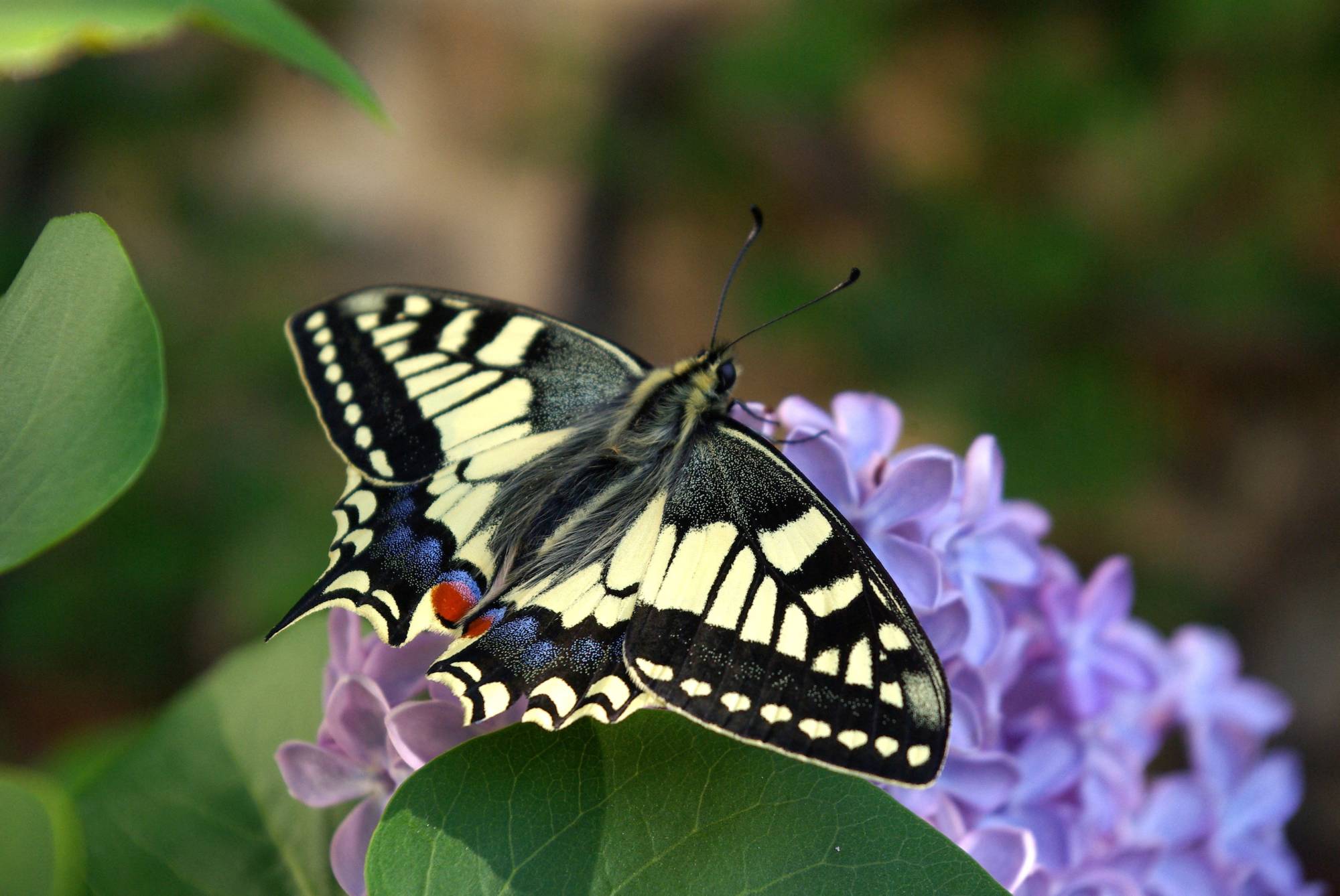
A European swallowtail butterfly rests on purple lilac in Mareil-Marly, France April 20, 2019, in this handout image released on September 30, 2026. Helen Briolat/Handout via REUTERS

Because the neural circuits involved in motion vision are quite fundamental in vertebrates, Troscianko said, the researchers hope the findings can translate between different species.

Butterflies face multiple predators, and motion confusion may not fool them all equally.

"For now, we've only looked at bird vision," Troscianko said. "In principle, similar effects could happen in predatory insects like dragonflies and robber flies. However, they have much faster vision than birds, so the illusions might not work for them. Indeed, dragonflies and robber flies do successfully hunt butterflies quite often."

Beyond biology, the team's motion-vision tools could have practical applications, from improving how movement is displayed in flight or combat simulators to developing patterning that protects personnel, vehicles, drones or robots in motion when being targeted visually.

"I'm most excited to explore how useful our models could be for improving road safety and reducing discomfort and stress in the built environment, where flashing, moving and striped objects can cause harm or danger," Troscianko said.