


In Sicily, Drones at Work to Predict Volcanic Eruptions

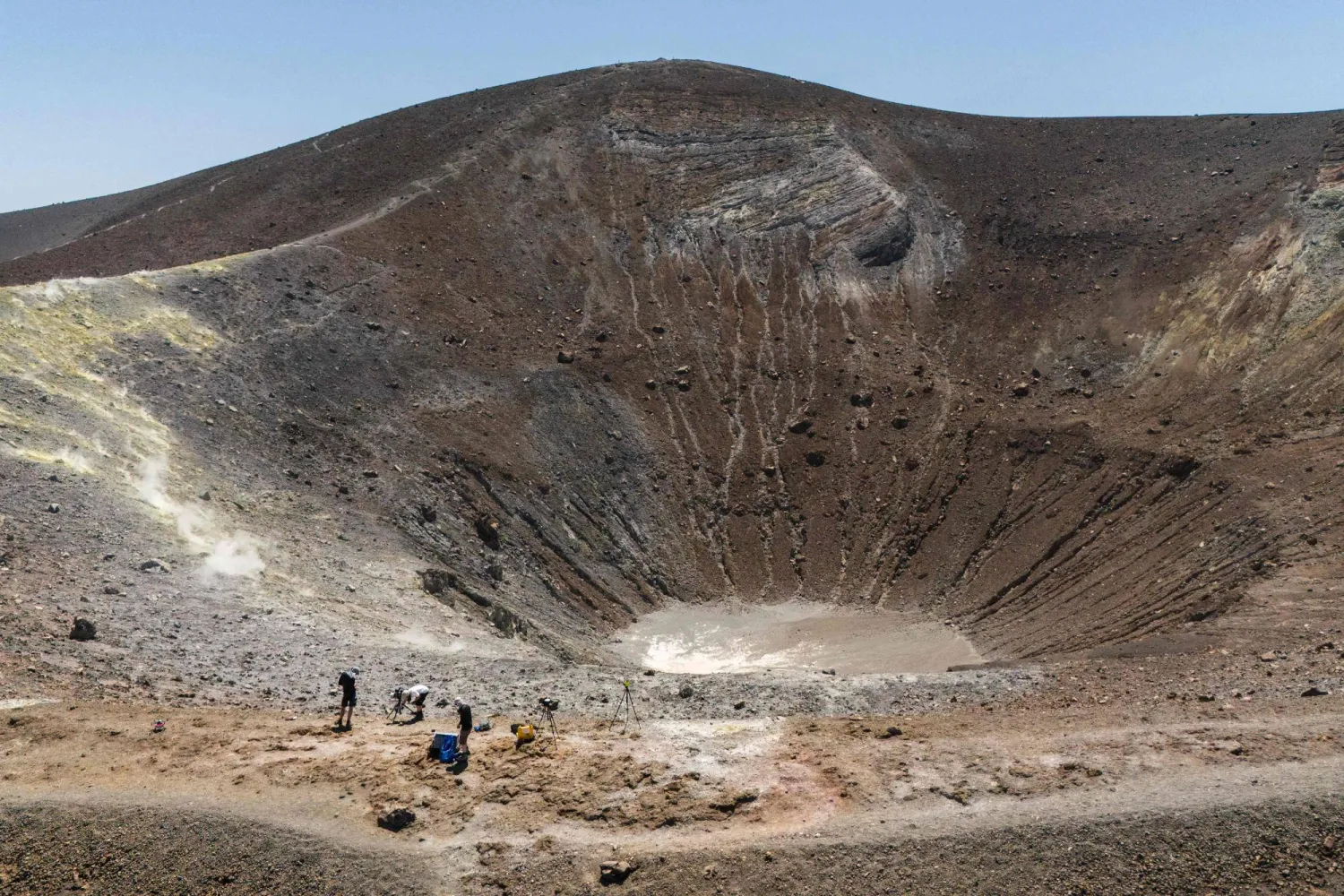
Vulcanologists collect data from gas emissions with a drone and a laser during a mission in the crater of La Fossa, on Vulcano Island, one of the seven islands of the Aeolian Archipelago of Sicily, on July 9, 2026. (Photo by Marco Bertorello / AFP)
TT

In Sicily, Drones at Work to Predict Volcanic Eruptions

Vulcanologists collect data from gas emissions with a drone and a laser during a mission in the crater of La Fossa, on Vulcano Island, one of the seven islands of the Aeolian Archipelago of Sicily, on July 9, 2026. (Photo by Marco Bertorello / AFP)

Hovering over the volcano, a buzzing drone pauses in front of a laser beam on the crater's edge, as researchers test whether the devices can measure gases to predict eruptions.

On the Aeolian island of Vulcano, off the coast of Sicily, German researcher Marius Schaab, from the Technical University of Munich (TUM), stands next to a gas sensor mounted on a tripod, waiting for the drone his colleague has just launched to draw closer.

In this remote lunar landscape, where hot volcanic gases and steam smelling of sulphur rise eerily from the earth, the small propeller-driven device catches the eye.

The last eruption of the island's Grand Crater occurred in the late 19th century but the volcano continues to show intense degassing activity -- to the awe of the visitors who are allowed to walk around the rim.

Soon, the drone positions itself along the axis of the sensor, which transmits an invisible laser beam that passes through the volcanic gas emissions before being reflected by the drone, and travelling back.

The sensor works by "sending a laser beam through some gas and then onto some reflector that measures the intensity of the driving light", Schaab said.

The drone can move around and switch angles to take full measurements.

Using a laser allows the sensor to avoid the gas plume, the researcher told AFP.

"Our drone flies behind the plume and also our ground unit is not in the plume," said Schaab, noting that the corrosive nature of the plume would require any sensor inside it to be constantly recalibrated.

Based on the signals sent back to the sensor, an algorithm calculates a map of gas concentration in the 10 or 15 minutes it takes for the drone to follow a predefined path at a distance of up to 60 meters (nearly 200 feet).

Although drones have been used in monitoring volcanoes for about 15 years, scientists are now looking to develop gas measurement tools that are increasingly accurate and risk-free.

Further around the crater, another team of German scientists from the University of Mainz is using sensors carried on a drone to measure concentrations of chemical substances in the air.

"One reason for measuring gases and particles is to better understand the impact of volcanic eruptions and volcanic emissions on the atmosphere," said Tjarda Roberts, a researcher at the National Centre for Scientific Research (CNRS) in Paris, who is collaborating with the Mainz team.

"Another reason is to anticipate volcanic eruptions, because the gas composition can change before an eruption occurs," she said.

The greater the pressure exerted by lava rising from inside the Earth towards the surface, the larger the amount of gas released.

It is the first time the team from TUM has tested its drone system -- which can work at altitudes up to 3,000 meters -- on a volcano.

A checklist in hand, Jonas Krajewski, a student at the Johannes Gutenberg University Mainz, checks that "Tina" -- the name given to the drone -- is ready to fly safely.

Soon, the drone weighing 2.5 kilograms (5.5 pounds) lifts into the air and heads towards the rising gases.

This time, following a predefined flight path lasting up to 40 minutes, the drone flies into the heart of the fumaroles, or vents where the gases and vapor escape and where temperatures range between 100 and 140C.

"Tina" is equipped with a series of sensors measuring gases, particles and halogens, elements like chlorine, bromine and others.

"We have a very constant output of gas... so we can have very reliable sensor data," said Krajewski.

For Roberts, one of the biggest advantages of the drone is its great flexibility and ability to move around more diluted parts of the plume and quickly switch direction if the plume suddenly changes angles.

With the drone, researchers no longer need to carefully enter the area of the gas emissions, a dangerous activity which requires the use of masks and other protection.

"Here we don't have a major risk of an imminent eruption but there are volcanoes where you can't reach the summit on foot," Roberts said.

But with a drone, "you can take measurements... without putting yourself in danger".

Skimming over rocks speckled with yellow sulphur crystals deposited by the fumaroles, "Tina" soon reappears on the horizon.

In the coming days, a new challenge awaits the drone -- Mount Etna, the 3,000-meter-high active volcano in eastern Sicily, where a new eruption has just occurred.


The Sunhat is Everywhere in Athens as Crowds Grow Larger at Ancient Sites

Tourists wearing hats take photographs on the rocky Areios Pagos Hill next to the Acropolis in Athens, Greece, Friday, Aug. 14, 2026. (AP Photo/Thanassis Stavrakis)
TT

The Sunhat is Everywhere in Athens as Crowds Grow Larger at Ancient Sites

Tourists wearing hats take photographs on the rocky Areios Pagos Hill next to the Acropolis in Athens, Greece, Friday, Aug. 14, 2026. (AP Photo/Thanassis Stavrakis)

Outside the Acropolis, a sea of hats bobs up and down the hill to the ancient site: straw boaters, Panama hats, baseball caps and bucket hats in the relentless heat.

Hat racks are hard to miss in central Athens this summer. Kiosks and stores keep outdoor stands piled high as more tourists seek relief from the midday heat.

The Acropolis drew about 4.6 million visitors in 2025, a record year for Greek tourism. Many spend hours in mid-30s Celsius (mid-90s Fahrenheit) temperatures with little shade. Even a carriage horse at the foot of the ancient monument has joined in, sporting a brown bucket hat with holes cut for its ears.

“You need a hat. I’m already red as it is,” said Jack Yosif, an Australian tourist wearing a black baseball cap. “It’s a bit more of a common thing nowadays, and people are a bit more aware.”

Scorching temperatures didn't deter a record 38 million visitors last year, the most recent for which there is data. The combination of extreme heat and high demand for sites — which means not everyone can visit in the morning — is adding urgency to sun protection.

Greek health campaigners have welcomed a growing awareness of the dangers of ultraviolet exposure and risk of heat stroke. Red Cross volunteers at the Acropolis hand out kits with sunscreen, water, information leaflets and red caps, The Associated Press reported.

Hats are displayed alongside materials using in their production on hangers and shelves at a shop in Athens, Greece, Tuesday, Aug. 11, 2026. (AP Photo/Thanassis Stavrakis)

On nearby Syntagma Square, kiosk owner Konstantinos Mallios says hat sales have risen in recent years. His stylish and souvenir models run up to 20 euros ($24) while the cheapest costs 6 euros. Available elsewhere is semi-disposable headgear: mass-produced hats made using compressed paper pulp.

And there are more ostentatious options. At her basement workshop, hatmaker Lisa Sarigiannidou turns straw braids into boaters using century-old presses and molds in a matter of minutes. Her hats start at around 50 euros, with elaborate designs costing more than 100 euros.

“People’s attitudes toward hats have changed,” said Sarigiannidou, who was trained by her hatmaker father. “In the past, when a young woman tried on a hat and looked at herself in the mirror, she usually laughed. Now they try them on seriously ... and they wear them straight out the door.”


King Salman bin Abdulaziz Royal Reserve Highlights Two Distinctive Native Shrubs

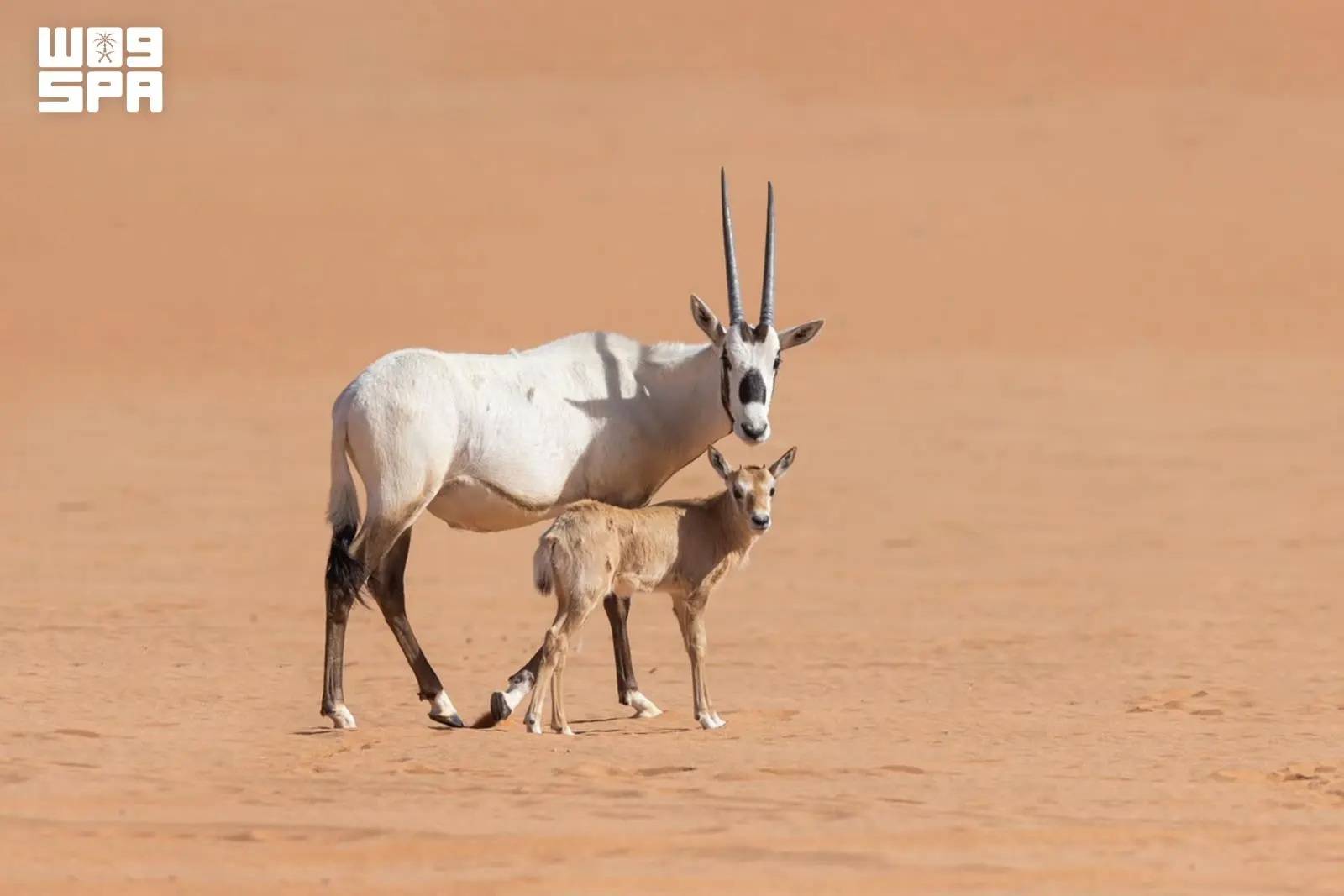
The King Salman Bin Abdulaziz Royal Natural Reserve (SPA).
TT

King Salman bin Abdulaziz Royal Reserve Highlights Two Distinctive Native Shrubs

The King Salman Bin Abdulaziz Royal Natural Reserve (SPA).

King Salman bin Abdulaziz Royal Reserve is distinguished by its unique natural plant diversity and its captivating natural features, highlighted by distinctive plants that add exceptional beauty to its various environments. Among the most prominent plant features found across most areas of the reserve are Al-Rmath (Haloxylon salicornicum) and Al-Qaisum (white wormwood).

Al-Rmath is a perennial shrub in the family Amaranthaceae and is widespread throughout most of the reserve.

According to SPA, it can reach a height of 120 centimeters and is characterized by bluish-green stems that turn gray with age, as well as scale-like leaves and tiny yellow flowers.

Al-Qaisum is also a perennial aromatic shrub belonging to the Asteraceae family. It grows in clay flats, valleys, ravines, and most areas of the reserve.

It can reach a height of 60 centimeters and is distinguished by its white stems, oval to oblong leaves with serrated edges, and small yellow flowers.


Lebanon Arrests ‘Doctor Food’ over Drug-laced Treats

Georges Dib, known on TikTok as "Doctor Food." Photo: Social media
TT

Lebanon Arrests ‘Doctor Food’ over Drug-laced Treats

Georges Dib, known on TikTok as "Doctor Food." Photo: Social media

Lebanon on Sunday arrested an online influencer known for his videos about food who had been handed a life sentence in absentia for drug trafficking, a judicial source told AFP.

Georges Dib, known on TikTok as "Doctor Food" and followed by more than eight million accounts, was apprehended at his home in the far north governorate of Akkar, the source said, speaking on condition of anonymity.

Dib, who also owns a confectionery business, would be taken to a detention center in Mount Lebanon, where he would face a new trial on further drug trafficking charges, the source added.

Two years ago, the Lebanese judiciary issued a warrant for Dib, accusing him of "manufacturing narcotics, trafficking and smuggling them abroad,” according to Lebanon's state-run National News Agency (NNA).

The NNA said at the time that authorities had seized confectionery and other food products at Beirut's international airport that contained narcotics and were manufactured in factories owned by Dib.

The products were to be shipped to a Gulf country, the news agency reported.

Despite an arrest warrant and conviction against him, Dib continued to post videos on TikTok.

Last month, after news of his conviction was made public, he denied the accusations in one of his videos, urging followers not to listen to what was being said about him.

Dib rose to prominence on social media posting content about cooking and daily life with his ex-wife, known as Shorouk, a Canadian of Palestinian origin who has more than 15 million followers.

They separated after she accused him of abuse. On Saturday night, she held a "divorce party" at a seaside resort in Lebanon attended by thousands of her followers.
