


In a Sweet Discovery, Astronomers Find Sugar Lurking in the Space Between Stars

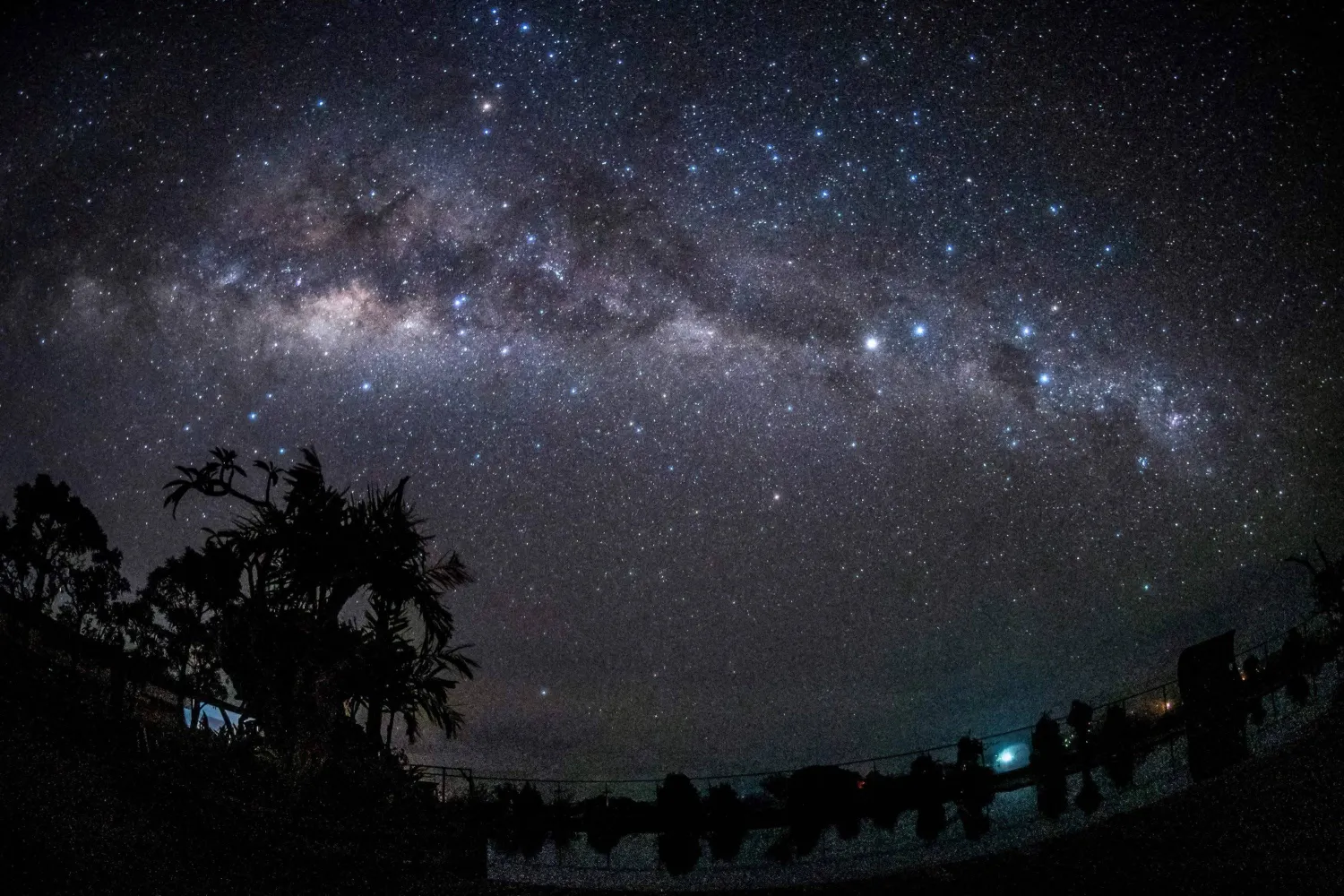
A long exposure photo shows the Milky Way galaxy star cluster from Tuban village in Badung, Bali, Indonesia, March 23, 2023. (AFP)
TT

In a Sweet Discovery, Astronomers Find Sugar Lurking in the Space Between Stars

A long exposure photo shows the Milky Way galaxy star cluster from Tuban village in Badung, Bali, Indonesia, March 23, 2023. (AFP)

The space between stars just got a little sweeter.

Astronomers have detected a type of sugar in space that's also found in raspberries and self-tanners. The sugar, called erythrulose, lurks in what's called the interstellar medium: thin clouds of gas and dust littered between stars.

Sugar does more than sweeten tea and powder doughnuts. Different varieties fuel our cells and even make up DNA. Scientists are itching to know how sugars form because they're a key ingredient for life as we know it.

Using two dish-shaped radio telescopes in Spain, researchers collected data from a large gas cloud near the center of the Milky Way. They identified the sugar in gas form by comparing telescope signals to samples in the lab. It's the latest kind of sugar detected in space — in a region crossed by NASA's twin Voyager, the farthest spacecraft to ever travel from Earth.

The results were published Monday in the journal Nature Astronomy.

Scientists have found interesting chemistry in our galaxy, including building blocks for genetic material and parts of the cell. They spotted a cousin to table sugar near the center of the Milky Way about 25 years ago, and black grains from asteroid Bennu retrieved by NASA’s Osiris-Rex spacecraft yielded other sugars, including a key DNA ingredient.

The latest sugar isn’t essential for life, but can easily convert to a form that’s thought to be crucial to kick-starting life on Earth. And it’s one of the most complex sugars spotted so far, said astrophysicist Erika Hamden with the University of Arizona.

It's “a pristine example of the stuff that’s just floating out in the galaxy,” said Hamden, who had no role in the new research.

Researchers want to look for more sugars in space and learn about how they convert to different forms.

Finding them in one spot means they're likely also hiding in distant corners of the galaxy along with other important bits, said study author Izaskun Jiménez-Serra, an astrophysicist at the Center for Astrobiology in Spain.

“The key ingredients for the origin of life could be present in other regions across the galaxy, opening the possibility for life to develop elsewhere in the universe,” Jiménez-Serra said.



Tunisia Says 2026 Summer Hottest on Record

Tourists pose for a picture in downtown Tunis, Tunisia, August 4, 2017. REUTERS/Zoubeir Souissi
TT

Tunisia Says 2026 Summer Hottest on Record

Tourists pose for a picture in downtown Tunis, Tunisia, August 4, 2017. REUTERS/Zoubeir Souissi

Tunisia's summer this year was its hottest on record, the country's weather authority said Tuesday, following multiple heatwaves, water shortages and power cuts.

"The summer of 2026 was ranked the hottest in Tunisia since 1950," the year temperature records began, the National Meteorological Institute said.

The average temperature was about 2.9 degrees Celsius higher than the previous record, it added.

Although accustomed to scorching heat, Tunisia experienced a particularly gruelling summer this year, with July and August marked by "intense and prolonged heatwaves", the authority said.

Scientists attribute these episodes to climate change.

This summer also saw persistently high nighttime temperatures, the agency added.

The highest temperature was recorded in the central city of Kairouan, which reached 49.7 degrees Celsius in mid-July.

Temperatures also reached 49.2 degrees Celsius in Beja in the northwest, and in the south they reached 48.4 degrees Celsius in Tozeur.

Authorities have yet to provide figures on the health impact of the heatwaves, but a group representing young Tunisian doctors reported numerous deaths it said were caused by the heat.


Six-year-old Chinese Girl Sets World Record with Rubik's Cube

Erno Rubik, the creator of the puzzle, solves a Rubik's cube as he poses during the world's largest Rubik's Cube championship in Aubervilliers, near Paris, France, July 15, 2017. REUTERS/Stephane Mahe/File Photo
TT

Six-year-old Chinese Girl Sets World Record with Rubik's Cube

Erno Rubik, the creator of the puzzle, solves a Rubik's cube as he poses during the world's largest Rubik's Cube championship in Aubervilliers, near Paris, France, July 15, 2017. REUTERS/Stephane Mahe/File Photo

A six-year-old Chinese girl has set a new women's world record for solving a 3x3 Rubik's Cube in just over four seconds, state media reported.

Young speedcuber Lian Yunzhi broke the women's 3x3 average world record twice this month at two World Cube Association certified competitions in Wuhan and Guangzhou, according to state broadcaster CCTV on Monday.

She posted averages of 4.52 and 4.27 seconds, after solving the Rubik's Cube five times.

Lian, who is from Chengdu, is "the first female speedcuber to average under 4.5 seconds", CCTV added.

A video CCTV posted showed the small girl wearing a red gingham bow on her head as she deftly turned and twisted a Rubik's Cube.

After solving the puzzle she places the cube on the table, claps her hands and pumps a fist into the air.

Nicknamed "Zhizhi", Lian was first introduced to the Rubik's Cube after being enrolled into a class as a child -- one of various extracurriculars alongside dance and music lessons, her mother Lin Yangxi, told local media outlets.

Lin "gradually realized" that cubing was an "excellent activity for fostering a child's comprehensive abilities" and shifted her focus towards it, she told Chengdu's Red Star News, according to AFP.

Her daughter has now mastered over 1,300 Rubik's Cube solving algorithms, practicing daily for two to three hours, Lin said.

Photos from Red Star News showed Lian's trophies displayed on a shelf in her home.

"Solving a Rubik's Cube improves focus, memory, logical thinking, spatial awareness, and helps develop a healthy mindset toward winning and losing," Lin said.

"It's not just about blindly memorizing formulas, but using logical reasoning to find optimal solutions," she added.


800,000 Bees stolen Across Australia in ‘Sophisticated’ Operation

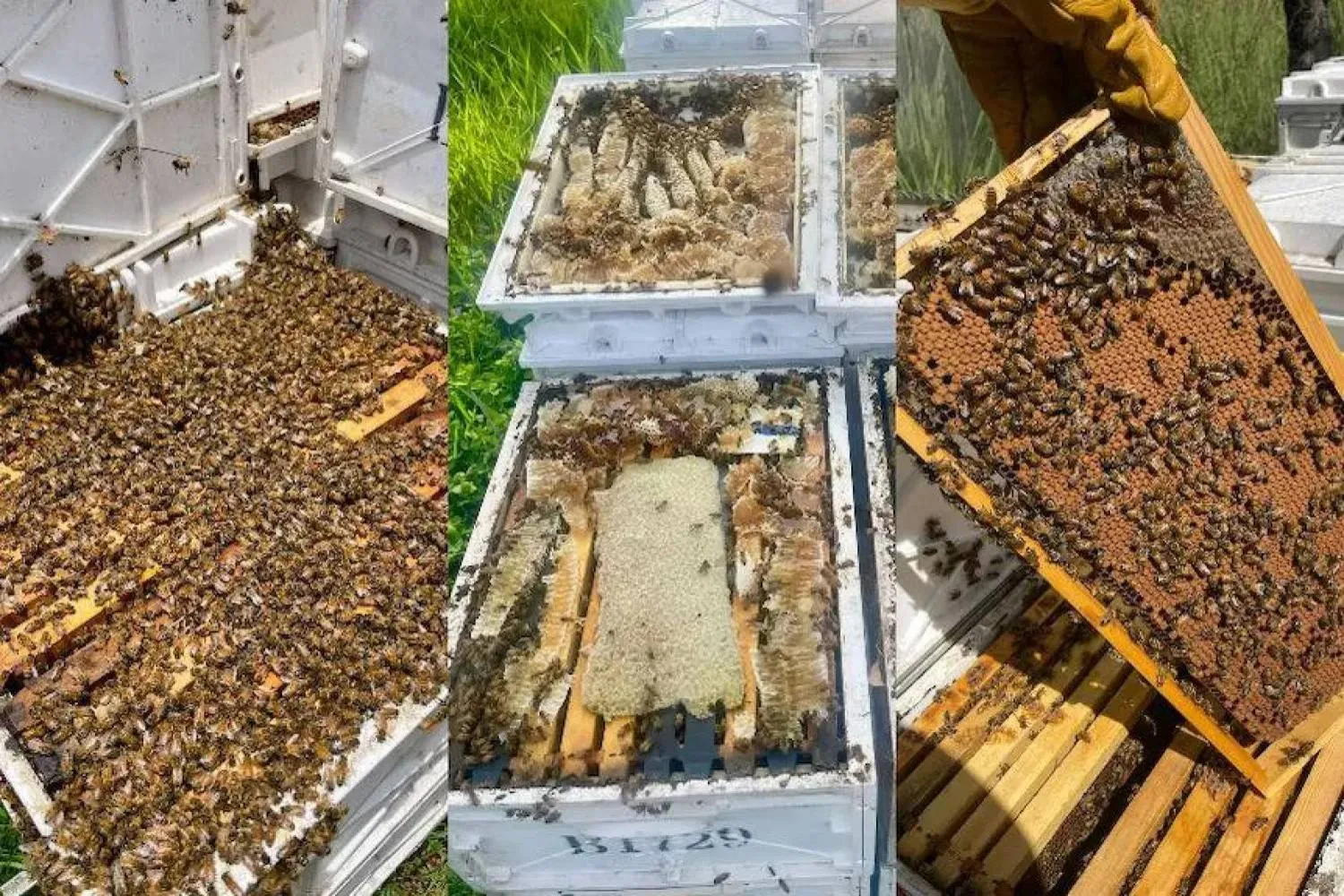
The frames, brood and bees stolen from 41 hives. (Tom Bidner for ABC Network)
TT

800,000 Bees stolen Across Australia in ‘Sophisticated’ Operation

The frames, brood and bees stolen from 41 hives. (Tom Bidner for ABC Network)

An estimated 800,000 bees, worth tens of thousands of dollars, have been stolen from properties in far north Queensland.

The industry is already reeling from this month’s arrival of the varroa mite parasite, according to The Guardian.

Tom Bidner, an apiarist from the Atherton Tablelands, west of Cairns, said 44 colonies had been stolen from three different beekeepers.

“This isn’t over yet,” he said. “We’ve got so many colonies to get through. We’re still getting around and checking all our different sites.”

He estimated that each hive contained at least 20,000 bees, making it a total of more than 800,000.

The alleged thefts happened on multiple different properties in different areas and required a sophisticated operation and specialist equipment.

Rather than risking early detection by stealing an entire box, they took out what’s known as the brood box. That means the hive appears unchanged from afar.

“They’re rocking up with a truckload of gear, basically, and they’re transferring our frames into their boxes ... and putting our hives back together, so it doesn’t sort of alert any of the growers that it looks like someone’s been in and done such a thing,” Bidner said.

The thieves also didn’t take any honey, which was left on the hive.

He suspects that the culprits are probably people from within the industry.

The apiarists will lose not just the stolen insects but the value of the pollination contracts, which can run into the thousands of dollars, he said.

The grower will also lose out due to lower quality flowering.

Bidner said it was the biggest theft in memory, though far from the first.

It’s now the peak of the avocado season in far north Queensland, so hives are deployed at properties across the area on contracted pollination work for local growers. Others are just left on the side of the highway.

“Security wise, in the past, we’ve let the bees do the majority of the job ... from time to time, it definitely happens you’ll have someone try and come and tamper with a hive,” he said. “They usually get about 30 seconds into the job and they’re gone.”