


Chile-led Team Maps Antarctic Plant Genome in Step Towards Climate-resilient Crops

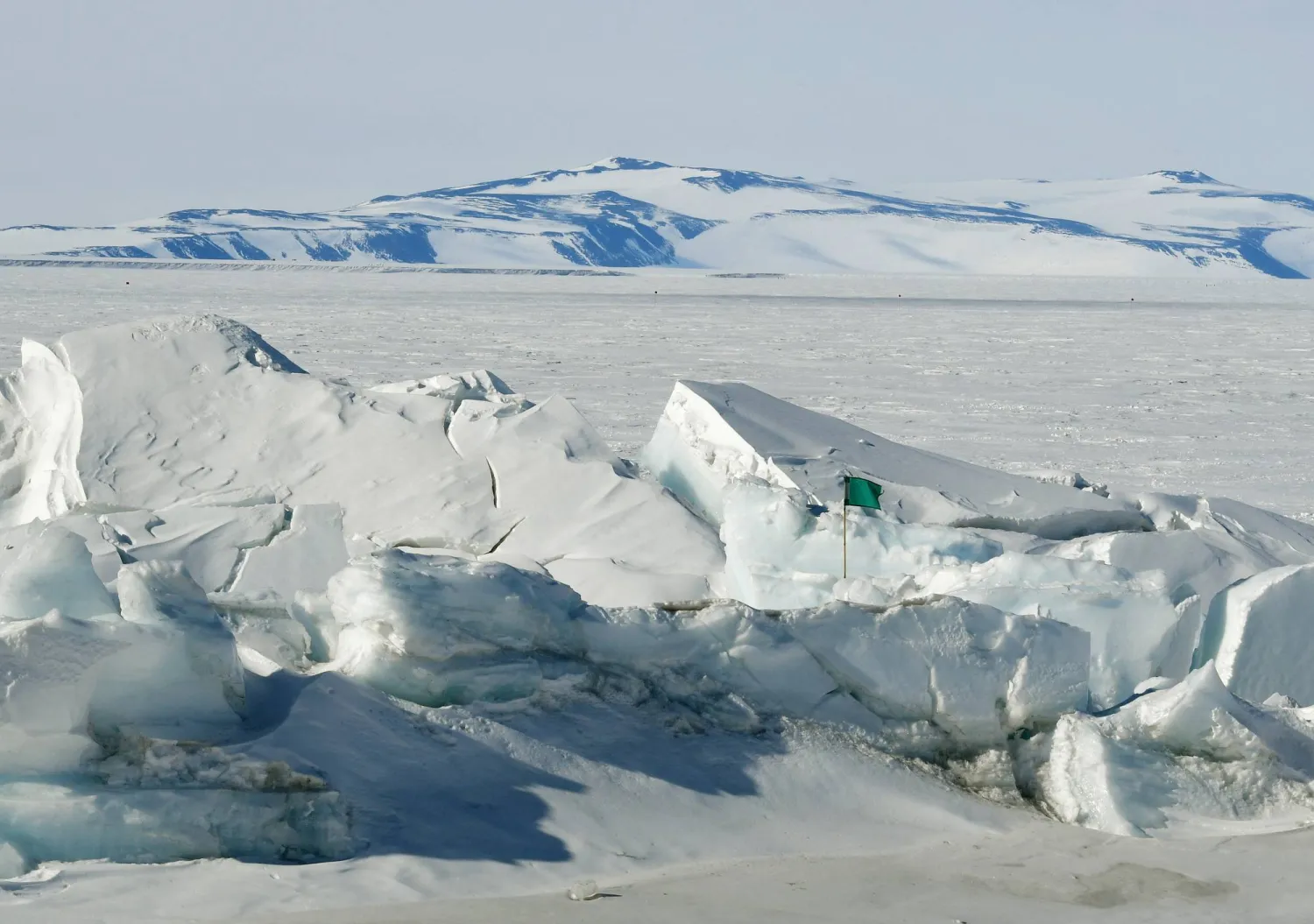
FILE PHOTO: A frozen section of the Ross Sea at the Scott Base in Antarctica on November 12, 2016. REUTERS/Mark Ralston/Pool/File Photo
TT

Chile-led Team Maps Antarctic Plant Genome in Step Towards Climate-resilient Crops

FILE PHOTO: A frozen section of the Ross Sea at the Scott Base in Antarctica on November 12, 2016. REUTERS/Mark Ralston/Pool/File Photo

A team led by Chilean researchers has produced the most complete genetic map yet of one of only two flowering plants that grow naturally in Antarctica, potentially helping the development of crops resistant to extreme weather.

Colobanthus quitensis has long attracted scientific interest because it can survive the freezing temperatures, lack of water and high levels of ultraviolet radiation in Antarctica, one of the planet's coldest and driest environments.

As record heat and extensive drought have increased the urgency of ⁠debate in many ⁠parts of the world over how to adapt agriculture, the scientists said they are now equipped to start assessing whether the plant's traits could be transferred to agricultural crops through gene-editing techniques.

The study, published in Oxford University Press journal "Genome Biology and Evolution," ⁠assembled all 40 chromosome-scale scaffolds that make up the plant's genetic blueprint under a project known as Polarix.

"We were able to sequence and assemble the entire genome," said Eduardo Castro, an associate researcher at Chile's Cape Horn International Center and lead author of the study alongside Claudio Meneses of Chile's Pontifical Catholic University.

"The idea is not to create transgenic plants. The idea is to edit the genome of a plant with ⁠nutritional ⁠value," Reuters quoted Castro as saying.

Identifying individual genes is easier once a genome has been mapped, but it can still take time. When that has been done, Castro said that scientists could need between five and 10 years to develop commercial applications.

A team in California supported the Chilean scientists, who said their work built on previous efforts by the Korea Polar Research Institute. That work produced only a partial version of the genome and was not published.



Sydney Sweats in Spring Hot Spell, Faces ‘Extreme’ Bushfire Risk

A ferry passes in front of apartments in Sydney, Australia, August 18, 2026. (Reuters)
TT

Sydney Sweats in Spring Hot Spell, Faces ‘Extreme’ Bushfire Risk

A ferry passes in front of apartments in Sydney, Australia, August 18, 2026. (Reuters)

Australia's most ‌populous city Sydney baked in a burst of sweltering spring heat on Saturday, raising the risk of bushfires and prompting authorities to issue a ban on lighting fires.

The heat comes as a powerful El Nino weather pattern in the Pacific, expected to be among the strongest in decades, drives hotter and drier ‌conditions across ‌southern Australia during the September-November spring ‌season.

On ⁠Saturday, the nation's ⁠weather forecaster said temperatures in the New South Wales capital, home to 5.6 million people, were set to hit 33 degrees Celsius (91.4 degrees Fahrenheit), nearly 13C above average.

At Sydney Airport, the temperature ⁠was already 28.6C (83.48F) at 11:30 ‌a.m. (0130 GMT)local ‌time, more than seven degrees above the September mean ‌maximum temperature, according to forecaster data.

"Fresh ‌to strong and gusty northwesterly winds developing during the morning, combined with dry, unseasonably warm conditions, will result in elevated fire dangers ‌across the Greater Sydney Region today," the forecaster said.

State fire authorities ⁠issued ⁠a total fire ban for Sydney where they rated fire risk as "extreme", the second highest danger rating.

Climate change is causing extreme heat and fire weather to become more common in Australia, a bushfire-prone country of around 27 million. In January, thousands of firefighters battled bushfires in the southeast that razed homes, cut power to thousands of homes and burned swathes of bushland.


How Haze from Indonesian Fires Impacts Southeast Asia

This aerial photo taken from a commercial plane shows haze from Indonesian forest fires blanketing a residential district in Kuching, the capital city of Sarawak state on the island of Borneo on September 5, 2026. (AFP)
TT

How Haze from Indonesian Fires Impacts Southeast Asia

This aerial photo taken from a commercial plane shows haze from Indonesian forest fires blanketing a residential district in Kuching, the capital city of Sarawak state on the island of Borneo on September 5, 2026. (AFP)

Thick smog has blanketed parts of Indonesia as the vast archipelago for weeks battles to contain fires that have burned large swathes of Borneo and Sumatra.

The hazardous smoke has led to an increase in respiratory problems, forced schools to close, and has been drifting to neighbouring countries including -- Malaysia, Singapore, and the Philippines.

Here's what to know:

- Where are the fires? -

Most of the fires are concentrated on Borneo island, home to vast tropical jungle that Indonesia shares with Brunei and Malaysia, as well as Sumatra.

So far this year, nearly 300,000 hectares of land have burned in Indonesia, according to an independent estimate from the Nusantara Atlas portal.

Indonesia saw an uptick in carbon emissions since late July, and by the end of last month the levels were comparable to previous El Nino years of 2015 and 2019, Copernicus Atmosphere Monitoring Service (CAMS) senior scientist Mark Parrington told AFP.

"We're seeing already now... really extreme fire emissions comparable to those previous strong El Nino years, and also the extent of the smoke and the haze and the air quality impacts," Parrington said.

Fires in the archipelago have released more than 23 million metric tons of carbon emissions between August 28 and September 3, according to CAMS' Fire Emission Watch portal.

It was higher than 20.7 million metric tons of emissions from fires over the same period in 2015, which was a strong El Nino year.

- What causes the fires? -

Analysts said that the El Nino weather phenomenon, which the United Nations said this week could turn out to be the strongest in four decades, has contributed to creating drier conditions in Indonesia and made it easier for fires to spread.

But slash-and-burn land-clearing practices also contributed to the damage, said David Gaveau, founder of the Nusantara Atlas.

"El Nino does not ignite fires. It creates the dry conditions that allow human-started fires to escape and become very large," he told AFP.

The fires are difficult to extinguish because many occurred on peatlands, a wetland ecosystem with layers of partially decomposed organic materials that become flammable when dry.

Between January and August this year, more than 210,000 hotspots were detected in peatland areas across the country, according to NGO Pantau Gambut.

"Peat is a naturally wet ecosystem and stores large amounts of organic material. When peat is drained, this organic material is converted into fuel," Pantau Gambut spokesman Wahyu Perdana said.

- What is the impact? -

More than five million people across Borneo and Sumatra are directly exposed to the health risks from haze, deputy health minister Dante Saksono Harbuwono said last month.

Over 1.4 million students were attending classes remotely, with many schools closed due to worsening air quality, an education ministry official said this week.

In Malaysia, soaring pollution levels prompted the government on Friday to declare an emergency in a region of the Sarawak state in Borneo, with nearly 650 schools closed next week.

In the Philippines, air quality was slowly returning to normal after a week of reaching "very unhealthy" and "severely unhealthy" PM 2.5 levels that saw officials shutter schools in cities and provinces citing the drifting haze.

The haze also drove air quality in Singapore's central region to an "unhealthy" level on Friday, the country's National Environment Agency data showed.


Jordan’s Government Launches AI-Powered Digital Spokesperson ‘Farah’

Farah's account on the Instagram platform
TT

Jordan’s Government Launches AI-Powered Digital Spokesperson ‘Farah’

Farah's account on the Instagram platform

The account of the Jordanian government’s digital spokesperson, "Farah," has been launched on Instagram as a new digital platform for communicating with the public and providing citizens with information in a simple and direct manner.

In its announcement on X introducing “Farah,” the Jordanian Ministry of Government Communications included a video clip of the character, who introduced herself in a colloquial dialect as a digital spokesperson.

“This is considered the first experience of its kind in the region and the world.”

"Farah" is a virtual character developed using artificial intelligence technologies. She has begun appearing on social media platforms as part of efforts to harness modern technology to enhance communication with citizens, Jordan News Agency (Petra) reported Friday.

The launch aims to address questions and inquiries concerning issues of public interest through digital content tailored to social media users, Petra said.

Speaking in a simple and accessible style, "Farah" is intended to complement traditional communication channels in an innovative experience designed to keep pace with the rapid digital transformation and changing ways in which the public receives official information and news.

The launch of the digital spokesperson is seen as a pioneering step in the use of artificial intelligence in institutional work and public communication, as government institutions seek to strengthen their presence on digital platforms and reach broader segments of society.