


Is Space Tourism Finally Ready for Takeoff?

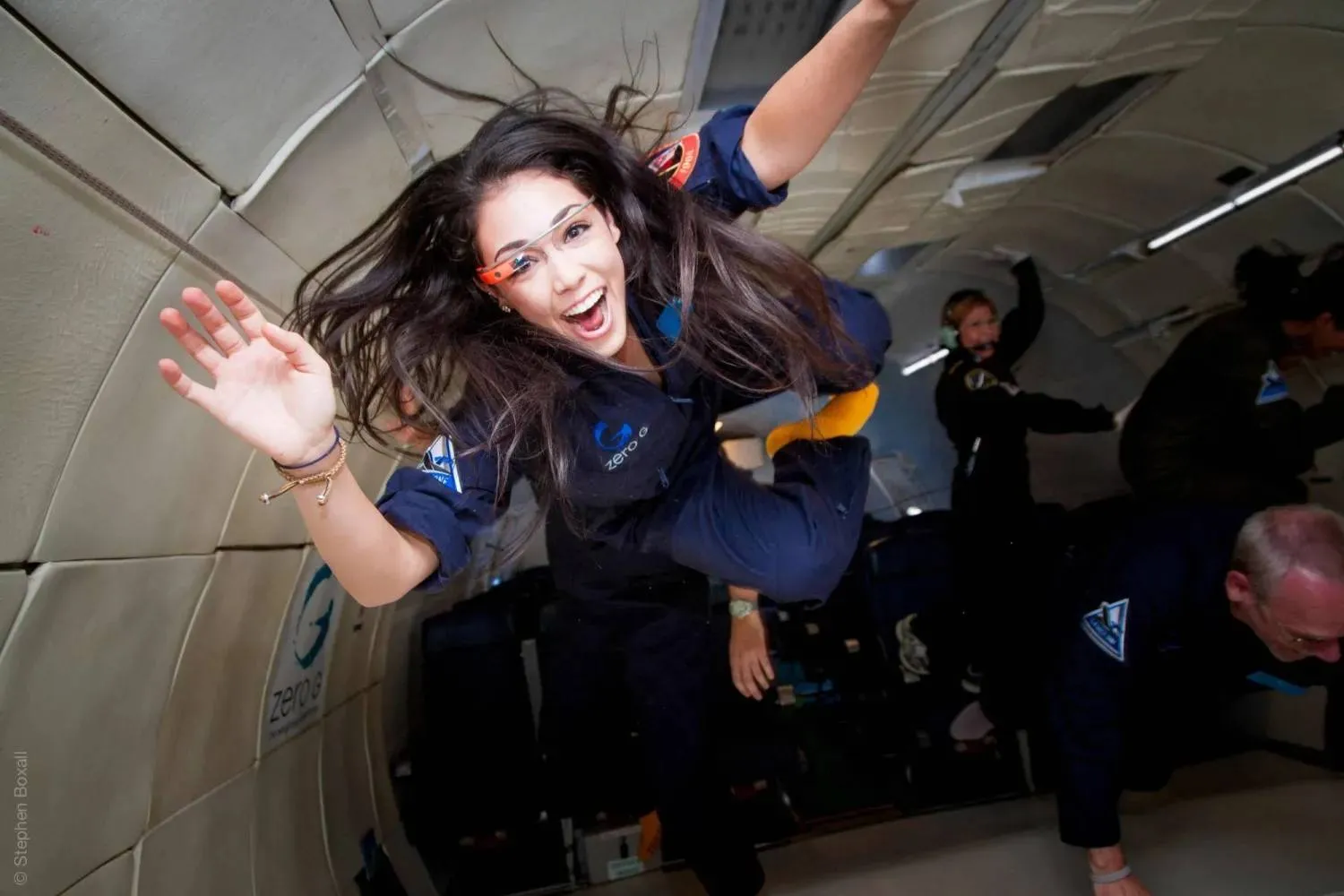
Researcher for the International Institute for Astronautical Sciences (IIAS), Kellie Gerardi, experiences weightlessness on a Zero Gravity plane. (AFP)
TT

Is Space Tourism Finally Ready for Takeoff?

Researcher for the International Institute for Astronautical Sciences (IIAS), Kellie Gerardi, experiences weightlessness on a Zero Gravity plane. (AFP)

New York - Stefano Montali

In 2001, Dennis Tito, an American entrepreneur, paid a reported $20 million for a voyage to the International Space Station aboard a Russian Soyuz spacecraft, officially becoming the first space tourist.

“It was eight days of euphoria,” he said from the steppes of Kazakhstan after returning to Earth.

Twenty-five years later, the frenzy surrounding the initial public offering of SpaceX, along with the recent success of NASA’s Artemis II mission, has people dreaming of space travel again.

The modern space tourism landscape is more robust and commercial than when Tito took flight.

For one, it is dominated by private, billionaire-led companies: Richard Branson’s Virgin Galactic, Elon Musk’s SpaceX and Jeff Bezos’ Blue Origin lead the way, though their short-term plans have diverged in recent months.

As of this year, about 140 people have traveled to space as tourists, most of them on short trips to and from the edge of the atmosphere. But broader plans for more ambitious spaceflights — trips that take passengers on longer journeys, in orbit — haven’t materialized beyond a handful of billionaire-financed exceptions.

All the while, the development of a wider market for space tourism has been hampered by delays, rising costs and shifting corporate and governmental priorities.

Here’s what to know about the current state of space tourism and where it might be heading.
Today, a vast majority of commercial spaceflights are suborbital, and Branson’s Virgin Galactic is the main provider. In a round trip of about 90 minutes, tourists ascend close to the Karman line, the internationally recognized boundary for space, about 62 miles above sea level, where they experience several minutes of weightlessness.

Jamila Gilbert flew aboard Virgin Galactic’s final test flight before it began offering commercial services in 2023. In a recent interview, she said she remembered unstrapping her seatbelt and floating around inside the cabin while Earth loomed ethereally outside her window.

“Everything that you have ever known has lived within the bounds of it,” she said, “and all of a sudden you’re looking at it from above.”

Before the flight to space, tourists must undergo three days of training at the company’s Spaceport America, in New Mexico, which includes medical checks, mission briefings and both physical and mental preparation.

On launch day, a Virgin Galactic launch vehicle called the VMS Eve climbs for about 50 minutes to around 50,000 feet, before releasing the attached spaceship that will ferry passengers the rest of the way to the Karman line.

“When you escape the atmosphere,” said Gilbert, “you’re suddenly in the quietest place you’ve ever been.”

Virgin Galactic has flown 32 passengers to space since 2018.

The price of a ticket was initially $200,000, and it has climbed steadily since.

After a two-year pause, the company resumed ticket sales this year with a price tag of $750,000 per seat.

This summer, the company is testing its new SpaceShip, which increases passenger capacity to six, up from four. Suborbital trips are expected to resume by the end of the year.

There are around 650 passengers waiting for a spot aboard a Virgin Galactic flight. But if all goes to plan, most are expected to fly by 2027 or 2028, when the company said it plans to have the capability to fly 750 passengers to space per year.

“We have people who wanted to fly to space their whole lives,” said Clare Pelly, the vice president for astronaut operations, “including some who saw the moon landing and said, ‘I will do that one day.’”

The company’s customers, she said, are joined more by a shared set of values and life goals than a particular demographic, and 60 countries are represented on the waiting list.

“It sounds a little cheesy,” said Pelly, “but we deal with people’s lives and dreams.”

The company estimates that around 300,000 people globally have the appropriate net worth and desire to take part in a suborbital trip, a number that company officials predict will grow about 8% annually.

Virgin Galactic said it planned to substantially increase the accessibility of suborbital space travel in coming years as it adds new flights. Several more spaceships are being built, and there are plans for at least one more spaceport in Europe or the Middle East.

“Just like summiting Everest isn’t going to be for everyone, neither will flying to space,” said Gilbert. “But the optionality that was never there before to have this experience is alive and well now.”

Others may be getting out of the tourism game. Blue Origin, Bezos’ competing operation, announced after the completion of its 38th successful suborbital trip in January that it would pause its New Shepard private passenger program for at least two years.

In suspending its suborbital operations, the company said that it would instead focus on building an orbital rocket and developing a lunar lander for NASA.

Unlike Virgin Galactic, whose vehicles take off like normal airplanes, Blue Origin rockets launch vertically, and their suborbital flights last about 11 minutes. A total of 92 people have flown to space aboard the New Shepard reusable rocket, which flies autonomously.

Compared with suborbital travel, orbital trips are far more technically challenging and require that spacecraft reach significantly higher speeds.

SpaceX, Musk’s company, offers tourists the opportunity to enter orbit aboard Crew Dragon, billed as “the first private spacecraft to take humans to the space station.”

These private trips last three to six days, require up to nine months of extensive training and cost about $200 million for four passengers. So far, about two dozen tourists have made the journey, including a cryptocurrency tycoon, an e-commerce billionaire and the friend of a sweepstakes winner.

Axiom Space, a Houston-based company, has taken more than 20 private passengers since 2022 on SpaceX rockets to stay on the International Space Station.

Tickets cost from about $55 million to $65 million per seat, with trips lasting up to about two weeks. Axiom is also competing to build the space station’s replacement — NASA and its international partners plan to discontinue the ISS at the end of 2030 — as the world’s first commercial space station.

Some experts, like Rachel Fu, a professor of tourism and hospitality at the University of Florida, predict that a plethora of tourist experiences will become available in the coming years — orbital hotels, research labs, lunar missions.

Others predict that as more entities begin operating in space, a more crowded ecosystem will bring new challenges, including how countries and companies will coexist there.

The defining question, Fu said, is no longer “Can we go?” but rather “Can we stay, operate and thrive?”

The New York Times


Queen Camilla Says it Was Difficult to Keep King Charles' Cancer Diagnosis Private

King Charles and Queen Camilla alongside their Coronation State Portraits at the National Gallery in London on May 6, 2025. (AFP)
TT

Queen Camilla Says it Was Difficult to Keep King Charles' Cancer Diagnosis Private

King Charles and Queen Camilla alongside their Coronation State Portraits at the National Gallery in London on May 6, 2025. (AFP)

Britain's Queen Camilla has spoken publicly for the first time about how hard it was to keep her husband King Charles' cancer diagnosis initially private.

Buckingham Palace revealed in February 2024 that the British monarch was undergoing treatment for an undisclosed form of cancer.

He is still receiving treatment but said last December than an early diagnosis and effective intervention meant this could be scaled back, according to Reuters.

A week before the palace made the announcement, Camilla visited a Maggie's cancer support center at a London hospital and in a video released on behalf of the ⁠charity on Wednesday, she said it had been hard not to talk about her husband's own illness.

“I remember coming to see a Maggie's just after the king being diagnosed. Nobody could say anything at the time, that was quite difficult,” Camilla told Laura Lee, the chief executive of Maggie's of which the queen is president.

“I almost said something but, you know, I felt that it wasn't the time to say, (I) looked at everybody who was suffering and all the relations, and I think it made me realize even more how important these ⁠places were.

“I was just longing to let it out but obviously I couldn't.”

In the film, produced to mark Maggie's 30th anniversary, Camilla spoke of looking after her “poor husband” and how he was determined to keep working.

“Look at my husband, nothing stopped him,” she said. “He just said, this is ⁠my way I'm going to cope with it.”

Maggie's has said that the revelation that Charles and his daughter-in-law Kate, the Princess of Wales, had undergone treatment for cancer and their willingness to speak ⁠publicly about coping with the illness had had a huge positive impact on fellow sufferers.

“The king's openness about his diagnosis has undoubtedly helped others to be more open themselves ⁠and to now hear the Queen's completely understandable and natural response as a wife, shines a light on why it is so important that family and friends also get the support they need,” Lee said.


Harvard Agrees to Pay $53 Mn after Morgue Manager Sold Body Parts

FILE PHOTO: Students walk past Widener Library at Harvard University in Cambridge, Massachusetts, US, November 19, 2025. REUTERS/Reba Saldanha/File Photo
TT

Harvard Agrees to Pay $53 Mn after Morgue Manager Sold Body Parts

FILE PHOTO: Students walk past Widener Library at Harvard University in Cambridge, Massachusetts, US, November 19, 2025. REUTERS/Reba Saldanha/File Photo

Harvard University has agreed to pay a $53 million settlement after its former morgue manager stole and sold body parts donated for scientific research, with a Boston court reportedly approving the plan on Tuesday.

Cedric Lodge, who managed the morgue at the prestigious Harvard Medical School before being fired in 2023, was sentenced to eight years in prison in December after pleading guilty to trafficking stolen remains.

Investigators said Lodge and his wife took body parts from the school "without the knowledge or permission of his employer, the donor, or the donor's family" and shipped them to buyers in other states since 2018.

According to AFP, Harvard University said in a letter on Monday that it will seek the court's permission to set up "two class action settlement funds totaling $53 million."

"We are grateful to be working together with the plaintiffs to move forward in a way that prioritizes support for families and the (organ donation program) and avoids prolonged litigation," read the letter co-signed by Harvard Medical School Dean George Daley and Bernard Chang, dean for medical education.

Lodge's violations "were despicable, abhorrent, and a flagrant betrayal of our values as a medical community," they said.

"We reaffirm our deep sorrow and empathy for the families of donors who may have been impacted."

A Boston state court judge gave preliminary approval to the settlement plan on Tuesday, US media reported.

Harvard said the process of distributing funds is expected to take several months.

Lodge's wife Denise was earlier sentenced to one year in prison.

Six other co-conspirators who bought remains from Lodge have also pleaded guilty and received sentences.

The Harvard Medical School will set up an annual financial aid scholarship starting in the 2027-28 academic year "in appreciation and in honor of all of our anatomical donors," the school said.

The settlement plan also includes a pledge by the school to provide a statement to the claimant families condemning Lodge's criminal acts, and to detail improvements made to the organ donation program.


Chinese Space Program Pioneer Liu Jiyuan Dies at 93

Commuters ride past the Tiananmen Square in Beijing on August 18, 2026. (Photo by ADEK BERRY / AFP)
TT

Chinese Space Program Pioneer Liu Jiyuan Dies at 93

Commuters ride past the Tiananmen Square in Beijing on August 18, 2026. (Photo by ADEK BERRY / AFP)

A pioneer of China's aerospace program, Liu Jiyuan, died in Beijing aged 93 after an illness, the main space contractor said on Wednesday.

In a career of nearly four decades from 1960, Liu worked on, and ⁠led development of, ⁠control systems for China's first generation of strategic weapons and launch vehicles.

Born in 1933, Liu died ⁠on Monday due to illness, the contractor, China Aerospace Science and Technology Corporation, said.

The expert in missile and rocket control technology was deputy commander of the manned space program in 1992 before heading the ⁠newly ⁠set-up National Space Administration from 1993 until he retired in 1999.

His death follows the August 12 demise of Wang Xiji, who led the development of China's first sounding rocket.
