



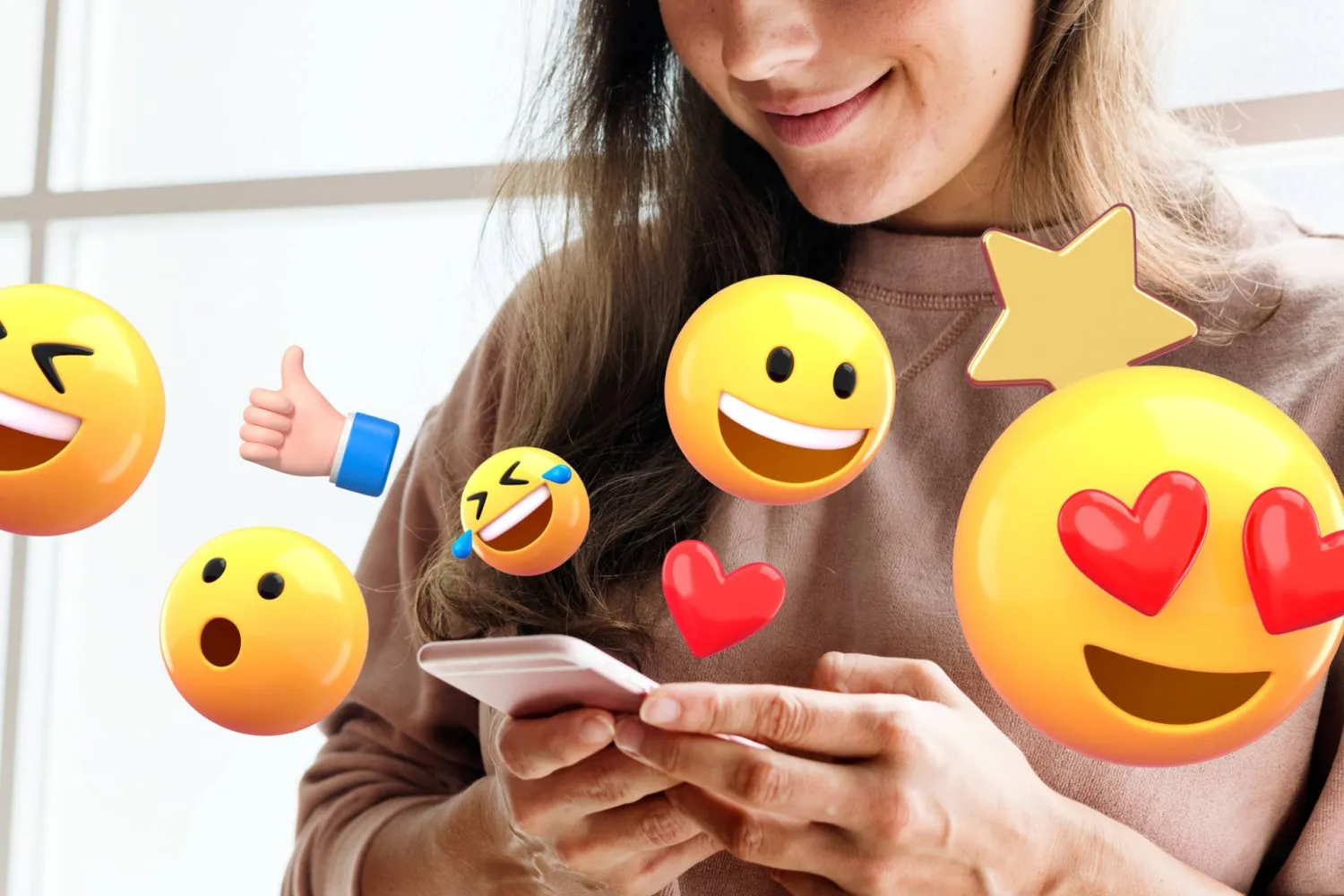

Emojis have become an integral feature of modern communication. As a new icon is crowned the most popular symbol of the last year on record, The Independent looked at what its mixed meaning could do to our brains.
That little yellow circle with tears streaming down its face has officially been named the most popular emoji worldwide, according to data from Google shared with The New York Times.
While the original cry-laughing face and its diagonal sibling have traditionally been used to convey joy digitally, their overuse has essentially rendered them a bit toe-curling.
Want to show your age? Send one to anyone below the age of 30 and see them send a (dead from laughing) skull back. Honorable mentions also go to: the two beers emoji, the monkey covering its eyes and the sunglasses smiley. They can all get – unless used with irony – firmly in the digital bin.
Much like with new fashion drops or sought-after artwork, the appeal of an emoji in 2026 stems from its originality.
So, it’s no surprise to find that, although young people are conveying the same emotions as everyone else using a smart phone, the images being used to express them have evolved: the wilting rose (93rd most used) instead of the broken heart, the praying hands instead of thumbs up, And then we come to the Moai statue, which has become the 33rd most used emoji up from 482nd in 2021.
The New York Times says, is used now instead of raised eyebrows or the routine deadpan smiley.
While it’s easy to dismiss emoji use as irrelevant or childish, the symbols have become a language in their own right, with more and more people leaning on the icons to convey meaning.
Although emojis play increasingly critical communicative functions, studies have found that frequency of use decreases among older adults, who may struggle to adapt to new forms of non-verbal communication due to lack of confidence.
In Adolescence, emojis like the red pill were used in incel subcultures, which police struggled to decode without a teen’s help, On the flip side, a recent study by researchers at Bournemouth University found that emojis can trigger similar neural response patterns to those involved in processing real human facial expressions.
“This suggests that emojis are not simply fun additions to digital communication but may be processed by the brain in ways comparable to genuine facial cues. In this sense, emojis can function as meaningful emotional signals during online interaction,” said the study’s lead, Madeline Molly Ely.
So, whether you are perceiving this year’s most popular emoji as joy or sorrow, could actually be having an impact on your brain.


