


Kinshasa Urban Train Back on Track after Years to Beat Gridlock

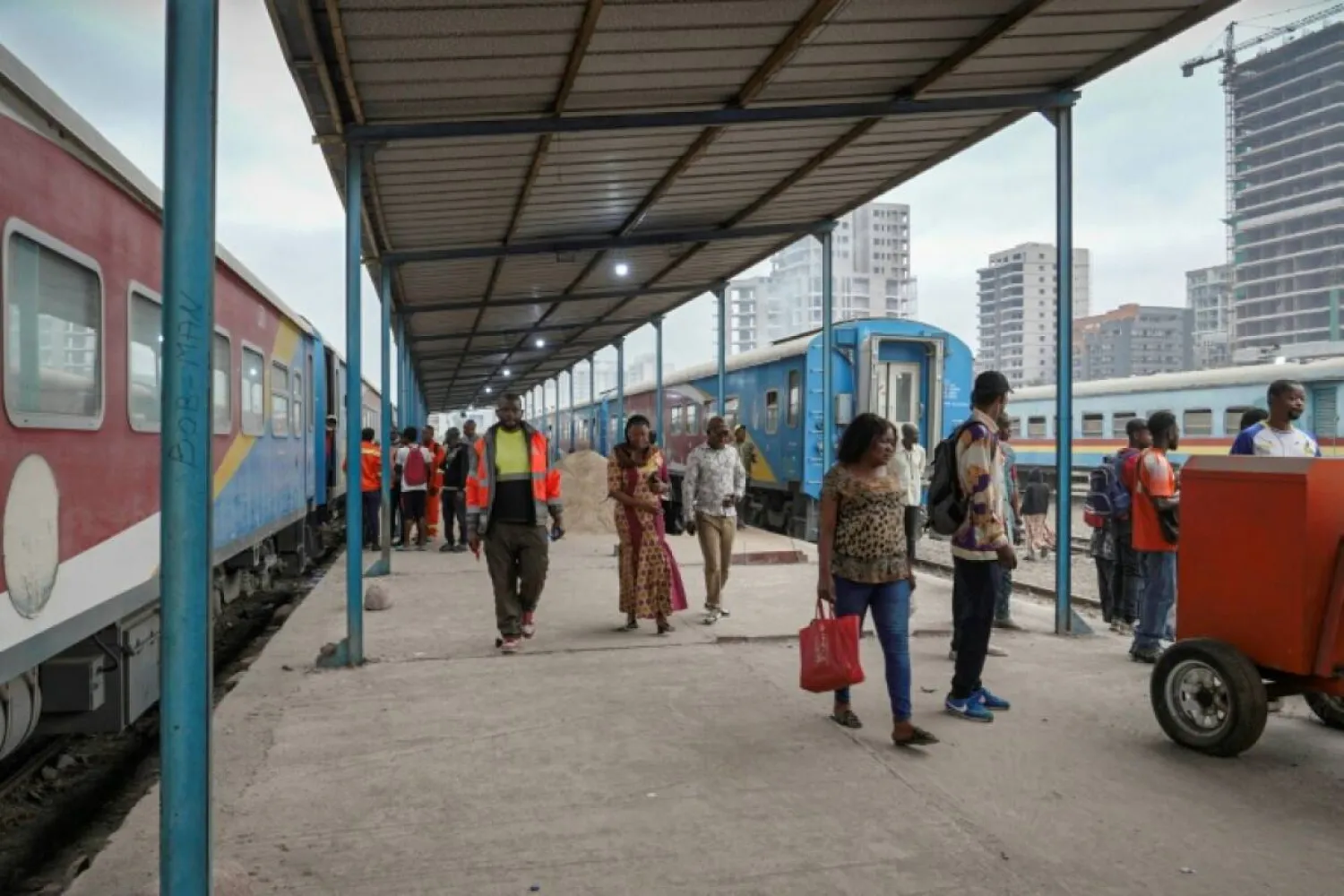
Kinshasa's urban train is back in service after nearly 15 years. AFP
TT

Kinshasa Urban Train Back on Track after Years to Beat Gridlock

Kinshasa's urban train is back in service after nearly 15 years. AFP

At dawn, dozens of passengers crowded along dusty tracks to board the only urban rail link serving downtown Kinshasa, the Democratic Republic of Congo's congested capital.

Recently brought back into service after nearly 15 years out of operation, the sky-blue train sporting the national colors makes the daily round trip between the outskirts of the airport and the center of the megacity of nearly 17 million inhabitants, said AFP.

At Masina station, a suburb about 10 kilometers (six miles) from the city center, people have to elbow their way through to find a spot in the packed carriages.

Those who miss their stop -- which last barely a few moments -- have to jump on while the train is moving.

The basic one-way ticket costs 2,000 Congolese francs (around $0.87), rising to 4,000 francs in second class and 5,000 in first class.

Carriages are packed to bursting and the heat inside quickly becomes stifling due to a lack of air conditioning.

Those lucky enough to have a seat can see the busy avenues and vast shantytowns that have sprung up along the tracks in recent years as they go by.

Others end up missing the legendary yellow minibuses that clog the city streets.

"We're paying the same price, but here there's nowhere to sit," grumbled Clovis Musa, who lives in Masina and works at the central market, standing in a second-class carriage filled with noise and chatter.

Nevertheless, the Kinshasa rail service offers an escape for residents of outlying neighborhoods who are otherwise forced to spend several hours a day in monster traffic jams.

"I haven't taken a car in four years; I do all my trips back and forth by motorbike," Britey Mafuka, a trader who spends around $380 a month on transport, said.

"I was starting to look for a house near the city, but when they brought the train back, I dropped the whole idea," he added.

- Quick but 'expensive' -

Mass transit systems are considered vital for the future of African megacities, which are seeing rapid population growth and often chaotic urbanization.

Kinshasa, Lagos in Nigeria and Tanzania's Dar es Salaam are projected to be the most populous cities in the world by 2100.

Nigeria's biggest city inaugurated a long-awaited urban train in 2023.

The Senegalese capital, Dakar, did the same in 2021, and three years later, established a bus network on dedicated lanes to alleviate the congestion in the city center.

But in Kinshasa, which sits on the banks of the mighty Congo River, such infrastructure has remained at the planning stage.

The railway network, built in the aftermath of independence from Belgium in 1960, was gradually abandoned by the National Transport Office (ONATRA) due to a lack of funds to maintain the tracks.

President Felix Tshisekedi officially restarted the Kinshasa urban train service after nearly 15 years at the end of June.

Its resurrection is part of the MetroKin project, a 300-kilometer rail network supported by Africa Finance Corporation, a pan-African organization that helps fund and develop infrastructure, the president's office said.

The revamped city link means it takes around an hour and 15 minutes to travel into the city center from the area around the airport.

By road "it's practically impossible", Chadrack Walele, the line manager, said.

Between 4,000 and 5,000 passengers are transported per train, he said.

"If these passengers were now to go by road it would cost us an enormous amount of time and cause traffic jams," he said.

The train currently does one daily round trip but that will soon rise to two, he added.

On arrival at Kinshasa's central train station, thousands of passengers poured out onto the tracks -- with mixed opinions.

"We're glad they restarted the train because it's the fastest way to travel," Gabriel Mfutila said.

But "we are poor, we are trying to survive -- how are we going to feed our children and pay for transportation that's so expensive?" he said, on the platform before disappearing into the city's crowds.


Indonesia Conducts Water Bombing to Contain Wildfires Near Future Capital

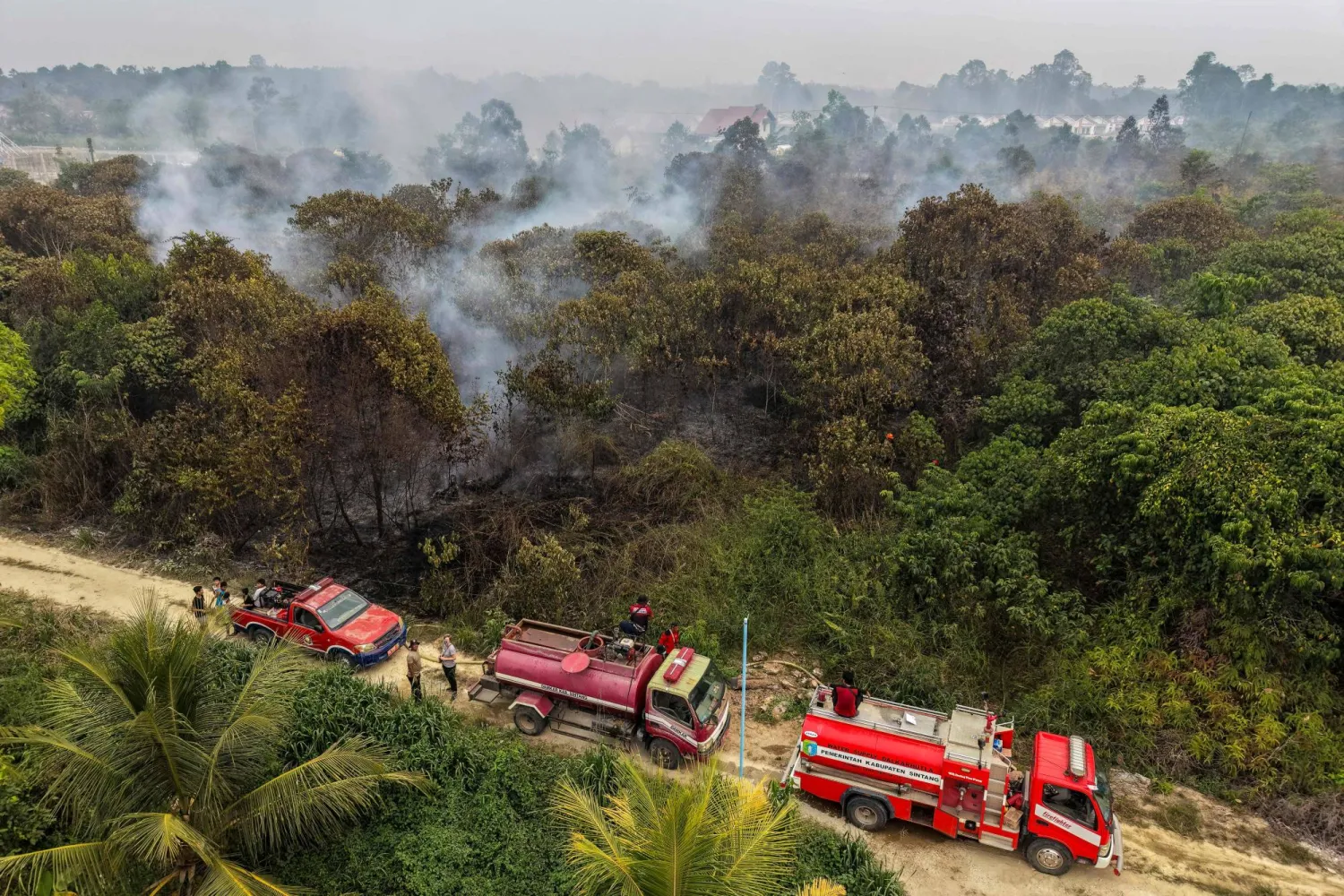
A drone view shows firefighters spraying water in an attempt to extinguish a wildfire in Soeharto Hill Forest Park, North Penajam Paser in East Kalimantan province, Indonesia, September 3, 2026. (Public Relations Office of the Nusantara Capital City Authority/Handout via Reuters)
TT

Indonesia Conducts Water Bombing to Contain Wildfires Near Future Capital

A drone view shows firefighters spraying water in an attempt to extinguish a wildfire in Soeharto Hill Forest Park, North Penajam Paser in East Kalimantan province, Indonesia, September 3, 2026. (Public Relations Office of the Nusantara Capital City Authority/Handout via Reuters)

Indonesian authorities carried out a water bombing operation on Saturday to prevent wildfires from spreading in the future capital city Nusantara, a city official told AFP.

The archipelago is constructing a new capital city in Borneo, home to vast tropical jungle, to replace sinking and traffic-clogged Jakarta.

The country is also fighting to contain wildfires that have burned large swathes of Sumatra and Borneo, which caused choking haze that has drifted across the border to Malaysia, Singapore and the Philippines.

Fires have been intensifying since mid-August in buffer areas outside the core area in Nusantara, where the city's development is concentrated, Nusantara authority environment and natural resources deputy Myrna Asnawati Safitri said.

It prompted authorities to carry out a water bombing operation to complement on-the-ground firefighting efforts, she added.

"The function of water bombing is not only to extinguish fires but also to accelerate cooling in areas that have been extinguished by ground firefighters," Myrna said.

The operation will last until Sunday, but Myrna said it can be extended if necessary.

So far, Nusantara's construction has not been hampered by wildfires or haze, she said.

Then-president Joko Widodo revived the long-proposed capital move from Jakarta when he won a second term in 2019.

But construction has slowed down under his predecessor Prabowo Subianto, as the former general prioritized his welfare programs including a free meal scheme for students.

As president-elect, Prabowo said he wanted to "continue, if possible finish" the capital move, but since taking office in 2024 he has yet to express any plans to sign the presidential decree needed to shift from Jakarta.

His spokesman Prasetyo Hadi said Nusantara should be ready to host the executive, legislative and judicial branches of the government before the move can take place, local media reported.


Moto Guzzi’s Renovated Lake Como Headquarters Welcomes Motorcycle-Bound Aficionados

Riders and visitors enjoy Guzzi motorcycles displayed at the museum during the Guzzi opening inaugurating its completely redeveloped historic factory and new museum as the motorcycle maker celebrates its 105th anniversary, in Mandello del Lario, Thursday, Sept. 3, 2026. (AP)
TT

Moto Guzzi’s Renovated Lake Como Headquarters Welcomes Motorcycle-Bound Aficionados

Riders and visitors enjoy Guzzi motorcycles displayed at the museum during the Guzzi opening inaugurating its completely redeveloped historic factory and new museum as the motorcycle maker celebrates its 105th anniversary, in Mandello del Lario, Thursday, Sept. 3, 2026. (AP)

After extensive renovation by the Italian motorcycle manufacturer Moto Guzzi, aficionados this year had fresh reasons for a pilgrimage to the lakeside spot where their beloved two-cylinder bikes are hand-built.

Thousands of Moto Guzzi riders pulled up Saturday for an annual gathering and informal ride along the winding lakeside roads. They started arriving on Thursday for the unveiling of the headquarters, new museum and expanded factory on the shores of northern Italy’s Lake Como.

The headquarters, nestled between a mountainside and the lakeshore, received an additional 5,500 square meters (nearly 60,000 square feet) for factory space and the museum that honors the iconic brand that has been owned by Vespa-maker Piaggio since 2004. Works took five years and cost more than 50 million euros ($58 million).

Timothy Bennett, who lives in the US state of Georgia, was making his second trip to the headquarters after attending a toned-down 100th anniversary celebration during the pandemic. His first Moto Guzzi — made distinctive by its dual cylinders projecting from either side of the bike — was an 850-T, and now he owns a 2018 California 1400 Touring.

“I’ve owned a Moto Guzzi since my 20s,” said Bennett, 58. “The first time I saw one in a magazine, I thought it looked very interesting. And then I went ahead and saved up some money and bought a used one, and fell in love.”

This year, Bennett and other visitors to the World Guzzi Days could peek through new observation points to see workers hand-assembling the motorcycles, just as they have for 105 years. The company prides itself on its processes.

“Moto Guzzi is handmade, it is an artisanal product, it’s a piece of art,” said Matteo Boddi, head of manufacturing for the Piaggio Group. “And we never substitute automation for this core part. Automation is for safety and for sustainability.”

The new factory includes the addition of an automation belt to move parts and engines through the factories and robotics to transport the finished motorcycles for their final test. The factory expansion potentially doubles the maximum production to 30,000 motorcycles a year.

“We tried to make an accessible place both for passionate motorcyclists and people who are just curious about motorcycles being made in Italy, on Lake Como, and may never even have heard of Moto Guzzi before,” said US architect Greg Lynn.

Celebrity spottings and weddings have long been a pastime at Lake Como, known for its majestic views of the Alps. The lake is featured in the James Bond film Casino Royale, and George Clooney owns a villa on its shore. But that glitz isn't why the Moto Guzzi fans turn out in droves.

Roland Rampnoux has been visiting the factory regularly since 1980 and belongs to a 150-strong Moto Guzzi club in Paris. He was impressed by the factory, but his interest was mostly in the bikes and the camaraderie.

“I like the mentality of the people who ride them,” Rampnoux said. “When you see a Moto Guzzi it is immediately recognizable. It is a legendary brand.”


Sydney Sweats in Spring Hot Spell, Faces ‘Extreme’ Bushfire Risk

A ferry passes in front of apartments in Sydney, Australia, August 18, 2026. (Reuters)
TT

Sydney Sweats in Spring Hot Spell, Faces ‘Extreme’ Bushfire Risk

A ferry passes in front of apartments in Sydney, Australia, August 18, 2026. (Reuters)

Australia's most ‌populous city Sydney baked in a burst of sweltering spring heat on Saturday, raising the risk of bushfires and prompting authorities to issue a ban on lighting fires.

The heat comes as a powerful El Nino weather pattern in the Pacific, expected to be among the strongest in decades, drives hotter and drier ‌conditions across ‌southern Australia during the September-November spring ‌season.

On ⁠Saturday, the nation's ⁠weather forecaster said temperatures in the New South Wales capital, home to 5.6 million people, were set to hit 33 degrees Celsius (91.4 degrees Fahrenheit), nearly 13C above average.

At Sydney Airport, the temperature ⁠was already 28.6C (83.48F) at 11:30 ‌a.m. (0130 GMT)local ‌time, more than seven degrees above the September mean ‌maximum temperature, according to forecaster data.

"Fresh ‌to strong and gusty northwesterly winds developing during the morning, combined with dry, unseasonably warm conditions, will result in elevated fire dangers ‌across the Greater Sydney Region today," the forecaster said.

State fire authorities ⁠issued ⁠a total fire ban for Sydney where they rated fire risk as "extreme", the second highest danger rating.

Climate change is causing extreme heat and fire weather to become more common in Australia, a bushfire-prone country of around 27 million. In January, thousands of firefighters battled bushfires in the southeast that razed homes, cut power to thousands of homes and burned swathes of bushland.