Saudi Arabia Reinforces Regional Leadership with 21 WHO-Accredited Healthy Cities

From one city to another, the Kingdom of Saudi Arabia’s network of healthy cities continues to expand as an integral part of sustainable development. (SPA)
TT

Saudi Arabia Reinforces Regional Leadership with 21 WHO-Accredited Healthy Cities

From one city to another, the Kingdom of Saudi Arabia’s network of healthy cities continues to expand as an integral part of sustainable development. (SPA)

From one city to another, the Kingdom of Saudi Arabia’s network of healthy cities continues to expand as an integral part of sustainable development. The number of cities accredited by the World Health Organization (WHO) has reached 21, reinforcing the Kingdom’s regional leadership among countries in Eastern Mediterranean and North Africa.

This achievement presents a model that translates quality of life into standards and practices, placing human health at the heart of planning, services, the environment, and society, the Saudi Press Agency said on Wednesday.

This progress is underpinned by the unwavering support of wise leadership for citizens' health and quality of life.

This support has enabled the expansion of health efforts to encompass the various factors affecting people’s lives and strengthened the “Health in All Policies” approach as a key pillar of planning, development, and decision-making, in line with the objectives of Saudi Vision 2030 to build a vibrant society and higher-quality, more sustainable environments.


'We've Never Had This': Bear Sightings Spook Russia

Russia's brown bear population has more than doubled since 1990, according to one estimate. Handout / National Park "Zapovednoye Pribaikalye"/AFP
TT

'We've Never Had This': Bear Sightings Spook Russia

Russia's brown bear population has more than doubled since 1990, according to one estimate. Handout / National Park "Zapovednoye Pribaikalye"/AFP

Seeing what looked like a brown blob in a tree while driving through Siberia's Irkutsk region, 36-year-old Daria Tyurneva pulled over, curious to get a better look.

She was not expecting to find a bear cub, perched on a branch, several feet up.

"We stopped, without turning off the engine or taking off the gear, because we knew the mother could be somewhere nearby," Tyurneva told AFP, showing a phone video she recorded of the bear.

Her sighting was one of several to spook Russians in recent weeks, as the country grapples with a spate of deadly bear attacks.

Russia is home to the world's largest population of brown bears. Experts say interactions with bears are becoming more common, as habitat loss and climate change force the animals to find food where humans live.

Their numbers have more than doubled since 1990, from around 130,000 to almost 308,000 in 2026, according to an estimate from Russia's natural resources ministry.

While the number of bear attacks across Russia has remained constant at around 20 to 30 a year, according to the ministry, a series of recent maulings has caused alarm.

At least 26 people have been killed in bear attacks this year, seven of which were in Siberia's vast Krasnodar region, according to Russian state media.

In September, a bear was reported to have killed a 66-year-old woman after dragging her from her window, while a week later, a 39-year-old logger was killed guarding machinery in a forest.

A Siberian town reported last month that it was "under siege" from the furry animals.

- 'I started fighting it' -

Bears flee in the vast majority of encounters with humans, according to the Russian government.

The number of deadly attacks this year has not yet reached the record of around 80 deaths, last seen in 1996, according to the state-owned TASS news agency.

This year has seen abnormally large bear sightings, said Mikhail Strelkov, a ranger in the Lake Baikal national park.

"We've never had this," he told AFP of the recent incursions of bears into urban areas.

"There is no pine nut in the forest, the main food source that the bear eats and uses to fatten before hibernation," he added.

He showed AFP videos his team had recorded of bears frolicking at the edge of Lake Baikal, one of which scampered away upon hearing their boat approach.

Vladimir Odulo, an angler from Russia's far east, told the Komsomolskaya Pravda newspaper in October how a female bear rushed at him on the banks of a river.

"Believe it or not, I didn't even have time to get scared. I started fighting it off with my fishing rod," he said.

He said he escaped after a fight that left him with injuries across his body.

- 'Not afraid of bears' -

Authorities have introduced curfews in some municipalities and formed bands of hunters but some environmental activists say the government may be overestimating the bear population.

So far, in 2026, officials have culled more than "3,400 dangerous bears", TASS reported earlier in October.

Alla, a Russian tourist whom AFP met at the entrance to a hiking trail near Lake Baikal, said she turned back after seeing a sign warning of bears.

"Maybe I will come again to see. Maybe in summer, maybe in winter, when they're hibernating," she said.

Other tourists were unfazed.

"I'm not afraid of bears," said 39-year-old Chinese tourist Nick, who also only gave one name.

Brown bears eat a mixed diet that can include up to 90 percent fruit and vegetation.

Russia's emergencies ministry says the best way to avoid bear encounters is to make loud noises and that in the rare event a bear starts to attack, "to give up".

"It's common for a bear to stop attacking when it feels the threat has been eliminated. Remain motionless for as long as possible," it said.

"If you move and the bear sees or hears you, it may return and resume the attack. In rare cases, an attacking bear may mistake a person for food."



Tiny Fiji Village Restores Dying Fishery with Coral Planting

Villagers and environment advocates plant coral in the sea within the Naidiri Marine Biodiversity Park. Saeed KHAN / AFP
TT

Tiny Fiji Village Restores Dying Fishery with Coral Planting

Villagers and environment advocates plant coral in the sea within the Naidiri Marine Biodiversity Park. Saeed KHAN / AFP

It had been decades since sharks last patrolled the reef off the coast of Fiji's Naidiri Village, but they returned this year following a community-led effort to protect the fishery and plant thousands of corals.

Manoa Duwai convinced his village in 2009 to create a protected area within their customary fishing grounds on Fiji's Coral Coast after concerns over the small number and size of fish he was catching.

At the time, he was lucky to catch a fish as big as his palm.

"Man, imagine 10, 15, 20 years to come, what we going to have," Duwai said after a fishing trip one night yielded only tiny, juvenile fish.

"What type of species are we going to have left in our customary fishing ground? We have to do something," he said.

Duwai approached village elders with a proposal to protect part of their fishing grounds, originally a 30-by-40-metre area within the reef.

It didn't take long for the plan to bear fruit, with larger fish finding a home in the protected area and then spreading into the neighboring waters.

In time, the village increased the size of the protected area to 280 by 240 meters. It is now flanked by a similar-sized area they call "the fridge", which they temporarily closed as a way to build up fish stocks.

Duwai's vision for a plentiful marine habitat that would sustain his village of 147 people has now received global praise, with academics and charities seeking his insights.

- Youth ownership -

Joseva Kunagado, 21, leads the youth of Naidiri Village in preserving the health of their protected area.

The village formed a youth group in 2011 to manage what they call the "tabu area", and the group leads the effort to plant corals and encourage a healthy ecosystem.

In 2023 alone, the group planted 18,000 corals and 10,000 mangroves.

"When we started this we were small kids," Kunagado told AFP.

"We used to take some barrels, cut it in half, tie the rope on it, and we pull it. We have to walk for maybe 20 minutes to get corals, come back and plant.

"From that to today, we can say that we are very happy on the work that we have done because we've seen big changes."

The protected area Kunagado and his friends have cultivated is bursting with corals and is now home to hundreds of heat-resistant "super corals" that may protect the village from the impacts of rising sea temperatures.

Sharks have started returning to the area.

Far from being scared, Duwai said he shed a tear when they came back this year.

"When things started to come back, different types of fish species, invertebrates, all back, I'm like the most happiest person in the whole village," Duwai said.

Kunagado said he'd seen sharks the morning of AFP's visit. He smiled with pride at the state of the fishery.

"We didn't see this coming, like having tourists coming, having researchers, students from universities coming. So we're proud of the work."

- Super corals -

Researchers are interested in not only how Naidiri Village has protected their marine ecosystem, but also specific corals showing extraordinary heat resistance.

Duwai said water temperatures reached up to 39C during a heatwave earlier this year, and there was widespread bleaching of the thousands of planted corals.

At those temperatures, most of the coral should have died, but Duwai said 20 percent survived and are considered "super corals".

"The only corals we have here now are the ones who survived this 38, 39 degrees."

Duwai said Naidiri is now transplanting their heat-resistant corals to deeper, cooler waters close to the capital Suva to further protect from future heatwaves.


Haze Triggers Highest-level Alert in Parts of Southeast Asia

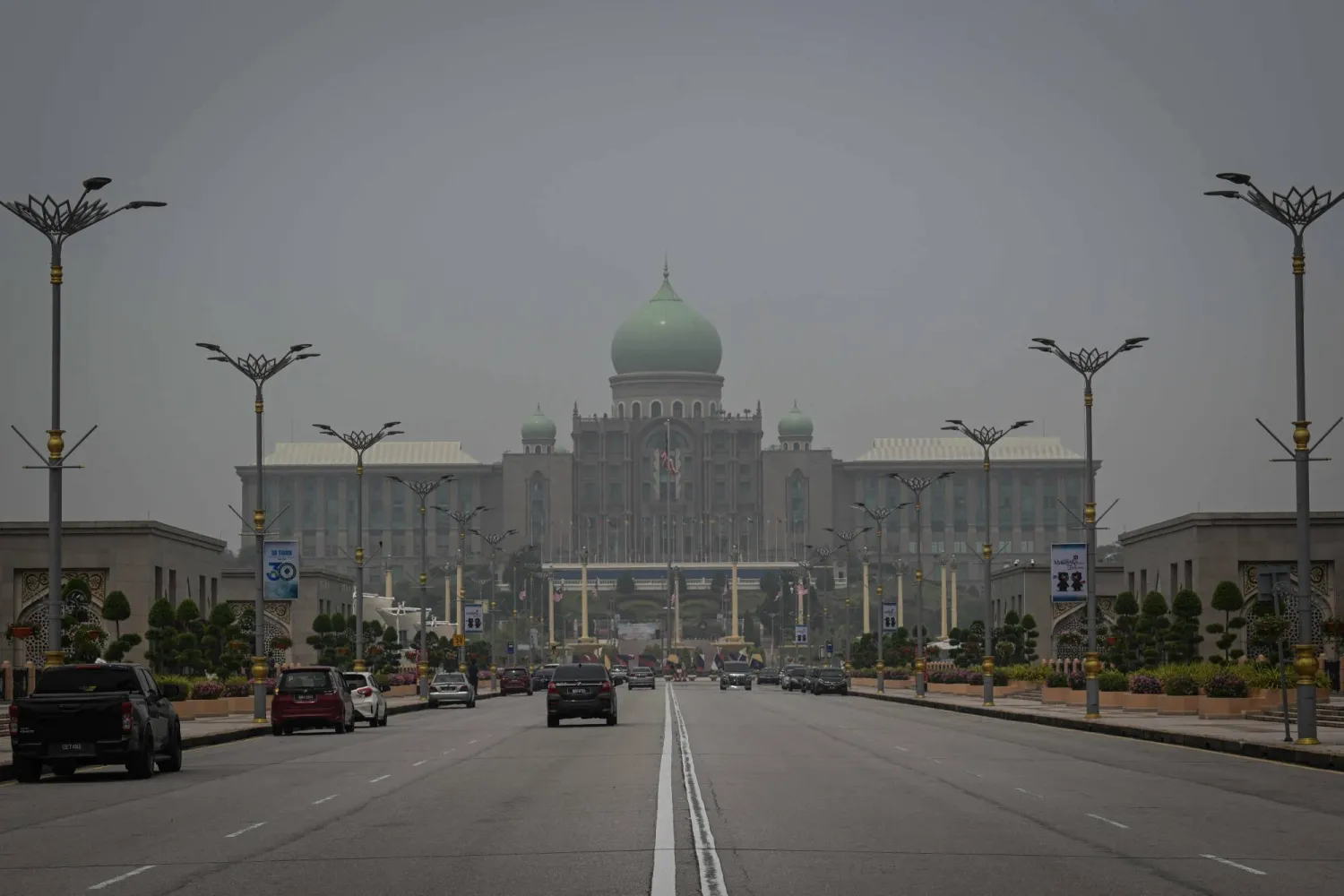
Motorists drive past the Prime Ministers’ Office in Putrajaya on October 17, 2026, as the country continues to be shrouded in haze caused by fires in Indonesia.  (Photo by Jam STA ROSA / AFP)
Motorists drive past the Prime Ministers’ Office in Putrajaya on October 17, 2026, as the country continues to be shrouded in haze caused by fires in Indonesia. (Photo by Jam STA ROSA / AFP)
TT

Haze Triggers Highest-level Alert in Parts of Southeast Asia

Motorists drive past the Prime Ministers’ Office in Putrajaya on October 17, 2026, as the country continues to be shrouded in haze caused by fires in Indonesia.  (Photo by Jam STA ROSA / AFP)
Motorists drive past the Prime Ministers’ Office in Putrajaya on October 17, 2026, as the country continues to be shrouded in haze caused by fires in Indonesia. (Photo by Jam STA ROSA / AFP)

Fires in Indonesia that have sent toxic smoke disrupting daily life across Southeast Asia has triggered the highest-level alert by the regional bloc's meteorological monitor.

The months-long pollution spell has closed schools, fueled a surge in respiratory conditions and restricted outdoor activities in Indonesia, Malaysia, Singapore and East Timor.

"This thing needs to stop," Zul Hafiz, a 39-year-old teacher cycling from the Malaysian city of Shah Alam to the capital, told AFP on Saturday, calling on the Association of Southeast Asian Nations (ASEAN) to take action.

The 11-country organization's ASEAN Specialized Meteorological Center (ASMC) said in a notice on its website on Friday that it had activated "Alert Level 3 for the Southern ASEAN region" -- the highest rung of a four-tiered alert system.

The alert level is triggered when there is a "high risk of severe transboundary haze in the region" and is reserved for widespread moderate to dense smoke haze, observed over two or more consecutive days.

The ASMC has already issued two Level 3 alerts this year, according to its website.

Singapore ranked second on IQAir's live ranking of the world's most polluted major cities behind Baghdad on Saturday, with Kuala Lumpur third. All readings showed "very hazardous" levels."

- 'Irresponsible behavior' -

Indonesia said Saturday it had been using dry ice at one of South Sumatra province's main airports in an attempt to disperse the haze.

The country's national disaster mitigation agency said that 2.4 tons of dry ice were dispersed by plane.

"The smoke not only reduces visibility and disrupts aircraft operations, but also affects residents' health," the agency warned.

The haze has disrupted life across Southeast Asia, sparking fresh calls for action from residents in Kuala Lumpur.

"It's a bit unfair on Malaysia because of the irresponsible behavior of our neighboring country," Khairul Azhar, a 33-year-old bank officer told AFP.

"This is affecting our weekend routine -- not just for us but many Malaysians," he said.

In East Timor, unhealthy air pollution persisted on Saturday, including in the capital Dili, according to IQAir.

Authorities warned that the situation may worsen on Saturday and schools were closed.

Singapore said Friday it would issue warnings to seven companies in Indonesia it identified as responsible for the fires.

The companies named by the Singaporean government are mainly pulpwood and timber suppliers in Sumatra and include Bumi Andalas Permai, Bumi Mekar Hijau and SBA Wood Industries.

Philippines foreign department spokesman for ASEAN issues, Dominic Xavier Imperial, said Friday that the haze would be discussed at upcoming meetings ahead of a November ASEAN summit in Manila.