


Satellites Show Earth Lost More Than 12 Trillion Tons of Ice from Greenland, Antarctica in 47 Years

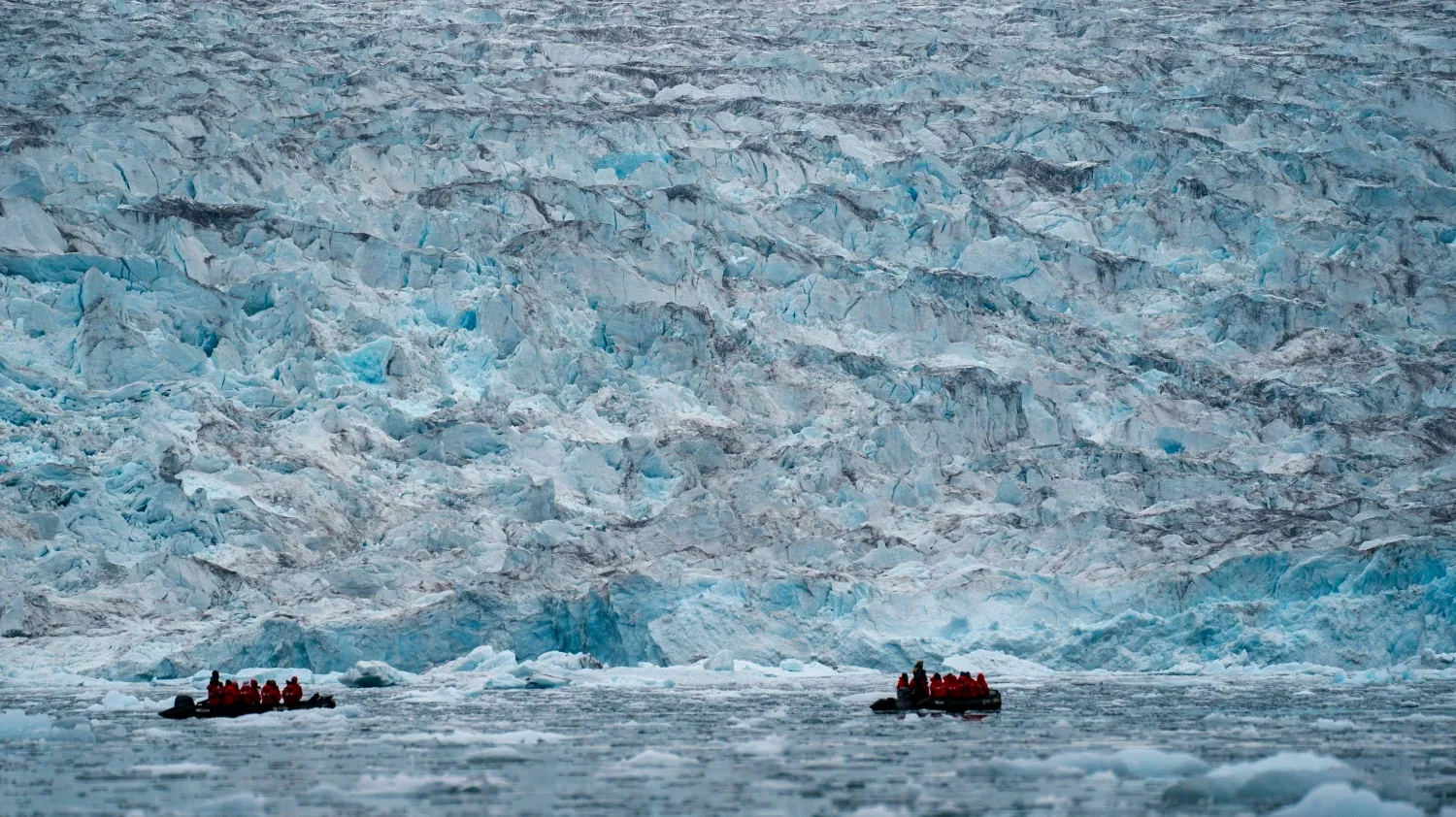
Two groups from the Poseidon Expeditions tour company look at a glacier in the Scoresby Sund, Sept. 7, 2023, in Greenland. (AP)
TT

Satellites Show Earth Lost More Than 12 Trillion Tons of Ice from Greenland, Antarctica in 47 Years

Two groups from the Poseidon Expeditions tour company look at a glacier in the Scoresby Sund, Sept. 7, 2023, in Greenland. (AP)

About 12.5 trillion tons (11.3 trillion metric tons) of ice from glaciers in Greenland and Antarctica have melted since 1979, which is enough frozen water to stack ice five feet deep across the continental United States, according to a major scientific report.

A warming Earth is accelerating the melting of the planet's two major ice sheets, with five-sixths of the melt not coming from hotter air, but from warmer waters eating away at the ice sheets from below and the sides, with glaciers flowing into the oceans, according to a study in Wednesday's journal Scientific Data. That's bad news for future sea level rise, the study's authors said.

“The ice sheets are melting away fast,” said study co-author Eric Rignot, an ice scientist at University of California, Irvine. “We are melting the polar regions, sea level is rising worldwide and will exacerbate the vulnerability of coastal regions.”

Huge numbers for ice melt, people flooded

The numbers behind the melt are both mind-bogglingly huge and deceptively small.

All that melted ice turned into nearly 3 quadrillion gallons of water (11.3 quadrillion liters), which pushed global sea levels up about an inch (3.1 centimeters) since 1979, on top of other climate factors raising ocean heights, the report said.

An inch may not sound like much, but for every third of an inch (or centimeter) of sea level rise, another 2 to 3 million people get flooded at least once a year, said lead study author Ines Otosaka, an ice scientist at Northumbria University in England.

The Jakobshavn glacier in Greenland is now retreating up to 164 feet (50 meters) a day, Otosaka said.

The international collaboration of polar scientists, headed by the European Space Agency, had in the past only looked at ice sheet melt since the 1990s based on European satellite data. But by incorporating NASA satellites, the scientists were able to chart ice sheet volumes in Antarctica back to 1979 and in Greenland back to 1972.

The melting is accelerating

“There is a clear trend that the ice sheets are losing more mass and it has been increasing from decade to decade, especially if you look at the ice being discharged to the ocean," Otosaka said. "And that’s quite clear that there’s a link to climate change.”

It showed that in the 1970s, 1980s and into the 1990s, the ice sheets were relatively stable, but then melt started happening and it really kicked in during the 2010s, Otosaka said.

“That’s something to be concerned about as it shows that the changes are tracking decades behind global warming, which means we can expect them to continue for decades more — even if we are able to stop heating the planet,” said study co-author Andrew Shepherd, also of Northumbria.

The accelerating numbers seemed to pause from 2020 to 2023, but the study's authors said it more reflected short-term weather variations not long-term trends. Otosaka said the study stopped with 2023 data, but she's looked at measurements since and found the accelerating trend has picked back up.

A lot of the stability in Antarctica was because East Antarctica had record snowfall, which compensated for the rapid melting in the less stable West Antarctic Ice Sheet, the authors said.

The three-year hiatus was “just a bump in the record,” Rignot said. “The long rise is climate and the threat is crystal clear.”

Worrying about a collapse scenario

The biggest changes scientists saw are in what they call dynamic processes, which are more abrupt and active than the slow steady melting from the air, and that's something prone to trigger runaway “tipping points,” Otosaka said.

New York University ice scientist David Holland, said that's what concerns him “because most of the ice loss is dynamical and that is exactly what you would expect in an ice sheet instability collapse scenario.”

The international team used 45 independent surveys and 27 different satellites. “The use of relatively independent methods gives me greater confidence in the result,” said Holland, who wasn't part of the study. “The upward trend is real.”

“The ‘wild cards’ of Antarctic mass loss continue to pose a challenge for human management of the planet — a clear and present danger, but many decades in the future,” said University of Colorado ice scientist Ted Scambos, who wasn't part of the study. “We are now as a society smart enough to know the future, but not prudent enough to act upon the knowledge.”


Damaged and Drained, Indonesia's Peatlands Go Up in Smoke

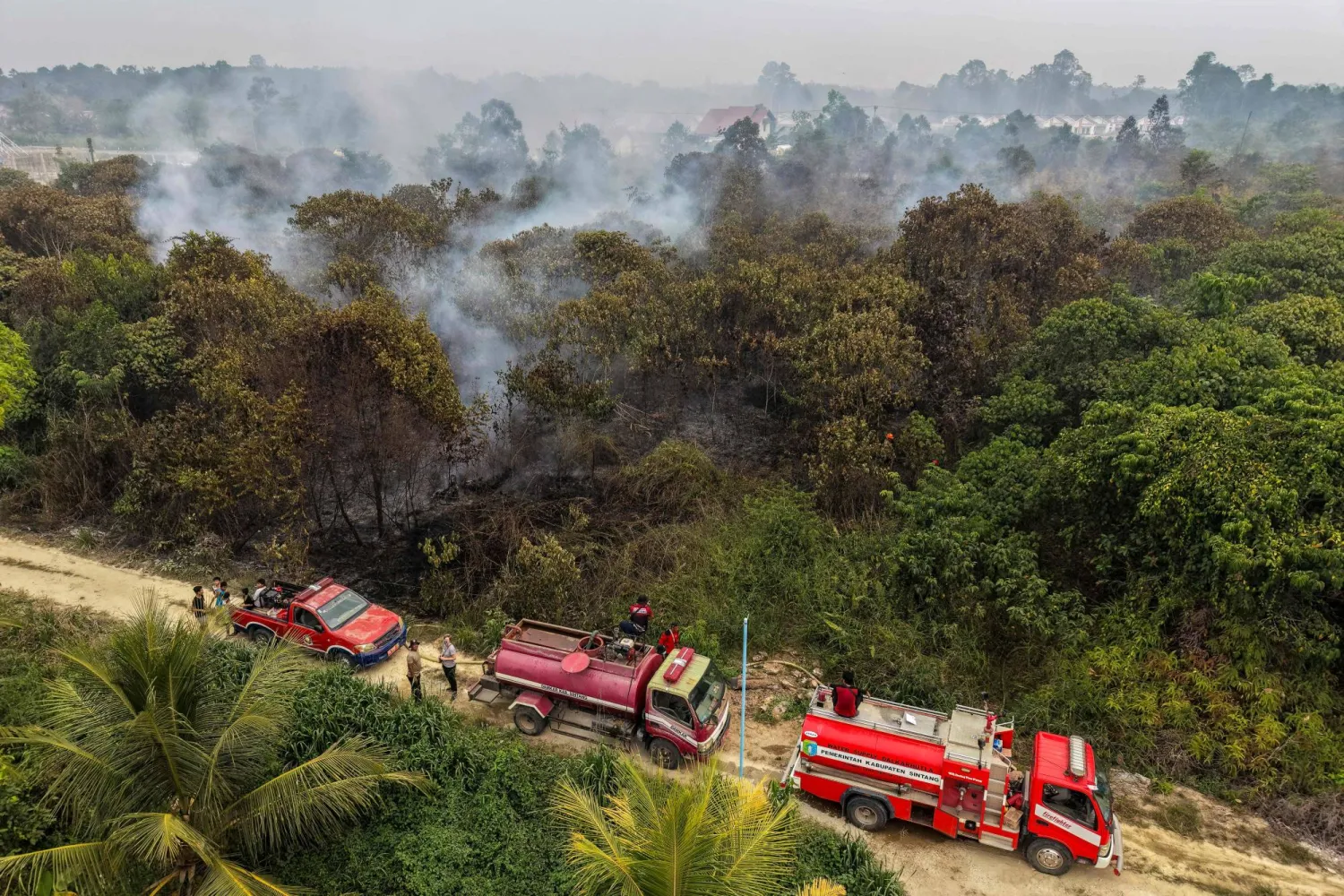
(FILES) This aerial picture shows fire fighters battling peatland fires in Sintang, West Kalimantan on September 5, 2026. (Photo by BAY ISMOYO / AFP)
TT

Damaged and Drained, Indonesia's Peatlands Go Up in Smoke

(FILES) This aerial picture shows fire fighters battling peatland fires in Sintang, West Kalimantan on September 5, 2026. (Photo by BAY ISMOYO / AFP)

For weeks on end, parts of Indonesian Borneo have resembled an Armageddon landscape with masked residents immersed in a putrid, red-brown haze as wildfires devour peatlands near homes and farms.

Burning slowly, mostly under the surface and sometimes for months on end, peatland fires are responsible for much of the dry season haze that this year has tainted air as far afield as Malaysia, Singapore and the Philippines.

- What are peatlands? –

Peatlands are composed of organic material that does not completely decompose in water-logged conditions and has settled over thousands of years into a layered soil-like substance.

Healthy peatlands are home to diverse plants and trees like nutmeg and durian, and animals that can include endangered orangutans, clouded leopards, Sumatran tigers, sun bears and tapirs.

They are porous and absorbent, making them critical for flood containment.

While they cover only about three percent of global land, peatlands store about a third of the world's soil carbon -- double that trapped by forests.

Indonesia has the world's biggest share of tropical peatland, about a third of the global total.

- Why are they burning? –

Of Indonesia's estimated 24.2 million hectares (93,400 square miles) of peatland, 16.4 million hectares have been degraded and are vulnerable to fire, according to the Pantau Gambut NGO.

The culprit is mainly industrial-scale plantations for timber, pulp and paper, rice paddies and palm oil, of which Indonesia is the world's biggest producer by far.

To cultivate peatlands, they are drained with canal networks that in Indonesia span about 285,000 kilometers (177,000 miles), according to Pantau Gambut research -- seven times the circumference of Earth.

The water runs into rivers or the sea, leaving the dried-out peatlands vulnerable to burning, especially in strong El Nino years that can bring severe drought to Indonesia.

Peatland fires are often imperceptible but for the foul smoke they emit and the heat they generate underfoot, AFP reported.

The many layers of thick carbon can keep smoldering in "zombie fires" for weeks, and are hard to put out.

- What are the impacts? -

While less than a third of wildfires in Indonesia are on peatlands, they produce most of the haze, according to Greenpeace research.

This toxic smog contains harmful elements including formaldehyde, hydrogen cyanide and ammonia, as well as PM2.5 particles small enough to penetrate the lungs or bloodstream.

The World Health Organization has linked PM2.5 exposure to increased illness and death.

Indonesia and Malaysia have shut hundreds of schools over haze, and more than 170,000 people in Indonesia required treatment for acute respiratory infections in August and September, according to the health ministry.

Many more fell ill in Malaysia and Singapore.

Peatland fires also ravage the habitats of animals, further imperiling already endangered species such as orangutans and Sumatran rhinos.

- What about greenhouse gases? -

By October 6, Indonesian wildfires had emitted 140.5 megatons of planet-warming carbon, around 13 percent of the global total this year, according to the Copernicus Atmosphere Monitoring Service.

That was the highest figure for Indonesia fire emissions since 2019, another strong El Nino year.

Indonesia emits significant greenhouse gases from its coal-powered electricity grid, and is seeking to reduce its emissions in part by relying on forests, peatlands and other land ecosystems to absorb more than they emit.

- What is being done? -

Activists and experts say concession licenses for extractive activities on peatlands must be revoked, and peatlands should be rewetted and planted with native species.

Canals should be blocked, they say.

Indonesia has a moratorium in place on new permits to clear 66 million hectares of land designated as primary forest and peatland.

In a statement last year, the government said it had rewetted 4.16 million hectares of peatland, built 45,000 canal barriers and replanted various native species.

But there are doubts about some of that work.

"Today, some of the peat hydrological units that have received major restoration efforts... have experienced fires and have some of the highest hotspot counts," Greenpeace forest campaigner Belgis Habiba told AFP.

Last month, the government announced the creation of a new National Peatland and Mangrove Management agency to replace a body whose mandate expired in 2024.

The agency's remit and resources are still being worked out, but there are concerns its name mentions neither restoration nor protection.

"Does managing in this context serve as a pretext for the state to grant new concessions on peatlands?" asked Belgis.

The forestry ministry did not reply to AFP's request for input.


Siberian Hunters Declare Open Season on Bears after Spate of Deadly Attacks

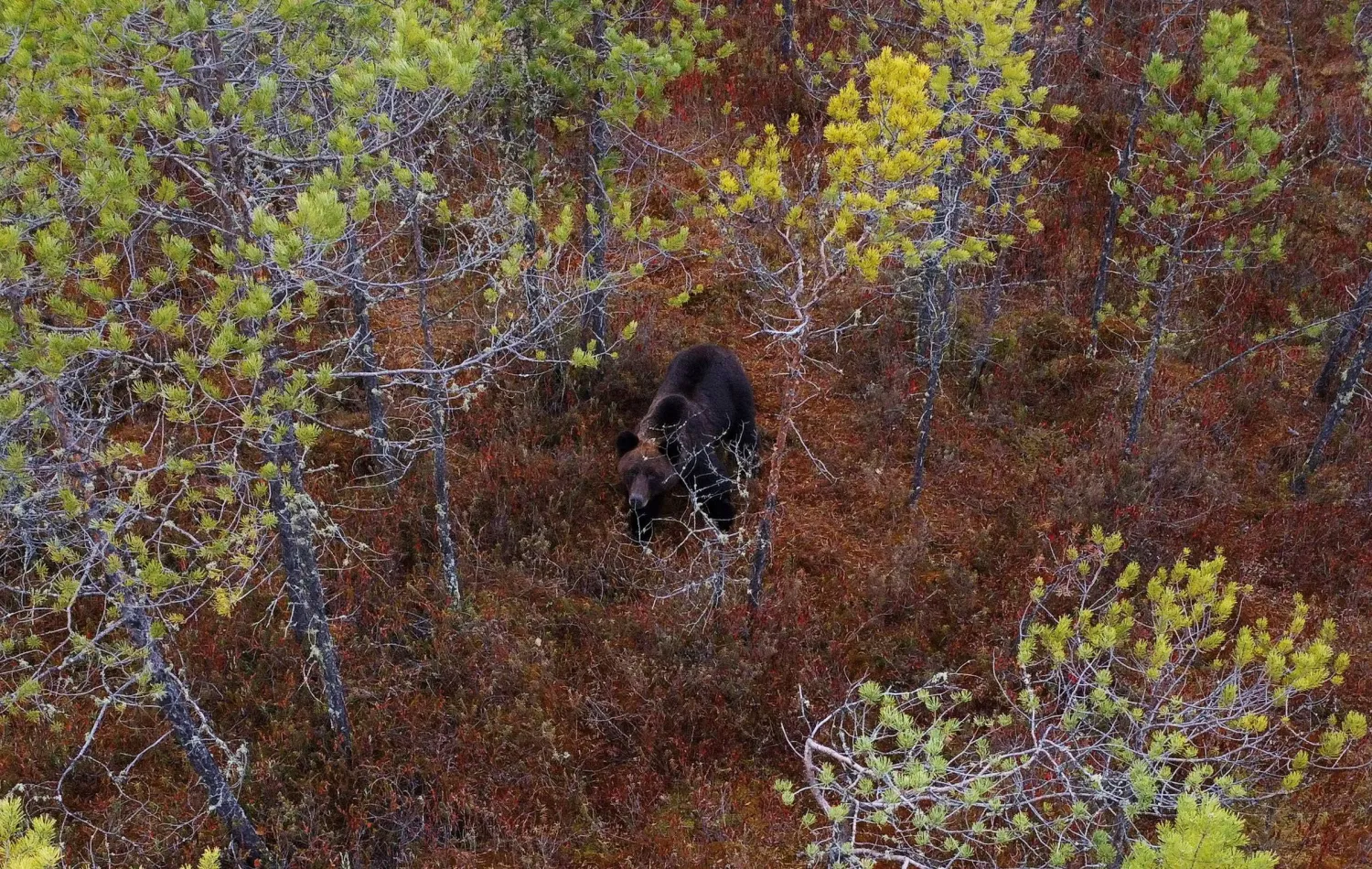
A drone view of a bear in the Siberian taiga outside the settlement of Podtesovo, on the banks of the Yenisei River in the Krasnoyarsk region, Russia, September 27, 2026. REUTERS/Vladislav Nekrasov
TT

Siberian Hunters Declare Open Season on Bears after Spate of Deadly Attacks

A drone view of a bear in the Siberian taiga outside the settlement of Podtesovo, on the banks of the Yenisei River in the Krasnoyarsk region, Russia, September 27, 2026. REUTERS/Vladislav Nekrasov

A brown bear bounds across the Siberian taiga before two hunters close in on their prey. Three shots ring out and the bear quickly drops dead in the long grass.

Cradling his rifle as he rests his hand on the dead animal's fur, hunter Mikhail Kondakov says he and others have heeded requests from residents in the nearby settlement of Podtesovo after a fatal bear attack on local women.

"The bear situation in the settlement is very difficult at the moment," Kondakov told Reuters.

"Bears have increasingly been coming directly into the settlement. This year we had a tragedy — two women who went mushroom picking were killed by a man-eating bear. We decided to start hunting bears because there are so many of them."

The problem is nationwide. The Russian government said last month it was drawing up urgent measures to control the population of brown bears that has spiraled out of control in some regions, with at least 22 people killed in attacks since this spring, according to state media.

The population of brown bears has more than doubled in the last three decades to 308,000 according to government data, in part due to shorter and milder winters.

Experts ⁠cited in Russian ⁠media have said bears have been forced to look further afield for food this year because an early and dry spring meant there was a lack of berries for them to feed on. People have also been blamed for leaving food waste out in the open where it attracts bears and for ignoring safety rules.

In Krasnoyarsk, the Siberian region where Kondakov is hunting and which is home to nearly 27,000 bears, investigators said last month that they had opened a criminal case into the local environment ministry, accusing it of failing to keep bear numbers under control, negligence which they said had led to the deaths of seven people in September alone.

In Podtesovo, a settlement of around 3,500 people perched on the right ⁠bank of the River Yenisei, a simple wooden cross stands on the grave of Zoya Gubanova along with a color photograph of the late pensioner. Gubanova, 67, was killed on August 31 in a bear attack while out gathering mushrooms, a popular Russian pastime.

Chatting outside her wooden house, Yulia Markova, a local resident, says the situation has become intolerable.

"We have been living in fear for almost two months now, we cannot even go out for a walk in the evening. People are afraid to let their children go out alone. This is not a cuddly toy, it is not some soft, harmless teddy bear. It is a wild animal. And who knows what its intentions are, what kind of mood it is in when it comes here. Maybe it is simply curious, or maybe it is looking for its next victim," she said.

Markova said that locals, like bear attack victim Gubanova, had not fully understood the danger posed by bears and that people had initially felt sorry for them because they clearly did not have enough nuts and berries to eat this year.

But she said hearts ⁠had hardened after the bears ⁠started coming into the settlement in large numbers.

"We have never seen an invasion like this before," said Markova.

Watching her daughter relax at the local playground, pregnant mother Valeriya Efremova said heightened bear activity had changed locals' lives.

"When the bears started coming out of the forest, we restricted outings as much as possible, even to the park. It was really frightening because bears were even coming into the park where children play. Going out after dark was absolutely out of the question. Even now, although the number of sightings seems to have fallen, at least according to the information we have, you still walk around looking over your shoulder," she said.

Nikolai Zhilinsky, another local, said people were waiting for the weather to get colder and for the bears to hibernate, but he said people would still be worried even when that happened.

"We are not sure that all of the bears will hibernate. There are too many of them and they are hungry," he said. He was afraid to go fishing in his boat in case he was attacked by a bear, he added.

Vladimir Vagin, another local, said people feared they could be attacked in their own gardens. He pointed to an area near a raspberry bush in his own garden where he believed a bear had been.

Driving through the settlement after dark, he noted how empty the streets were.

"People don't go out because they are afraid," he said.


Failure to Fit Tags Left 5,000 Offenders Unmonitored in England and Wales, Report Finds

More than 5,000 people who should have been monitored were not tagged (AP) 
TT

Failure to Fit Tags Left 5,000 Offenders Unmonitored in England and Wales, Report Finds

More than 5,000 people who should have been monitored were not tagged (AP) 

More than 5,000 offenders went unmonitored in the first half of the year because electronic tags were not installed, while 1,600 tags had no signal for more than two weeks due to faults, a report published by The Guardian has found.

The Institute for Government (IfG) has revealed the full scale of the crisis in the probation system in England and Wales, concluding that “rationing probation supervision” due to a lack of staff meant sentences imposed by the court had become “essentially a fiction” for most offenders.

Once the 2026 Sentencing Act – which reduces the release point for many sentences – is fully implemented, most offenders will spend the final third of their sentence on license without any active supervision, the report said.

“This risks further undermining public trust in the criminal justice system and making sentences even more convoluted and opaque, including to victims,” the report by the independent thinktank found.

Cassia Rowland, the associate director at the institute and author of the report, said: “It’s hard to set out just how demoralized and unhappy a lot of probation staff are.”

“They feel everything is really chaotic, all of these changes are being flung on to them, they’re worried about their personal safety and the public protection risk of the people they’re managing,” she said.

Rowland also noted that, “The sentences courts are imposing are having less and less relevance to the time people are actually serving.”

She said the situation we have reached now is if you get given a six-year sentence, you are most likely going to be spending two years in prison, two years on probation and then two years with conditions that no one is monitoring or enforcing. “That’s just not a six-year sentence,” she said.

The report’s most scathing criticisms of the Probation Service included the electronic tagging of offenders, which the report found was “performing poorly and failing to meet demand.”

Between January and April, more than 5,000 people who should have been monitored were not tagged, equating to 15% of all people with an electronic tagging order.

Almost 1,600 people were wearing a tag that did not send a signal to the monitoring system for two weeks due to technical faults or the device not being charged.

The report highlighted how issues of this kind meant that not a single probation delivery unit inspected in 2024 or 2025 received a rating above “requires improvement,” and two-thirds were rated “inadequate.”

The report, based on public data and interviews with frontline staff, found as well as the increased risk to public safety, prisoners were also being let down, with little action taken to reduce reoffending rates.