

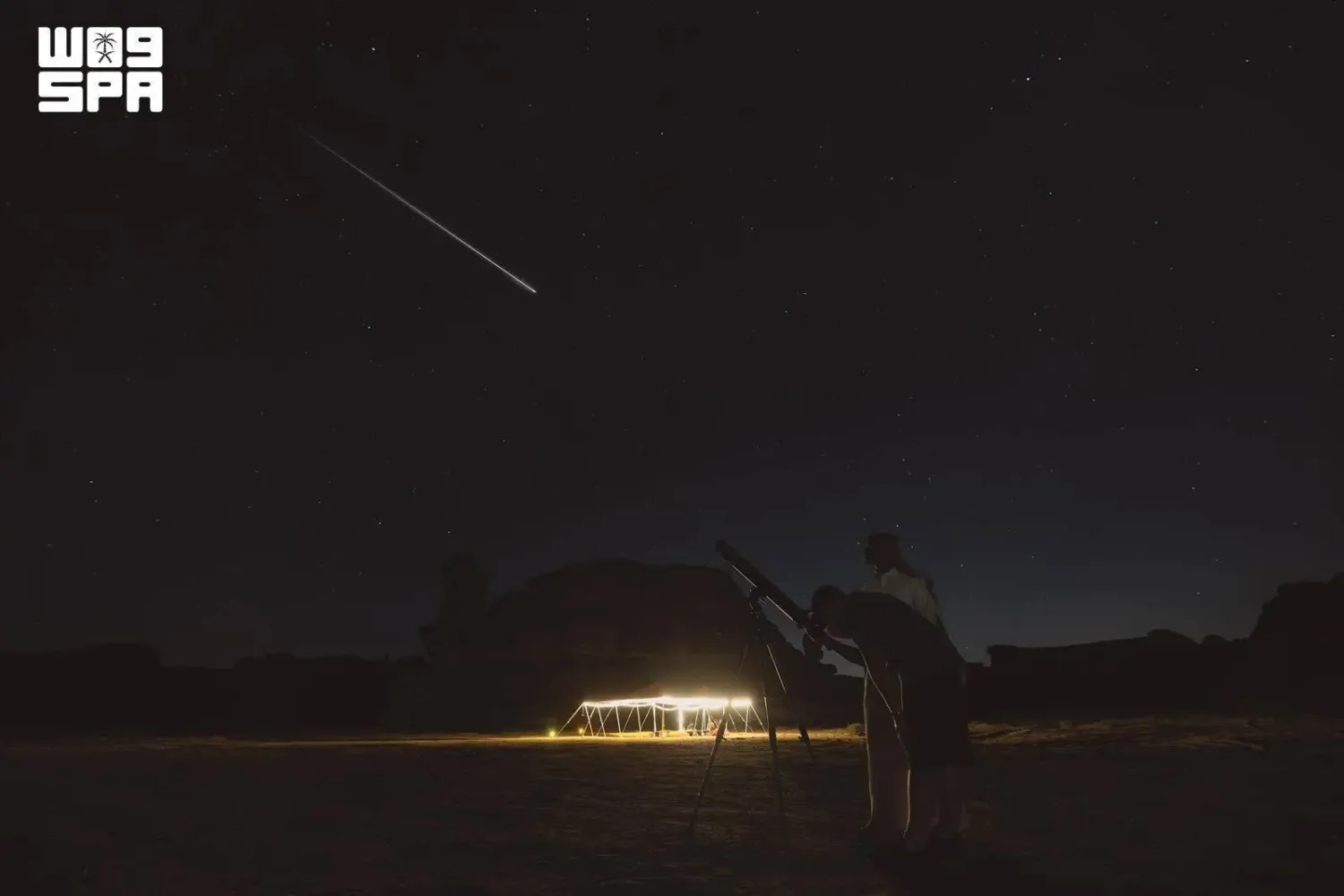

AlUla Skies 2026 Returns with Exceptional Celestial Experiences

The AlUla Skies Festival will take place from November 6-15. (SPA)
TT

AlUla Skies 2026 Returns with Exceptional Celestial Experiences

The AlUla Skies Festival will take place from November 6-15. (SPA)

Saudi Arabia’s AlUla Moments announced the return of AlUla Skies Festival, taking place from November 6-15, bringing 10 days of extraordinary experiences that celebrate the wonder of the skies. From hot-air balloons floating above the landscape at sunrise to immersive evenings beneath a canopy of stars, the festival offers visitors a spectacular new way to experience AlUla.

Designed as a celebration of nature, adventure, and astronomy, the event transforms AlUla’s dramatic desert landscapes into a destination for sky-inspired experiences, combining aerial adventures with cultural and entertainment programming, reported the Saudi Press Agency on Tuesday.

By day, guests can experience sunrise hot air balloon flights and aerial views over AlUla’s landscapes, while evenings will feature balloon glow shows, stargazing experiences, moonlight cinema, and wellness sessions, creating a unique blend of nature, culture, and immersive entertainment.

Timed to coincide with a period of moonless skies from November 7-12, with the New Moon on November 9, the 2026 edition offers ideal conditions for observing faint celestial objects. The festival will also coincide with the Leonid Meteor Shower on November 15, when visitors could see up to 20 meteors per hour with minimal moonlight interference.

As AlUla continues to grow as a leading destination for nature-based and experiential tourism, the festival offers visitors a chance to reconnect with the night sky and experience the landscapes from entirely new perspectives.

Among the headline moments of this year’s program is AlUla Skyrise, where guests can join a shared sunrise hot air balloon flight, rising above the landscapes of AlUla. The experience operates daily throughout the festival, with flights taking place from approximately 6:00-7:00 am, following early-morning transfers, briefing and boarding. Guests will also be served Saudi coffee and dates before take-off, with refreshments provided following the flight.

Visitors can also enjoy the Hot Air Balloon Glow Show, taking place at Hegra on November 6 and 7 and at Elephant Rock on November 13 and 14. The evening spectacle combines illuminated hot air balloons with music, lighting, projection, fire performers, and aerial trapeze artists, culminating in a choreographed grand finale.
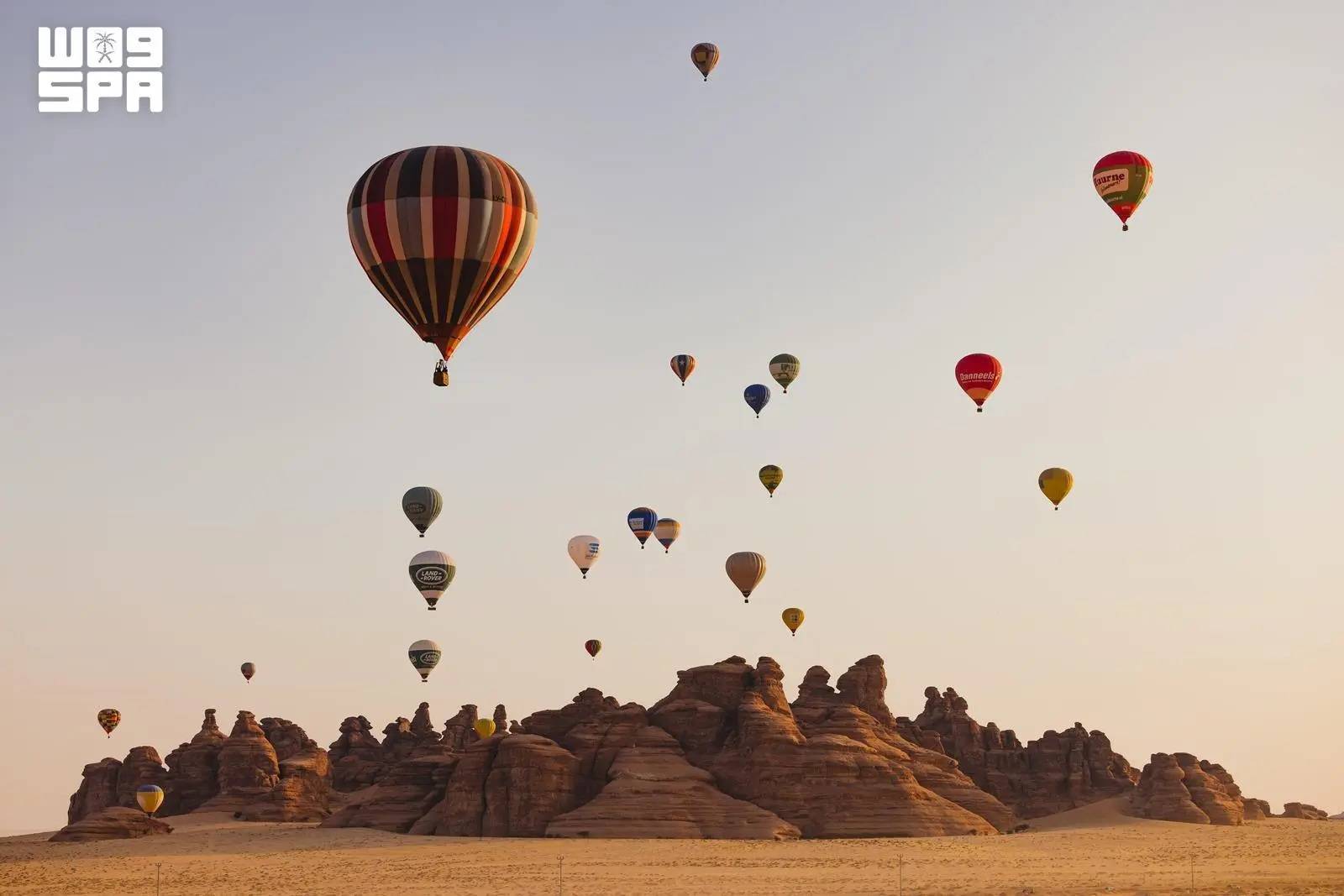
Guests can join a shared sunrise hot air balloon flight, rising above the landscapes of AlUla. (SPA)

For those seeking a more accessible option, the Tethered Hot Air Balloon Experience offers gentle ascents with panoramic views of AlUla’s landscapes, making it ideal for families, first-time visitors, and photography enthusiasts. Payment is available on-site, with no advance booking required.

The festival will also feature VOX Moonlight Cinema at Our Habitas AlUla, across the 10-day program, with screenings scheduled throughout the festival.

For astronomy enthusiasts, the Stargazing at AlUla Fort experience will operate on November 6, 7, 10-12 and 13-15 from 19:00-23:00. The experience will feature five telescopes focused on planets and constellations, alongside guided observations led by a trained astronomer and a Rawi, who will provide cultural and storytelling context.

The 2026 program will also introduce Sunset Stillness wellness experiences at Our Habitas AlUla, featuring Guided Meditation, Sound Immersion and Conscious Connected Breathwork, taking place on November 13 and 14 from 17:00-18:00.

AlUla Skies Festival will bring stargazing experiences and hikes under the stars with Husaak, all set against AlUla’s sandstone mountains, canyons and heritage sites. With the festival taking place during a period of moonless skies, visitors can experience a range of daytime and night-time activities against AlUla’s dark desert skies.

The festival also highlights AlUla’s designation as the region’s First Dark Sky Park destination, with four areas officially designated as International Dark Sky Parks by DarkSky International, including AlGharameel Nature Reserve, Sharaan National Park and Wadi Nakhlah Nature Reserve. Together, these protected areas reinforce AlUla’s commitment to preserving its natural environments, reducing light pollution, while promoting sustainable tourism and offering visitors some of the region’s best stargazing conditions.

AlUla Skies Festival forms part of the AlUla Moments calendar, a year-round program celebrating art, culture, heritage, nature and adventure, and reinforces AlUla as a leading global destination for experiential travel.



Military Shows to be Featured at Saudi International Falcons and Hunting Exhibition 2026

The exhibition will welcome visitors daily from 2 p.m. to 11 p.m. - SPA
TT

Military Shows to be Featured at Saudi International Falcons and Hunting Exhibition 2026

The exhibition will welcome visitors daily from 2 p.m. to 11 p.m. - SPA

The Saudi International Falcons and Hunting Exhibition 2026, scheduled for October 1 to 10 in Malham, north of Riyadh, will feature military shows presented by the Ministry of Interior among the accompanying events, adding a new element to the program.

The exhibition will allow visitors to watch the military shows at 4:30 p.m. and 7 p.m., while the band will perform at 6 p.m. and 8 p.m., SPA reported.

This year's exhibition will offer a wide range of experiences, including "Falconer of the Future," safari, mountain climbing, fishing, shooting, horseback and camel riding, auctions, and workshops, providing families, youth, and enthusiasts with a variety of options during their visit.

The exhibition will welcome visitors daily from 2 p.m. to 11 p.m.


Italy's Catania Airport Reopens as Etna Threat Downgraded

Visitors climb Mount Etna as smoke rises from its volcano in Catania, on the Mediterranean island of Sicily, on September 28, 2026. (Photo by Roman PILIPEY / AFP)
TT

Italy's Catania Airport Reopens as Etna Threat Downgraded

Visitors climb Mount Etna as smoke rises from its volcano in Catania, on the Mediterranean island of Sicily, on September 28, 2026. (Photo by Roman PILIPEY / AFP)

Italy's Catania airport resumed flights on Tuesday after briefly halting operations due to renewed volcanic activity from nearby Mount Etna and adverse weather conditions, in the latest stop-and-go disruption to air traffic.

According to Reuters, Operator SAC said ⁠flights to and ⁠from the airport had resumed with immediate effect after the volcanic alert level was lowered from red to ⁠orange.

The hub had previously suspended operations until 1300 GMT on Tuesday, only hours after ending a three-day shutdown on Monday evening.

The Sicilian airport, Italy's fifth-busiest by passenger traffic, is often disrupted by volcanic ⁠ash ⁠interference from Mount Etna, Europe's highest and most active volcano.

The latest shutdown affected thousands of passengers and placed significant pressure on other Sicilian airports, as airlines diverted flights away from Catania.


Scientists: Rising Seas Threaten Spread of Marine Invaders

An aerial view of fishermen returning from sea at the traditional fishing port in Banda Aceh, Indonesia, 29 September 2026. EPA/HOTLI SIMANJUNTAK
TT

Scientists: Rising Seas Threaten Spread of Marine Invaders

An aerial view of fishermen returning from sea at the traditional fishing port in Banda Aceh, Indonesia, 29 September 2026. EPA/HOTLI SIMANJUNTAK

Sea-level rise driven by climate change could help invasive marine species spread into newly flooded coastal areas, threatening biodiversity and some economic activities, researchers warned in a study published Monday.

The findings in Nature Ecology & Evolution highlight the links between the climate and biodiversity crises, with global warming altering ecosystems and creating new opportunities for non-native species to thrive.

That could "potentially expose ecosystems and human activities that have not previously been affected by these species," said study co-author Xuan Liu of Beijing Normal University.

The researchers modelled the potential future spread of 122 established non-native marine animals, including fish, crustaceans, molluscs and sea stars, under different climate and sea-level scenarios.

Climate change causes sea levels to rise through thermal expansion -- ocean water increases in volume as it warms -- and the melting of glaciers and ice sheets.

Global sea levels are projected to rise by about 20 centimeters (eight inches) by 2050 and 56 cm by 2100 under a scenario of moderate growth in greenhouse gas emissions.

That would see around 360,000 square kilometers (139,000 square miles) of coastal land flooded by mid-century, rising to 550,000 square kilometers by the end of the century.

More than two-thirds of the newly flooded coastal land -- roughly 290,000 to 470,000 square kilometers -- could become suitable for the marine non-native animals studied, particularly around estuaries at mid-latitudes, AFP quoted the authors as saying.

The risk is concentrated in regions including the eastern United States, Gulf of Mexico, North Sea, Gulf of Guinea, Arabian Gulf, northern Bay of Bengal, southeastern China and northern Australia.

Several species examined are already established in Europe, including the Pacific oyster, Atlantic blue crab and the veined rapa whelk, a predatory sea snail.

"Estuaries are particularly at risk because they are directly connected to the ocean and are also major hubs of human activity," Liu said.

Such areas could provide stepping stones for marine invaders moving further inland as the sea advances, the study said.

The findings come as governments prepare for two UN-backed international summits on the twin biodiversity and climate crises: COP17 in October and COP31 in November.

A global assessment by the UN's expert scientific panel on biodiversity, IPBES, estimated that economic costs from biological invasions exceeded $423 billion in 2019.