As Species Decline, Green Turtles Offer Glimmer of Hope

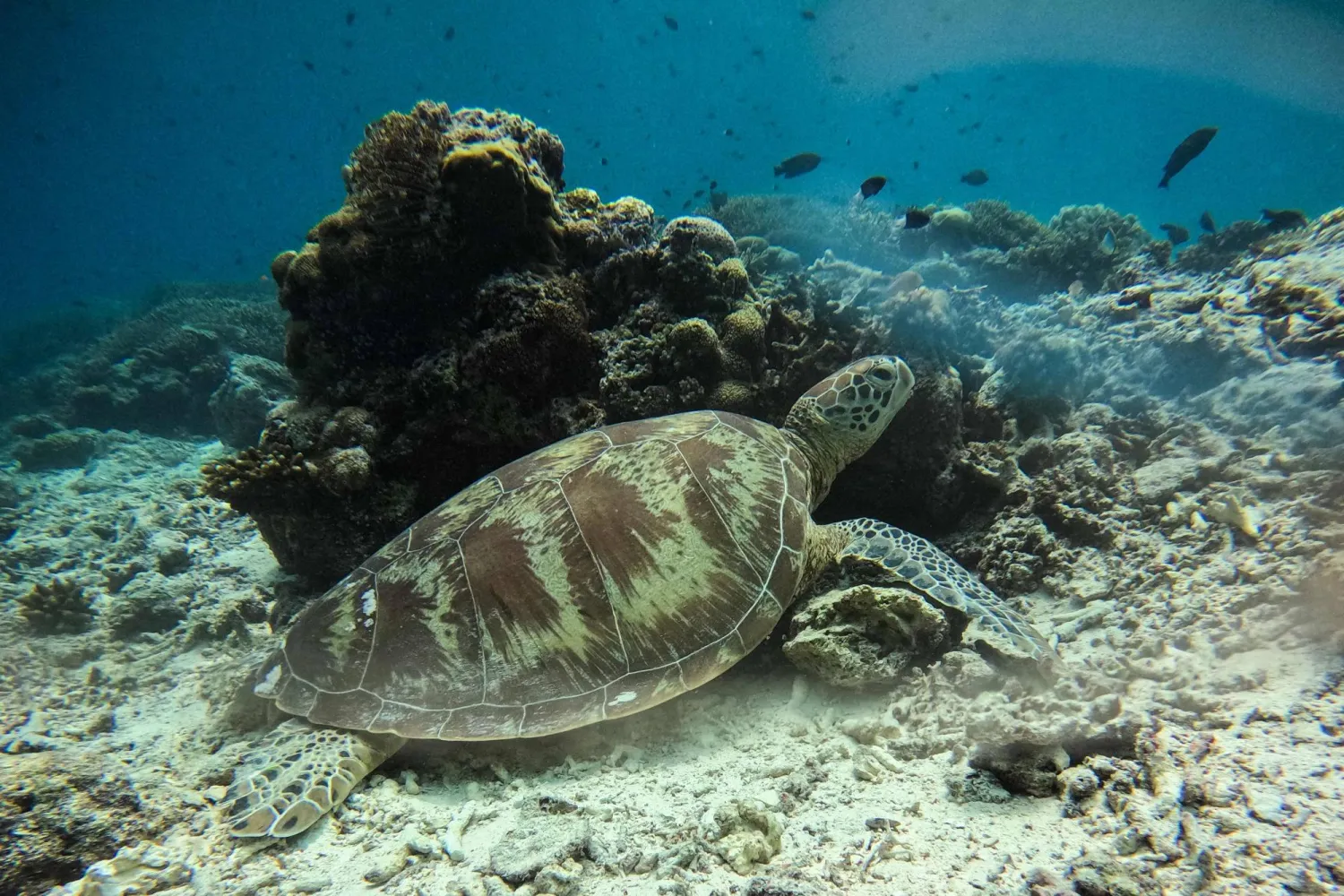
This underwater photo taken on September 25, 2026 shows an endangered adult green sea turtle resting on the sandy seabed next to a coral reef formation off the coast of Mataking Island in Semporna, in Malaysia's eastern state of Sabah. (Photo by SAI AUNG MAIN / AFP)
TT

As Species Decline, Green Turtles Offer Glimmer of Hope

This underwater photo taken on September 25, 2026 shows an endangered adult green sea turtle resting on the sandy seabed next to a coral reef formation off the coast of Mataking Island in Semporna, in Malaysia's eastern state of Sabah. (Photo by SAI AUNG MAIN / AFP)

The palm-sized green turtle hatchling flailing through the sand on a Malaysian island may seem vulnerable, but its species has emerged as a symbol of hope for wildlife conservation.

Green turtles have made the rare jump from endangered to "least concern" in global conservation rankings, a remarkable success when many species are declining.

Conservation NGO World Wildlife Fund (WWF), in its biannual Living Planet Report released Thursday, found a 73-percent decline in the average size of monitored wildlife populations over 53 years.

But around 50 percent of the thousands of vertebrates monitored for the report are stable or increasing.

That includes green turtles, thanks to decades of efforts including egg relocation, marine protection and trade bans.

Malaysian turtle expert Juanita Joseph has spent years on the frontlines, carrying out cutting-edge genetic research and even convincing her own father to stop eating turtle eggs.

Still, when the International Union for the Conservation of Nature last year announced green turtles were no longer endangered, she could hardly believe it.

"Never in my mind (did I think) that one day turtles can be 'least concern'. I cried... I said I've done my part," she told AFP at Universiti Malaysia Sabah, where she is a professor.
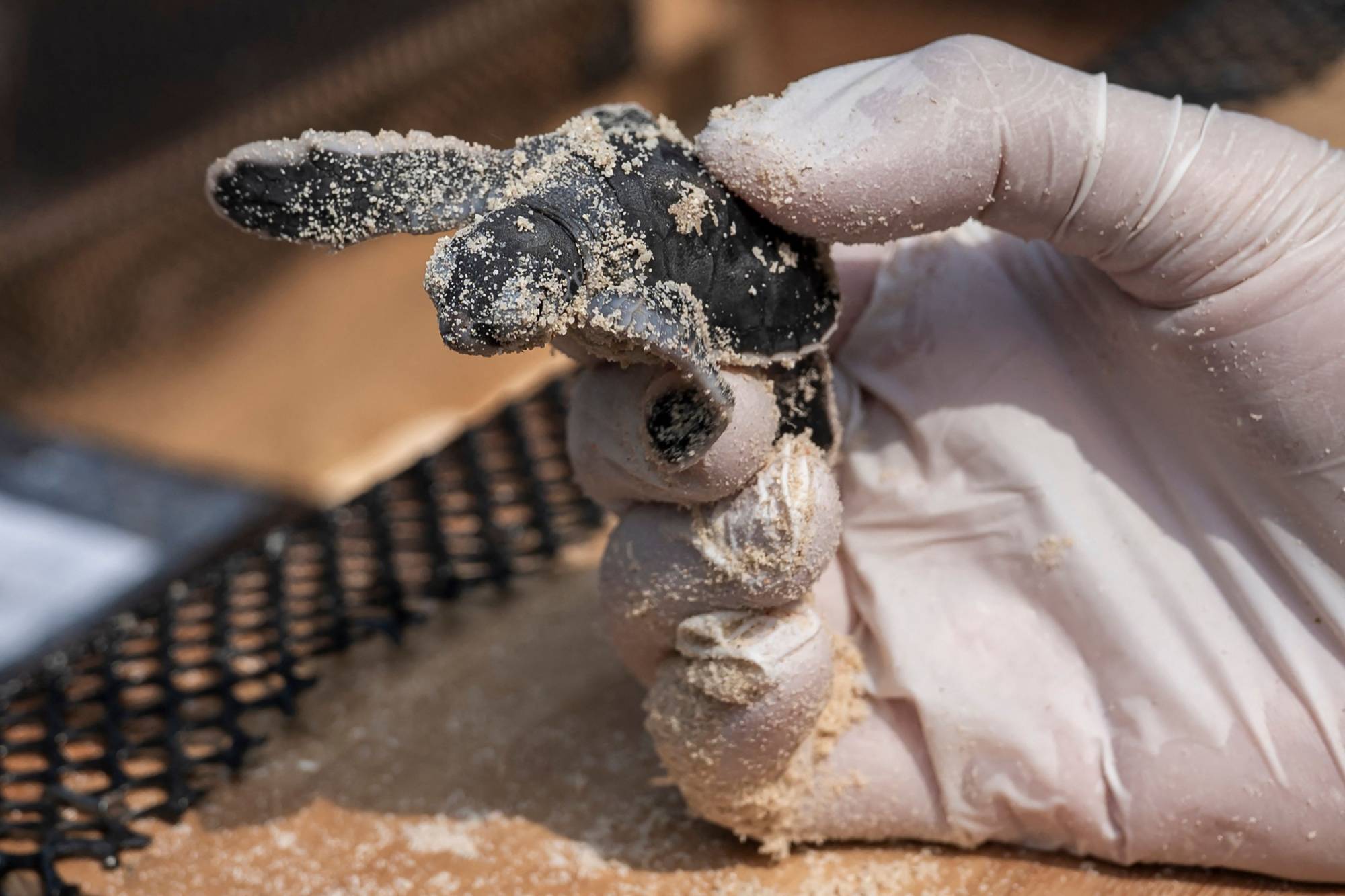
This photo taken on September 24, 2026 shows a conservationist holding a green sea turtle hatchling on Mataking Island, off Semporna in Malaysia's eastern state of Sabah. (Photo by SAI AUNG MAIN / AFP)

All six other sea turtle species are still vulnerable or critically endangered, apart from the flatback turtle, whose status is unclear because of data shortages.

Turtles are targeted for food and their shells, killed in fishing nets, and constrained by development and pollution at nesting beaches and feeding grounds.

Climate change also skews populations more female because heat determines sex development in eggs.

Even now, recovery is uneven. While green turtles globally are "least concern", some regional populations are still endangered and declining.

- 'Our heritage' -

Malaysia is something of a regional exception. Green turtle nesting at Sabah state's Turtle Islands has tripled since the 1970s to over 20,000 nests annually.

That reflects "over five decades" of work, said Sabah Parks director Maklarin Lakim.

The Turtle Islands have been protected since 1977, and Sabah banned turtle meat and egg consumption in 1997.

"This is our heritage, this is our biodiversity," Maklarin said.

"We would like to protect that as long as possible."

Much of the conservation success has relied on people like Sitti Rasah Abdul, 50, from a fishing community on Malaysia's Omadal island.

Since 2012, she and other members of a women's cooperative have relocated turtle eggs from beaches to a hatchery to protect them from predators and poachers.
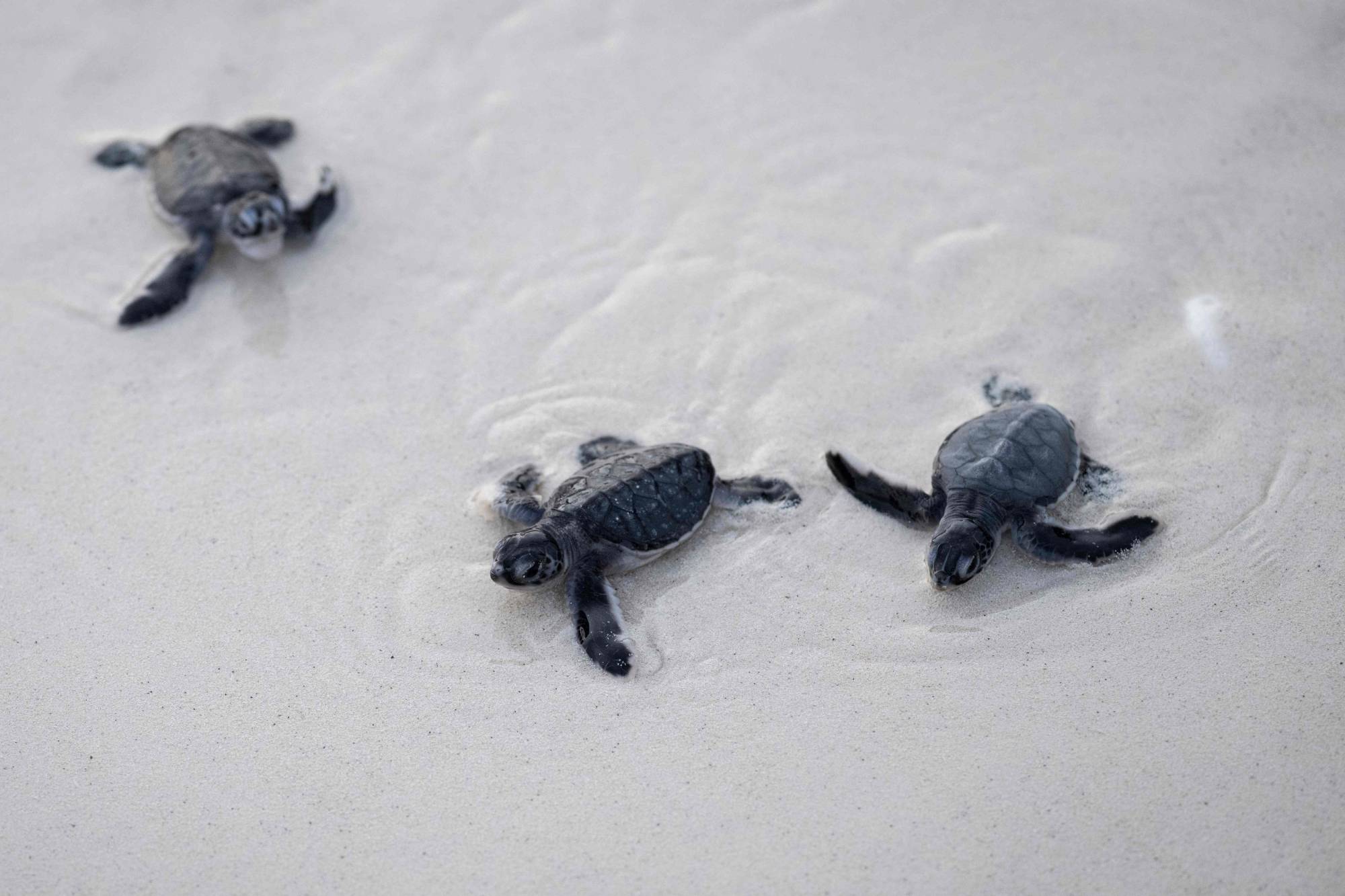
This photo taken on September 25, 2026 shows newborn green turtles crawling across a sandy beach towards the sea after being released from a wildlife protected area on Mataking Island, Semporna, in Malaysia's Sabah region. (Photo by SAI AUNG MAIN / AFP)

The 20-strong team started conservation work with WWF, but now self-funds, ploughing 10 percent of revenue from their handicraft and catering business into turtle protection.

"I'm already old," said Rasah, on the wooden jetty that extends from her home into aquamarine seawater.

"But I feel a sense of responsibility to ensure that there are still turtles around for the next generation."

A 45-minute boat ride away, green and hawksbill turtle hatchlings emerged from relocated nests in a hatchery at the high-end Mataking Reef Resort.

Hotel owner Sophia Sie fell in love with turtles decades ago when her father acquired land on Mataking island, and now around 10 percent of her staff works on conservation.

In 2006, "we had about 600 eggs collected... today we have about 36,000 eggs," Sie told AFP.

Guests can release hatchlings, and while Sie considers conservation a passion, it is also good business.

"The survival of our business here is very much dependent on the natural resources and the beauty around us," she said.

- 'Long-term project' -

The hatchlings tipped from a basket onto a Mataking beach face long odds. Just one in 1,000 will survive to sexual maturity at 20 years old.

Hatchlings spend around a decade in the open ocean, a period sometimes called the "lost years" because scientists know so little about it.

Working out where turtles spend those years, and where they forage and reproduce, is key to sustaining conservation success, said Gavin Jolis, marine species strategy manager at WWF-Malaysia.

The NGO has created the world's first global turtle DNA database, Shellbank, using samples from turtle tissue and shells to trace populations and even target poachers.

"In order to save sea turtles, we have to look at the life cycle," said Jolis.

"That's where the genetic work comes in."

The neat rows of test tubes in Joseph's lab contain bits of hatchling flipper snipped from babies that did not survive.

Sequencing them reveals a turtle's "haplotype", a kind of genetic fingerprint.

The work has already helped show that turtles foraging in parts of Malaysia come from Micronesia, and identified the likely source of turtle shell intercepted in Britain.

While each conservation effort faces different challenges, the battle to protect green turtles teaches "to really be resilient and patient with the work", said Jolis.

"We should not look at just a short-term project, it's a long-term project."


UN Reports Warn of Large-Scale Damage to Earth’s Ice from Climate Change

Melting of glaciers and sea ice, the thawing of permafrost and the accelerating rise in sea levels, will have widespread repercussions, from flooding to water shortages. (AFP)
TT

UN Reports Warn of Large-Scale Damage to Earth’s Ice from Climate Change

Melting of glaciers and sea ice, the thawing of permafrost and the accelerating rise in sea levels, will have widespread repercussions, from flooding to water shortages. (AFP)

Exceeding 1.5C of global warming will have "irreversible" consequences for glaciers, sea ice and the Earth's frozen regions, two UN reports warned on Monday, calling for urgent action.

The landmark 2015 Paris Agreement commits the world to limiting warming to well below 2C and pursuing efforts to hold it at 1.5C to try to avoid the worst effects of climate change.

One of the reports said overshooting the 1.5C target "will bring large-scale and in many cases irreversible impacts" for the cryosphere -- Earth's ice in all its forms.

Melting of glaciers and sea ice, the thawing of permafrost and the accelerating rise in sea levels, will have widespread repercussions, from flooding to water shortages.

Some of the effects of the rise in temperature are already visible, such as the 20-percent loss in glacial mass in Switzerland.

But even if the 1.5C target remains relevant, it is already too high for the cryosphere, as current levels of warming were "already unsafe" for the Arctic, Antarctic, mountain glaciers and polar oceans, the UN warned.

"Although returning to 1.5 C will slow ice loss, a truly 'safe' temperature for Earth's ice is now thought to be closer to 1C or even below over the coming centuries," it added.

Global warming has already reached 1.37C above pre-industrial levels and according to the European Copernicus network, the 1.5C threshold could be exceeded around 2030.

"There are no good outcomes in exceeding 1.5C," said glaciologist James Kirkham, lead author of one of the reports, entitled "Overshoot and the Cryosphere", which was written with 80 scientists.

"To contain the global fallout and damage from ice loss in the world's polar and mountain regions, overshoot needs to be kept to the absolute minimum," he said.

"Every extra fraction of a degree and every year spent in overshoot means more devastating impacts."

- Urgency -

Scientists warn in particular about the risks of crossing certain tipping points and say that, even if temperatures were to return to below the 1.5C threshold, recovery would be very slow.

Reducing warming to under 1.5C and even 1C could see some glaciers partially regenerate, while there could also be benefits for sea ice.

But Matthew England, an oceanographer and climatologist at the University of New South Wales in Australia, said recovery could take "decades to centuries".

The second report -- "State of the Cryosphere 2026. The Cost of Overshoot" -- shows that exceeding 2.8C into the next century would have significant consequences.

Sea levels could rise by up to five centimeters a year by 2150, compared to the current 0.45 centimeters while the thawing of permafrost could release as much carbon dioxide each year as the United States, the world's second-largest polluter.

A worst-case but not-so-improbable scenario is that the world is heading towards warming of 2.6C by 2100 even if countries meet their climate commitments.

"Temporarily exceeding 1.5C does not mean that the goals of the Paris Agreement are irrelevant but instead makes them more urgent," argued Kirkham.

"Returning to 1.5C or below by 2100 remains possible with sufficient political ambition and urgency, specifically by speeding the transition away from fossil fuel use to reach net zero by mid-century," he said.

"Such urgent action can prevent and even reverse some cryosphere loss."

Gunjan Silwal, a Nepali glacier researcher, said decisions made in the next few years "will lock in the scale of the damage", warning that August's mountain and glacier collapse that killed more than 1,400 and left over 5,000 missing, was "only a foretaste".


Challenging Scientific Assumptions: Blood Remnants Found in 115-Million-Year-Old Dinosaur Bones

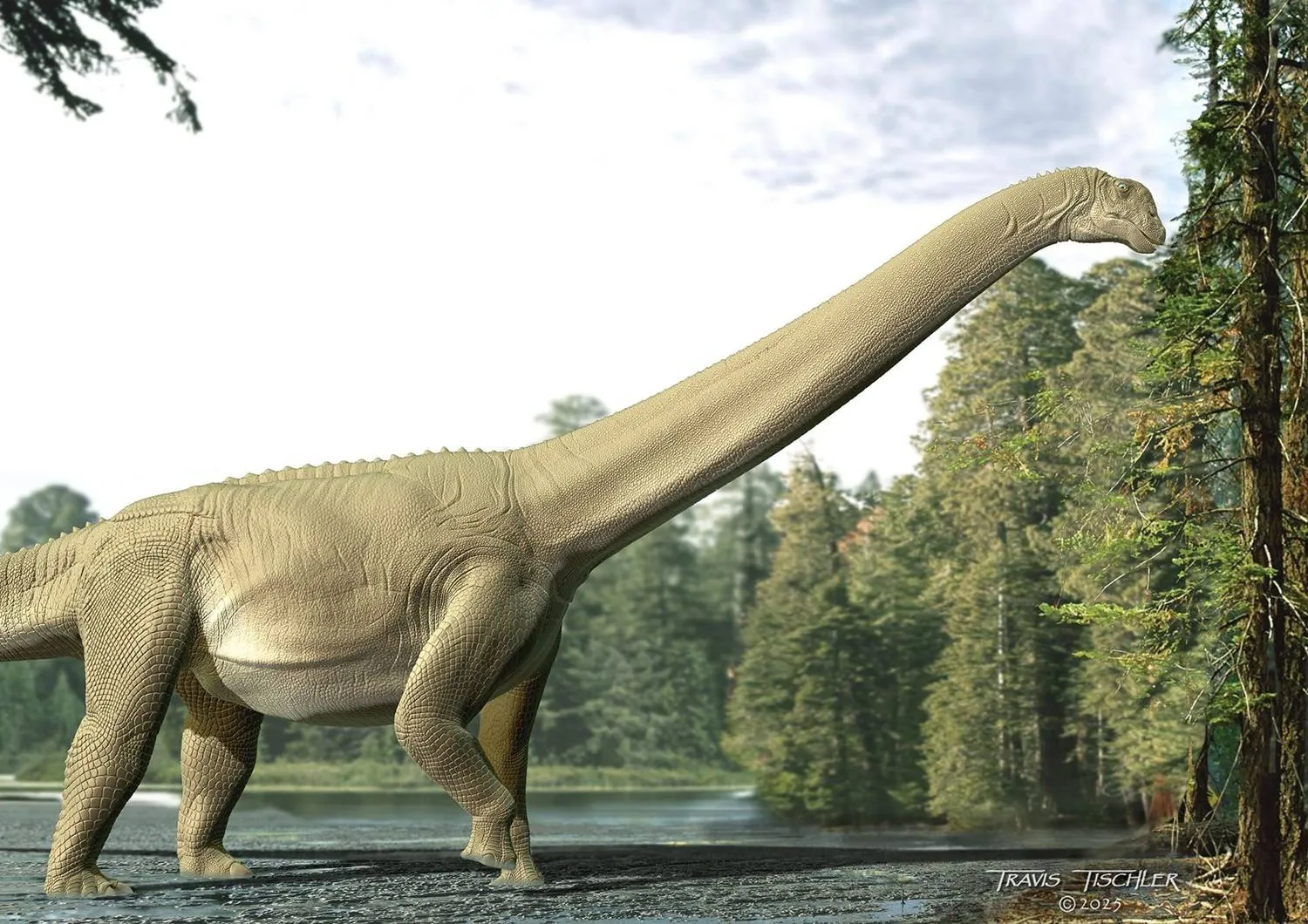
An artist's impression of a giant dinosaur (Curtin University, Australia)
TT

Challenging Scientific Assumptions: Blood Remnants Found in 115-Million-Year-Old Dinosaur Bones

An artist's impression of a giant dinosaur (Curtin University, Australia)

An international research team has discovered fossilized red blood cells, hemoglobin-derived biomolecules and amino acids from collagen protein inside the bones of a dinosaur that lived approximately 115 million years ago in Brazil. The unprecedented discovery opens new avenues for studying ancient life and challenges existing assumptions about how long fossils can preserve their biological components.

The researchers, led by Australia's Curtin University, said the remains were discovered inside the limb bones of a theropod dinosaur known as Aratasaurus museunacionali, whose fossils were found in northwestern Brazil. The findings were published Monday in the journal Proceedings of the National Academy of Sciences (PNAS).

Analyses revealed large numbers of preserved red blood cells within the bones' vascular canals. For the first time, researchers were able to establish the presence of hemoglobin-derived chemical compounds inside these cells by detecting heme, the component of hemoglobin responsible for binding and transporting oxygen.

The finding provides confirmed chemical evidence of fossilized blood remnants, unlike previous studies that identified structures resembling red blood cells in fossils but could not conclusively establish their chemical nature.

The discovery surprised researchers because the preservation of delicate biological components, such as red blood cells and hemoglobin molecules, over 115 million years challenges scientific assumptions about how long these materials can survive degradation.

The researchers described the identification of heme-derived molecules within red blood cells of such extraordinary age as a remarkable discovery and a significant milestone in paleontology.

They added that the findings not only expand the fossil record of blood remnants but also provide a direct molecular window into the physiological characteristics of extinct animals, helping scientists better understand their biology and the environments in which they lived.

The study explained that the red blood cells had been mineralized by hausmannite, a mineral that acted as a natural time capsule, helping stabilize cellular structures and biological components, including amino acids associated with collagen protein, and protecting them from degradation over millions of years.

Researchers believe this exceptional preservation resulted from the dinosaur's carcass being rapidly buried after death in a low-oxygen environment rich in microorganisms. These conditions may have helped preserve the biological components within the bones.

The researchers said the findings challenge long-standing scientific assumptions that biomolecules such as hemoglobin could not survive over extended geological timescales.

They also open new avenues for investigating the evolution of blood and metabolic processes, potentially offering insights into the activity levels of ancient animals.

According to the team, the study redefines the limits of molecular preservation across vast periods of time, even under harsh environmental conditions.

The findings may also have implications for astrobiology, potentially helping scientists develop methods to search for evidence of ancient life beyond Earth.


Charles Left without Umbrella in Rainstorm Fit for a King

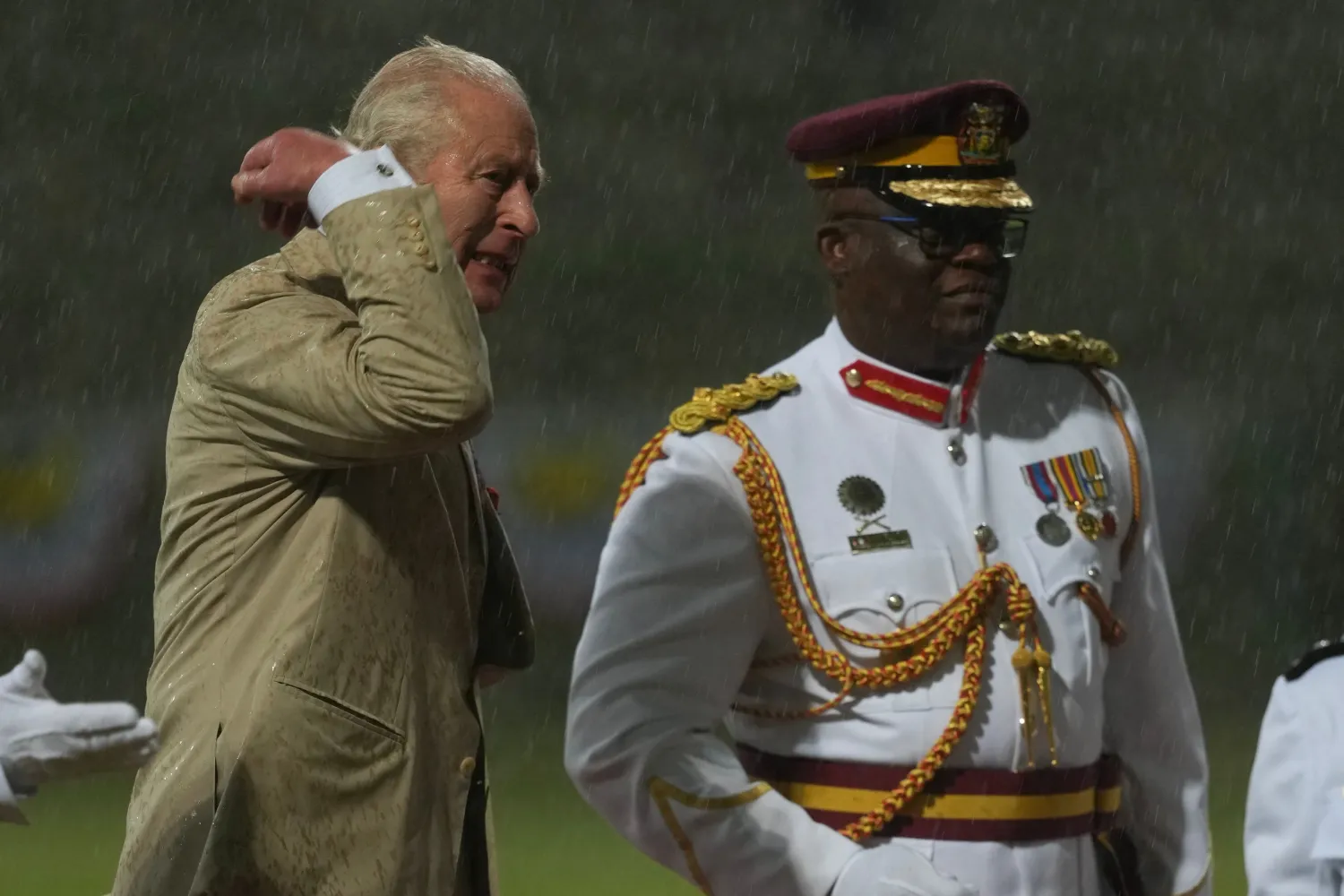
Britain's King Charles III arrives alongside Chief of Defense Staff, Brigadier General Telbert Benjamin in the rain for a military parade marking Antigua and Barbuda's 45th Independence anniversary at the Sir Vivian Richards Stadium, Antigua and Barbuda, on November 1, 2026. (AFP)
TT

Charles Left without Umbrella in Rainstorm Fit for a King

Britain's King Charles III arrives alongside Chief of Defense Staff, Brigadier General Telbert Benjamin in the rain for a military parade marking Antigua and Barbuda's 45th Independence anniversary at the Sir Vivian Richards Stadium, Antigua and Barbuda, on November 1, 2026. (AFP)

King Charles flung up his hands in despair as he was caught in a tropical rainstorm in Antigua, while his wife Queen Camilla strolled off with the only available umbrella.

The couple's Caribbean tour has been dominated by the debate over Britain's role in the slave trade, but it was the sight of the soaked monarch which made headlines on Sunday.

As the rain hammered down on Charles, ‌77, he ‌was seen gesturing and turning round to ‌try ⁠to attract the ⁠attention of someone who might help, while Camilla was shielded from the downpour.

Locals taking part in the Antigua and Barbuda independence day parade did not flinch as they were lashed by the storm.

Charles was eventually given an umbrella and was seen joking about ⁠his experience with Prime Minister Gaston ‌Browne. "I think I'm about to ‌grow watercress on my suit," he said in a ‌video posted on the royal family's Instagram account.

It ‌is not the first time the frustration of the famously short-fused Charles has been captured in public.

Not long after he became king in 2022 in an incident which went ‌viral on social media, he reacted grumpily when a pen leaked ink onto ⁠his ⁠hand at an event in Northern Ireland.

"Oh God, I hate this," he cursed.

"I can't bear this bloody thing... every stinking time," he continued.

He has since made fun of himself, quipping at a subsequent event, "I'm hoping that my pen is going to work. It doesn't usually."

He is due to make a speech to Commonwealth leaders on Tuesday. Since becoming king, he has expressed sorrow for the suffering caused by slavery without crossing a line that Britain has long resisted: an apology.