



Cracking a Smile Regularly May be Good Not Just for Your Mood but for Your Health

FILE - A fan attends the performance by American singer Jon Batiste at the Rock in Rio music festival in Rio de Janeiro, Sept. 7, 2026. (AP Photo/Bruna Prado, File)
TT

Cracking a Smile Regularly May be Good Not Just for Your Mood but for Your Health

FILE - A fan attends the performance by American singer Jon Batiste at the Rock in Rio music festival in Rio de Janeiro, Sept. 7, 2026. (AP Photo/Bruna Prado, File)

Reminding yourself to smile often cannot only make more friendships but it can also make you feel better.

And rather than wait for a reason to smile, just making the physical change of literally turning that frown upside down could impact emotions, according to experts.

Research backs up the fact that smiling goes a long way.

Some older research has focused on this “facial feedback hypothesis,” according to Jeanne Tsai, a longtime psychology professor at Stanford University who runs the Culture and Emotion Lab. In one classic study in the late 1980s, researchers would have subjects put a pencil between their lips and adopt a smile or a frown while viewing a positive movie clip like a cartoon. Some subjects who smiled would feel the sensation of the smile more and be more amused.

“When we’ve done that demonstration in classes, it works,” Tsai said. “When you’re doing it in a room by yourself, you’re not doing it in a social interaction, maybe it’s making you remember, or it’s an effect of remembering some good thing that happened and that would put you in a better mood.”

At the Orange County Academy of Sciences and Arts in Southern California, the power of a smile is taken very seriously. An entire section on the charter school group’s website is dedicated to its philosophy that a smile can make a difference.

“Smiling creates a supportive classroom culture that makes students relaxed, active, and motivated,” according to the website. “It increases emotional well-being, lowers stress, and gives students confidence.”

How smiling can benefit health Dr. Judy Ho, a Los Angeles clinical and forensic neuropsychologist who also teaches at Pepperdine University, discusses smiling as a coping strategy with some patients suffering depression or anxiety.

“I'm not suggesting that that's the only way they can fix things,” Ho said. “It's just like another thing that you can add to your toolbox.”

Smiling can affect one's level of cortisol, a hormone the body releases partly to help regulate stress and mood, according to Ho. Smiling can affect brain chemicals that are associated with positive feelings including endorphins, dopamine and serotonin.

“People who smile during stressful tasks generally demonstrated lower heart rates during recovery than those maintaining neutral expressions,” Ho said. “Smiling also reduced aspects of the body's physiological stress response.”

The hope is if you smile enough, you will start feeling it emotionally.

“In some ways it's like a mediating effect,” she added.

The value of a smile varies culture to culture How smiling and even the openness of a smile are perceived are not universal. Tsai, the Stanford professor, has conducted research on how emotion in American culture puts value on trying to always feel positive and minimizing negativity and sadness. In East Asian cultures, emotion is more about balance.

“It’s like the positive and the negative emotions are braided together, and so you don’t want to feel too positive or too negative,” Tsai said. “You want more of a balance between the two.”

Her past studies also examined how European Americans and East Asians — including Taiwanese, South Koreans, Japanese and Hong Kong Chinese — look at a “neutral or a calm” smile versus a full-on grin. Subjects rated the differing facial expressions on warmth and trustworthiness. While some Americans saw the excited smiles as friendlier, some East Asians characterized those facial expressions as “emotionally unstable” or “unreliable."

“What kind of smile matters — whether it’s a calm, closed mouth smile more like the Dalai Lama or a big toothy excited smile like Julia Roberts,” Tsai said. “We’ve done some series of studies in Taiwan and other East Asian contexts. They don’t like the big, toothy, excited smile unless it’s really situationally appropriate.”

In Thailand — known as “The Land of Smiles” — smiling is embedded in the culture. There are nearly 30 Thai words for “smile.” Many teach-abroad programs where people can teach English as a foreign language in Thailand cite that smiling often with children and colleagues is key to showing respect, good manners and calmness.

At the OCASA charter schools, smiling is part of an effort to make children feel seen.

“I’ve always believed in wanting school to be a happy place for kids,” said RaNae Posey, principal of OCASA Capistrano Elementary School. “To actually help them form habits of looking at the bright side of things.”

Mandating smiles may lead to more frowns Women in recent years have smacked down the idea that they have to smile in the workplace while men do not. Smiling can feel like a Catch-22 for some women and sometimes for people of color who may be stereotyped as unapproachable or cold if they don’t smile enough.

Last year, retailer Target was ridiculed across social media for instituting a smiling policy. Workers had to smile and make eye contact if a customer was within 10 feet (3 meters) and personally greet them if they were within 4 feet (1.2 meters).

People do not like feeling like they have no “emotional autonomy,” according to Nicholas Coles, an assistant professor who runs the Social Science Collaboratory at the University of Florida in Gainesville.

“In those scenarios, what we find is that it’s more that you’re smiling your way to misery,” Coles said. “It’s only when it feels authentic and voluntary that I think it’ll have any real effect.”

With the holidays approaching, more people may have to muster smiles with family if sensitive topics like politics and religion come up. Those could be good times to see if smiling helps.

“If we were able to just smile and be like ’Look, this is somebody that historically cares about you and loves you,' maybe that would change the way that we respond to them even in a moment of tough conversation,” Ho said.

Egypt Recovers Remains of Napoleon's Sunken Fleet Off Alexandria

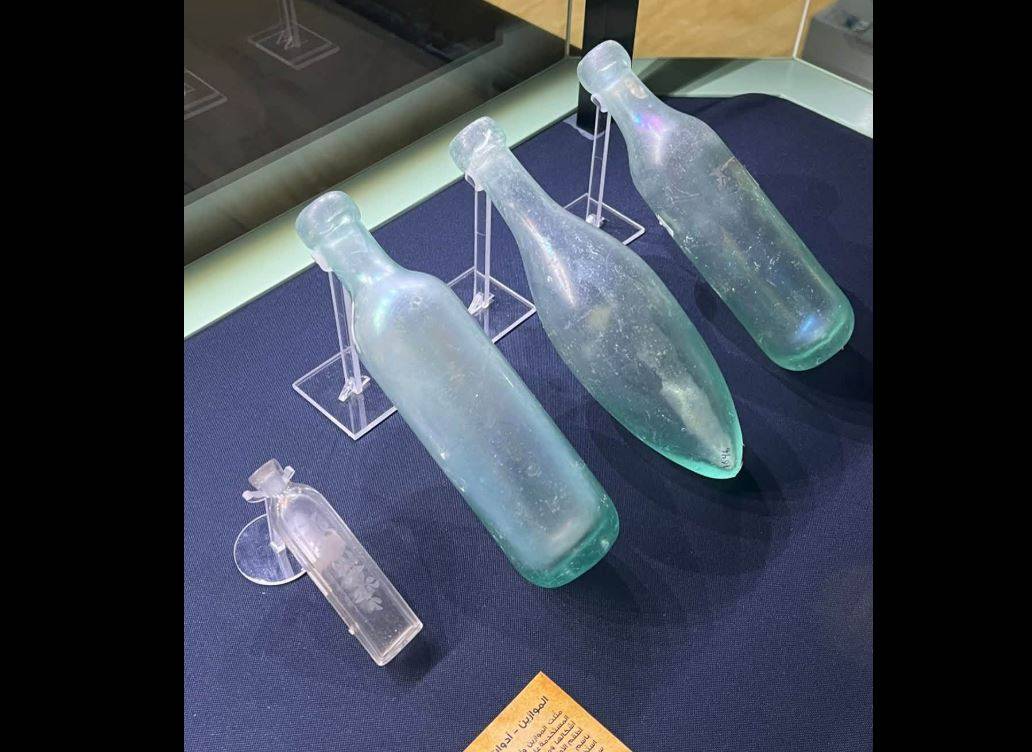
Tableware from Napoleon's sunken fleet (Egyptian Ministry of Tourism and Antiquities)
TT

Egypt Recovers Remains of Napoleon's Sunken Fleet Off Alexandria

Tableware from Napoleon's sunken fleet (Egyptian Ministry of Tourism and Antiquities)

Egypt marked World Underwater Cultural Heritage Day with an exhibition titled "Napoleon's Fleet: Tales Told by the Sea" at the National Museum of Egyptian Civilization (NMEC), highlighting one of the most significant historical events associated with the country's underwater archaeological heritage.

The exhibition tells the story of the French fleet that sank off the coast of Alexandria during Napoleon Bonaparte's campaign in Egypt. Through a collection of archaeological artifacts, it sheds light on the events surrounding the fleet's sinking while offering insights into the daily lives and activities of sailors aboard the ships.

The exhibition features approximately 235 artifacts displayed for the first time, including objects recovered from the wrecks of Napoleon's fleet and selected from the collections of the Department of Underwater Antiquities.

Some artifacts from the sunken fleet (Ministry of Tourism and Antiquities)

Other exhibits come from several museums, including the Maritime Museum, the Alexandria National Museum and the National Museum of Egyptian Civilization, according to a statement issued Monday by Egypt's Ministry of Tourism and Antiquities.

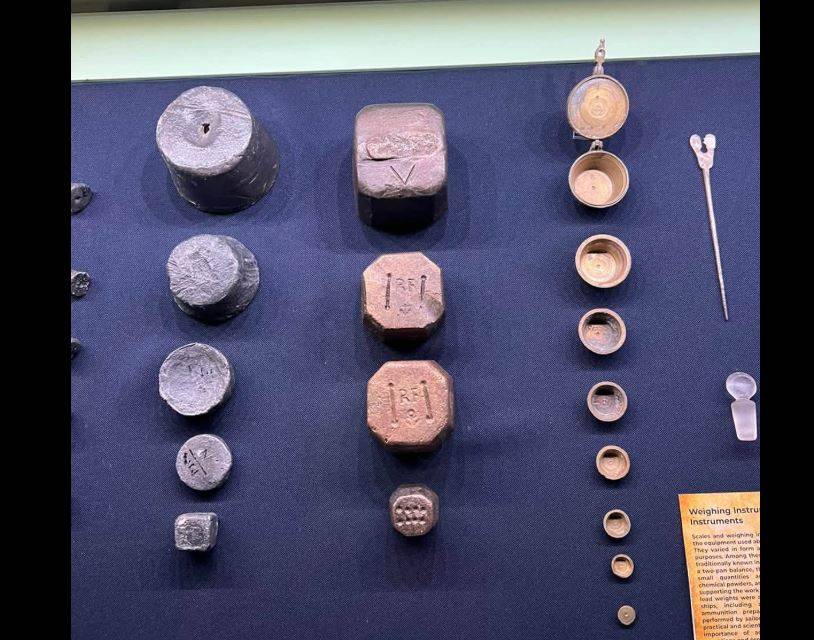
Among the exhibits are gold coins, navigation and writing instruments, cooking utensils used by crew members, and weapons recovered from the shipwreck sites. Together, the objects provide a comprehensive picture of maritime and military life during that period.

The exhibition will run for three months in the Egyptian Textile Hall at the National Museum of Egyptian Civilization.

It forms part of the ministry's efforts to highlight the importance of underwater cultural heritage as a rich source of physical evidence documenting historical events, figures and civilizations.

Such discoveries also contribute to archaeological research and scholarship, allowing historians to reexamine aspects of the past through evidence recovered from the sea.

The exhibition offers visitors an opportunity to explore a distinctive part of Egypt's heritage through original artifacts preserved underwater for centuries, each providing evidence of a significant historical period and revealing stories of maritime life at the time.

Archaeologist Dr. Hussein Abdel-Bassir, director of the Antiquities Museum at the Bibliotheca Alexandrina, said the exhibition's significance lies in its ability to bring back an entire world that disappeared beneath the water, leaving behind details waiting to be rediscovered and interpreted.

Some of the weighing scales used aboard the fleet (Ministry of Tourism and Antiquities)

"On August 1, 1798, Abu Qir Bay witnessed one of the most important naval battles in modern history," Abdel-Bassir explained.

"Napoleon's French expedition had arrived in Egypt just weeks earlier, pursuing an ambitious military, political and scientific project. But the French fleet suffered a devastating blow at the hands of the British fleet under Admiral Horatio Nelson in the Battle of the Nile."

He said the French ships were reduced to wreckage, shattering France's ambitions to dominate the Mediterranean, while the waters off Alexandria preserved the remains of that historic moment.

"What is fascinating is that the sea, which witnessed the struggle between empires, preserved not only the remains of ships and cannons but also details of the everyday lives of the men aboard them," he said.

"A small artifact can sometimes tell history more effectively than a grand monument. A coin, a personal belonging, a piece of tableware or part of a ship's equipment allows us to see history from a human perspective, rather than through the eyes of rulers and generals."

Abdel-Bassir said perhaps the most important lesson offered by Napoleon's sunken ships is that history never truly disappears.

"Sometimes history simply changes its location. It may leave the pages of books for the seabed, or transform from a written account into a silent artifact. But it remains there, waiting for someone to discover it, understand it and bring it to life for new generations," he said.

The archaeologist also described the celebration of World Underwater Cultural Heritage Day, coinciding with the 30th anniversary of Egypt's General Department of Underwater Antiquities, as an important opportunity to reconsider the future of the field.

Three decades of archaeological work, he said, provide an opportunity to assess what has been accomplished and develop an ambitious vision for what should be achieved in the decades ahead.


Denmark to Propose Mobile Phone Ban in Schools in 2027

22 October 2026, Schleswig-Holstein, Kiel: A man's hand reaches for a smartphone. (dpa)
TT

Denmark to Propose Mobile Phone Ban in Schools in 2027

22 October 2026, Schleswig-Holstein, Kiel: A man's hand reaches for a smartphone. (dpa)

Denmark will propose a ban on mobile phones in its primary and lower secondary school system as well as content filtering on the schools' network starting from the new academic year in 2027, the Danish education ministry said ‌on Monday.

Countries ‌including the Netherlands, ‌South ⁠Korea and Italy have ⁠banned smartphones in schools due to concerns over their impact on concentration and behavior, while Poland and the Czech Republic in June proposed ⁠a similar ban.

"Children ‌should be ‌able to go to school ‌without constantly being distracted by ‌things like social media, online shopping, and gaming," Education Minister Magnus Heunicke said in a statement.

The ‌ban also includes other private electronic devices with internet ⁠access.

⁠Content filters will be implemented to block websites that have no educational or pedagogical relevance, including social media, gaming and shopping sites, during lesson time.

It will be up to each municipality and school to decide which websites should be blocked.


Kuala Lumpur Otters Raise River Revival Hopes

This picture taken on October 19, 2026, shows a smooth-coated otter eating a fish along the bank of the Klang River in Kuala Lumpur. (AFP)
TT

Kuala Lumpur Otters Raise River Revival Hopes

This picture taken on October 19, 2026, shows a smooth-coated otter eating a fish along the bank of the Klang River in Kuala Lumpur. (AFP)

Beneath a tangle of highway in the Malaysian capital Kuala Lumpur, a family of otters rolls around in a patch of riverside sand, delighting the few passersby who notice them.

Small groups of otters are now being seen regularly in parts of the city, including along the once heavily polluted Klang River.

Theories vary on whether the smooth-coated otters, classed as vulnerable by the International Union for Conservation of Nature, have returned to the city or were hiding in plain sight all along.

But their presence has raised hopes that efforts to clean up the Klang may be bearing fruit, and could inspire further improvement.

The Klang was once one of the world's dirtiest waterways, designated a Class 5 severely polluted river under Malaysia's rankings.

Years of work improved it to Class 3, or moderately polluted, which seems to have encouraged the otters to move in, said Malaysian wildlife ecologist Woo Chee Yoong.

"Wherever there are otters, there are fish. Wherever there are fish it means the whole river system... (is) clean, it's healthy for all the communities around. So that's one of the importance of otters," he said.

In recent years, the animals have been filmed sunbathing on the river's concrete banks and swimming in front of elevated metro stations, winning viral fame.

Retired soldier Hasan Ujang, who lives in a riverside apartment, enjoys watching their antics.

"We feel really happy when we watch them playing and playing, like kids swimming," he said.

- 'They have to survive' -

But unlike otters in neighboring Singapore, which are closely monitored by a network of citizen scientists, little is known about Kuala Lumpur's otters.

Woo learned about them from local media reports on sightings in 2019 and the following year co-founded the Malaysian Otter Network (MON) conservation group.

"We don't know how many groups are there, we don't know how actually the otters are moving around," he said.

Even the question of whether the otters have returned to the capital or were simply in less visible city environments before remains a "mystery."

MON hopes to set up a citizen science system for people to report sightings.

Otters have been spotted elsewhere in the city, including at the Tropicana Golf & Country Resort, a high-end housing estate where they are less welcome visitors.

They are accused of raiding at least 12 houses in the past year. Their target: fish ponds.

Resident Yee Sze Mun, 89, said otters killed the beloved -- and expensive -- arowana fish he had nurtured for 15 years.

"They are a nuisance, but I can't blame them, because they are just like us, they have to survive," he said.

Residents say the incursions began last year after a company began clearing forest next door for a new development.

"We have an issue because they're losing their habitat," said residents' association president Joy Appukuttan, who called the otter attacks a "grave concern."

Tropicana's security team believes there are around 25 otters in the forest and the estate brought in Woo to teach residents how to deal with them.

The species is protected in Malaysia, so Woo urges residents to block entry points to their yards and install fences or netting over ponds.

- 'An asset' -

Maimunah Mohd Sharif, a former Kuala Lumpur mayor and now advisor to the city on sustainable urbanization, call the otters an "asset."

"Otters are one of the benchmarks for clean cities," she said.

Like others, she hopes a growing awareness of the Klang River otters can be harnessed to help improve the river further.

Hundreds of garbage traps were installed as part of the government's River of Life project, and solar-powered "interceptors" deployed by a Dutch NGO have collected tens of thousands of tons of waste.

Now Maimunah wants to see more done to stop waste entering the river in the first place, and efforts to make the Klang Class 2B status, clean enough for body contact.

"One day, I want to swim in the Klang River," she said.

Scarlett Koon Si Qi, a community architect and co-organizer of the annual Klang River Festival hopes the waterway can be restored to its natural banks without concrete lining.

"Some parts, maybe yes, you do need concrete to kind of protect and control for floods," she said.

"But I think wherever we can, we should leave it as natural as possible."

That would further benefit the otters, who need some vegetation and natural crevices to hide in, experts said.

The otters are already shifting views on the river, said Faith Foo, who runs the festival.

Growing up, "the teachers would always say that this is a very unsanitary place," he said.

But seeing the otters, "it's a reminder that that is a river."
