


Woman Stuck on Tiny Pacific Island for 3 Years Can’t Get Transit Visa to Fly Home

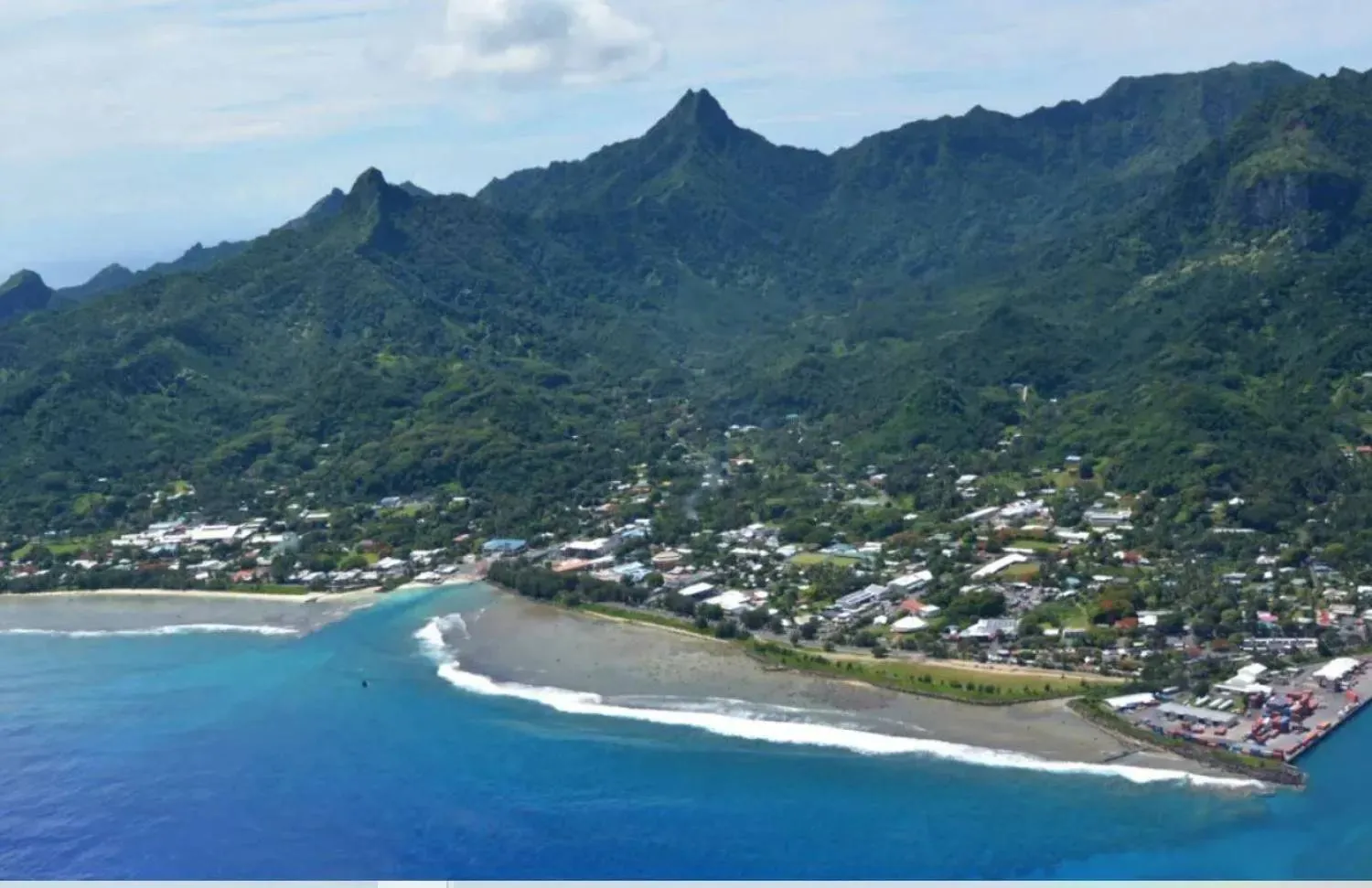
Cook Islands is known for its beaches and volcanic peaks - but Ruchira Ranasingha is an involuntary guest (AFP) 
TT

Woman Stuck on Tiny Pacific Island for 3 Years Can’t Get Transit Visa to Fly Home

Cook Islands is known for its beaches and volcanic peaks - but Ruchira Ranasingha is an involuntary guest (AFP) 

When Ruchira Ranasingha left Sri Lanka almost a decade ago, she could never have imagined she would end up stranded on a tiny archipelago in the South Pacific.

The 50-year-old has now been stuck in the Cook Islands for three years. She told the BBC she is desperate to go back to Sri Lanka and has even offered to go “handcuffed, bound and gagged.”

Ranasingha had been hoping to settle in New Zealand.

After seeking asylum there, she said she followed an immigration adviser’s recommendation to temporarily exit the country to apply for a work visa. But once in the Cook Islands, her application was rejected. And by leaving New Zealand, she had breached the terms of her existing asylum-linked visa.

Now New Zealand is refusing to issue her a transit visa that would allow her to fly home to Sri Lanka.

Australia is refusing too. The only other international destinations she can fly to from the Cook Islands - Tahiti and Hawaii - require her to give biometric information in New Zealand before any visa can be processed.

As a result, she has no feasible way of leaving.

“My son - my only child - is getting married in November and I really want to be there for his wedding. My mother is so worried about what has happened to me that she is constantly in and out of hospital,” she said through tears.

“I will do anything they ask of me - I just want to go home,” she added.

Ranasingha left Sri Lanka in 2018 after being forced to close her small T-shirt factory due to a loss of business. Struggling to repay loans, she moved to Hong Kong to work as a domestic caregiver looking after elderly people and children.

Her brother tells BBC Sinhala she had come under immense financial pressure. Her husband was a drug addict who died about seven years ago, he added.

In December 2022, Ranasingha headed to New Zealand, where she said she lived with a cousin on a two-month visit visa. As it came close to expiring, she said an immigration interpreter helped her apply for asylum on the grounds she was facing threats from lenders in Sri Lanka.

She was granted an asylum seeker “open work visa”, enabling her to work for almost any employer for a year.

She found a job at a restaurant, she says, which ultimately agreed to sponsor an employment visa, which she believed would give her longer-term stability.

But as asylum seekers generally cannot apply for other visas while their applications are processed in New Zealand, it was declined.

That’s when she got in touch with Immigration & Secretarial Services, a firm she claimed told her a fresh application for an employment visa could be made from overseas.

Email correspondence the BBC has seen shows its manager, Sylviane Gallant, saying she would initiate the process as soon as Ranasingha had left the country.

So she booked a short stay in the Cook Islands while the application was made.

It turned out to be a disastrous decision.

She was again refused the employment visa. And by leaving New Zealand, she had violated the terms of her existing visa. New Zealand authorities made it clear they would not grant her any future visas.

Gallant claimed to make various interventions on her behalf, including writing to politicians including Chris Penk, New Zealand’s then-immigration minister.

But ultimately, Ranasingha said Gallant admitted the situation was her fault and told her “there was nothing more she could do.”

“She told me I was better off going home. There was nothing holding me there so I agreed to go.”

But when she turned up at the airport with an Air New Zealand ticket to Sri Lanka in hand, she was told she couldn’t board the flight without a New Zealand transit visa.

Three applications for a New Zealand transit visa were rejected. Authorities said they weren’t convinced she would leave New Zealand. Four applications for Australian transit visas were rejected too.

In one of its rejections, New Zealand suggested she explore other routes. But both the US state of Hawaii and the French Polynesian island of Tahiti told her she would need to provide biometric information before any visa could be processed - and that could only be done in person in New Zealand.

Her latest application to New Zealand, which included all the details of the alternative routes she’d been trying, as well as her son’s upcoming wedding and mother’s failing health, was also rejected.

“I have lost so much money on tickets. For almost four years I have been just applying for visa after visa with nothing working out,” she said, breaking down.


An Iconic Puzzle Comes Home as Production of the Rubik’s Cube Returns to Hungary

Hungarian architect and inventor Ernő Rubik attends the opening event of Rubik's Cube production line of the Jasz-Plasztik plastic processing company in Jaszbereny, Hungary, 10 November 2026. (EPA)
TT

An Iconic Puzzle Comes Home as Production of the Rubik’s Cube Returns to Hungary

Hungarian architect and inventor Ernő Rubik attends the opening event of Rubik's Cube production line of the Jasz-Plasztik plastic processing company in Jaszbereny, Hungary, 10 November 2026. (EPA)

More than half a century ago, a Hungarian architect, sculptor and professor invented what would become one of the world's most popular and beloved puzzles whose appeal has spanned generations: the colorful, mind-bending, six-sided Rubik's Cube.

Now, after selling more than half a billion units and becoming a worldwide cultural touchstone, production of the cube is returning to Hungary, where its inventor, Ernő Rubik, first conceived of the iconic object that bears his name.

Hungary “is the home of the cube. The cube was born here,” Rubik, 82, said on Tuesday at the opening of a new, fully automated Rubik's Cube production line in the Hungarian city of Jászberény.

The journey of the Rubik's Cube began in 1974, when Rubik was teaching design at the Academy of Applied Arts and Design in Budapest. Seeking to create a three-dimensional object that was “infinite,” he said, he completed a prototype — then made of wood — of a cube that could rotate on multiple axes and was made up of 27 blocks.

Recognizing its consumer value, Rubik soon began producing more of the puzzles. Beginning in 1977, an initial 5,000 units of what was then called the “Magic Cube” were sold at specialty shops in the Hungarian capital.

The invention — or what Rubik prefers to describe as a “discovery” — gained popularity, and after having difficulties procuring materials for the cubes in then-socialist Hungary, he realized: “We were not prepared for that size of production ... We can’t fulfill the needs of the market worldwide.”

The cube was licensed to a British and then a US toy company, and its production was moved abroad. By the early 1980s, its popularity had exploded in what Rubik called “the first big wave,” in which he said 200 million units were sold between 1980 and 1983.

While sales of the cube dipped after its initial success, it still attracts plenty of users eager to try their hand at solving the puzzle. Millions are sold every year.

At the new production line in Hungary, a series of robotic arms assembles the cubes and tests them for functionality and durability — a level of automation Rubik said was “very different” than in the early days when the cubes were assembled by hand.

The new line in Jászberény plans to produce 1 million cubes annually.

Steve Radewych, a senior vice president with Canadian toy company Spin Master, which owns the Rubik's Cube trademark, said at Tuesday's opening that the theme of the day was: “Back to its roots: The cube comes home.”

“Ernő, your discovery is more than a toy,” Radewych told Rubik. “It's a global social phenomenon.”

Radewych noted the “incredible staying power” of the Rubik's Cube, and the fact that the puzzle continues to hold the fascination of young people even today.

“The cube represents an intellectual journey, a symbol of intelligence, problem-solving and cognitive discipline,” he added, which “has brought joy — and frustration — to many generations.”

The cube has enjoyed another surge in popularity in recent years as global competitions have proliferated, measuring who can solve the puzzle the fastest.

The current record, set only last month in China by nine-year-old Xuanyi Geng, is 2.51 seconds, according to the World Cube Association, which organizes and certifies competitions across the world.

Rubik, who does not consider himself a speed competitor, said that for him, the cube represents a “transformable sculpture,” the place where art and engineering meet and users can manipulate and change the cube in nearly endless variations.

“If you are doing something, creating something, you have the chance to do something that is meaningful — that’s one part — and beautiful,” he said.


SpaceX Starship Test to Attempt First-Ever Spaceship ‘Catch'

SpaceX's mega rocket Starship is stacked and prepared for a test flight from Starbase, Texas, Thursday, Nov. 12, 2026. (AP)
TT

SpaceX Starship Test to Attempt First-Ever Spaceship ‘Catch'

SpaceX's mega rocket Starship is stacked and prepared for a test flight from Starbase, Texas, Thursday, Nov. 12, 2026. (AP)

Elon Musk's SpaceX was poised Friday to carry out its latest test of the world's biggest and most powerful rocket, the Starship, with plans for a groundbreaking "catch" of the spaceship following a day in orbit.

A successful capture of the Starship upper stage would mark a significant milestone in the space industry's decades-long pursuit of fully reusable spacecraft that can drastically reduce mission costs and make frequent travel possible.

"If successful, this will mark the first full recovery of an orbital launch system and a breakthrough moment in making Starship a reliable, rapidly reusable rocket," SpaceX said.

For the 15th Starship test flight Friday, SpaceX aims to recover both stages of the massive 124-meter (407-foot) launch vehicle.

The company has caught the booster, dubbed Super Heavy, on three previous occasions, with the first stage descending vertically back to the launch site shortly after blastoff and nestling into mechanical "chopstick" arms.

It will now attempt to do the same with the spaceship. Some versions of the vessel are designed to launch internet satellites and data centers into orbit, while others will be made to ferry people to the Moon and Mars.

A spacecraft that can be fully reused is the "Holy Grail" of the space industry, said Clayton Swope, an aerospace expert at the Center for Strategic and International Studies.

"No one's really been able to do that so far," he said. "People have been trying to do that since the (NASA) space shuttle. But the space shuttle ended up being kind of a compromise because a lot of the vehicle wasn't reusable."

Reusing the Starship spacecraft would require the vessel to withstand the extreme heat of reentering Earth's atmosphere and then return to service without extensive refurbishment.

- Refueling challenge -

Musk, the world's richest person, has already revolutionized the space sector with the partially reusable Falcon rockets, which are regularly employed to launch satellites and carry astronauts to the International Space Station.

The Starship project, however, has been plagued by years-long delays as SpaceX grapples with novel engineering challenges -- even as NASA is counting on the spaceship to serve as a lunar lander for its Artemis program.

Other technical challenges include transferring fuel to Starship in orbit -- a requirement for any journey to the Moon or Mars.

Following SpaceX's high-profile stock market debut in June, the company carried out the first orbital flight of Starship in September, though the mission was cut short due to an engine issue.

It is also investing heavily in additional launch sites for its mega-rocket in Louisiana and Florida.

- Complex capture -

Friday's launch is scheduled to take place at SpaceX's "Starbase" in southern Texas at 4:45 pm (2245 GMT).

Following liftoff and the mid-air separation of the two stages, SpaceX plans to bring Super Heavy back to Earth six and a half minutes later, catching it at the launch site on the Gulf of Mexico coastline.

The spaceship will continue to reach Earth's orbit, where it will deploy 26 satellites into Musk's Starlink satellite internet constellation that has become a major revenue stream for SpaceX.

It will then circle the planet 14 times, before returning 22 hours later and -- SpaceX hopes -- descending safely into the chopstick arms.

This capture attempt is more complex than that of the booster, as the spaceship will be descending much faster and from a much greater altitude.

SpaceX has said it would proceed with these maneuvers only if conditions are optimal, and in the past has made last-minute changes to test flights under Musk's "fail fast" strategy of learning through crashes, explosions and other mishaps.

As of late Thursday, the US Federal Aviation Administration had not yet given its final approval for the test flight.


Delhi Overtakes Lahore as World’s Most Polluted City as Air Quality Drops

Traffic moves on a smoggy morning as air pollution spikes in New Delhi, India, November 13, 2026. (Reuters)
TT

Delhi Overtakes Lahore as World’s Most Polluted City as Air Quality Drops

Traffic moves on a smoggy morning as air pollution spikes in New Delhi, India, November 13, 2026. (Reuters)

India's capital Delhi overtook Lahore in Pakistan to become the world's most polluted city on Friday, with air quality reaching hazardous levels and visibility dropping as smog blanketed the city of 20 million people.

Air quality index (AQI) in Delhi was "hazardous" at 334, making ‌it the ‌most polluted global major ‌city, ⁠according to Swiss group ⁠IQAir, which measures air quality levels based on the concentration of toxins.

An AQI reading up to 50 is considered good with little or no ⁠health risk.

India's official ‌Central Pollution ‌Control Board pegged the AQI higher at ‌403 and rated it "severe".

The ‌Swiss and Indian readings vary due to the different AQI scales and methodologies used to calculate and ‌classify air pollution levels.

Cars and motorcycles emerged from dense ⁠smog, ⁠which also appeared to obscure streetlights on the city's main roads, videos from news agency ANI showed.

Pollution is a seasonal problem in many parts of northern India and neighboring Pakistan, as the cold, heavy air of winter traps vehicle emissions, construction dust and smoke from agricultural burning.
