


Turkish Voters Weigh Final Decision on Next President, Visions for Future

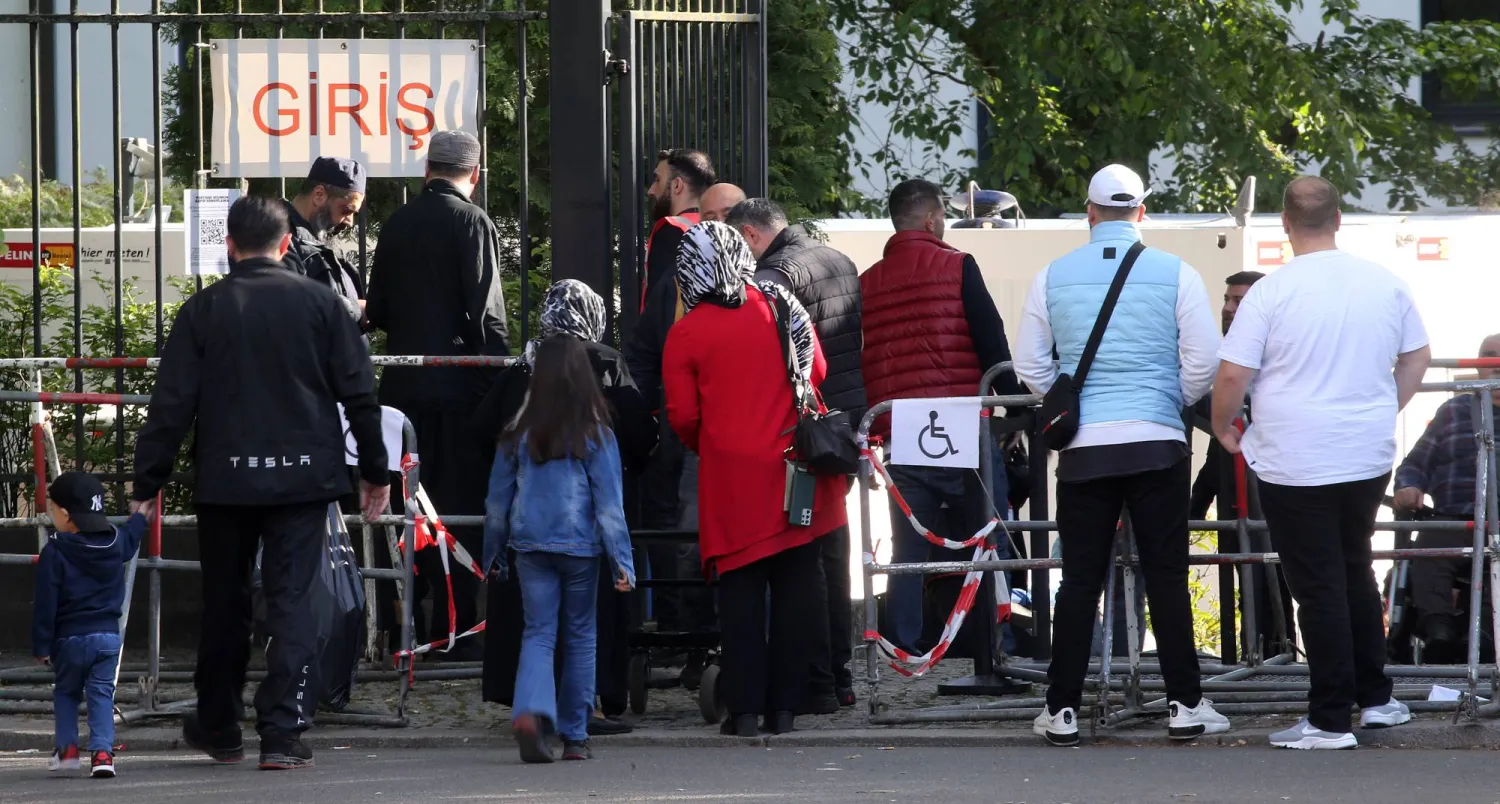
24 May 2023, Berlin: People line up in front of the Turkish Consulate General's property to cast their votes in containers set up for the runoff election in Türkiye. Photo: Wolfgang Kumm/dpa
TT

Turkish Voters Weigh Final Decision on Next President, Visions for Future

24 May 2023, Berlin: People line up in front of the Turkish Consulate General's property to cast their votes in containers set up for the runoff election in Türkiye. Photo: Wolfgang Kumm/dpa

Two opposing visions for Türkiye’s future are on the ballot when voters return to the polls Sunday for a runoff presidential election that will decide between an increasingly authoritarian incumbent and a challenger who has pledged to restore democracy.

President Recep Tayyip Erdogan, a populist and polarizing leader who has ruled Türkiye for 20 years, is well positioned to win after falling just short of victory in the first round of balloting on May 14. He was the top finisher even as the country reels from sky-high inflation and the effects of a devastating earthquake in February, The Associated Press said.

Kemal Kilicdaroglu, the leader of Türkiye’s pro-secular main opposition party and a six-party alliance, has campaigned on a promise to undo Erdogan's authoritarian tilt. The 74-year-old former bureaucrat has described the runoff as a referendum on the direction of the strategically located NATO country, which is at the crossroads of Europe and Asia and has a key say over the alliance's expansion.

“This is an existential struggle. Türkiye will either be dragged into darkness or light,” Kilicdaroglu said. “This is more than an election. It has turned into a referendum.”

In a bid to sway nationalist voters ahead of Sunday's runoff, the normally soft-mannered Kilicdaroglu (pronounced KEH-lich-DAHR-OH-loo) shifted gear and hardened his stance, vowing to send back millions of refugees if he is elected and rejecting any possibility of peace negotiations with Kurdish fighters.

The social democrat had previously said he planned to repatriate Syrians within two years, after establishing economic and safety conditions conducive to their return.

He has also repeatedly called on 8 million people who stayed away from the polls in the first round to cast votes in the make-or-break runoff.

Erdogan scored 49.5% of the vote in the first round. Kilicdaroglu received 44.9%.

At 69, Erdogan is already Türkiye’s longest-serving leader, having ruled over the country as prime minister since 2003 and as president since 2014. He could remain in power until 2028 if reelected.

Under Erdogan, Türkiye has proven to be an indispensable and sometimes troublesome NATO ally.

It vetoed Sweden’s bid to join the alliance and purchased Russian missile-defense systems, which prompted the United States to oust Türkiye from a US-led fighter-jet project. Yet together with the UN Türkiye also brokered a vital deal that allowed Ukraine to ship grain through the Black Sea to parts of the world struggling with hunger.

This week, Erdogan received the endorsement of the nationalist third-place candidate, Sinan Ogan, who garnered 5.2% of the vote. The move was seen as a boost for Erdogan even though Ogan’s supporters are not a monolithic bloc and not all of his votes are expected to go to Erdogan.

Erdogan’s nationalist-Islamist alliance also retained its hold on parliament in legislative elections two weeks ago, further increasing his chances for reelection as many voters are likely to want to avoid a split government.

On Wednesday, the leader of a hardline anti-migrant party that had backed Ogan threw its weight behind Kilicdaroglu after the two signed a protocol pledging to send back millions of migrants and refugees within the year.

Kilicdaroglu’s chances of turning the vote around in his favor appear to be slim but could hinge on the opposition’s ability to mobilize voters who did not cast ballots in the first round.

“It’s not possible to say that the odds are favoring him, but nevertheless, technically, he stands a chance,” said professor Serhat Guvenc of Istanbul’s Kadir Has University.

If the opposition can reach the voters who previously stayed home, "it may be a different story.”

In Istanbul, 45-year-old Serra Ural accused Erdogan of mishandling the economy and said she would vote for Kilicdaroglu.

She also expressed concerns over the rights of women after Erdogan extended his alliance to include Huda-Par, a hardline Kurdish Islamist political party with alleged links to a group that was responsible for a series of gruesome killings in the 1990s. The party wants to abolish mixed-gender education, advocates for the criminalization of adultery and says women should prioritize their homes over work.

“We don’t know what will happen to women tomorrow or the next day, what condition they’ll be in,” she said. “To be honest Huda-Par scares us, especially women.”

Mehmet Nergis, 29, said he would vote for Erdogan for stability.

Erdogan "is the guarantee for a more stable future,” Nergis said. “Everyone around the world has already seen how far he has brought Türkiye.”

He dismissed the country’s economic woes and expressed confidence that Erdogan would make improvements.

Erdogan’s campaign has focused on rebuilding areas that were devastated by the earthquake, which leveled cities and left more 50,000 dead in Türkiye. He has promised to build 319,000 homes within the year.

In the parliamentary election, Erdogan’s alliance won 10 out 11 provinces in the region affected by the quake despite criticism that his government’s initial disaster response was slow.

“Yes, there was a delay, but the roads were blocked,” said Yasar Sunulu, an Erdogan supporter in Kahramanmaras, the quake’s epicenter. “We cannot complain about the state ... It gave us food, bread and whatever else needed."

He and his family members are staying in a tent after their house was destroyed.

Nursel Karci, a mother of four living in the same camp, said she too would vote for Erdogan.

Erdogan "did all that I couldn’t,” she said. “He clothed my children where I couldn’t clothe them. He fed them where I couldn’t ... Not a penny left my pocket.”

Erdogan has repeatedly portrayed Kilicdaroglu as colluding with the outlawed Kurdistan Workers’ Party, or PKK, after the opposition party leader received the backing of the country’s pro-Kurdish party.

During a rally in Istanbul, Erdogan broadcast a faked video purporting to show a PKK commander singing the opposition’s campaign song to hundreds of thousands of his supporters. On Monday, Erdogan doubled down on the narrative, insisting that the PKK has thrown its support to Kilicdaroglu whether the video is “faked or not.”

“Most analysts failed to gauge the impact of Erdogan’s campaign against Kilicdaroglu,” Guvenc said. “This obviously did strike a chord with the average nationalist-religious electorate in Türkiye.”

“Politics today is about building and sustaining a narrative which shadows the reality," he added. "Erdogan and his people are very successful in building narratives that eclipse realities.”



Poland Bars Chinese-Made Cars from Military Sites Over Data Security Fears 

A soldier from the 18th Mechanized Division stands guard on a Light Strike Vehicle "Zmija" during a media tour organized by the country's military to demonstrate the security measures on the Polish Belarusian border, near Bialowieza, Poland, January 10, 2025. (Reuters)
TT

Poland Bars Chinese-Made Cars from Military Sites Over Data Security Fears 

A soldier from the 18th Mechanized Division stands guard on a Light Strike Vehicle "Zmija" during a media tour organized by the country's military to demonstrate the security measures on the Polish Belarusian border, near Bialowieza, Poland, January 10, 2025. (Reuters)

Poland has barred Chinese-made vehicles from entering military facilities due to concerns their onboard sensors could be used to collect sensitive data, the Polish Army said on Tuesday evening.

The army said in ‌a statement ‌that such vehicles ‌may ⁠still be allowed onto ⁠secured sites if specified functions are disabled and other safeguards required under each facility's security rules are in place.

To ⁠limit the risk ‌of ‌exposing confidential information, the military has ‌also banned connecting company ‌phones to infotainment systems in vehicles manufactured in China.

The restrictions do not apply ‌to publicly accessible military locations such as hospitals, ⁠clinics, ⁠libraries, prosecutors' offices or garrison clubs, the army said.

It added that the measures are precautionary and align with practices used by NATO members and other allies to ensure high standards of protection for defense infrastructure.


Starmer, Trump discussed Russia-Ukraine, Iran after Geneva Talks, Downing Street Says 

US President Donald Trump and British Prime Minister Keir Starmer announce an agreement between the two countries as they hold a press conference at Chequers at the conclusion of a state visit on September 18, 2025 in Aylesbury, Britain. (Reuters)
TT

Starmer, Trump discussed Russia-Ukraine, Iran after Geneva Talks, Downing Street Says 

US President Donald Trump and British Prime Minister Keir Starmer announce an agreement between the two countries as they hold a press conference at Chequers at the conclusion of a state visit on September 18, 2025 in Aylesbury, Britain. (Reuters)

British ‌Prime Minister Keir Starmer spoke to US President Donald Trump on Tuesday night about US-mediated Russia-Ukraine peace talks in Geneva, as well as talks between the US and Iran on ‌their nuclear ‌dispute, a Downing Street ‌spokesperson ⁠said.

Starmer also discussed ⁠Gaza with Trump and stressed on the importance of securing further access for humanitarian aid, the spokesperson said.

Negotiators ⁠from Ukraine and ‌Russia ‌concluded the first of two days ‌of the US-mediated ‌peace talks in Geneva on Tuesday, with Trump pressing Kyiv to act fast ‌to reach a deal.

Separately, Iranian Foreign Minister ⁠Abbas ⁠Araqchi said Tehran and Washington reached an understanding on Tuesday on "guiding principles" aimed at resolving their longstanding nuclear dispute, but that did not mean a deal is imminent.


Japan PM Takaichi Reappointed Following Election

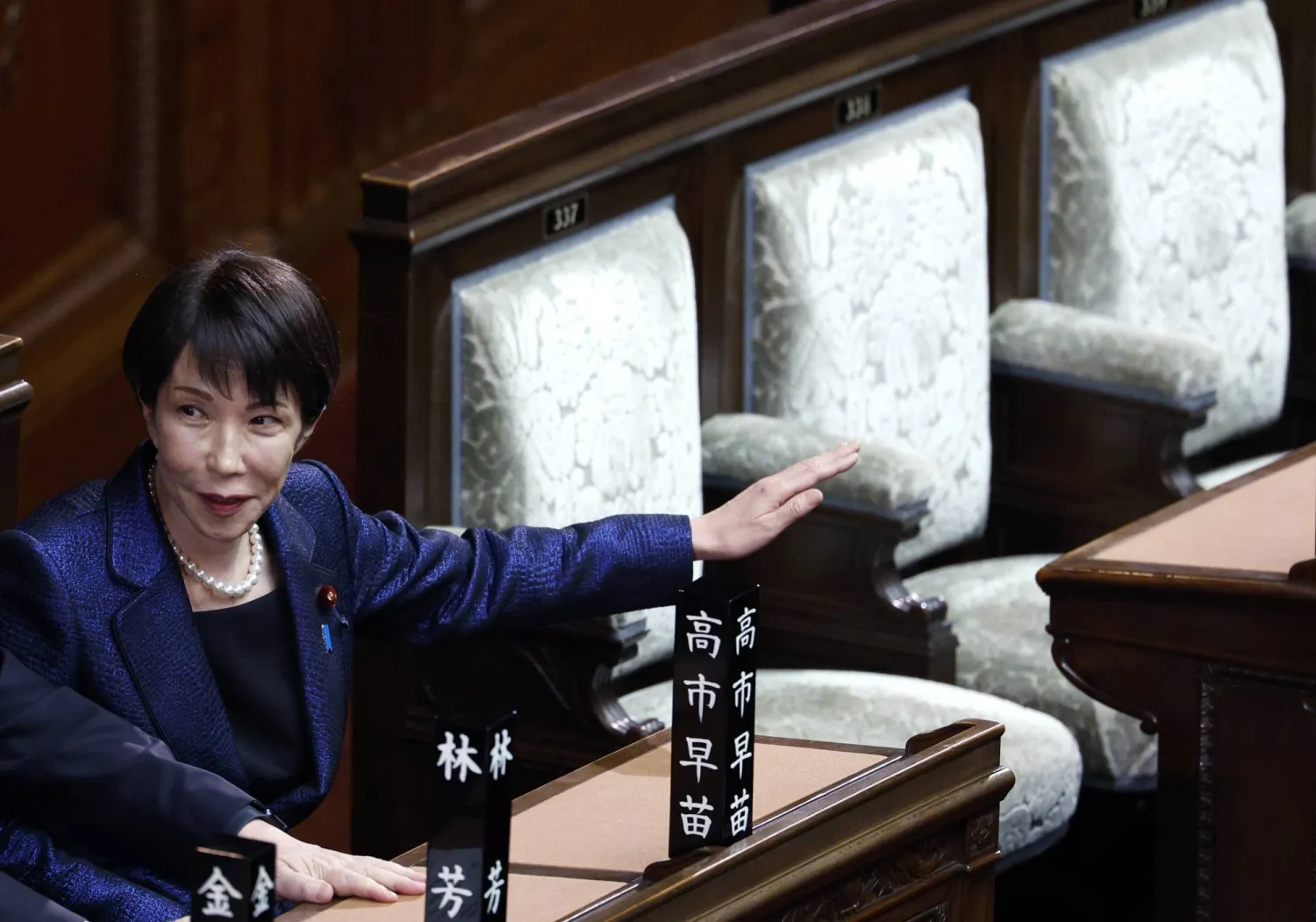
Sanae Takaichi gestures at the Lower House of the Parliament in Tokyo, Japan, 18 February 2026. EPA/FRANCK ROBICHON
TT

Japan PM Takaichi Reappointed Following Election

Sanae Takaichi gestures at the Lower House of the Parliament in Tokyo, Japan, 18 February 2026. EPA/FRANCK ROBICHON

Japan's lower house formally reappointed Sanae Takaichi as prime minister on Wednesday, 10 days after her historic landslide election victory.

Takaichi, 64, became Japan's first woman premier in October and won a two-thirds majority for her party in the snap lower house elections on February 8.

She has pledged to bolster Japan's defenses to protect its territory and waters, likely further straining relations with Beijing, and to boost the flagging economy.

Takaichi suggested in November that Japan could intervene militarily if Beijing sought to take Taiwan by force.

China, which regards the democratic island as part of its territory and has not ruled out force to annex it, was furious.

Beijing's top diplomat Wang Yi told the Munich Security Conference on Saturday that forces in Japan were seeking to "revive militarism".

In a policy speech expected for Friday, Takaichi will pledge to update Japan's "Free and Open Indo-Pacific" strategic framework, local media reported.

"Compared with when FOIP was first proposed, the international situation and security environment surrounding Japan have become significantly more severe," chief government spokesman Minoru Kihara said Monday.

In practice this will likely mean strengthening supply chains and promoting free trade through the Trans-Pacific Partnership (CPTPP) that Britain joined in 2024.

Takaichi's government also plans to pass legislation to establish a National Intelligence Agency and to begin concrete discussions towards an anti-espionage law, the reports said.

Takaichi has promised too to tighten rules surrounding immigration, even though Asia's number two economy is struggling with labor shortages and a falling population.

On Friday Takaichi will repeat her campaign pledge to suspend consumption tax on food for two years in order to ease inflationary pressures on households, local media said, according to AFP.

This promise has exacerbated market worries about Japan's colossal debt, with yields on long-dated government bonds hitting record highs last month.

Rahul Anand, the International Monetary Fund chief of mission in Japan, said Wednesday that debt interest payments would double between 2025 and 2031.

"Removing the consumption tax (on food) would weaken the tax revenue base, since the consumption tax is an important way to raise revenues without creating distortions in the economy," Anand said.

To ease such concerns, Takaichi will on Friday repeat her mantra of having a "responsible, proactive" fiscal policy and set a target on reducing government debt, the reports said.

She will also announce the creation of a cross-party "national council" to discuss taxation and how to fund ageing Japan's ballooning social security bill.

But Takaichi's first order of business will be obtaining approval for Japan's budget for the fiscal year beginning on April 1 after the process was delayed by the election.

The ruling coalition also wants to pass legislation that will outlaw destroying the Japanese flag, according to the media reports.

It wants too to accelerate debate on changing the constitution and on revising the imperial family's rules to ease a looming succession crisis.

Takaichi and many within her Liberal Democratic Party (LDP) oppose making it possible for a woman to become emperor, but rules could be changed to "adopt" new male members.