Iran, US Deny Nearing a Temporary Nuclear Deal

A satellite image of the chosen site (AFP)
TT

Iran, US Deny Nearing a Temporary Nuclear Deal

A satellite image of the chosen site (AFP)

Iran and the US denied reports that they were close to a temporary agreement to reduce the Iranian nuclear program in exchange for easing sanctions.

It is no secret that US and European officials have been looking for ways to curb Iran's nuclear program since the collapse of indirect US-Iranian talks on reviving the nuclear deal, formally known as the 2015 Joint Comprehensive Plan of Action (JCPOA).

One possible solution was an interim deal under which Iran would accept fewer restrictions on its nuclear program in return for more modest sanctions' relief than in the 2015 deal.

The Coordinator for Strategic Communications at the National Security Council, John Kirby, said that US intelligence officials believe a UAV factory in the Russian Alabuga Special Economic Zone could be operational early next year.

The statement was accompanied by satellite photos taken in April of the plant's site, hundreds of miles east of Moscow, where the factory is likely to be built.

- "Exposing" cooperation with Russia

Kirby confirmed that US officials have also determined that Iran continues to supply the Russian army with one-way attack drones made in Iran to be used in its war on Ukraine.

He revealed that the drones were shipped across the Caspian Sea.

"This is a full-scale defense partnership that is harmful to Ukraine, to Iran's neighbors, and the international community," he said.

"We are continuing to use all the tools at our disposal to expose and disrupt these activities, including sharing this with the public – and we are prepared to do more."

Kirby reported that the US administration would issue a new advisory to help companies and other governments implement procedures to ensure they do not inadvertently contribute to Iran's drone program.

The advisory aimed "to help businesses and other governments better understand the risks posed by Iran's UAV program and the illicit practices Iran uses to procure components for it."

The US, the EU, and the UK have issued in recent months rules to cut the flow of drone components to Russia and Iran.

A National Security Council spokesman said, "Any reports of an interim agreement are false."

A State Department spokesperson declined to comment on such talks, saying it had ways to pass messages to Iran but would not detail their content or how they were delivered.

Iran's mission to the United Nations also cast doubt on the report: "Our comment is the same as the White House comment."

Reuters quoted Iranian officials saying progress had been made, but no agreement was forthcoming.

A third official said US special envoy for Iran, Rob Malley, and Iran's ambassador to the UN, Amir Saeid Iravani met at least three times in the past weeks but gave no details.

"There (has) been some progress, and we have exchanged proposals and messages with Americans," said a senior Iranian official. "Still, there are lots of details that we need to discuss."

- Pressure from US legislators

US President Joe Biden's administration has been under more pressure to halt negotiations with Iran.

Thirty-five House representatives sent a bipartisan letter to the British, French, and German leaders urging them to immediately initiate the snapback mechanism of United Nations sanctions on Iran, according to the JCPOA.

The three European countries are the only partners capable of initiating a "snapback" in the 2015 deal that canceled the lifting of UN sanctions on Iran.

The parties to the agreement rejected a previous US attempt to do so, given Washington's withdrawal from the deal in 2018 under former President Donald Trump.

In their new letter, US lawmakers specifically highlight the urgency of stepping back in light of the upcoming expiration of the UN embargo on Iran's missile and drone programs later this year.

The letter read: "It is clear that Iran has failed to live up to its nonproliferation commitments, and time is running out to curb their nuclear ambitions."

"For nearly four years, Iran has ceased implementing important commitments under the JCPOA, continues to expand its nuclear program, and has rejected all diplomatic offers. As our great nations have seen countless times, appeasing belligerent nations does not lead to peace, it only feeds even greater threats to international peace and security."

The two representatives, Claudia Tenney and Josh Gottheimer sent the message, and they were joined by 32 Republicans and Democratic Representative Jared Moskowitz.

"It is indisputable that Iran is in violation of the JCPOA, which is why our European allies must initiate snapback now to reimpose previously lifted sanctions," Tenney added.

"Snapback will send a clear message to Iran that its nuclear extortion has severe consequences and that the expansion of its nuclear program will not be tolerated. The time for bold and decisive action is now."

Gottheimer stressed that lifting sanctions on Iran would fuel its malign activities worldwide.


Poland Bars Chinese-Made Cars from Military Sites Over Data Security Fears 

A soldier from the 18th Mechanized Division stands guard on a Light Strike Vehicle "Zmija" during a media tour organized by the country's military to demonstrate the security measures on the Polish Belarusian border, near Bialowieza, Poland, January 10, 2025. (Reuters)
TT

Poland Bars Chinese-Made Cars from Military Sites Over Data Security Fears 

A soldier from the 18th Mechanized Division stands guard on a Light Strike Vehicle "Zmija" during a media tour organized by the country's military to demonstrate the security measures on the Polish Belarusian border, near Bialowieza, Poland, January 10, 2025. (Reuters)

Poland has barred Chinese-made vehicles from entering military facilities due to concerns their onboard sensors could be used to collect sensitive data, the Polish Army said on Tuesday evening.

The army said in ‌a statement ‌that such vehicles ‌may ⁠still be allowed onto ⁠secured sites if specified functions are disabled and other safeguards required under each facility's security rules are in place.

To ⁠limit the risk ‌of ‌exposing confidential information, the military has ‌also banned connecting company ‌phones to infotainment systems in vehicles manufactured in China.

The restrictions do not apply ‌to publicly accessible military locations such as hospitals, ⁠clinics, ⁠libraries, prosecutors' offices or garrison clubs, the army said.

It added that the measures are precautionary and align with practices used by NATO members and other allies to ensure high standards of protection for defense infrastructure.


Starmer, Trump discussed Russia-Ukraine, Iran after Geneva Talks, Downing Street Says 

US President Donald Trump and British Prime Minister Keir Starmer announce an agreement between the two countries as they hold a press conference at Chequers at the conclusion of a state visit on September 18, 2025 in Aylesbury, Britain. (Reuters)
TT

Starmer, Trump discussed Russia-Ukraine, Iran after Geneva Talks, Downing Street Says 

US President Donald Trump and British Prime Minister Keir Starmer announce an agreement between the two countries as they hold a press conference at Chequers at the conclusion of a state visit on September 18, 2025 in Aylesbury, Britain. (Reuters)

British ‌Prime Minister Keir Starmer spoke to US President Donald Trump on Tuesday night about US-mediated Russia-Ukraine peace talks in Geneva, as well as talks between the US and Iran on ‌their nuclear ‌dispute, a Downing Street ‌spokesperson ⁠said.

Starmer also discussed ⁠Gaza with Trump and stressed on the importance of securing further access for humanitarian aid, the spokesperson said.

Negotiators ⁠from Ukraine and ‌Russia ‌concluded the first of two days ‌of the US-mediated ‌peace talks in Geneva on Tuesday, with Trump pressing Kyiv to act fast ‌to reach a deal.

Separately, Iranian Foreign Minister ⁠Abbas ⁠Araqchi said Tehran and Washington reached an understanding on Tuesday on "guiding principles" aimed at resolving their longstanding nuclear dispute, but that did not mean a deal is imminent.


Japan PM Takaichi Reappointed Following Election

Sanae Takaichi gestures at the Lower House of the Parliament in Tokyo, Japan, 18 February 2026. EPA/FRANCK ROBICHON
TT

Japan PM Takaichi Reappointed Following Election

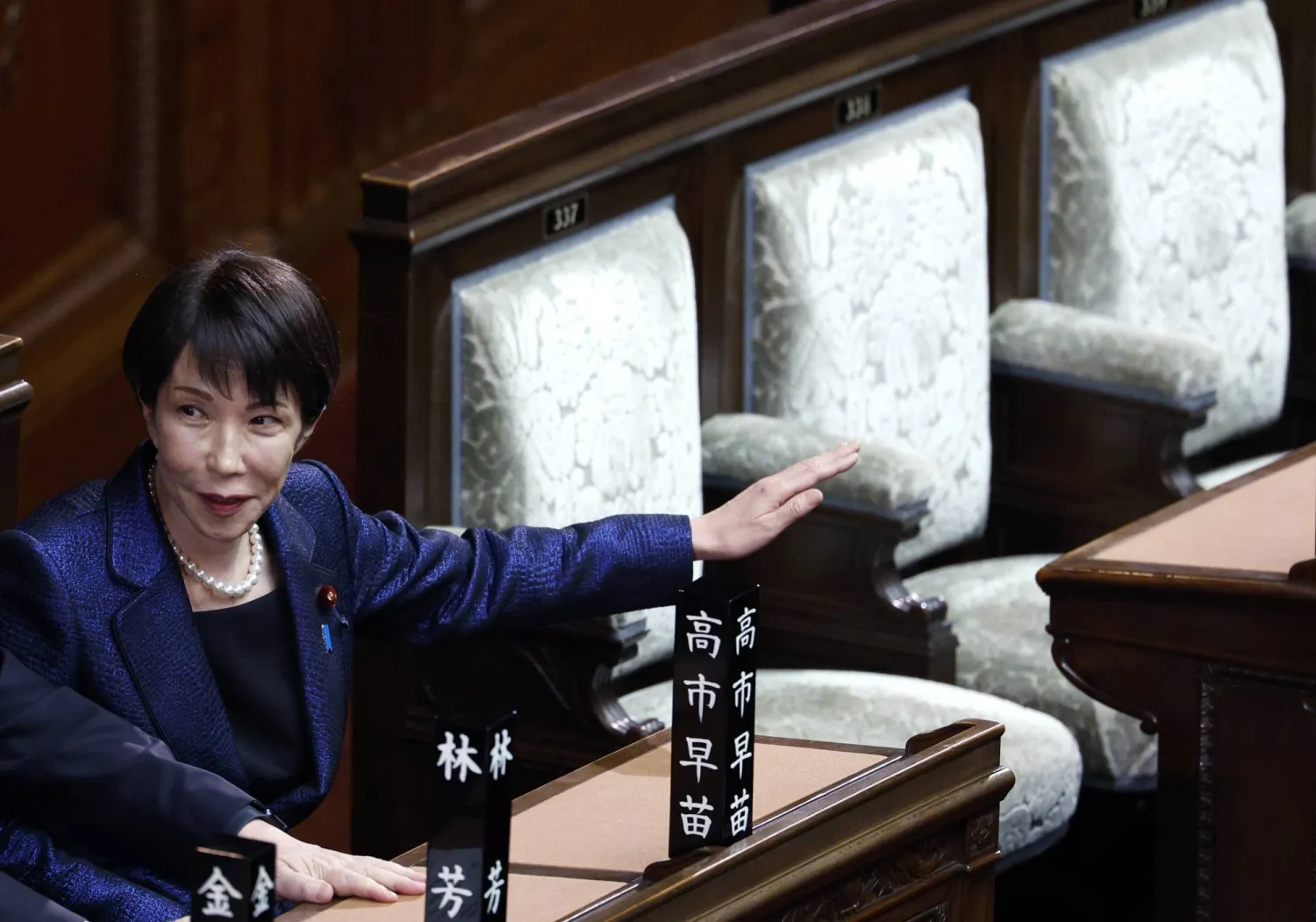
Sanae Takaichi gestures at the Lower House of the Parliament in Tokyo, Japan, 18 February 2026. EPA/FRANCK ROBICHON

Japan's lower house formally reappointed Sanae Takaichi as prime minister on Wednesday, 10 days after her historic landslide election victory.

Takaichi, 64, became Japan's first woman premier in October and won a two-thirds majority for her party in the snap lower house elections on February 8.

She has pledged to bolster Japan's defenses to protect its territory and waters, likely further straining relations with Beijing, and to boost the flagging economy.

Takaichi suggested in November that Japan could intervene militarily if Beijing sought to take Taiwan by force.

China, which regards the democratic island as part of its territory and has not ruled out force to annex it, was furious.

Beijing's top diplomat Wang Yi told the Munich Security Conference on Saturday that forces in Japan were seeking to "revive militarism".

In a policy speech expected for Friday, Takaichi will pledge to update Japan's "Free and Open Indo-Pacific" strategic framework, local media reported.

"Compared with when FOIP was first proposed, the international situation and security environment surrounding Japan have become significantly more severe," chief government spokesman Minoru Kihara said Monday.

In practice this will likely mean strengthening supply chains and promoting free trade through the Trans-Pacific Partnership (CPTPP) that Britain joined in 2024.

Takaichi's government also plans to pass legislation to establish a National Intelligence Agency and to begin concrete discussions towards an anti-espionage law, the reports said.

Takaichi has promised too to tighten rules surrounding immigration, even though Asia's number two economy is struggling with labor shortages and a falling population.

On Friday Takaichi will repeat her campaign pledge to suspend consumption tax on food for two years in order to ease inflationary pressures on households, local media said, according to AFP.

This promise has exacerbated market worries about Japan's colossal debt, with yields on long-dated government bonds hitting record highs last month.

Rahul Anand, the International Monetary Fund chief of mission in Japan, said Wednesday that debt interest payments would double between 2025 and 2031.

"Removing the consumption tax (on food) would weaken the tax revenue base, since the consumption tax is an important way to raise revenues without creating distortions in the economy," Anand said.

To ease such concerns, Takaichi will on Friday repeat her mantra of having a "responsible, proactive" fiscal policy and set a target on reducing government debt, the reports said.

She will also announce the creation of a cross-party "national council" to discuss taxation and how to fund ageing Japan's ballooning social security bill.

But Takaichi's first order of business will be obtaining approval for Japan's budget for the fiscal year beginning on April 1 after the process was delayed by the election.

The ruling coalition also wants to pass legislation that will outlaw destroying the Japanese flag, according to the media reports.

It wants too to accelerate debate on changing the constitution and on revising the imperial family's rules to ease a looming succession crisis.

Takaichi and many within her Liberal Democratic Party (LDP) oppose making it possible for a woman to become emperor, but rules could be changed to "adopt" new male members.