


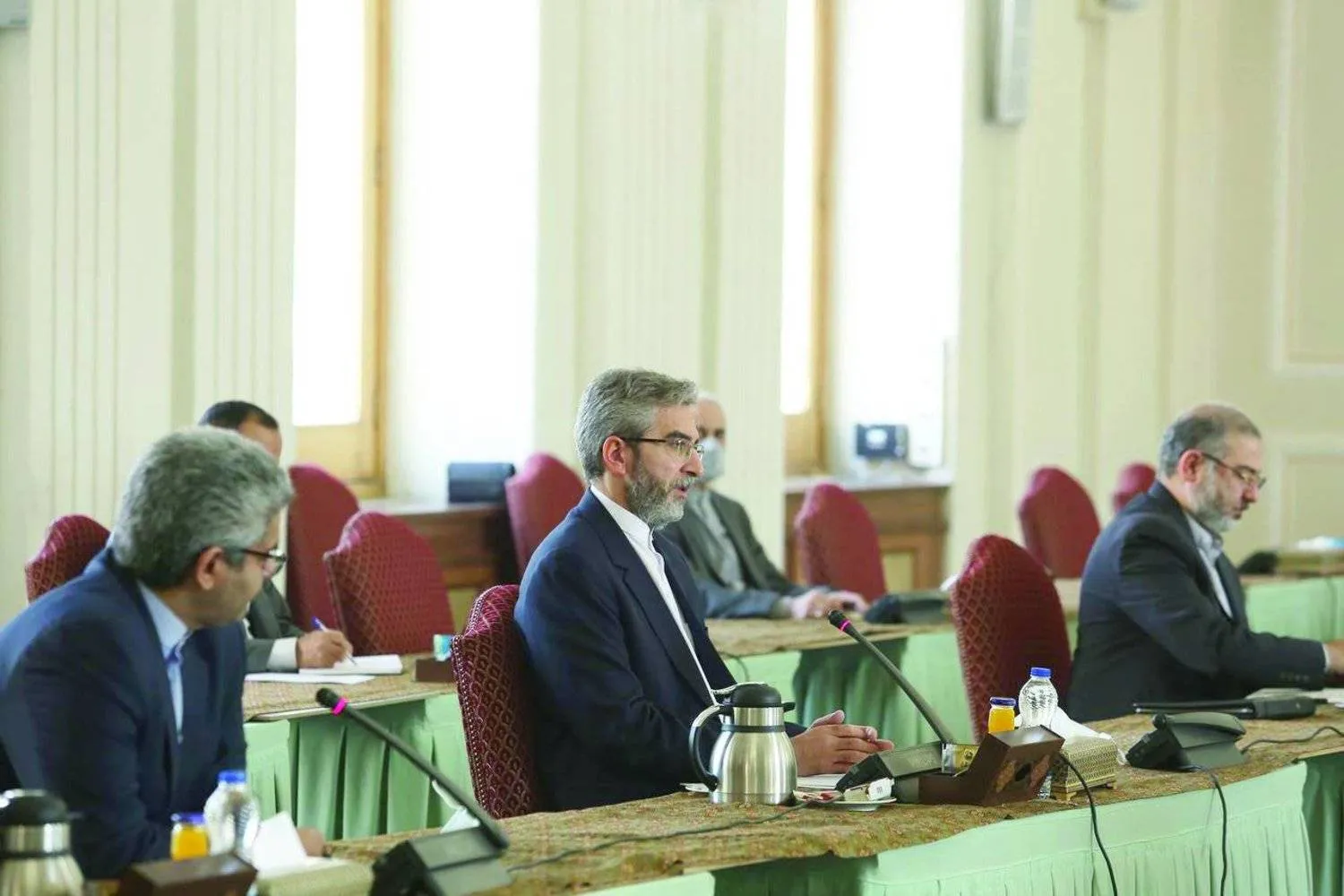

Iranian Deputy Foreign Minister for Political Affairs Ali Bagheri Kani announced Tuesday he has met with diplomats from three European countries in Abu Dhabi to discuss a number of issues, including the country’s atomic energy program.
The meeting came amid a US-Iranian standoff over the progress of talks to stimulate the diplomatic track aimed at reviving the 2015 nuclear deal.
Germany's foreign ministry told AFP the meeting took place on Monday and that discussions covered topics concerning Iran's nuclear program.
Also, Christian Turner, a British diplomat serving as Political Director of the Foreign, Commonwealth and Development Office, confirmed the meeting in a Tweet.
“E3 Political Directors and our Iranian counterpart Bagheri Kani, met for talks on June 12. The discussion covered a wide range of issues of mutual interest and concern,” he wrote.
On Tuesday, Bagheri tweeted that “following diplomatic consultations with regional and extra-regional parties, we met with our German, French and British counterparts in Abu Dhabi and discussed a range of issues.”
The Iranian official also said that he travelled to the United Arab Emirates to strengthen the neighborhood policy and continue political consultations with neighbors. He then explained that his visit aims to “discuss the development of bilateral cooperation and discuss regional issues with Emirati officials.”
Bagheri said he met with Anwar Mohammed Gargash, senior diplomatic advisor to the UAE President, and Minister of State Khalifa Shaheen Almarar.
The UAE’s news agency, WAM, also confirmed that Gargash and Almarar met with the Iranian official.
It said the meeting addressed the prospects of promoting bilateral relations between the two countries in a manner that achieves their common interests and promotes stability and prosperity in the region.
The discussions also touched on a number of topics and issues of interest, WAM noted.
Bagheri’s visit to Abu Dhabi came few days after UAE’s Foreign Minister Sheikh Abdullah bin Zayed Al Nahyan met with his Iranian counterpart, Hossein Amir-Abdollahian, on the sidelines of the ‘Friends of BRICS’ meeting held in Cape Town, South Africa, where they discussed ways of driving UAE-Iran relations forward and boosting their cooperation to serve their common interests and support security, stability and prosperity in the region.
Last March, sources in the German Foreign Ministry had confirmed to Asharq Al-Awsat that European diplomats from Germany, France, and Britain, met in Oslo with Ali Bagheri Kani.
The sources said that the meeting dealt with several issues, namely the Iranian escalation, adding that European diplomats "clearly" expressed their countries' concerns and positions to the Iranian side.
A Western diplomatic source said Western countries are using all available channels to urge Iran to clarify the traces of highly-enriched uranium of up to 83.7 percent, close to the 90 percent that enables the production of a nuclear bomb.
Meanwhile, Bagheri’s meetings in Abu Dhabi came amid US-Iranian standoff over the direct talks held between both sides in New York, in addition to the indirect talks under Omani mediation to negotiate the issue of exchanging prisoners, and the concessions from Iran in nuclear matters in exchange for releasing frozen funds.
On Sunday, Iranian Supreme Leader Ali Khamenei expressed his support for an agreement on the country's nuclear program with the West but added that “the existing infrastructure of the nuclear industry should not be touched.”
He urged Iranian officials to cooperate with the International Atomic Energy Agency (IAEA), calling on the officials not to yield to the Agency's “excessive and false demands”. He said that a law passed by Iran's parliament in 2020 had to be respected.
A day later, Iranian Foreign Ministry spokesman Nasser Kanaani said the government was “serious” in reaching an agreement following Khamenei’s orders and within the framework of the parliament law to secure national interests.
On Monday, a US official told Reuters that the US and Iran are not discussing an interim nuclear deal, but Washington has told Tehran of steps that might trigger a crisis and also those that may create a better climate between the long-time antagonists.
“There are no talks about an interim deal,” said the US official, who spoke on condition of anonymity.
His comment went further than a US denial last week, which called a report the nations were nearing an interim deal “false and misleading.”
The official did not deny media reports of recent US-Iranian contacts but rather said that suggestions they were about an interim nuclear deal were inaccurate.
“We have made clear to them what escalatory steps they needed to avoid to prevent a crisis and what de-escalatory steps they could take to create a more positive context,” he said, declining to detail these but noting Washington would like to see greater Iranian cooperation with the UN nuclear watchdog.
US and European officials have been searching for ways to curb Tehran's nuclear program since the breakdown last year of indirect US-Iranian talks on reviving the 2015 nuclear deal between Iran and major powers.
Under that accord, aimed at keeping Iran from developing a nuclear weapon, Tehran limited its nuclear program and agreed to more extensive UN inspections in exchange for the easing of UN, US and EU sanctions.
Then-US President Donald Trump abandoned the pact in 2018 and reimposed US sanctions, leading Tehran to gradually move far beyond the deal's nuclear restrictions and reviving US, European and Israeli fears that Iran may seek an atomic bomb.
Iran denies any such ambition.
While the US official declined to go into details, the latest US messages to Iran appeared aimed at damage control.
The Biden administration has repeatedly said it will not allow Iran to get a nuclear weapon and that all options are on the table, which is diplomatic language for the possibility of a military strike.


