


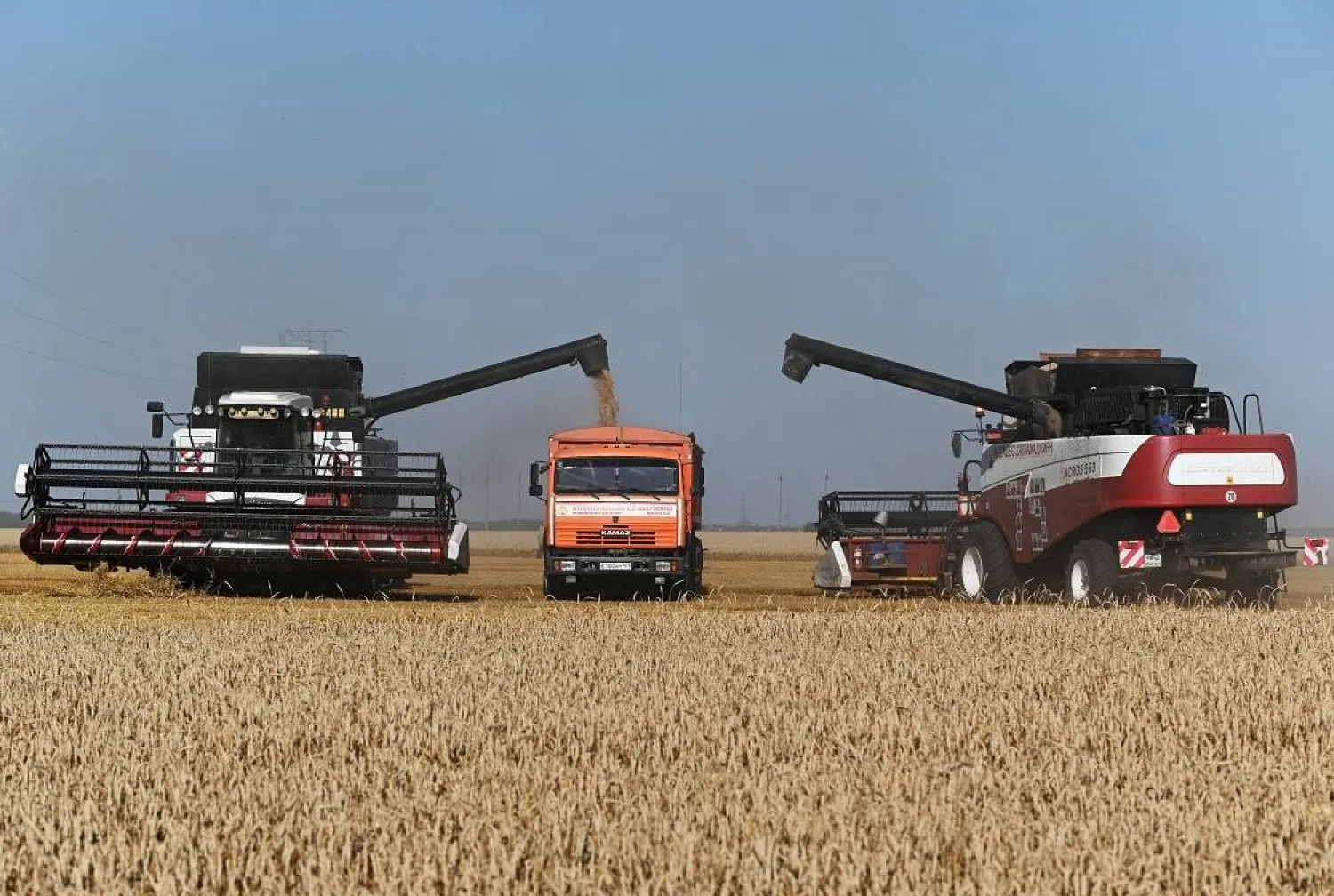

Russia said on Friday it needed actions, not promises, from the United States to meet the conditions it has set for a return to the Black Sea grain deal.
This came after US Secretary of State Antony Blinken told reporters on Thursday: “In the event of return to the agreement, of course, we'll continue to do whatever is necessary to make sure that everyone can export their food and food products freely and safely to include Russia.”
Russia last month declined to renew the deal that had allowed Ukraine to ship grain from its Black Sea ports despite the war, saying not enough had been done to remove obstacles to its own exports of food and fertiliser. It said it was ready to return to the agreement as soon as those issues were addressed.
“If they want to contribute to fulfilling the part of the grain deal that is due to Russia, the Americans must fulfil it, not promise that they will think about it,” Kremlin spokesman Dmitry Peskov told reporters.
“As soon as this is done, this deal will immediately be renewed,” he added.
Western countries have accused Russia of using food as a weapon of war by quitting the Black Sea deal, which had helped to bring down global food prices, and carrying out repeated air strikes in recent weeks on Ukrainian ports and grain stores.
Russia says the deal was not working properly as not enough grain was getting to the poorest countries. It says its own food exports, while not targeted directly, are hampered by Western sanctions affecting port access, insurance and banking.
Meanwhile, Turkish President Recep Tayyip Erdogan on Friday said he hoped that his Russian counterpart Vladimir Putin would visit Türkiye in August, as Ankara works to revive a key deal that allowed Ukraine to export its grain via the Black Sea.
“There's no precise date yet but my foreign minister and intelligence head are holding talks,” Erdogan told reporters after Friday prayers at a mosque in Istanbul.
“I believe that this visit will take place in August,” he said.
Also on Friday, the British Defense Ministry said in its daily intelligence update on the war in Ukraine that Russia is taking risks in order to prevent Ukrainian grain exports.
“In the last two weeks, Russia has conducted several waves of strikes against Ukrainian ports on the Danube River using Iranian-produced one-way attack uncrewed aerial vehicles (OWA UAVs),” it said.
The Ministry added that OWA UAVs have struck targets as close as 200 meters from the Romanian border, suggesting that Russia has evolved its risk appetite for conducting strikes near NATO territory.
“There is a realistic possibility that Russia is using OWA UAVs to strike this area in the belief they are less likely to risk escalation than cruise missiles: Russia likely considers them as acceptably accurate, and they have much smaller warheads than cruise missiles,” it said.
In a related development, the United Nations food agency’s world price index rebounded in July from two-year lows as vegetable oil markets jumped on renewed tensions over exports from war-torn Ukraine and concerns over global production.
The Food and Agriculture Organization’s (FAO) price index, which tracks the most globally-traded food commodities, averaged 123.9 points in July against a revised 122.4 for the previous month, the agency said on Friday.
The June reading was initially given as 122.3.
The July score was nonetheless almost 12% lower than a year ago and 22% below an all-time peak reached in March 2022 following the start of Russia’s invasion of Ukraine.
The FAO Vegetable Oil Price Index rose 12.1 percent from June after seven months of consecutive declines.
International sunflower oil prices rebounded by more than 15 percent in the month, due mostly to renewed uncertainties surrounding the exportable supplies after the Russian Federation’s decision to end implementation of the Black Sea Grain Initiative.
Also, rising world crude oil quotations lent support to vegetable oil prices, FAO said.


