
Iran Accuses Israel of Supplying Potentially Exploding Parts for Ballistic Missile Program

The Stuxnet computer virus in the late 2000s also attacked control units for uranium centrifuges, causing the sensitive devices to spin out of control and destroy themselves. Experts widely attribute the attack to the US and Israel, as does Iran. (Photo by IRINN / AFP)
TT

Iran Accuses Israel of Supplying Potentially Exploding Parts for Ballistic Missile Program

The Stuxnet computer virus in the late 2000s also attacked control units for uranium centrifuges, causing the sensitive devices to spin out of control and destroy themselves. Experts widely attribute the attack to the US and Israel, as does Iran. (Photo by IRINN / AFP)

Iran accused Israel on Thursday of trying to sabotage its ballistic missile program through faulty foreign parts that could explode, damaging or destroying the weapons before they could be used.

The Israeli prime minister's office declined to comment on the allegation, though it comes amid a yearslong effort by both Israel and the U. to target Iran. A reporter also said the parts could be used in Iran's extensive arsenal of drones, which have grown in prominence amid their use by Russia in its war on Ukraine.

The report described the alleged Israeli operation as "one of the biggest attempts at sabotage" it had ever seen. It accused Israeli Mossad agents of supplying the faulty parts, which the state TV report described as low-price "connectors."

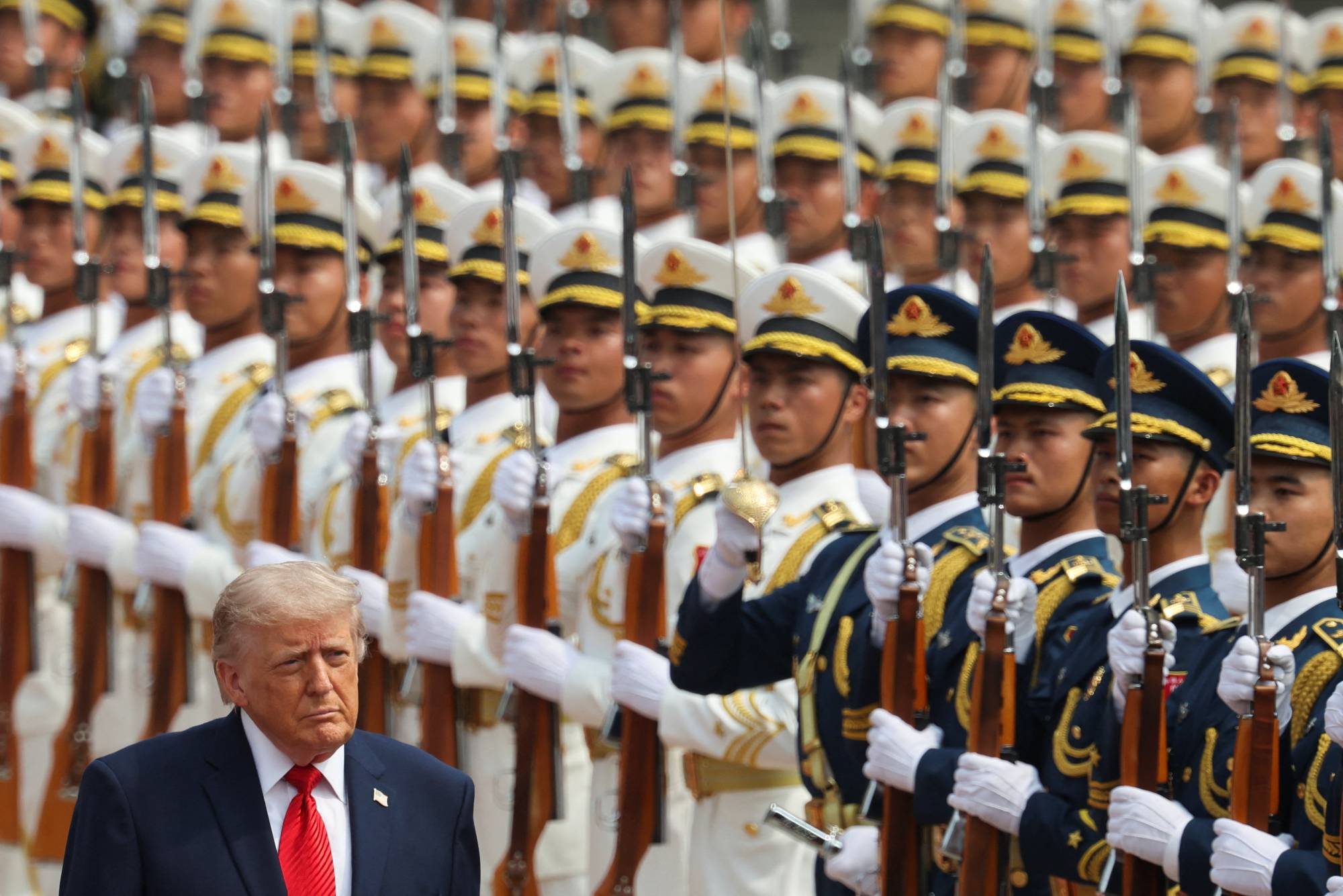
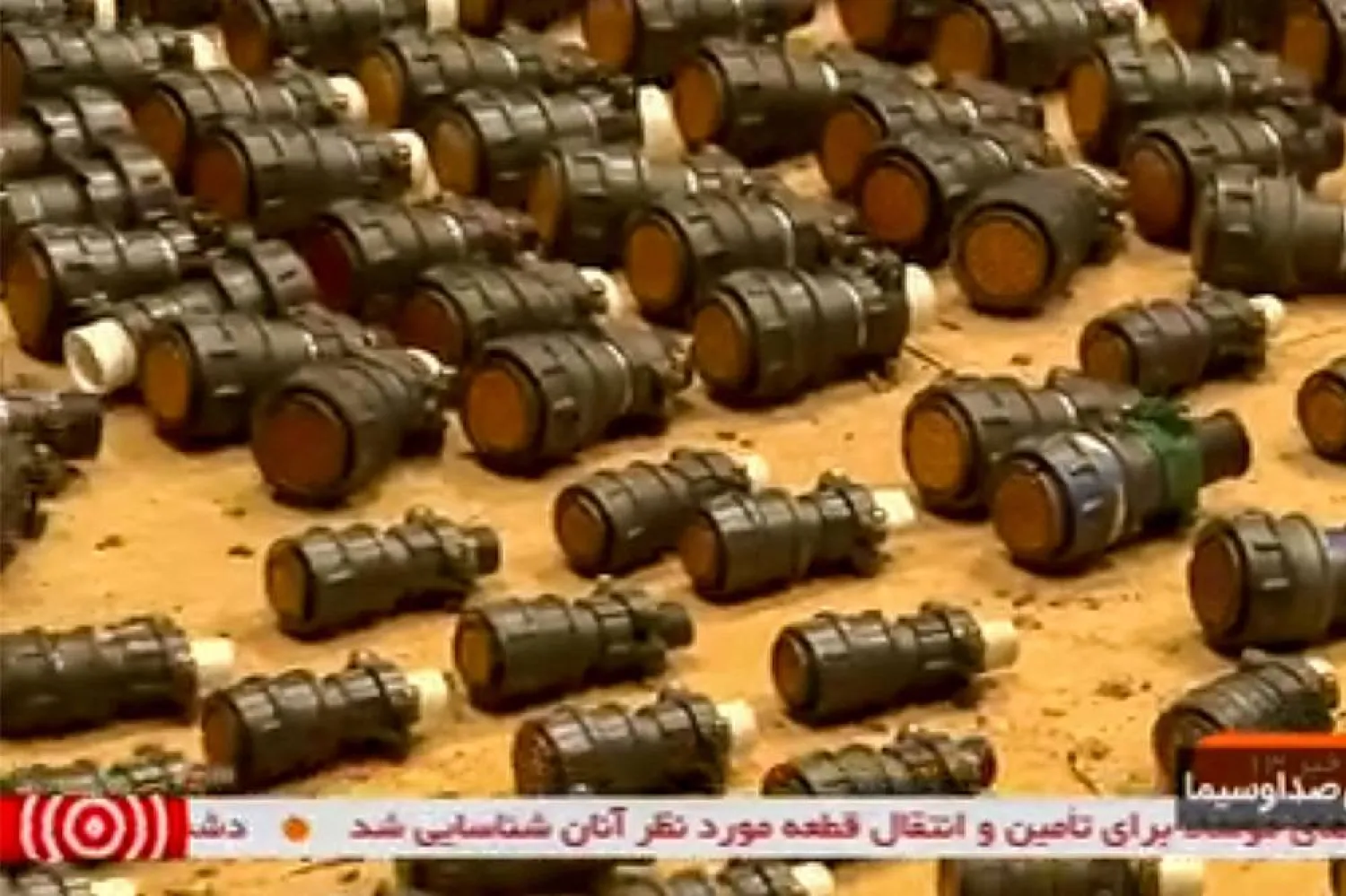
Footage aired by state TV showed the alleged parts, some of them popping up into the air, as if affected by an explosive.

The pieces shown in the television report appeared to be military-style, high-density circular electrical connectors. Such connectors can be used to attach electronic components of a missile or a drone, such as its guidance computer, and pass both electricity and signals. Video released by Iran in the past showed missile scientists working with similar connectors.

"This was planted in a part called the connector, which is responsible for connecting the (computer) network of Iranian-made ballistic missiles, as well as drones," state television military correspondent Younes Shadloo said in the report. "Apparently the part contained a modified explosive kit planted in it and was timed to explode at a certain time."

The state TV report did not explain why Iran sought to purchase the connectors abroad, though some Iranian websites advertising such connectors suggest that Russian-made ones were the best in the market. Russia faces international sanctions over its war on Ukraine, which has seen its own supply of electronics needed for missile systems challenged.

Iranian-made drones used by Russia in the war also use circular connectors, according to reports by experts who have torn down the weapons.

The TV broadcast did not say when authorities discovered the faulty parts, nor if they had been installed in any ballistic missile prior. In May 2022, an explosion at a major Iranian military and weapons development base east of Tehran called Parchin killed an engineer and wounded another. Other blasts have struck as well, including failures in Iran's space program that the US has long criticized as advancing Tehran's ballistic missile program.

The New York Times in 2019 reported the US under then-President Donald Trump had accelerated a sabotage program targeting Iran's missile and rocket program that dated back to the administration of President George W. Bush. Iran's paramilitary Revolutionary Guard, a hard-line force answerable only to Supreme Leader Ali Khamenei, oversees the country's ballistic missile arsenal.

Fabian Hinz, a missile expert and research fellow at the International Institute for Strategic Studies who examined the state TV footage of the parts, said the circular connectors "are used in almost every type of ballistic missile."

"It’s quite likely Iran purchases these connectors from abroad," Hinz said. "This is not the first time Iran is talking about components being tampered with to sabotage the missile program."

Israel also has been suspected in a series of targeted slayings of nuclear scientists in Iran. Sabotage attacks also have damaged Iranian nuclear sites.

The Stuxnet computer virus in the late 2000s also attacked control units for uranium centrifuges, causing the sensitive devices to spin out of control and destroy themselves. Experts widely attribute the attack to the US and Israel, as does Iran.


Russia Hits Kyiv with Drones and Ballistic Missiles, 1 Dead and 31 Wounded

Rescuers work at a residential building partially destroyed following Russian drone and missile strikes in Kyiv on May 14, 2026, amid the Russian invasion in Ukraine. (Photo by Roman PILIPEY / AFP)
TT

Russia Hits Kyiv with Drones and Ballistic Missiles, 1 Dead and 31 Wounded

Rescuers work at a residential building partially destroyed following Russian drone and missile strikes in Kyiv on May 14, 2026, amid the Russian invasion in Ukraine. (Photo by Roman PILIPEY / AFP)

Russia attacked Ukraine's capital with a mass drone and missile attack early Thursday morning that killed at least one and injured 31 people, local authorities said.

The attack struck civilian infrastructure and residential buildings across multiple cities, Ukrainian Prime Minister Yuliia Svyrydenko said, with Kyiv enduring the heaviest losses.

Damage was recorded across six districts of the capital, according to head of Kyiv's Military Administration Tymur Tkachenko. He warned Russia was attacking the city with ballistic missiles and drones. Residential buildings and civilian infrastructure was damaged.

The cities of Kremenchuk, Bila Tserkva, Kharkiv, Sumy and Odesa also were targeted in the attack, which involved both ballistic and cruise missiles, she said.

Russia's overnight air strikes targeted civilian infrastructure ⁠including ports in ⁠the southern ⁠Odesa region and railways, Deputy Prime Minister Oleksiy Kuleba said.

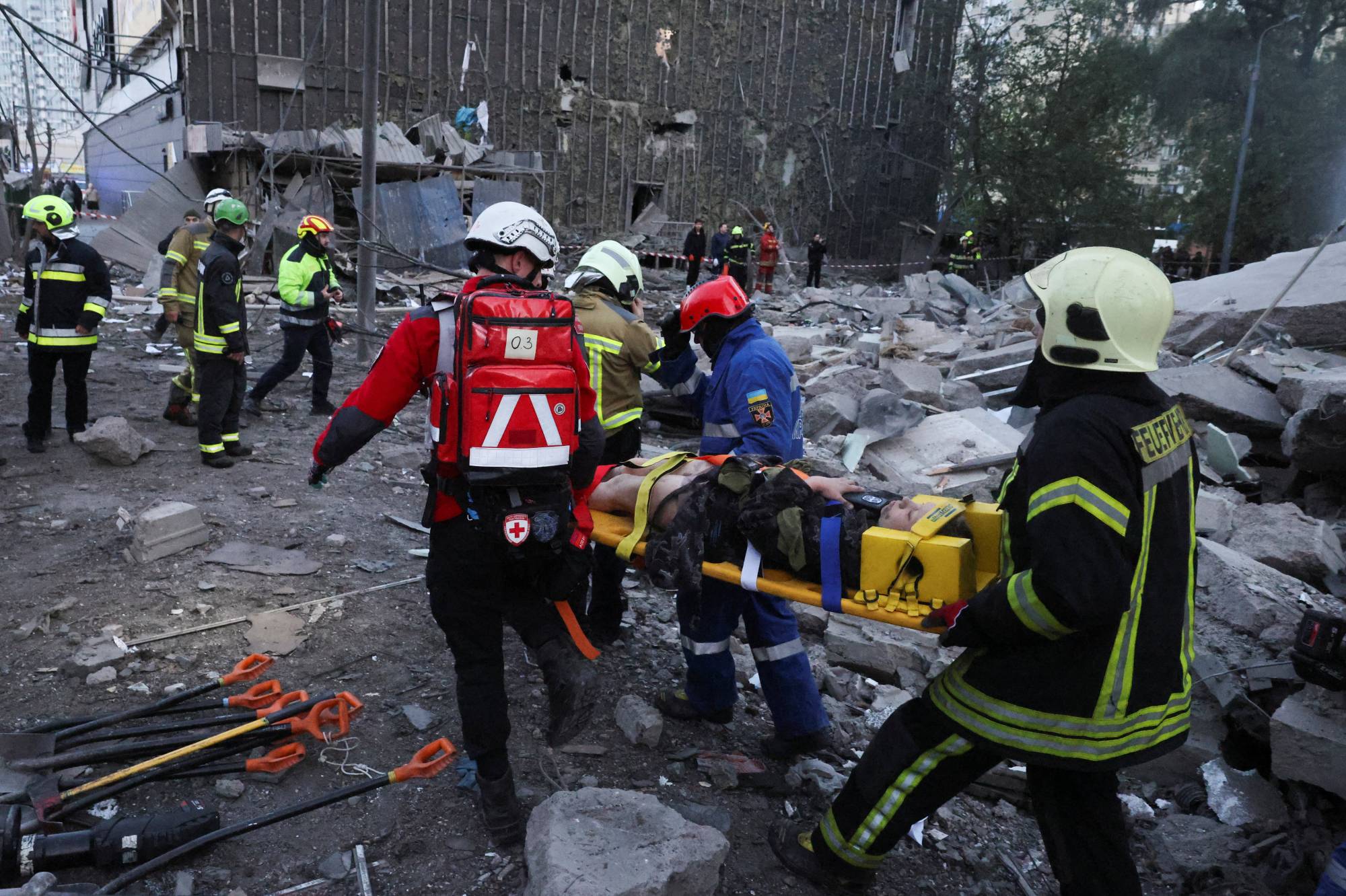
In the Darnytsia district of Kyiv, a multistory residential building partially collapsed, burying people under the rubble. At least 27 people were rescued from the rubble, according to Ukraine's Emergency Service.

Kyiv's Mayor Vitali Klitschko said 18 apartments were destroyed. He added that there were problems with water supply on the left bank of Kyiv as a result of the attack.

At the scene, emergency workers searched for survivors as smoke from the attack continued to smolder beneath the pile of rubble.

Rescuers evacuate an injured woman from an apartment building damaged during Russian missile and drone strikes, amid Russia's attack on Ukraine, in Kyiv, Ukraine, May 14, 2026. REUTERS/Thomas Peter

Emergency operations also were ongoing in the Obolonskyi and Holosiivskyi districts of Kyiv, the service said.

In the Dnieper district, a drone hit the roof of a five-story residential building, Tkachenko said. Another building in the Dniprovskyi district was also damaged.

People shelter in a metro station during a Russian attack, in Kyiv, Ukraine May 14, 2026. REUTERS/Thomas Peter

The attack came hours after a rare daytime attack on Kyiv that killed at least six people, according to Ukrainian President Volodymyr Zelenskyy. The assault, which involved 800 drones, struck about 20 regions of Ukraine and was among the longest such attacks during the war.

Zelenskyy said the attack that lasted hours Wednesday aimed to cause as much “pain and grief” as possible.


Xi and Trump Meet in High-profile Summit in Beijing

Children hold Chinese and US flags, as US President Donald Trump participates in a welcome ceremony with Chinese President Xi Jinping at the Great Hall of the People in Beijing, China, May 14, 2026. REUTERS/Maxim Shemetov/Pool
TT

Xi and Trump Meet in High-profile Summit in Beijing

Children hold Chinese and US flags, as US President Donald Trump participates in a welcome ceremony with Chinese President Xi Jinping at the Great Hall of the People in Beijing, China, May 14, 2026. REUTERS/Maxim Shemetov/Pool

Presidents Xi Jinping and Donald Trump on Thursday wrapped up a meeting in Beijing after about two hours of discussions focusing on trade, Taiwan and other differences in the US-China relationship.

In a closed-door meeting, Xi told Trump that if Taiwan is handled well, US-China relations “will enjoy overall stability,” according to a readout of their bilateral talks published by the official Xinhua news agency.

If not, however, the two countries risk “clashes and even conflicts, putting the entire relationship in great jeopardy,” Xi was reported to have said.

The US and China should be “partners rather than rivals,” Xi told Trump ahead of their bilateral talks.

“I always believed that the common interests between China and the US outweigh their differences,” Xi said. “Cooperation benefits both sides, while confrontation harms both.”

US President Donald Trump inspects an honor guard during a welcome ceremony at the Great Hall of the People, in Beijing, China, May 14, 2026. REUTERS/Maxim Shemetov/Pool

The leaders offered warm words about each other and hope for the future of US-China relations as they opened their bilateral talks.

But Xi sounded more cautionary about what lies ahead for the world’s biggest economic powers.

“Cooperation benefits both sides, while confrontation harms both,” Xi said. “The two countries should be partners rather than rivals, achieve success together and pursue common prosperity, and chart a correct path for major-country relations in the new era.”

In remarks welcoming Trump, Xi name-checked an ancient Greek historian to express his hopes that the US and China can avoid conflict, saying that history, the world and its people were asking “whether the two countries can transcend the “Thucydides Trap” and forge a new model for relations between major powers.

“He was using a term that’s popular in foreign policy studies, referring to the idea that when a rising power threatens to displace an established power, the result is often war.

It comes from Thucydides’ account of the destructive Peloponnesian War between Athens and Sparta, in which he remarked that “It was the rise of Athens, and the fear that rise engendered in Sparta, that made war inevitable.”

The Chinese leader in his opening remarks at the summit underscored the importance of the moment for the two world powers and said the question before China and the United States is “whether the two countries can work together to meet challenges and bring greater stability to the world.”

“Can we, in the interest of the well-being of our two peoples and the future of humanity, build a brighter future together for our bilateral relations?” Xi said.

Trump only made glancing allusion to past difficulties in his yearslong relationship with Xi.

Those include two trade wars, tensions over US support for Taiwan — and Trump's impatience with Beijing over the flow precursor chemicals used to make fentanyl.


US Senate Backs Trump on Iran War Despite Deadline Lapse

The Iran flag flutters from a tall flagpole over high-rise buildings in northern Tehran on May 12, 2026. (AFP)
TT

US Senate Backs Trump on Iran War Despite Deadline Lapse

The Iran flag flutters from a tall flagpole over high-rise buildings in northern Tehran on May 12, 2026. (AFP)

US senators on Wednesday rejected a resolution curbing President Donald Trump's power to wage war on Iran -- their first vote on the conflict since a 60-day deadline expired for the White House to seek formal authorization.

The measure, introduced by Oregon Senator Jeff Merkley, was the seventh failed attempt by Democrats to rein in Trump's war powers since the conflict began more than 10 weeks ago.

Democrats say that, under the War Powers Act, the administration had until May 1 to secure congressional approval for military action after Trump notified lawmakers in early March of strikes against Iran.

The administration disputes that interpretation, arguing that the clock was paused by a ceasefire announced more than a month ago.