


Report: American Prisoners Freed by Iran Land in US After Swap Deal 

Siamak Namazi and Morad Tahbaz, who were released during a prisoner swap deal between US and Iran, arrive at Doha International Airport, Qatar September 18, 2023. (Reuters)
TT

Report: American Prisoners Freed by Iran Land in US After Swap Deal 

Siamak Namazi and Morad Tahbaz, who were released during a prisoner swap deal between US and Iran, arrive at Doha International Airport, Qatar September 18, 2023. (Reuters)

A plane carrying five Americans freed by Iran landed in the United States on Tuesday, a day after they were swapped for the release of five Iranians held in the US and the unfreezing of $6 billion in Iranian funds, in a deal between the arch enemies.

CNN reported the plane had landed. The report did not provide further details.

It followed a carefully choreographed exchange, agreed after months of Qatar-mediated talks, that was triggered on Monday when the funds that had been blocked in South Korea were wired, via Switzerland, to banks in Doha.

After the transfer was confirmed, the five US prisoners plus two relatives took off on a Qatari plane from Tehran, at the same time as two of the five Iranian detainees landed in Doha on their way home. Three Iranians chose not to go to Iran.

The deal removes a point of friction between the United States, which brands Tehran a sponsor of terrorism, and Iran, which calls Washington the "Great Satan".

But it is unclear whether it will bring the two adversaries, which have been at odds for 40 years, closer on any other issues, such as Iran's nuclear program and its backing for regional militias or the US military presence in the Gulf and US sanctions.

The freed Americans include US-Iranian dual citizens Siamak Namazi, 51, and Emad Sharqi, 59, both businessmen, and Morad Tahbaz, 67, an environmentalist who also holds British nationality. Two of them have not been publicly identified.

'Humanitarian action'

US President Joe Biden welcomed the return of the prisoners home in a statement on Monday but his administration also announced fresh US sanctions.

"We will continue to impose costs on Iran for their provocative actions in the region," he said.

Iranian President Ebrahim Raisi, who was in New York for the annual UN General Assembly, called the swap a humanitarian action. "It can certainly be a step based upon which in the future other humanitarian actions can be taken," he added.

Relations between the United States and Iran have been especially bitter since 2018 when then-President Donald Trump pulled out of a deal aimed at curbing Tehran's nuclear ambitions and toughened US sanctions.

Washington suspects Iran's nuclear program may be aimed at developing nuclear arms, a charge Iran denies.

US Secretary of State Antony Blinken left the door open to nuclear diplomacy, but suggested nothing was imminent.

US analysts were skeptical about prospects for progress.

"The prisoner swap does likely pave the way for additional diplomacy around the nuclear program this fall, although the prospect for actually reaching a deal is very remote," said Henry Rome of the Washington Institute for Near East Policy.


South Korea 'Closely Monitoring' Trump Call to Send Warships to Hormuz

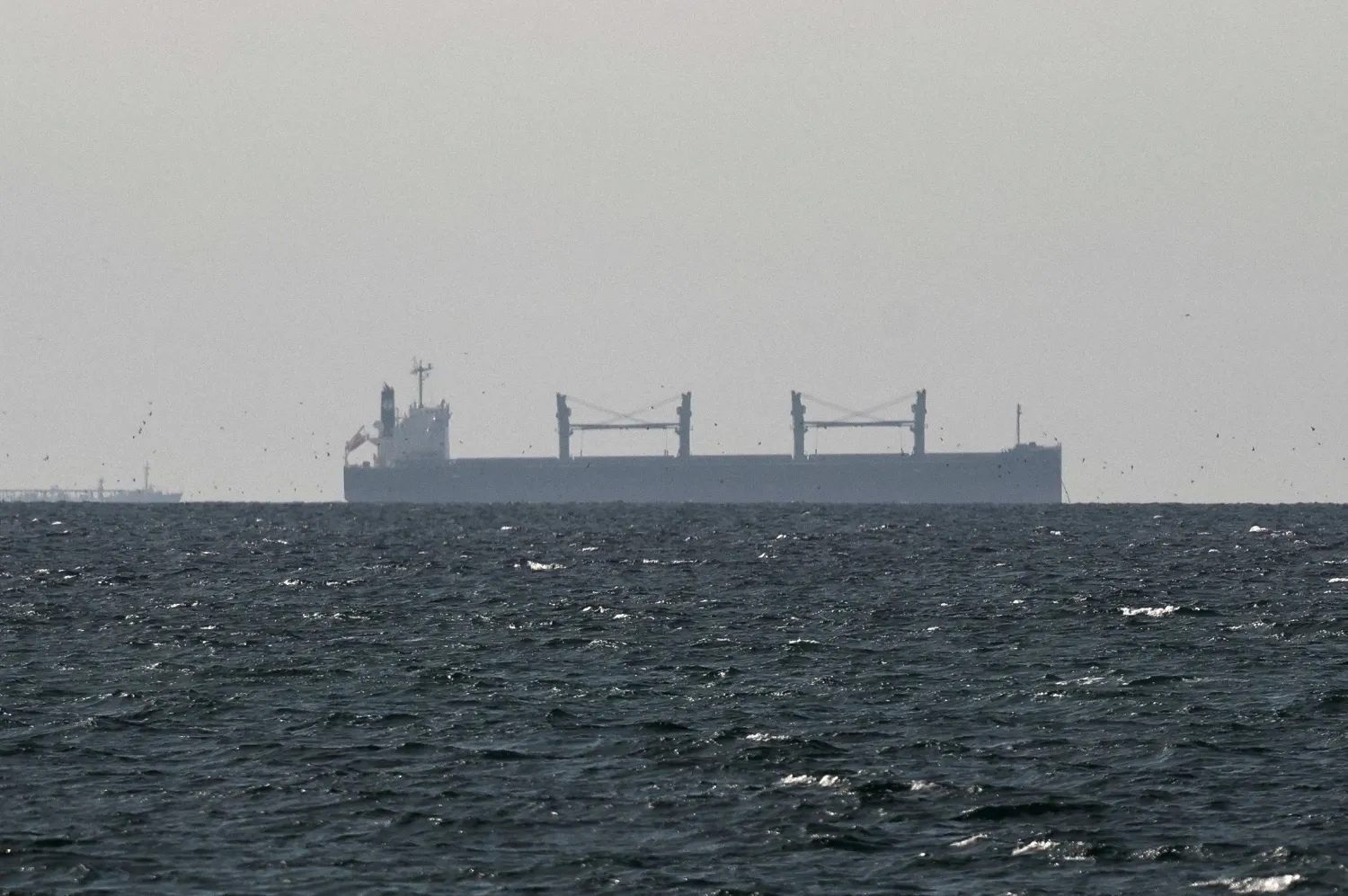
A tanker sails in the Gulf, near the Strait of Hormuz, as seen from northern Ras al-Khaimah, near the border with Oman’s Musandam governance, amid the US-Israeli conflict with Iran, in United Arab Emirates, March 11, 2026. (Reuters)
TT

South Korea 'Closely Monitoring' Trump Call to Send Warships to Hormuz

A tanker sails in the Gulf, near the Strait of Hormuz, as seen from northern Ras al-Khaimah, near the border with Oman’s Musandam governance, amid the US-Israeli conflict with Iran, in United Arab Emirates, March 11, 2026. (Reuters)

South Korea said on Sunday it was paying close attention to US President Donald Trump's call for Seoul and other countries to send warships to help protect oil supplies passing through the Strait of Hormuz. 

Since US-Israeli forces launched a war against Iran on Feburary 28, Tehran has responded with attacks and threats that have nearly halted shipping in the strait, through which one-fifth of global oil supplies normally passes. 

After earlier vowing that the US Navy would begin escorting tankers through the waterway, Trump said on social media on Saturday that "Many Countries" would also send warships to keep it open, naming South Korea and Japan among others. 

But after a senior Japanese official said on Sunday that Tokyo maintained a high threshold for such a move, Seoul also refrained from making any explicit commitments. 

"We are closely monitoring President Trump's remarks on social media and will carefully consider the matter in close consultation with the United States," a South Korean presidential official told AFP. 

Seoul was "comprehensively considering and exploring various measures... to ensure the safety of energy transport routes", the official said. 

Like other Asian economies, South Korea relies heavily on energy imports, including through the Strait of Hormuz. 

The war has already prompted Seoul to impose a fuel price cap to ease pressure on its energy supply, the first such measure since 1997. 

Earlier on Sunday, Takayuki Kobayashi, the policy chief of Japanese Prime Minister Sanae Takaichi's ruling Liberal Democratic Party, said the bar for sending Japanese navy ships to the region under existing laws was "extremely high". 

"Legally speaking, we do not rule out the possibility, but given the current situation in which this conflict is ongoing, I believe this is something that must be considered with great caution," he said on the public broadcaster NHK's political debate program. 

Trump also mentioned China, France and Britain by name in his post, saying he hoped countries "that are affected by this artificial constraint will send Ships to the area". 


Drone Debris Sparks Fire at Oil Facility in Russia’s Krasnodar Region, Authorities Say

 Smoke is seen through the broken window of a residential neighborhood damaged by Russian aerial guided bomb in Zaporizhzhia, Ukraine, Saturday, March 14, 2026. (AP)
Smoke is seen through the broken window of a residential neighborhood damaged by Russian aerial guided bomb in Zaporizhzhia, Ukraine, Saturday, March 14, 2026. (AP)
TT

Drone Debris Sparks Fire at Oil Facility in Russia’s Krasnodar Region, Authorities Say

 Smoke is seen through the broken window of a residential neighborhood damaged by Russian aerial guided bomb in Zaporizhzhia, Ukraine, Saturday, March 14, 2026. (AP)
Smoke is seen through the broken window of a residential neighborhood damaged by Russian aerial guided bomb in Zaporizhzhia, Ukraine, Saturday, March 14, 2026. (AP)

A fire broke out at an oil facility in Russia's Krasnodar region after debris from a downed drone fell on it, Russian authorities said on Sunday.

According to ‌preliminary reports, ‌there were no ‌casualties.

The ⁠damaged oil facility ⁠is located near Tikhoretsk, where Ukrainian drones struck an oil pumping station on Thursday. The fire ⁠had been extinguished on ‌Friday.

Authorities ‌did not clarify whether ‌it was the ‌same facility.

The Tikhoretsk hub is one of the largest oil points in southern ‌Russia and is the only supply route ⁠for ⁠petroleum products to the key Black Sea port of Novorossiysk.

The attack was the latest in a series of drone strikes on the region's energy and port infrastructure.


Iran Guards Vow to 'Pursue and Kill' Israeli Premier Netanyahu

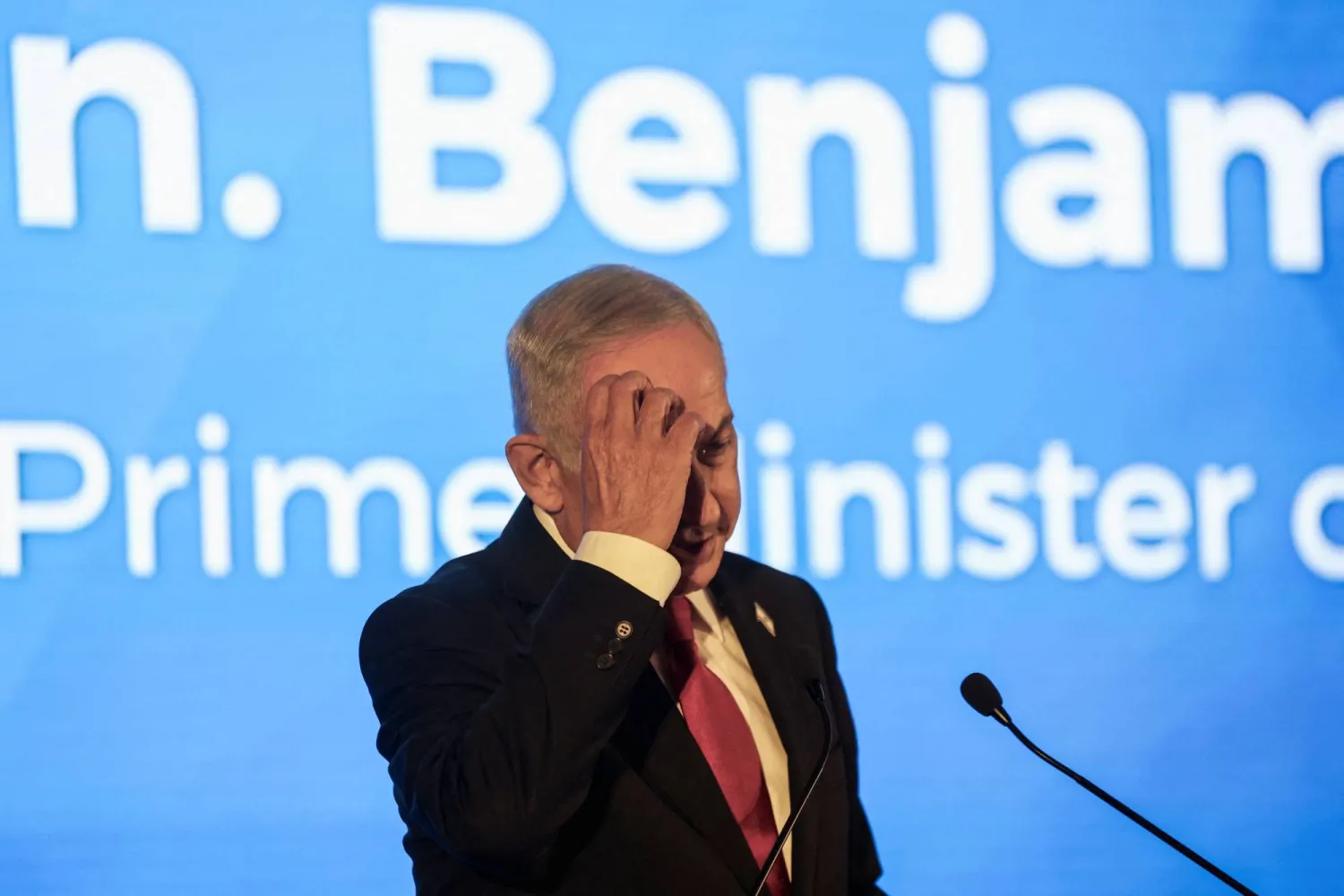
Israeli Prime Minister Benjamin Netanyahu at a press conference in Jerusalem (archive – Reuters)
TT

Iran Guards Vow to 'Pursue and Kill' Israeli Premier Netanyahu

Israeli Prime Minister Benjamin Netanyahu at a press conference in Jerusalem (archive – Reuters)

Iran's Revolutionary Guards vowed on Sunday to target Israeli Prime Minister Benjamin Netanyahu as the war with Israel and the United States continues.

"If this child-killing criminal is alive, we will continue to pursue and kill him with full force," said the Guards on their website Sepah News.