


Trump Goes to Michigan to Rail Against Biden’s Electric Vehicle Push While GOP Rivals Debate 

Former US President and Republican presidential candidate Donald Trump looks on while his supporters cheer on the day he addresses auto workers as he skips the second GOP debate, in Clinton Township, Michigan, US, September 27, 2023. (Reuters)
TT

Trump Goes to Michigan to Rail Against Biden’s Electric Vehicle Push While GOP Rivals Debate 

Former US President and Republican presidential candidate Donald Trump looks on while his supporters cheer on the day he addresses auto workers as he skips the second GOP debate, in Clinton Township, Michigan, US, September 27, 2023. (Reuters)

As his Republican rivals sparred onstage in California at their second primary debate, Donald Trump was in battleground Michigan Wednesday night working to win over blue-collar voters by lambasting President Joe Biden and his push for electric cars in the midst of an autoworkers’ strike.

“I will not allow under any circumstances the American automobile industry to die,” Trump said at Drake Enterprises, a non-unionized auto parts supplier in Clinton Township, about a half-hour outside Detroit.

The Republican front-runner's trip came a day after Biden became the first sitting president in US history to walk a picket line as he joined United Auto Workers in Detroit. The dueling appearances had the feel of the opening salvo of the 2024 general election, which increasingly looks like a rematch between Trump and Biden, even though primary voting won’t begin until next year.

Trump’s decision to skip another debate comes as he maintains a commanding lead in the GOP primary, even as he faces four separate criminal indictments in four different states.

Trump, in his speech, tried to cast Biden as hostile to the auto industry and workers, using extreme rhetoric to claim the industry was “being assassinated.” He insisted Biden’s embrace of electric vehicles — a key component of his clean-energy agenda — would ultimately lead to lost jobs, amplifying the concerns of some autoworkers who worry that electric cars require fewer people to manufacture and that there is no guarantee factories that produce them will be unionized.

“He’s selling you out to China, he’s selling you out to the environmental extremists and the radical left,” Trump told his crowd, flanked by American flags and pallets of auto parts.

He also downplayed the strike as the UAW pushes for higher wages, shorter work weeks and assurances from the country’s top automakers that new electric vehicle jobs will be unionized. While Trump said he supported the workers and hoped they would get a good deal, he also said no deal would matter if proposed pollution limits take effect.

“You’re all on the picket lines and everything, but it doesn’t make a damn bit of difference what you get, because in two years you’re all going to be out of business,” he said.

While Trump has cast himself as pro-worker, he has clashed repeatedly with union leadership and tried to turn union members against their leaders. In a recent campaign video, Trump urged autoworkers not to pay union dues and claimed their leaders have “got some deals going for themselves.”

Just hours before Trump’s visit, the UAW posted a video on its Facebook page protesting factory closures by Detroit’s automakers that included 2017 footage of Trump telling a northern Ohio crowd that auto jobs would be coming back. Two years later, General Motors closed a huge assembly plant in Lordstown, Ohio, costing thousands of jobs.

Still, Trump repeatedly urged the union to endorse him, at one point directly appealing to UAW President Shawn Fain.

While the union has withheld its support for Biden after endorsing him in 2020, Fain appeared at Biden’s side during his visit Tuesday and has repeatedly criticized Trump.

“I don’t think he cares about working-class people. I think he cares about the billionaire class, he cares about the corporate interests. I think he’s just trying to pander to people and say what they want to hear, and it’s a shame,” Fain said this week.

Biden's re-election campaign, in a statement, called Trump's speech “a pathetic, recycled attempt to feign support for working Americans.”

Drake Enterprises, where Trump spoke, makes automotive and heavy-duty truck components, including gear shift levers for semi-trucks, said its president Nathan Stemple. He said a shift to electric cars would cripple his business.

While Trump aides had said the audience would include several hundred current and former UAW members, as well as members of plumbers and pipefitters unions, it also included many non-union workers who support the former president. Some said they had been invited by people who did business with Drake; others said they had simply arrived at the factory Wednesday afternoon and been allowed to attend.

Tony Duronio, 64, a longtime Trump supporter and real estate broker who lives in Clinton Township, said he received an invitation from a group called Autoworkers for Trump. Duronio praised the economy during Trump's time in office and echoed the former president's criticism of electric vehicles: “Nobody wants ‘em,” he said — and applauded Trump’s decision to skip the debate.

“He’s the frontrunner. He doesn’t have any competition," he said. “Look, if it ain’t him, I may stay home ’cause the rest are no different than Biden.”

Trump briefly mentioned the debate happening 2,000 miles away at the Ronald Reagan presidential library, calling his GOP rivals “job candidates.”

“They’ll do anything,” he said. “Secretary of something. They even say VP, does anybody see any VP in the group? I don’t think so.”

The former president has tried to use the strike to drive a wedge between Biden and union workers, a constituency that helped pave the way for his surprise 2016 victory. Trump in that election won over voters in Democratic strongholds like Michigan, Wisconsin and Pennsylvania, fundamentally reshaping voting alliances as he railed against global trade deals and vowed to resurrect dying manufacturing towns.

But Biden won those states back in 2020 as he emphasized his working-class roots and commitment to organized labor. He often calls himself the “ most pro-union president” in US history and argues the investments his administration is making in green energy and electric vehicle manufacturing will ensure the future of the industry unfolds in the US.

There’s disagreement in the auto industry over whether the shift to EVs will cost union jobs. Some executives say that because electric vehicles require fewer moving parts, companies will need 30% to 40% fewer workers to assemble them. But others say EVs will require comparable labor.

The Trump campaign has vigorously defended his record as pro-worker, but union leaders say his first term was far from worker-friendly — citing unfavorable rulings from the nation’s top labor board and the US Supreme Court, as well as unfulfilled promises of automotive jobs and the closure of the Ohio GM plant.

Along the picket line, workers have been split. Adrian Mitchell, who works at the GM parts warehouse that Biden visited, said he believes Biden would be better for the middle class than a second Trump term. Still, Mitchell said workers are worried the transition to electric cars may cost them jobs.

It was a different scene at Trump's event, filled with MAGA hats and pro-Trump signs.

“Let’s put it this way: There’s nothing I don’t like about Trump,” said Johnny Pentowski, who was a member of the Teamsters Union before he retired as a truck driver earlier this year.

Pentowski, 72, who lives in Eastpointe Michigan, accused union leaders of failing to listen to their members and shared Trump’s skepticism of EVs.

“You take away fossil fuels from a country, you’re taking away its lifeblood,” he said. “Windmills and solars don’t do it.”

The UAW’s targeted strikes against the Big Three automakers — General Motors, Stellantis and Ford — began at midnight Sept. 14 and have since expanded to 38 parts distribution centers in 20 states.

The union is asking for 36% raises in general pay over four years and has also demanded a 32-hour week with 40 hours of pay and a return of cost-of-living pay raises, among other benefits. It also wants to be allowed to represent workers at 10 electric vehicle battery factories, most of which are being built by joint ventures between automakers and South Korean battery makers.

While Biden has not implemented an electric vehicle mandate, he has set a goal that half of all new vehicle sales be electric by 2030. His administration has also proposed stiff new automobile pollution limits that would require up to two-thirds of new vehicles sold in the US to be electric by 2032, a nearly tenfold increase over current electric vehicle sales. That proposal is not final.



Wife of ex-Venezuelan President Nicolás Maduro Seeks Release from US Jail

(FILES) Venezuelan President Nicolas Maduro raises his fist next to his wife Cilia Flores during a rally to commemorate the 33rd anniversary of late President Hugo Chavez's 1992 failed military coup against the government (1989-1993) of Carlos Andres Perez in Caracas on February 4, 2025. (Photo by Pedro MATTEY / AFP)
TT

Wife of ex-Venezuelan President Nicolás Maduro Seeks Release from US Jail

(FILES) Venezuelan President Nicolas Maduro raises his fist next to his wife Cilia Flores during a rally to commemorate the 33rd anniversary of late President Hugo Chavez's 1992 failed military coup against the government (1989-1993) of Carlos Andres Perez in Caracas on February 4, 2025. (Photo by Pedro MATTEY / AFP)

The wife of former Venezuelan President Nicolás Maduro was set to be back in court Thursday, where her lawyers will urge a judge to free her from jail and put her under house arrest because she has heart problems.

Maduro and his wife Cilia Flores have been behind bars in New York since early January when forces seized them from their Caracas home in a middle-of-the-night raid.

Both have pleaded not guilty in a criminal case first brought six years ago against them and numerous alleged co-conspirators. They face potential life prison sentences if convicted of being part of a conspiracy to send cocaine into the US, The Associated Press said.

Their attorneys have asked for the case to be dismissed on the grounds that they have immunity as the leader and first lady of a foreign country.

Lawyers for Flores, 69, have also argued that she has medical issues that cannot be treated effectively in jail, and that she could instead be allowed to live under 24-hour guard at a residence in New York.

They also said she suffered permanent scarring when she was “thrown against a wall or dresser” during the US military action that led to her capture.

Her lawyers say she has lost 25 pounds while imprisoned at the Metropolitan Detention Center in Brooklyn and has been told that she might need heart surgery. They said she also suffers from “lingering lightheadedness, dizziness and shortness of breath" and might have suffered a minor heart attack in July.

Prosecutors opposed the bail request. In a court filing, they wrote that Flores would pose an “extreme risk of flight and danger to the public” if released. They also said she has been taken from the jail to get treatment at a local hospital, when care was needed.

President Donald Trump’s administration has defended the raid to capture Maduro as a “surgical law enforcement operation.” Maduro has called himself a prisoner of war and his capture a kidnapping.

Flores is charged with participating in a cocaine importation conspiracy with her husband, Maduro, who served as Venezuela's president from 2013 until his capture by American forces in January.

Lawyers for Flores said she was no threat to flee because she is “intent on supporting her husband with her constant presence.”


Gas, Health Care, Utilities: High Costs Squeeze US Midterm Voters

Sherrod Brown, a Democratic candidate for the Senate, hopes to win Ohio voters over as households feel the squeeze from affordability fears. DUSTIN FRANZ / AFP
TT

Gas, Health Care, Utilities: High Costs Squeeze US Midterm Voters

Sherrod Brown, a Democratic candidate for the Senate, hopes to win Ohio voters over as households feel the squeeze from affordability fears. DUSTIN FRANZ / AFP

Former US steelworker Denise Barber retired three years ago, but steep gasoline prices and family healthcare needs are making the Ohio resident consider returning to part-time work to make ends meet.

The 68-year-old is among American voters squeezed by affordability worries ahead of November's midterm elections, an issue that Democrats hope can help them to victory.

"I'm hoping that somebody can undo some of the things that this president has caused, like this Iran war," Barber told AFP.

The Democratic former union worker was among dozens in Mahoning Valley -- known for its industrial history -- to show up at a town hall in recent weeks, expressing concern over hospital closures, cuts to health programs and rising cost of living.

Many districts in Ohio are expected to remain Republican. But the Buckeye State, which President Donald Trump won by double digits in 2024, has become a battleground.

Democrats are competitive in some House races and have a chance of seeing former three-term senator Sherrod Brown unseat Republican Jon Husted, who filled a vacancy left by Vice President JD Vance.

The question is whether frustrations over rising gasoline, grocery and utilities prices, exacerbated by other worries like healthcare issues, will spill into the ballot box.

Barber recalls driving her husband to medical appointments recently after he had a mini stroke, and how costs piled up as they live in a "medical desert."

"The price of gas driving up there is outrageous," said Barber, a steelworker of 22 years who later became an accountant after losing her job. "On a fixed income, it makes it really hard."

She is not alone, with affordability top-of-mind for US voters this year.

Some 29 percent spontaneously named an economic concern when asked what they wanted congressional candidates to discuss, a Pew survey in June found.

War with Iran has intensified stresses, as Tehran retaliated against US-Israel strikes from late February by choking off the Strait of Hormuz, sending energy costs soaring.

The average cost of regular gasoline has jumped over 45 percent since the war started, to $4.37 per gallon ($1.15 per liter), AAA motor club data shows.

For Barber, this sometimes meant hundreds of dollars more in weekly expenses.

"I'm going to have to find a job so that I can make up the difference," she said.

- 'Win them over' -

While Mahoning Valley in northeast Ohio has "become very Republican," Hudson Institute nonresident senior fellow Paul Sracic believes the party faces "real danger" in the Senate race.

"The party in power always does poorly in midterm elections," he told AFP. "It was going to be an uphill fight anyway."

But "we have gas prices going up, and gas prices are the best measure of how people feel about the economy," he said.

Husted has also been a supporter of data center investment, which has attracted backlash, Sracic said.

And US grocery prices stood 2.2 percent higher than a year ago in August, underscoring households' compounding costs.

Democrats are campaigning on these pressures.

"Working-class voters didn't want this war," Brown told reporters on the sidelines of a recent meet-and-greet in Warren, Ohio.

"They didn't want to see explosions in costs of everything," Brown added. "I'm going to win them over."

"Why do you think the data centers are pumping $30 million against me in this state? Because they know I'll stand up to them."

- 'Getting crunched' -

"Affordability is affecting every worker, not only in this area but really across the entire country," said David Green, a labor leader with the United Auto Workers (UAW) union in Ohio.

"Workers are getting crunched right now," he added.

"What's been really scary is over the last six months to a year, a lot of our smaller UAW facilities that are independent part suppliers, mom and pop shops, are having layoffs and some plant closures," Green said.

While the area around Youngstown was once predominantly Democrat, he said, it turned red in 2016 amid Trump's election pledges.

"There were a lot of broken promises," Green said, including that "all these jobs were coming back."

Some residents say they are still awaiting the manufacturing resurgence Trump promised.

Retired steelworker Mike Rubicz has seen Mahoning Valley "go from one of the main centers of the steel industry in the world to (virtually having) no steel mills left."

"Everyone in this valley is conscious of the need for manufacturing jobs," he said. "But the reality is, the ability of people to come to the valley and get a job is gone."


Housing Crisis Set to Dominate Spain's Snap Election

The main tenants' unions have spearheaded pressure on politicians to reform Spain's housing market. JAVIER SORIANO / AFP
TT

Housing Crisis Set to Dominate Spain's Snap Election

The main tenants' unions have spearheaded pressure on politicians to reform Spain's housing market. JAVIER SORIANO / AFP

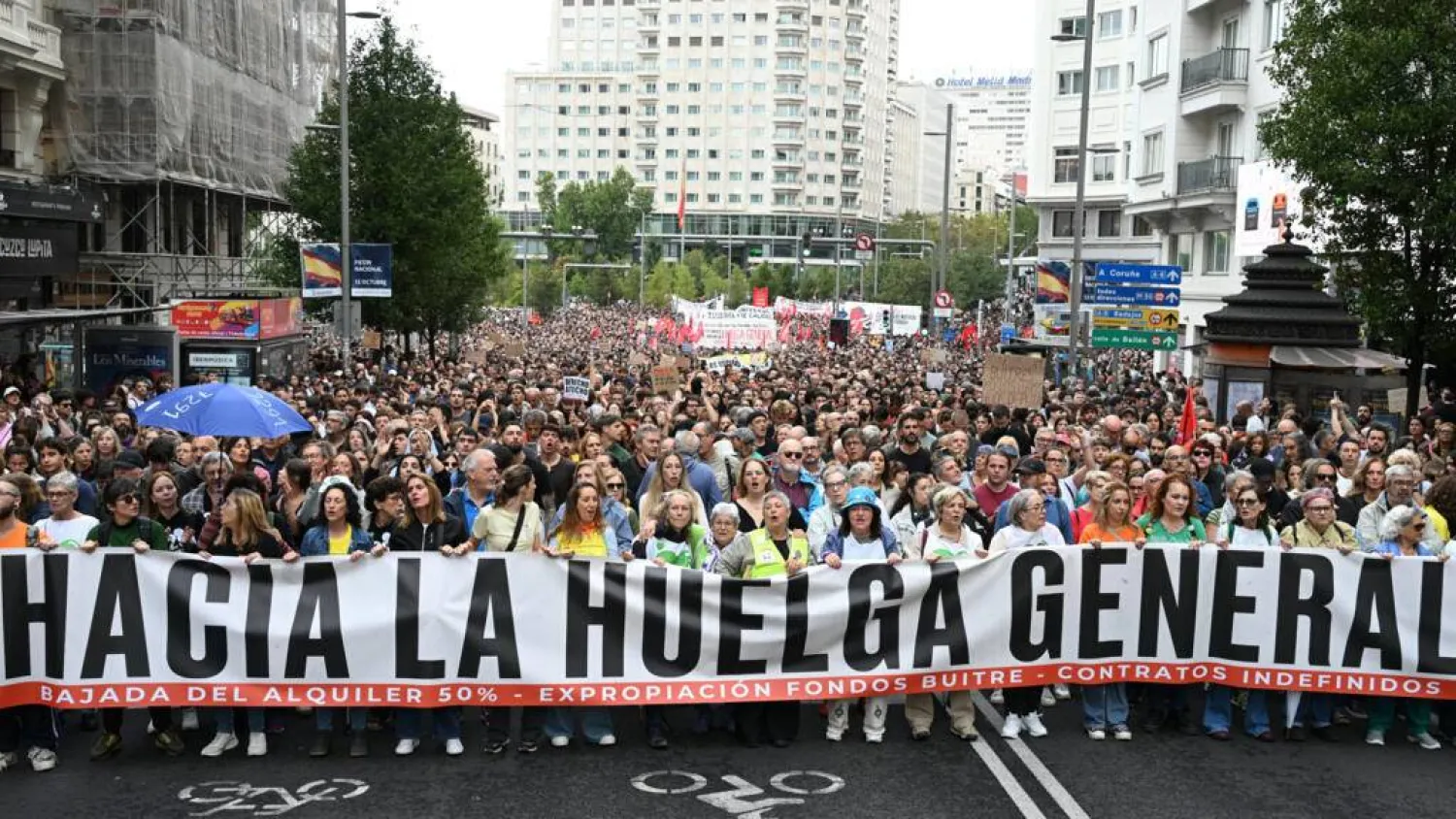
After simmering below the surface for years, anger at unaffordable housing in Spain has bubbled over and precipitated a general election that will be dominated by the crisis.

The spark was ignited on September 23 when 87-year-old Maricarmen Abascal was evicted from her lifelong Madrid home on a stretcher after the real estate firm that owned the apartment drastically hiked the rent, AFP said.

Abascal, who died on Wednesday, became the symbol of a crisis that cuts across Spanish society: young and old, renters and buyers, workers and pensioners.

The uproar at her eviction triggered national demonstrations, with hundreds of people camping in central Madrid's Puerta del Sol square in the most symbolic protest.

As in other European countries, housing has long been a top public concern, particularly for young adults who are priced out of the market and stay with their parents into their 30s and beyond.

Growth in housing prices has far outstripped wages in recent years, eating up far more than the upper limit of 30 percent of income recommended by public bodies and housing professionals.

According to the latest figures by the National Statistics Institute (INE), the average gross monthly salary in Spain is around 2,460 euros ($2,750).

Renting a 50-square-meter (538-square-foot) apartment in Madrid cost on average 1,170 euros per month in September, according to real estate portal Idealista -- around half of a normal income.

- 'Society of inheritors' -

Many residents in popular destinations like Barcelona complain that short-term tourist accommodation is limiting supply and driving up prices.

Investment funds with large housing portfolios are another much-maligned group, accused of being "vulture funds" that acquire properties and hike rents for maximum profits.

A tiny public housing supply is another major factor, with Madrid representing an extreme example of the phenomenon.

A paradise for luxury real estate, the capital only has around 10,000 social housing units for its 3.5 million inhabitants.

Such is the demand for them that some public apartments are allocated by lottery.

A history of home ownership partly explains the small public housing stock. Under the dictatorship of General Francisco Franco (1939-1975), a housing minister said he wanted "a country of owners and not proletarians".

But the model is breaking down, especially for the young. While almost three in four households own their main residence, more than half of under-30s rented in 2025, according to the INE.

Jorge Galindo, director of the Centre for Economic Policy at Esade business school, said the 2008 global financial crash was a turning point for the Spanish housing market.

The bursting of a real estate bubble sparked the "collapse" of construction and "the destruction of a million jobs" in the sector, Galindo told AFP.

Since then, "supply has not kept up", falling from around 260,000 new builds per year in the 1990s to 92,000 in 2025, he said.

The expert warned that the country of around 50 million people risked becoming "a society of inheritors" in which home ownership depends on parents passing property to their children.

- Political upheaval -

How to solve a puzzle that has bedeviled successive governments will be a central debate of the snap election that Socialist Prime Minister Pedro Sanchez called for November 29.

Last week, Sanchez's leftist coalition proposed a series of measures including more restrictions on evictions, a ban on the "speculative" purchase of homes and the automatic renewal of tenant contracts.

But the minority government failed to pass them in parliament, leading Sanchez to call an early vote originally scheduled for 2027.

Spain's main unions have called a general strike for November 11 in large part due to the political paralysis over housing.

In 2023, Sanchez's government passed a law that provided for more social housing, the regulation of rents in areas under the greatest stress, and punishments for owners who left their properties empty.

But the law has not stopped the spiraling prices and popular discontent.

The main opposition right-wing Popular Party advocates a building boom to make up the deficit between supply and demand.

For Galindo, the debate contains a "paradox".

"Those who suffer most from the housing crisis are those with the least weight at the ballot box: young people, who vote less, and immigrants."