


More than 70% of Nagorno-Karabakh's Population Flees

A local rides a horse (R, back) as ethnic Armenians from Nagorno-Karabakh cross the border with Azerbaijan on a bus with their belongings, near the village of Kornidzor, Armenia, 29 September 2023. EPA/ANATOLY MALTSEV
TT

More than 70% of Nagorno-Karabakh's Population Flees

A local rides a horse (R, back) as ethnic Armenians from Nagorno-Karabakh cross the border with Azerbaijan on a bus with their belongings, near the village of Kornidzor, Armenia, 29 September 2023. EPA/ANATOLY MALTSEV

More than 70% of the population of Nagorno-Karabakh has fled the ethnic Armenian enclave in Azerbaijan for neighboring Armenia, the Armenian government said Friday, as the enclave's separatist government said it will dissolve itself by the end of the year after a three-decade bid for independence.

Armenian officials said that 84,770 people had left Nagorno-Karabakh by Friday morning out of a total population of around 120,000.

The mass exodus that began Sunday raises questions about Azerbaijan’s plans for Nagorno-Karabakh following its lightning offensive last week to reclaim the breakaway region, and demand that its militants disarm and its separatist government disband.

Some people have lined up for days to get out of Nagorno-Karabakh as the only road to Armenia quickly filled up with vehicles, creating a major traffic jam on the winding mountain road.

Armenian Health Minister Anahit Avanesyan said that some people, including the elderly, had died while on the road to Armenia, because they were “exhausted due to malnutrition, left without even taking medicine with them, and were on the road for more than 40 hours.”

On Thursday, Armenian Prime Minister Nikol Pashinyan noted the departure of ethnic Armenians from Nagorno-Karabakh and alleged it was “a direct act of an ethnic cleansing and depriving people of their motherland.” Azerbaijan’s Foreign Ministry strongly rejected Pashinyan’s accusations, calling the departure of Armenians “their personal and individual decision and has nothing to do with forced relocation.”

In the 1990s, the Azerbaijani population was itself expelled from Nagorno-Karabakh and hundreds of thousands of people were displaced within Azerbaijan. As part of its “Great Return” program, the government in Baku has already relocated Azerbaijanis to territories recaptured from Nagorno-Karabakh forces in a 2020 war.

Analysts believe Azerbaijan could expand the program and resettle Nagorno-Karabakh with Azerbaijanis, while stating that ethnic Armenians could stay or exercise a right to return in order to “refute accusations that Karabakh Armenians have been ethnically cleansed,” Broers said.

A decree signed by the region’s separatist president, Samvel Shakhramanyan, cited a Sept. 20 agreement to end the fighting under which Azerbaijan will allow the “free, voluntary and unhindered movement” of Nagorno-Karabakh’s residents to Armenia.

On Thursday, Azerbaijani authorities charged Ruben Vardanyan, the former head of Nagorno-Karabakh’s separatist government, with financing terrorism, creating illegal armed formations and illegally crossing a state border. He was detained on Wednesday by Azerbaijani border guards as he was trying to leave Nagorno-Karabakh for Armenia along with tens of thousands of others.



Poland Bars Chinese-Made Cars from Military Sites Over Data Security Fears 

A soldier from the 18th Mechanized Division stands guard on a Light Strike Vehicle "Zmija" during a media tour organized by the country's military to demonstrate the security measures on the Polish Belarusian border, near Bialowieza, Poland, January 10, 2025. (Reuters)
TT

Poland Bars Chinese-Made Cars from Military Sites Over Data Security Fears 

A soldier from the 18th Mechanized Division stands guard on a Light Strike Vehicle "Zmija" during a media tour organized by the country's military to demonstrate the security measures on the Polish Belarusian border, near Bialowieza, Poland, January 10, 2025. (Reuters)

Poland has barred Chinese-made vehicles from entering military facilities due to concerns their onboard sensors could be used to collect sensitive data, the Polish Army said on Tuesday evening.

The army said in ‌a statement ‌that such vehicles ‌may ⁠still be allowed onto ⁠secured sites if specified functions are disabled and other safeguards required under each facility's security rules are in place.

To ⁠limit the risk ‌of ‌exposing confidential information, the military has ‌also banned connecting company ‌phones to infotainment systems in vehicles manufactured in China.

The restrictions do not apply ‌to publicly accessible military locations such as hospitals, ⁠clinics, ⁠libraries, prosecutors' offices or garrison clubs, the army said.

It added that the measures are precautionary and align with practices used by NATO members and other allies to ensure high standards of protection for defense infrastructure.


Starmer, Trump discussed Russia-Ukraine, Iran after Geneva Talks, Downing Street Says 

US President Donald Trump and British Prime Minister Keir Starmer announce an agreement between the two countries as they hold a press conference at Chequers at the conclusion of a state visit on September 18, 2025 in Aylesbury, Britain. (Reuters)
TT

Starmer, Trump discussed Russia-Ukraine, Iran after Geneva Talks, Downing Street Says 

US President Donald Trump and British Prime Minister Keir Starmer announce an agreement between the two countries as they hold a press conference at Chequers at the conclusion of a state visit on September 18, 2025 in Aylesbury, Britain. (Reuters)

British ‌Prime Minister Keir Starmer spoke to US President Donald Trump on Tuesday night about US-mediated Russia-Ukraine peace talks in Geneva, as well as talks between the US and Iran on ‌their nuclear ‌dispute, a Downing Street ‌spokesperson ⁠said.

Starmer also discussed ⁠Gaza with Trump and stressed on the importance of securing further access for humanitarian aid, the spokesperson said.

Negotiators ⁠from Ukraine and ‌Russia ‌concluded the first of two days ‌of the US-mediated ‌peace talks in Geneva on Tuesday, with Trump pressing Kyiv to act fast ‌to reach a deal.

Separately, Iranian Foreign Minister ⁠Abbas ⁠Araqchi said Tehran and Washington reached an understanding on Tuesday on "guiding principles" aimed at resolving their longstanding nuclear dispute, but that did not mean a deal is imminent.


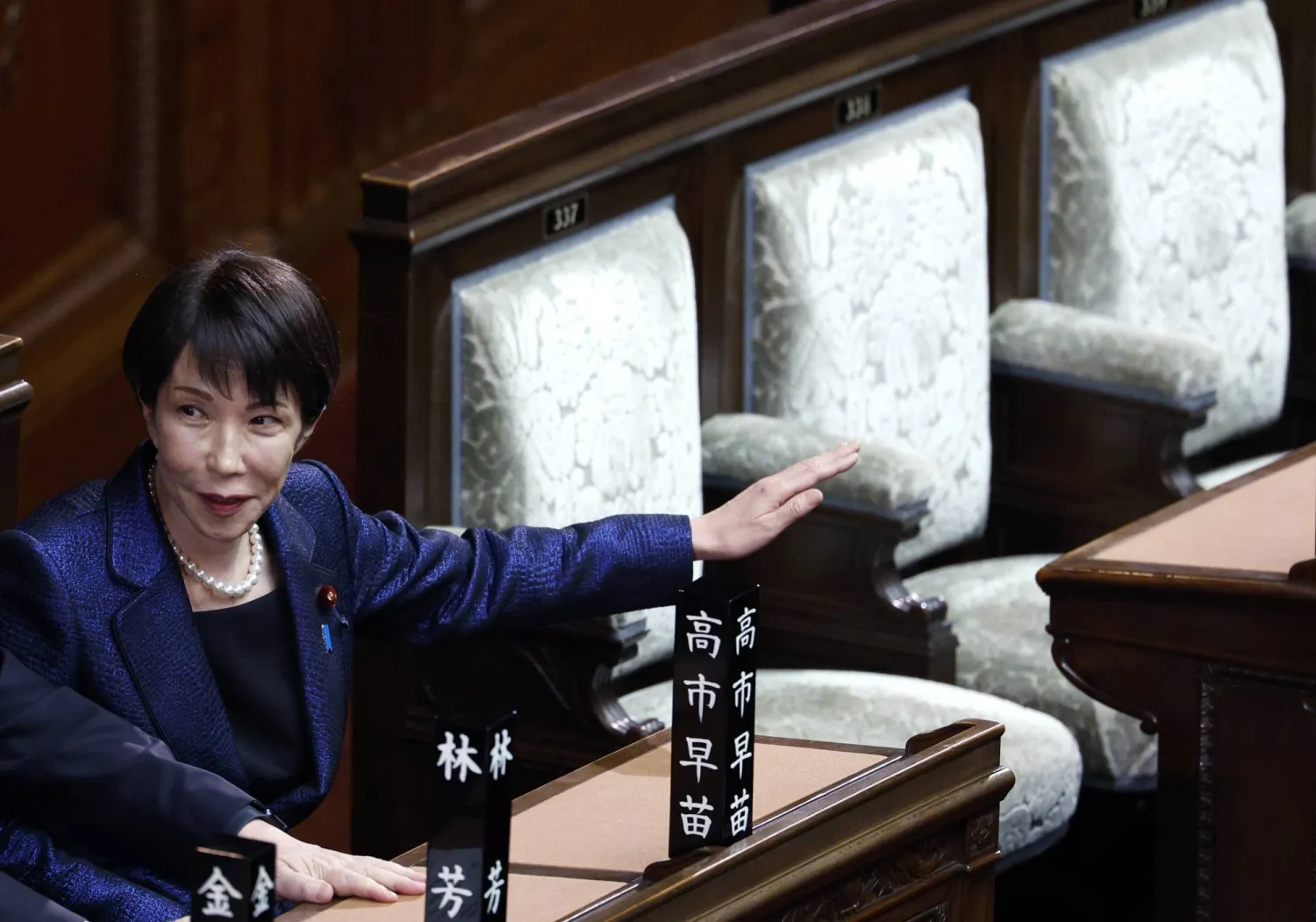
Japan PM Takaichi Reappointed Following Election

Sanae Takaichi gestures at the Lower House of the Parliament in Tokyo, Japan, 18 February 2026. EPA/FRANCK ROBICHON
TT

Japan PM Takaichi Reappointed Following Election

Sanae Takaichi gestures at the Lower House of the Parliament in Tokyo, Japan, 18 February 2026. EPA/FRANCK ROBICHON

Japan's lower house formally reappointed Sanae Takaichi as prime minister on Wednesday, 10 days after her historic landslide election victory.

Takaichi, 64, became Japan's first woman premier in October and won a two-thirds majority for her party in the snap lower house elections on February 8.

She has pledged to bolster Japan's defenses to protect its territory and waters, likely further straining relations with Beijing, and to boost the flagging economy.

Takaichi suggested in November that Japan could intervene militarily if Beijing sought to take Taiwan by force.

China, which regards the democratic island as part of its territory and has not ruled out force to annex it, was furious.

Beijing's top diplomat Wang Yi told the Munich Security Conference on Saturday that forces in Japan were seeking to "revive militarism".

In a policy speech expected for Friday, Takaichi will pledge to update Japan's "Free and Open Indo-Pacific" strategic framework, local media reported.

"Compared with when FOIP was first proposed, the international situation and security environment surrounding Japan have become significantly more severe," chief government spokesman Minoru Kihara said Monday.

In practice this will likely mean strengthening supply chains and promoting free trade through the Trans-Pacific Partnership (CPTPP) that Britain joined in 2024.

Takaichi's government also plans to pass legislation to establish a National Intelligence Agency and to begin concrete discussions towards an anti-espionage law, the reports said.

Takaichi has promised too to tighten rules surrounding immigration, even though Asia's number two economy is struggling with labor shortages and a falling population.

On Friday Takaichi will repeat her campaign pledge to suspend consumption tax on food for two years in order to ease inflationary pressures on households, local media said, according to AFP.

This promise has exacerbated market worries about Japan's colossal debt, with yields on long-dated government bonds hitting record highs last month.

Rahul Anand, the International Monetary Fund chief of mission in Japan, said Wednesday that debt interest payments would double between 2025 and 2031.

"Removing the consumption tax (on food) would weaken the tax revenue base, since the consumption tax is an important way to raise revenues without creating distortions in the economy," Anand said.

To ease such concerns, Takaichi will on Friday repeat her mantra of having a "responsible, proactive" fiscal policy and set a target on reducing government debt, the reports said.

She will also announce the creation of a cross-party "national council" to discuss taxation and how to fund ageing Japan's ballooning social security bill.

But Takaichi's first order of business will be obtaining approval for Japan's budget for the fiscal year beginning on April 1 after the process was delayed by the election.

The ruling coalition also wants to pass legislation that will outlaw destroying the Japanese flag, according to the media reports.

It wants too to accelerate debate on changing the constitution and on revising the imperial family's rules to ease a looming succession crisis.

Takaichi and many within her Liberal Democratic Party (LDP) oppose making it possible for a woman to become emperor, but rules could be changed to "adopt" new male members.