


Former UK PM Johnson Admits to Making Mistakes but Defends COVID Record at Inquiry

This image taken from the UK COVID-19 Inquiry live stream shows former British prime minister Boris Johnson giving evidence at Dorland House in London, Wednesday Dec. 6, 2023, during its second investigation (Module 2) exploring core UK decision-making and political governance. (AP)
TT

Former UK PM Johnson Admits to Making Mistakes but Defends COVID Record at Inquiry

This image taken from the UK COVID-19 Inquiry live stream shows former British prime minister Boris Johnson giving evidence at Dorland House in London, Wednesday Dec. 6, 2023, during its second investigation (Module 2) exploring core UK decision-making and political governance. (AP)

Former UK Prime Minister Boris Johnson acknowledged Wednesday that his government was too slow to grasp the extent of the COVID-19 crisis, but skirted questions about whether his indecisiveness had cost thousands of lives.

Testifying under oath at Britain's COVID-19 public inquiry, Johnson acknowledged that “we underestimated the scale and the pace of the challenge” when reports of a new virus began to emerge from China in early 2020.

The “panic level was not sufficiently high,” he said.

Ex-Health Secretary Matt Hancock told the inquiry last week that he had tried to raise the alarm inside the government, saying thousands of lives could have been saved by putting the country under lockdown a few weeks earlier than the eventual date of March 23, 2020.

The United Kingdom went on to have one of Europe’s longest and strictest lockdowns, as well as one of the continent's highest COVID-19 death tolls, with the virus recorded as a cause of death for more than 232,000 people.

Johnson conceded that the government had “made mistakes,” but emphasized collective failure rather than his own errors. He said ministers, civil servants and scientific advisers had failed to sound a “loud enough klaxon of alarm” about the virus.

“I was not being informed that this was something that was going to require urgent and immediate action," he said.

Grilled by inquiry lawyer Hugo Keith, Johnson acknowledged that he didn't attend any of the government’s five crisis meetings on the new virus in February 2020, and only “once or twice” looked at meeting minutes from the government’s scientific advisory group. He said that he relied on “distilled” advice from his science and medicine advisers.

Anna-Louise Marsh-Rees, whose father died during the pandemic, said that Johnson came across as “casual, careless, chaotic, clueless.”

“It just feels like he was living under a rock,” she said outside the hearing.

Johnson started his testimony with an apology “for the pain and the loss and the suffering of the COVID victims,” though not for any of his own actions. Four people stood up in court as he spoke, holding signs saying: “The Dead can’t hear your apologies," before being escorted out by security staff.

“Inevitably, in the course of trying to handle a very, very difficult pandemic in which we had to balance appalling harms on either side of the decision, we may have made mistakes,” Johnson said. “Inevitably, we got some things wrong. I think we were doing our best at the time.”

The former prime minister had arrived at the west London inquiry venue at daybreak, several hours before he was due to take the stand, avoiding a protest by a group of bereaved relatives, some holding pictures of their loved ones. A banner declared: “Let the bodies pile high” — a statement attributed to Johnson by an aide. Another sign read: “Johnson partied while people died.”

Johnson was pushed out of office by his own Conservative Party in mid-2022 after multiple ethics scandals, including the revelation that he and staff members held parties in the prime minister’s Downing Street offices in 2020 and 2021, flouting the government’s lockdown restrictions.

Johnson agreed in late 2021 to hold a public inquiry after heavy pressure from bereaved families. The investigation, led by retired Judge Heather Hallett, is expected to take three years to complete, though interim reports will be issued starting next year.

The inquiry's goal is to learn lessons rather than assign individual blame, but its revelations could further tarnish Johnson's battered reputation. Former colleagues, aides and advisers have painted an unflattering picture of the former leader and his government during weeks of testimony.

Former Chief Scientific Adviser Patrick Vallance said Johnson was “bamboozled” by science. In diaries that have been seen as evidence, Vallance also said Johnson was “obsessed with older people accepting their fate.” Former adviser Dominic Cummings, now a fierce opponent of Johnson, said the then prime minister asked scientists whether blowing a hair dryer up his nose could kill the virus.

Former senior civil servant Helen McNamara described a “toxic,” macho culture inside Johnson's government, and Cabinet Secretary Simon Case, the country’s top civil servant, called Johnson and his inner circle “basically feral.”

Johnson defended his administration, saying it contained “challenging” characters “whose views about each other might not be fit to print, but who got an awful lot done.”

He said he didn't recognize the chaotic picture painted by other witnesses at the inquiry.

"Nobody came to me and said ‘people have got God complexes and there’s internecine warfare going on here,'” Johnson said.

Johnson said he was “not sure” whether his government's decisions had caused excess deaths. He said that deciding when to impose lockdowns and other restrictions had been “painful” and “incredibly difficult."

Johnson sometimes appeared strained and emotional as he remembered the “tragic year” of 2020 and having to balance public health with the economic damage caused by lockdowns. But he denied allegations — in messages exchanged between aides at the time — that he had vacillated wildly about what to do as the virus spread.

The inquiry can compel witnesses to hand over emails and other communications evidence — but it hasn't received around 5,000 of Johnson's WhatsApp messages from several key weeks between February and June 2020. They were on a phone Johnson was told to stop using when it emerged that the number had been publicly available online for years. Johnson later said he’d forgotten the password to unlock it.

Johnson was unable to explain what had happened to the messages, but said he wanted to “make it absolutely clear I haven’t removed any WhatsApps from my phone.”



Poland Bars Chinese-Made Cars from Military Sites Over Data Security Fears 

A soldier from the 18th Mechanized Division stands guard on a Light Strike Vehicle "Zmija" during a media tour organized by the country's military to demonstrate the security measures on the Polish Belarusian border, near Bialowieza, Poland, January 10, 2025. (Reuters)
TT

Poland Bars Chinese-Made Cars from Military Sites Over Data Security Fears 

A soldier from the 18th Mechanized Division stands guard on a Light Strike Vehicle "Zmija" during a media tour organized by the country's military to demonstrate the security measures on the Polish Belarusian border, near Bialowieza, Poland, January 10, 2025. (Reuters)

Poland has barred Chinese-made vehicles from entering military facilities due to concerns their onboard sensors could be used to collect sensitive data, the Polish Army said on Tuesday evening.

The army said in ‌a statement ‌that such vehicles ‌may ⁠still be allowed onto ⁠secured sites if specified functions are disabled and other safeguards required under each facility's security rules are in place.

To ⁠limit the risk ‌of ‌exposing confidential information, the military has ‌also banned connecting company ‌phones to infotainment systems in vehicles manufactured in China.

The restrictions do not apply ‌to publicly accessible military locations such as hospitals, ⁠clinics, ⁠libraries, prosecutors' offices or garrison clubs, the army said.

It added that the measures are precautionary and align with practices used by NATO members and other allies to ensure high standards of protection for defense infrastructure.


Starmer, Trump discussed Russia-Ukraine, Iran after Geneva Talks, Downing Street Says 

US President Donald Trump and British Prime Minister Keir Starmer announce an agreement between the two countries as they hold a press conference at Chequers at the conclusion of a state visit on September 18, 2025 in Aylesbury, Britain. (Reuters)
TT

Starmer, Trump discussed Russia-Ukraine, Iran after Geneva Talks, Downing Street Says 

US President Donald Trump and British Prime Minister Keir Starmer announce an agreement between the two countries as they hold a press conference at Chequers at the conclusion of a state visit on September 18, 2025 in Aylesbury, Britain. (Reuters)

British ‌Prime Minister Keir Starmer spoke to US President Donald Trump on Tuesday night about US-mediated Russia-Ukraine peace talks in Geneva, as well as talks between the US and Iran on ‌their nuclear ‌dispute, a Downing Street ‌spokesperson ⁠said.

Starmer also discussed ⁠Gaza with Trump and stressed on the importance of securing further access for humanitarian aid, the spokesperson said.

Negotiators ⁠from Ukraine and ‌Russia ‌concluded the first of two days ‌of the US-mediated ‌peace talks in Geneva on Tuesday, with Trump pressing Kyiv to act fast ‌to reach a deal.

Separately, Iranian Foreign Minister ⁠Abbas ⁠Araqchi said Tehran and Washington reached an understanding on Tuesday on "guiding principles" aimed at resolving their longstanding nuclear dispute, but that did not mean a deal is imminent.


Japan PM Takaichi Reappointed Following Election

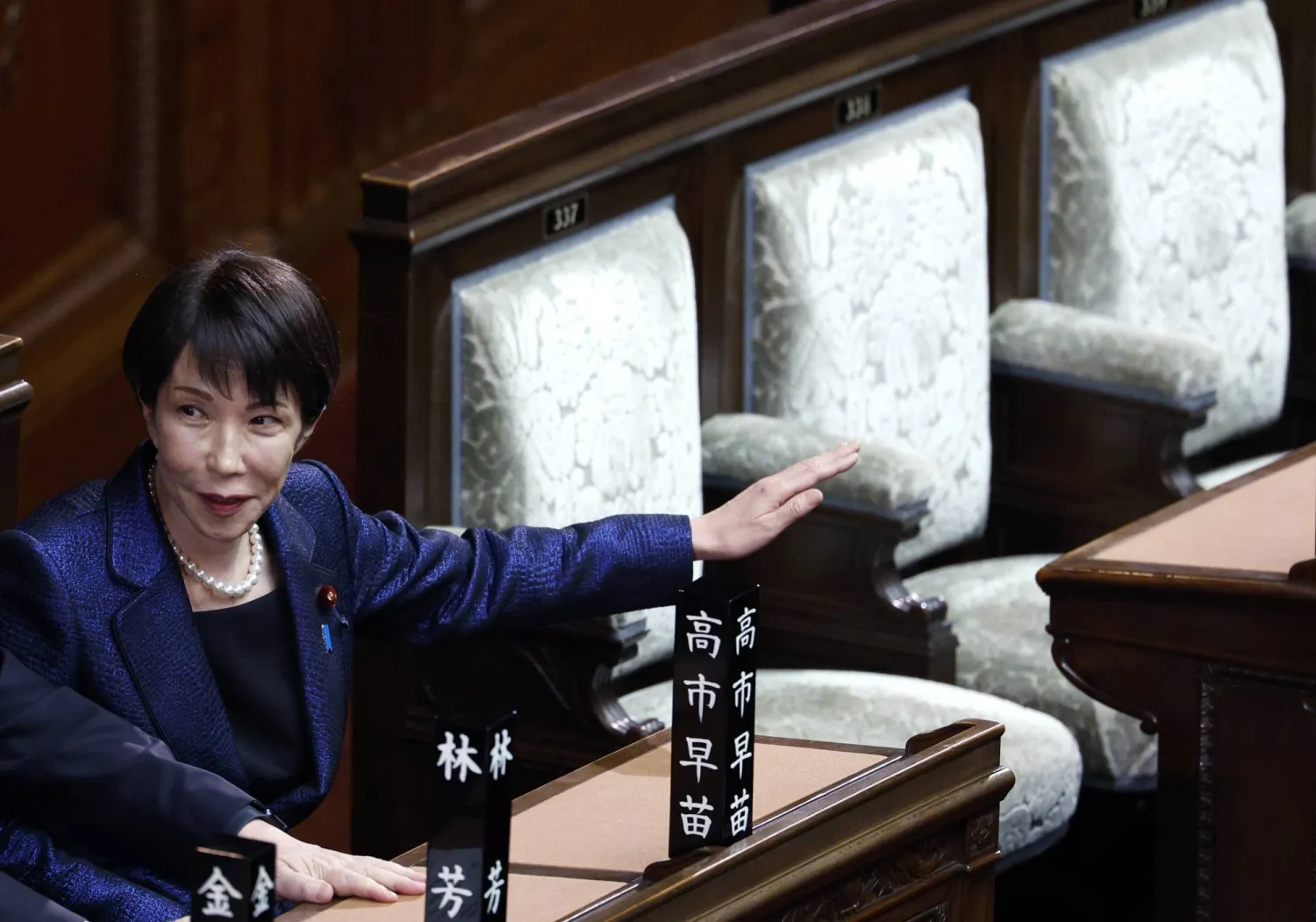
Sanae Takaichi gestures at the Lower House of the Parliament in Tokyo, Japan, 18 February 2026. EPA/FRANCK ROBICHON
TT

Japan PM Takaichi Reappointed Following Election

Sanae Takaichi gestures at the Lower House of the Parliament in Tokyo, Japan, 18 February 2026. EPA/FRANCK ROBICHON

Japan's lower house formally reappointed Sanae Takaichi as prime minister on Wednesday, 10 days after her historic landslide election victory.

Takaichi, 64, became Japan's first woman premier in October and won a two-thirds majority for her party in the snap lower house elections on February 8.

She has pledged to bolster Japan's defenses to protect its territory and waters, likely further straining relations with Beijing, and to boost the flagging economy.

Takaichi suggested in November that Japan could intervene militarily if Beijing sought to take Taiwan by force.

China, which regards the democratic island as part of its territory and has not ruled out force to annex it, was furious.

Beijing's top diplomat Wang Yi told the Munich Security Conference on Saturday that forces in Japan were seeking to "revive militarism".

In a policy speech expected for Friday, Takaichi will pledge to update Japan's "Free and Open Indo-Pacific" strategic framework, local media reported.

"Compared with when FOIP was first proposed, the international situation and security environment surrounding Japan have become significantly more severe," chief government spokesman Minoru Kihara said Monday.

In practice this will likely mean strengthening supply chains and promoting free trade through the Trans-Pacific Partnership (CPTPP) that Britain joined in 2024.

Takaichi's government also plans to pass legislation to establish a National Intelligence Agency and to begin concrete discussions towards an anti-espionage law, the reports said.

Takaichi has promised too to tighten rules surrounding immigration, even though Asia's number two economy is struggling with labor shortages and a falling population.

On Friday Takaichi will repeat her campaign pledge to suspend consumption tax on food for two years in order to ease inflationary pressures on households, local media said, according to AFP.

This promise has exacerbated market worries about Japan's colossal debt, with yields on long-dated government bonds hitting record highs last month.

Rahul Anand, the International Monetary Fund chief of mission in Japan, said Wednesday that debt interest payments would double between 2025 and 2031.

"Removing the consumption tax (on food) would weaken the tax revenue base, since the consumption tax is an important way to raise revenues without creating distortions in the economy," Anand said.

To ease such concerns, Takaichi will on Friday repeat her mantra of having a "responsible, proactive" fiscal policy and set a target on reducing government debt, the reports said.

She will also announce the creation of a cross-party "national council" to discuss taxation and how to fund ageing Japan's ballooning social security bill.

But Takaichi's first order of business will be obtaining approval for Japan's budget for the fiscal year beginning on April 1 after the process was delayed by the election.

The ruling coalition also wants to pass legislation that will outlaw destroying the Japanese flag, according to the media reports.

It wants too to accelerate debate on changing the constitution and on revising the imperial family's rules to ease a looming succession crisis.

Takaichi and many within her Liberal Democratic Party (LDP) oppose making it possible for a woman to become emperor, but rules could be changed to "adopt" new male members.